雪茄的文化符號:從歷史到現代的身份意義

雪茄不僅是風味的享受,更是文化的象徵,承載著權力、地位與傳統。從加勒比海的原住民儀式到歐洲宮廷,雪茄的歷史反映了階級與身份的變遷。它在社交場合中扮演著重要角色,從商務談判到紳士俱樂部,雪茄的存在促進了人際交流與尊重。品牌、尺寸與產地更是傳遞非語言訊息的關鍵,讓選擇雪茄成為一種文化表達。在華人社交中,雪茄常與面子與人情相連,選擇得體的品牌與型號尤為重要。了解這些,將使雪茄的品味更具深度與意義。
- 雪茄不僅是消費品,更是一段文化歷史的象徵,選擇品牌與產地反映個人風格。
- 在社交場合中,雪茄的使用應注重禮儀,讓他人感到被尊重,而非炫耀自我。
- 雪茄的尺寸與品牌暗示著不同的文化印象,懂得這些能幫助你在社交中更好地表達自己。
The Cultural Symbolism of Cigars: From Historical to Modern Identity Significance
Cigars are fascinating not just for their flavor but also for the cultural signals they have long carried: power, status, tradition, etiquette, and a sense of time. As the editor of the "Cigar Bible," I often remind beginners that truly understanding cigars is not about flaunting brand names but about understanding what they represent in different contexts.
From the indigenous rituals of the Caribbean to European courts, London clubs, the Cuban revolution, and Asian business socializing, cigars have constantly evolved. They can symbolize celebration or contemplation; they can be a language of identity or simply a quiet ninety minutes reserved for oneself.
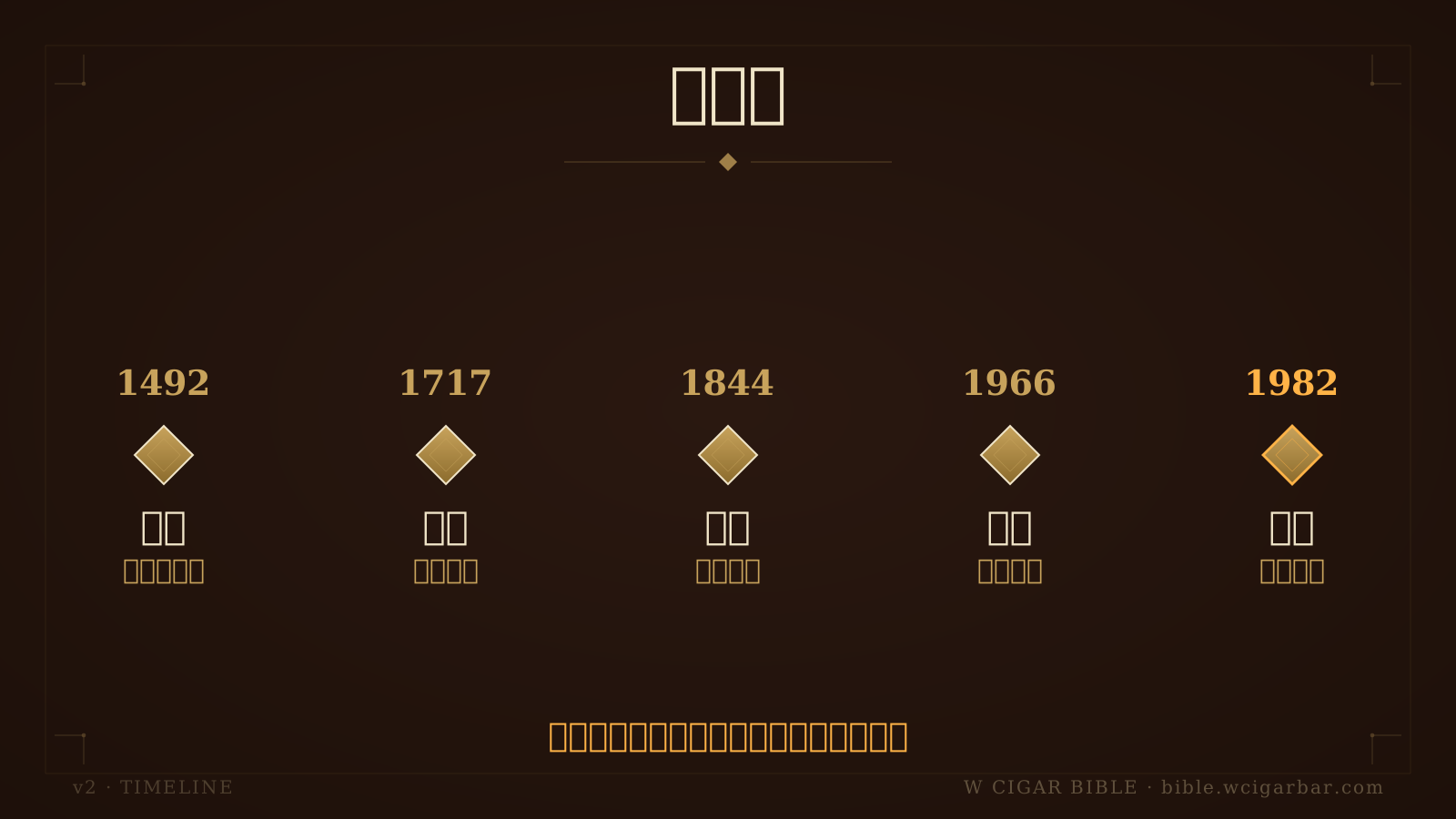
時間線呈現雪茄從加勒比記錄到走向國際
From the Caribbean to European Courts: How Cigars Became a Language of Power
When Columbus arrived in the Caribbean in 1492, the Spaniards recorded that the Taino people used rolled leaves to smoke tobacco. For the indigenous people, tobacco was often associated with rituals, exchanges, and the spiritual world. However, once it entered Europe, it was quickly repackaged as a rare colonial commodity. In the 16th century, Spanish courts and aristocratic circles regarded tobacco from the New World as a rarity, marking the first step in cigars' transition from ritual items to symbols of class.
In the 18th century, Cuba's status rose within the Spanish Empire's tobacco system. In 1717, the Spanish royal family established a tobacco monopoly to control the Cuban tobacco trade. By the 19th century, Havana's factories and brands began to take shape, with H. Upmann founded in 1844 and Partagás in 1845. Brand, origin, and factory names began to be seen as labels of quality and identity.
Cigars were initially understood by Europeans as rare colonial items before becoming tools of class and power etiquette. This history explains why a cigar is often more than just a consumer product; it's like a cultural business card: choosing Cuban, Nicaraguan, or Dominican cigars is a discussion of terroir; choosing between classic or modern brands reveals aesthetic preferences.
For beginners, understanding history is not about memorizing dates but about avoiding focusing solely on price and fame. When you know that Partagás represents the industrialization of 19th-century Havana, and that H. Upmann is related to finance, trade, and box culture, the cigar in your hand becomes more than just tobacco leaves; it becomes a piece of world history pressed into a cigar wrapper.
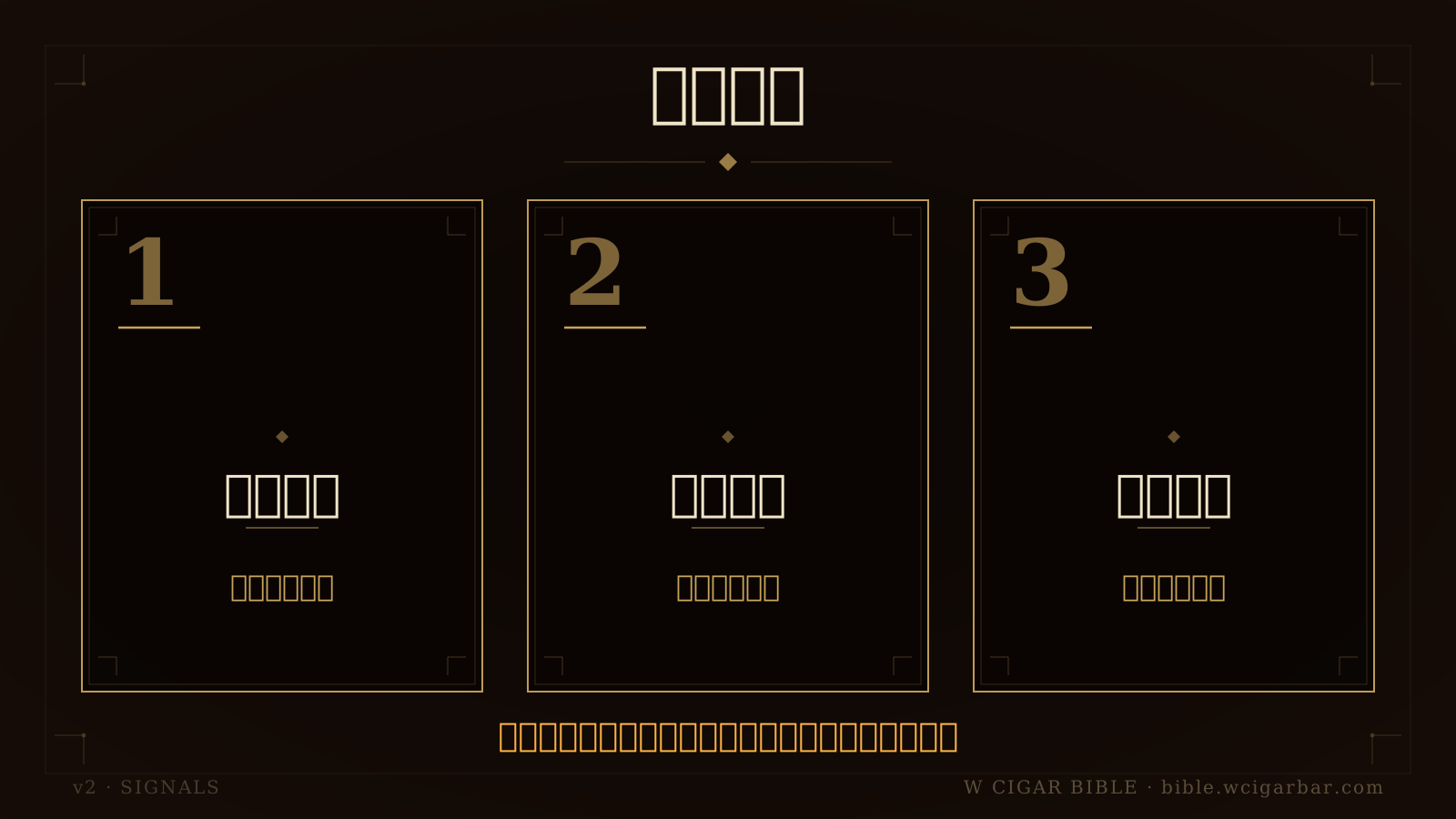
三張卡片列出文化名片場合語言與尊重優先
Revolution, War, and Leader Portraits: The Political Symbolism of Cigars
The 20th century turned cigars into a stronger political symbol. British Prime Minister Churchill's image is almost inseparable from cigars, and the Churchill size of Romeo y Julieta, approximately 178mm with a ring gauge of 47, became a typical understanding of "leader cigars" for many. During World War II, photos of Churchill holding a cigar were not just about lifestyle but were read as a visual language of calmness, resilience, and the twilight of the empire.
The Cuban revolution added another layer of meaning to cigars. Fidel Castro was long associated with Cohiba; initially used as gifts for Cuban high officials and diplomats around 1966, Cohiba was officially introduced to the international market in 1982. Before the U.S. embargo on Cuba in 1962, Kennedy was rumored to have asked aides to acquire about 1,200 H. Upmann Petit Upmanns, a story still frequently cited because it places political decisions and personal preferences on the same table.
When cigars enter the hands of political figures, they become more than leisure items; they become image symbols of authority, resilience, and historical stance. The same cigar in Churchill's hand symbolizes wartime will, in Castro's hand represents revolutionary nationalism, and in Kennedy's story reflects Cold War contradictions.
However, I also remind people not to romanticize cigars to the point of losing judgment. The cigar images of political figures are often processed through media, photography, propaganda, and narratives by later generations. Beginners learning about culture should not mimic leaders' postures but understand how symbols are constructed: who holds it, in what era, who photographed it, and who narrates it, all of which can change the meaning of a cigar.
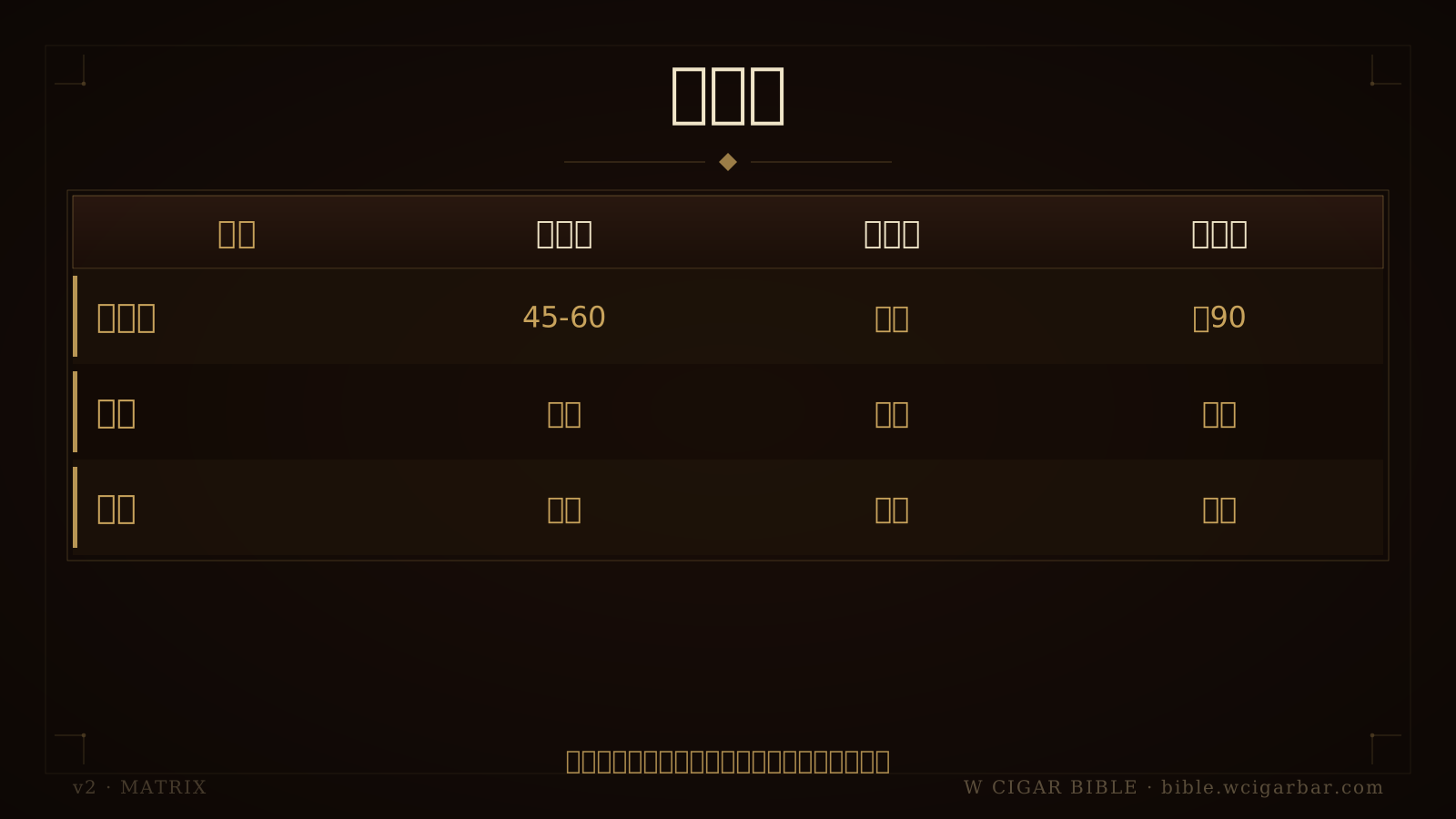
矩陣比較羅布圖冠戈達與邱吉爾的時間場合印象
Gentlemen's Clubs and Business Socializing: Etiquette Matters More Than Smoke
The 19th-century London gentlemen's clubs made cigars a part of "after-dinner conversation." Dinner, brandy, and the cigar room formed the triangular relationship of British upper-class socializing. The focus here is not on who smokes the largest cigar but on who knows how to leave space in conversation, exercise restraint in public spaces, and be considerate of others' feelings. The slowness of cigars adds a layer of rhythm to negotiations, reminiscing, and debates.
Modern business occasions are similar. Cigars often appear in celebrations, after contract signings, private clubs, and hotel terraces, but their function is not to display wealth but to shift relationships from "transactions" to "time-sharing." A Robusto can last about 45 to 60 minutes, while a Churchill might approach 90 minutes; during this time, the truly important thing is the nuance of conversation, not the amount of smoke.
The core etiquette of cigar socializing is to make everyone feel respected, not to make oneself appear the most knowledgeable. My basic principles for beginners are simple:
- Do not light up in spaces where the norms are unclear; respect regulations and venues first.
- Do not blow cigar smoke towards others, nor force others to accept your preferences.
- Do not flaunt prices or belittle others' choices.
- Do not interrupt conversations with cigars; remain composed when cutting and lighting.
- If someone does not use tobacco, naturally maintain distance and ventilation.
Cigars in social settings are like a slow language. Those who understand etiquette will let cigars become the background, allowing interpersonal communication to take the foreground. This is why, in truly mature settings, what is most remembered is often not which cigar you held but whether you made those at the table comfortable.
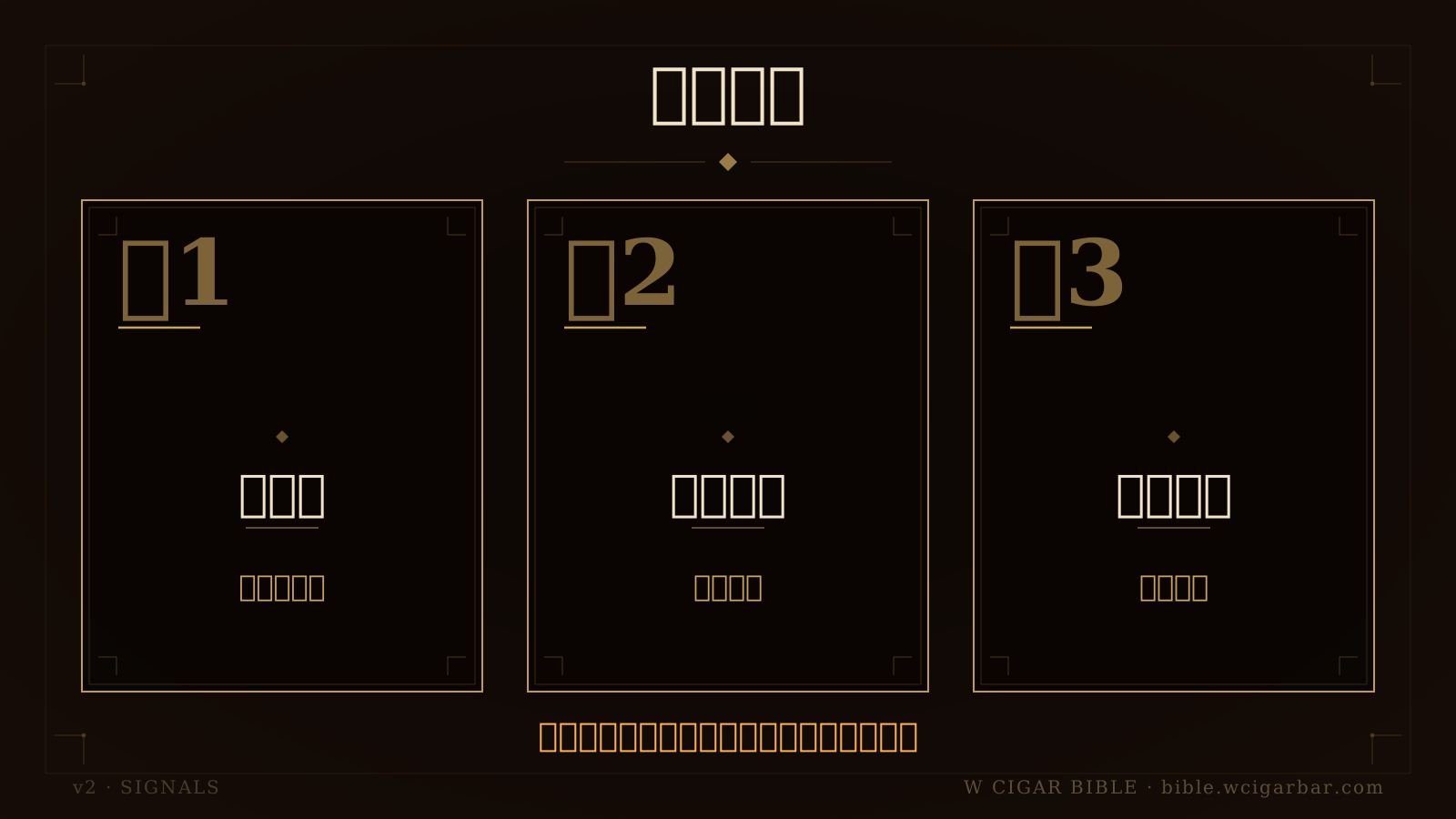
三張卡片指出先炫牌忽略規範與逼人接受
Brands, Sizes, and Identity Codes: Understanding the Non-Verbal Language at the Table
There are many "unspoken languages" at the cigar table. Brands represent historical context, sizes represent time arrangements, and regions represent taste preferences. For example, Cohiba is often understood as a Cuban national symbol, while Montecristo, due to its stable style since its founding in 1935, becomes many people's entry memory into Cuban cigars; Davidoff, after launching the Cuban-era Château series in 1968, later shifted to the Dominican Republic, further shaping a precise, elegant, and international image.
Sizes also have codes. Robusto, approximately 124mm with a ring gauge of 50, often gives an impression of decisiveness, modernity, and time efficiency; Corona Gorda, about 143mm with a ring gauge of 46, is more slender than Robusto, with a finer rhythm; Churchill, about 178mm with a ring gauge of 47, is often read as formal, composed, and carrying traditional authority. These are not absolute rules, but they are enough to influence others' first impressions of you.
| Type | Common Size Reference | Cultural Impression | Suitable Understanding Method |
|---|---|---|---|
| Robusto | Approx. 124mm × 50 ring gauge | Modern, Direct, Efficient | Suitable for observing the core style of a brand |
| Corona Gorda | Approx. 143mm × 46 ring gauge | Balanced, Delicate, Conversational | Suitable for practicing rhythm control |
| Churchill | Approx. 178mm × 47 ring gauge | Formal, Traditional, Time-Sensitive | Suitable for long talks and contemplation |
| Lancero | Approx. 192mm × 38 ring gauge | Elegant, Technical, Old-School | Suitable for experiencing the wrapper ratio |
Understanding size is about arranging time in a setting; understanding brand is about choosing tone in culture. For example, Trinidad originally had a diplomatic gift color, only becoming commercialized in 1998; Cohiba Behike, launched in 2010, became a topic of collection due to its positioning and scarcity, but collecting does not guarantee appreciation, still depending on source preservation and market.
Beginners should not rush to chase rare models but should first establish coordinates: Cuban cigars tend to be traditional with mineral, woody, and leathery memories; Nicaraguan cigars often have more distinct spice and strength; Dominican cigars are often associated with roundness and balance. When you can articulate why you choose something, rather than just saying "it's famous," you start entering the deep waters of cigar culture.
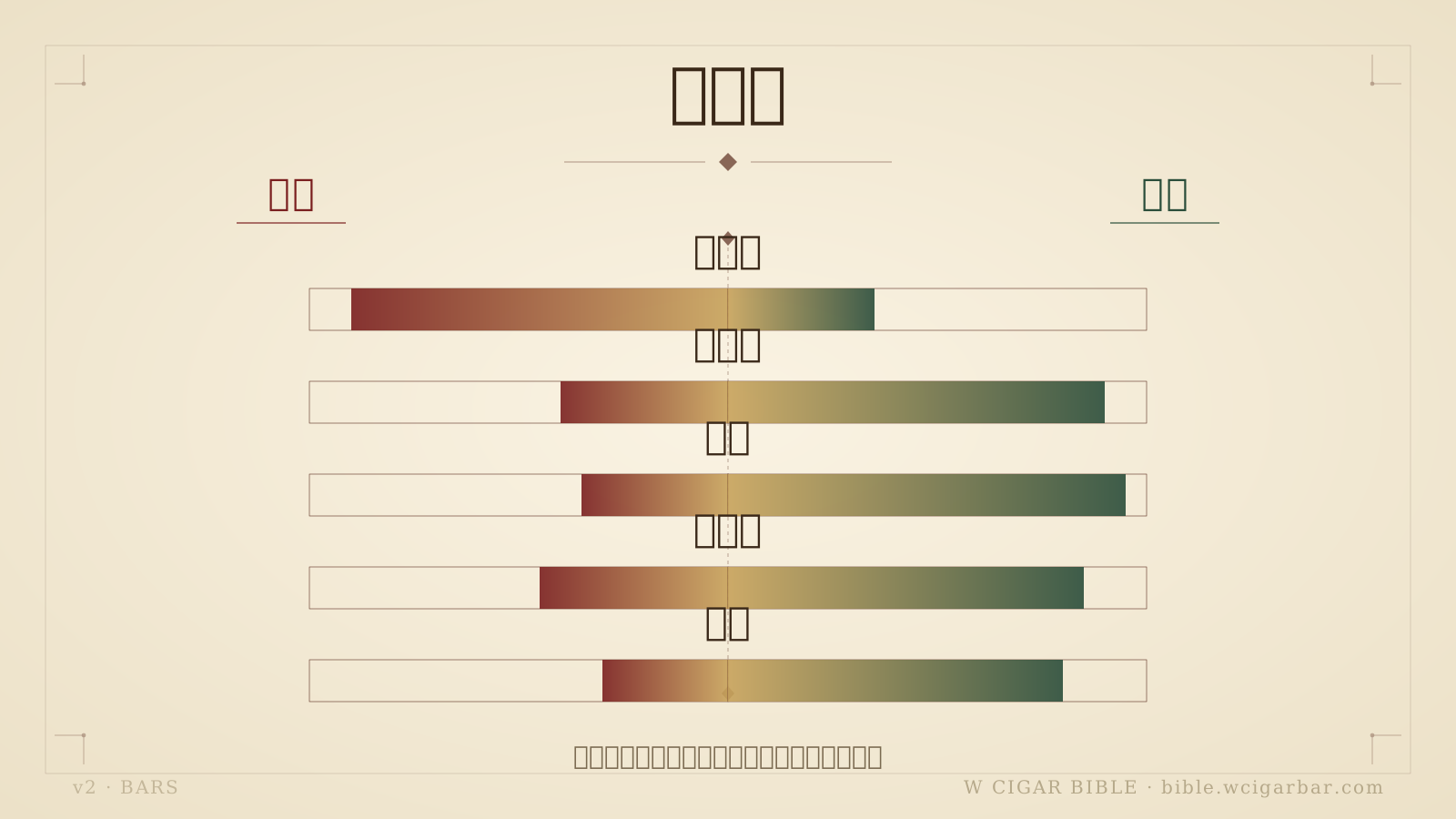
長條圖比較炫耀取向與素養取向的五個差異
Asia and the Chinese World: Face, Relationships, and Moderation
When cigars entered Chinese socializing, they often became associated with "face" and "relationships." Since the 1990s, Hong Kong has become an important node of Asian cigar culture due to international finance, hotel culture, and private clubs; Singapore, Japan, and Taiwan have also developed their own appearances. Compared to European and American club traditions, the Chinese world places more emphasis on the nuances of gifting, seniority, and the appropriateness of occasions.
For example, in business gifting, choosing an overly high-profile limited edition may not be as appropriate as a well-preserved, clearly sourced, and stable classic edition. Models like Montecristo No.2, Partagás Serie D No.4, and Hoyo de Monterrey Epicure No.2 are commonly discussed not just because of their taste but also because they are easily understood and do not make the recipient feel difficult to respond.
In Chinese socializing, if cigars are handled well, they represent respect and sharing; if handled poorly, they become pressure and show-off. The most mature approach I've seen is for the host to first confirm whether the other party accepts tobacco, has time, and is convenient to stay; if the other party does not use it, then turn to discussing brand stories, regional culture, or preservation knowledge, rather than pushing the other party into an awkward situation.
The Asian market also places special emphasis on preservation. Humid climates make cigars prone to over-moisture, and the large temperature difference between indoor and outdoor in Taiwan during summer can cause burning to slow and draw resistance to increase if humidity exceeds 72% for a long time; if below 62%, they may crack and become spicy. Cultural etiquette ultimately returns to basic skills: what you give or share is not just a brand but also the preservation state, occasion judgment, and consideration for people.
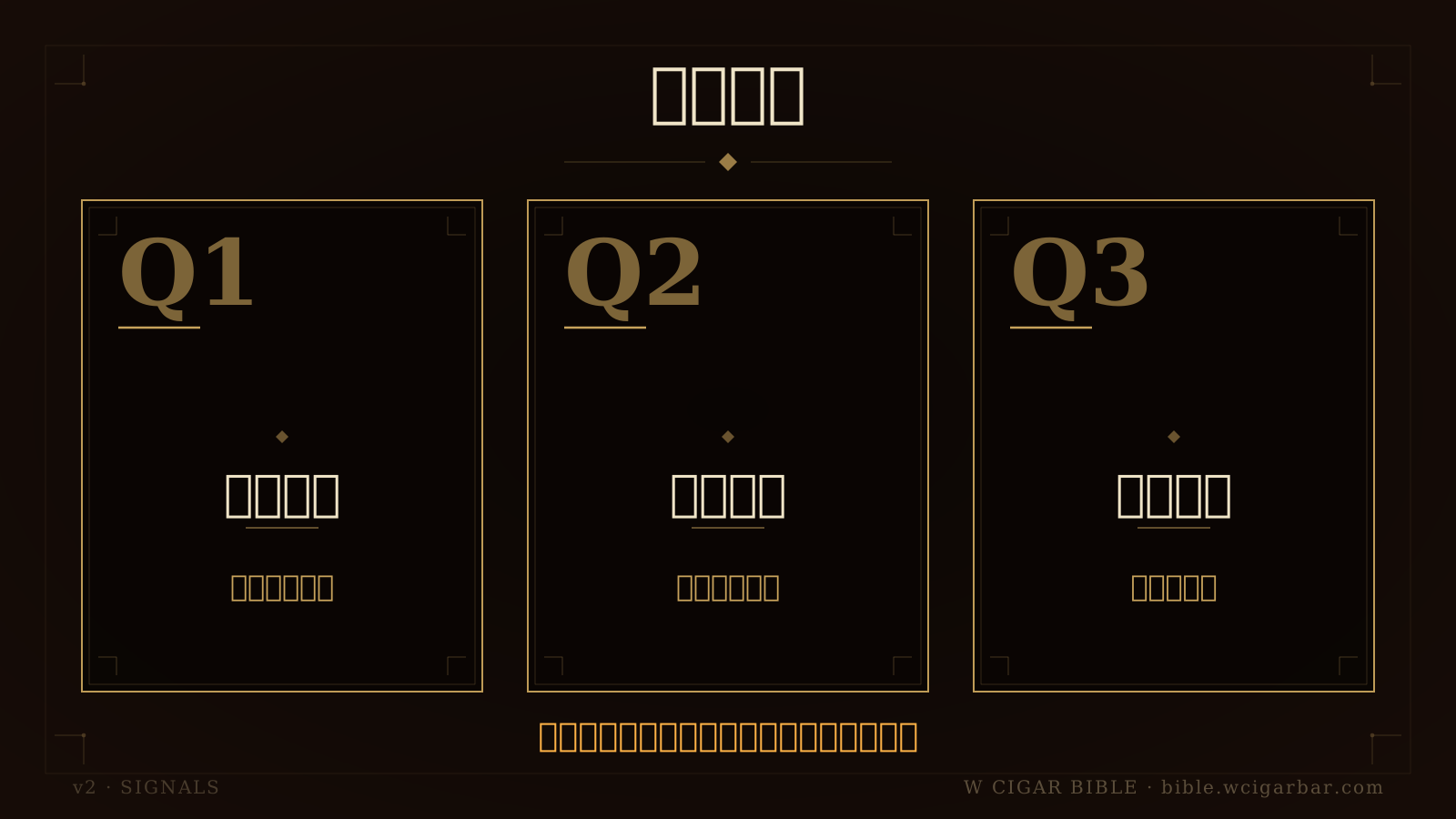
三張問答卡整理地位象徵尺寸學習與商務分寸
Techniques for Modern Beginners: From Respecting Tradition to Establishing Personal Style
If beginners have mastered basic puffing, the next step is not to pursue more expensive options but to make movements quieter and judgments more accurate. When cutting, use a double-bladed cutter or punch to handle the cap, avoiding cutting over the shoulder line; when lighting, first toast the foot of the cigar, then rotate evenly, without rushing to take big puffs. A general rhythm can be one puff every 45 to 60 seconds; if too frequent, the temperature rises, bringing out bitterness and scorched flavors.
Preservation is part of the culture. Most cigars can be maintained in an environment with relative humidity of 65% to 70% and a temperature of about 18 to 21°C; for long-term aging, record purchase time, box code, humidity changes, and taste notes. You can divide the notes into the front, middle, and back sections, observing how elements like wood, leather, cocoa, coffee, pepper, nuts, and herbs change.
True personal style is not about smoking what others say is good, but about being able to clearly articulate why you like it. I suggest building a database in three steps:
- Choose 2 to 3 sizes from the same brand to compare the impact of size on concentration and burning.
- Choose different brands from the same region to compare formulas and factory styles.
- Pair with only one type of drink each time, such as black coffee, unsweetened tea, rum, or whiskey, to avoid confusing judgments.
Finally, remember that cigars are a culture for adults and are subject to legal and public regulations. Those who understand cigars will balance time, space, and the feelings of others. When you can connect history, brand, preservation, etiquette, and rhythm into a line, cigars truly transform from "objects" into your life language.
Frequently Asked Questions
For beginners, the most important thing to learn first is not to flaunt brands but to understand occasions, rhythm, and respect for others.
Why are cigars often seen as a status symbol?
Because they have long been associated with rare origins, handcrafted processes, upper-class socializing, and political imagery. From 19th-century Havana brands to 20th-century photos of Churchill and Castro, cigars have been repeatedly placed into power narratives, naturally forming status associations.
Should beginners memorize brands first or understand sizes first?
I would recommend understanding sizes first. The different time sensations brought by Robusto, Corona Gorda, and Churchill also affect burning and flavor performance. Once you understand sizes, looking back at brands like Cohiba, Montecristo, and Davidoff will provide a more three-dimensional understanding.
Is it too ostentatious to bring cigars to business occasions?
The key is in the nuance. If the occasion is compliant, the other party accepts, and time is sufficient, cigars can be a medium to slow down conversations; if the environment is unsuitable, forcing a light-up is disrespectful. Cigar etiquette always precedes the cigar itself.
Does collecting cigars mean they will appreciate in value?
Not necessarily; it still depends on source preservation and market. Box condition, humidity, temperature, authenticity, rarity, and international demand all affect the outcome. Viewing cigars with only a speculative mindset can easily overlook cultural and preservation fundamentals.
How can I appear more knowledgeable about cigars?
Speak less in absolutes and ask more about context. You can discuss years, regions, sizes, preservation, burning, and occasions, rather than just prices. Those who truly understand usually have a calm tone and respect different preferences.
In my view, cigars have never been a simple symbol of enjoyment but a study of time, etiquette, and self-positioning. They teach people to slow down and allow them to see how history is hidden in brands, sizes, and occasions. If beginners can first understand respect before discussing flavor and collection, they are already on the right path.
—Cigar Prince Wilson Tsai
Smoking is harmful to health. Under 20 years old is not allowed to smoke. Quitline: 0800-636363. This article is intended for adults over 20 years old as a reference for cigar culture, preservation, and regulatory knowledge, not as a tobacco advertisement, promotion, or purchase suggestion.
Like this article?Share with friends
Share this W Cigar Bible piece with friends who want to learn cigar culture, storage, and tasting.
想把這篇 化為實踐
雪茄聖經是知識;雪茄文化要在空間裡發生

W Cigar Bar 大安總店資訊
台北大安區 · 雪茄聖經總編輯 Wilson Tsai 主理的雪茄文化空間
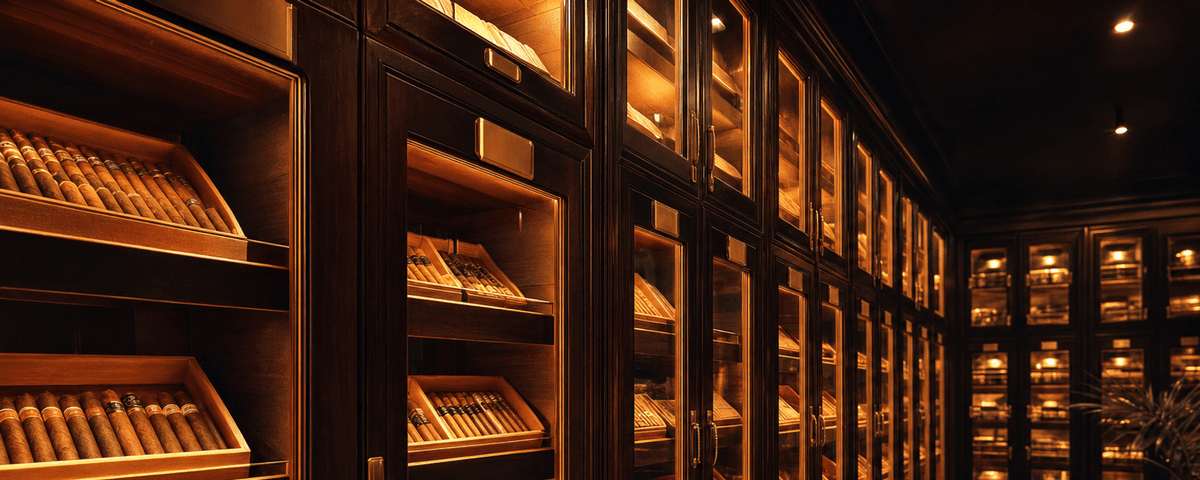
33 座 24 小時恆溫恆濕醇化室
W Cigar Bar 提供的會員醇化空間 · 場地資訊請洽編輯部
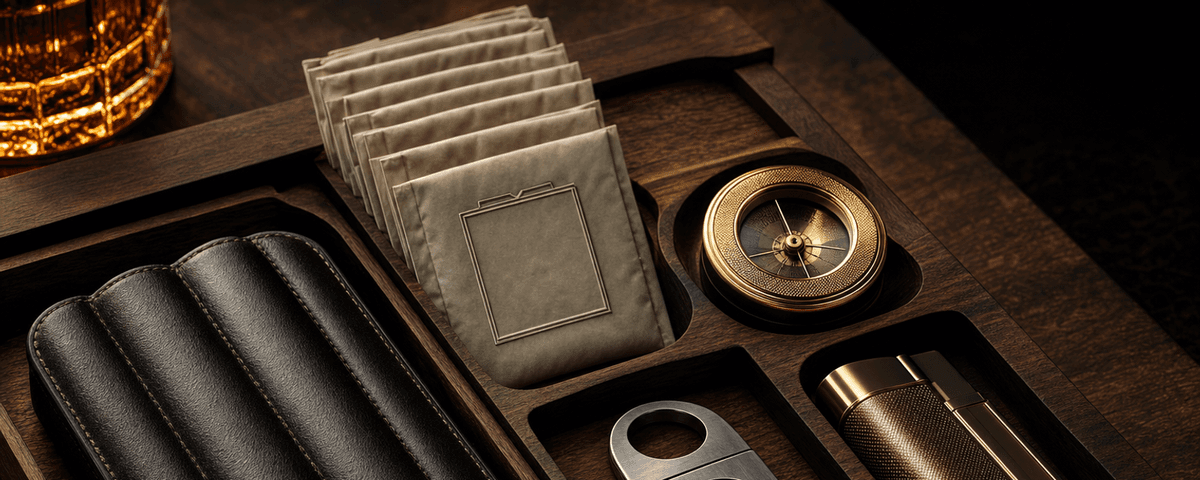
雪茄剪 / 打火機 / 雪茄盒 / Boveda
W Cigar 配件官網 · 專營雪茄配件正品
加 LINE 好友 · 文化諮詢
文化空間資訊 · 紳士沙龍 · 私人包場
本網站內容僅供雪茄文化、歷史、收藏與品吸知識研究參考。菸品有害健康、未滿法定年齡者請勿吸菸。實際規範請依所在地法律為準。
吸菸有害健康・戒菸專線 0800-636363・本站僅供 20 歲以上成年人閱覽。
讀到這裡,你不只是路過的人
留下 Email,加入 W 雪茄聖經內圈——總編輯 Wilson Tsai 親選的學院深文與國際新訊,先你一步送到信箱。
· 教育用途非銷售 · 隨時一鍵退訂 · Email 絕不對外公開 · 由勝茄股份有限公司營運
同分類延伸閱讀


資料來源:W Cigar Bible 編輯部整理 · 雪茄王子 Wilson Tsai 親自審稿
本文僅供雪茄文化、歷史、收藏與品鑑知識研究,不作為菸品促銷、銷售或購買建議。吸菸有害健康,未滿二十歲不得吸菸。