The Social and Cultural Appreciation of Cigars: From Historical to Modern Evolution

雪茄文化深植於歷史與社會中,從美洲原住民的祭儀到歐洲貴族的奢華象徵,雪茄的演變反映了權力、身份與社交的變遷。19世紀,雪茄進入上層社會,成為階級特權的象徵;而20世紀後,隨著工業化與品牌化,雪茄逐漸普及,成為中產階級的生活品味。現代雪茄不僅是社交工具,更是個人節奏的表達。理解雪茄的歷史與文化,能讓入門者在選擇與品味上更加得心應手,提升社交場合的優雅與品味。
- 雪茄文化反映了歷史演變,從貴族奢華到現代社交的節奏管理。
- 了解雪茄的尺寸與風味變化,有助於掌握社交場合中的時間與氛圍。
- 現代雪茄品味重視他人感受,懂得尊重場合與界線是成熟的標準。
Cigars are fascinating not only for their flavor but also for how they have been placed within the frameworks of power, etiquette, identity, and leisure by humans. As the editor of the "Cigar Bible," I often feel that understanding cigar culture is equivalent to understanding a social history that spans colonialism, revolution, commerce, and modern lifestyle tastes.
For beginners, knowing how to cut, light, and taste is just the first layer; what truly makes your conversation more stable and your choices more accurate is understanding the era language behind a cigar. It was once a symbol of aristocratic luxury, then entered the middle-class post-dinner time, and today it has become an expression of personal rhythm and social discretion.
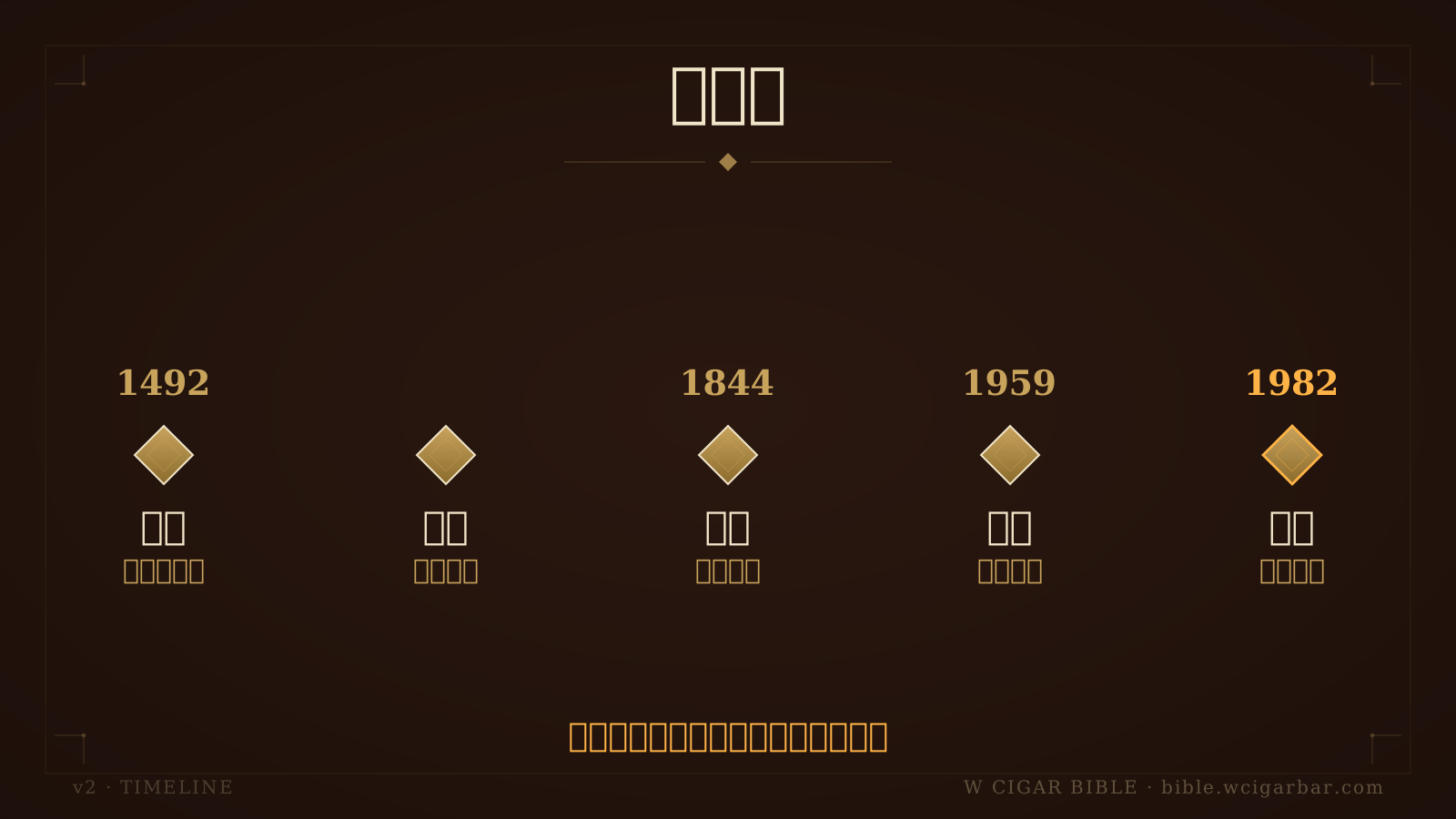
時間線標示從加勒比菸草到國際市場的文化演變節點
From Indigenous Americans to European Courts: How Cigars Became an "Exotic Taste"
In 1492, when Columbus arrived in the Caribbean, Europeans first systematically encountered the way Indigenous Americans used tobacco. At that time, tobacco was not merely for leisure but was part of rituals, medicine, and tribal communication. After the Spaniards brought tobacco back to Europe, it began to become popular in the courts and among the aristocracy in the mid to late 16th century, gradually transforming from a "New World curiosity" into a display of identity and knowledge.
In the 17th-century Spanish and French courts, tobacco was often listed alongside spices, porcelain, and coffee, representing the global products brought by the Age of Exploration. By the 18th century, large tobacco factories were established in places like Seville, and tobacco was no longer just a distant curiosity but became part of national taxation and trade systems. Cigars were not initially mere commodities but were endowed with the cultural meaning of having "seen the world" by European society.
For today's beginners, understanding this history helps to comprehend the origins of cigar etiquette: it has never been about hurried consumption but is a slow, steady, and ritualistic behavior. Even if you just choose a common Montecristo No.4, you are continuing a tradition of "exchanging time for aroma and conversation" that has lasted for hundreds of years.
Nobles, Officers, and Gentlemen's Clubs: The Identity Study of Cigars in the 19th Century
The 19th century was a period when the social image of cigars quickly took shape. After the Napoleonic Wars, officers, diplomats, and merchants traveled between Europe and the Caribbean, and cigars gradually entered the upper social spaces of London, Paris, and Madrid. British gentlemen's clubs flourished in the mid-1800s, with post-dinner cigars, brandy, political conversations, and newspaper reading forming a fixed scene.
During this period, the "slowness" of cigars was seen as a class privilege: you needed time, space, and enough social qualifications to sit down and talk. Brands like Partagás, founded in 1845, and H. Upmann, established in 1844, not only provided products but also participated in shaping the "public image of mature men." The core of 19th-century cigar culture was not about showing off but about who could master conversation, rhythm, and silence.
Beginners should not imitate old-fashioned postures but understand their nuances. For example, after a formal dinner, don't rush to talk about how many you have collected; first observe the host's arrangements, the ventilation of the space, and whether others mind. The true elegance of cigar etiquette often lies not in saying more but in knowing when to say less.
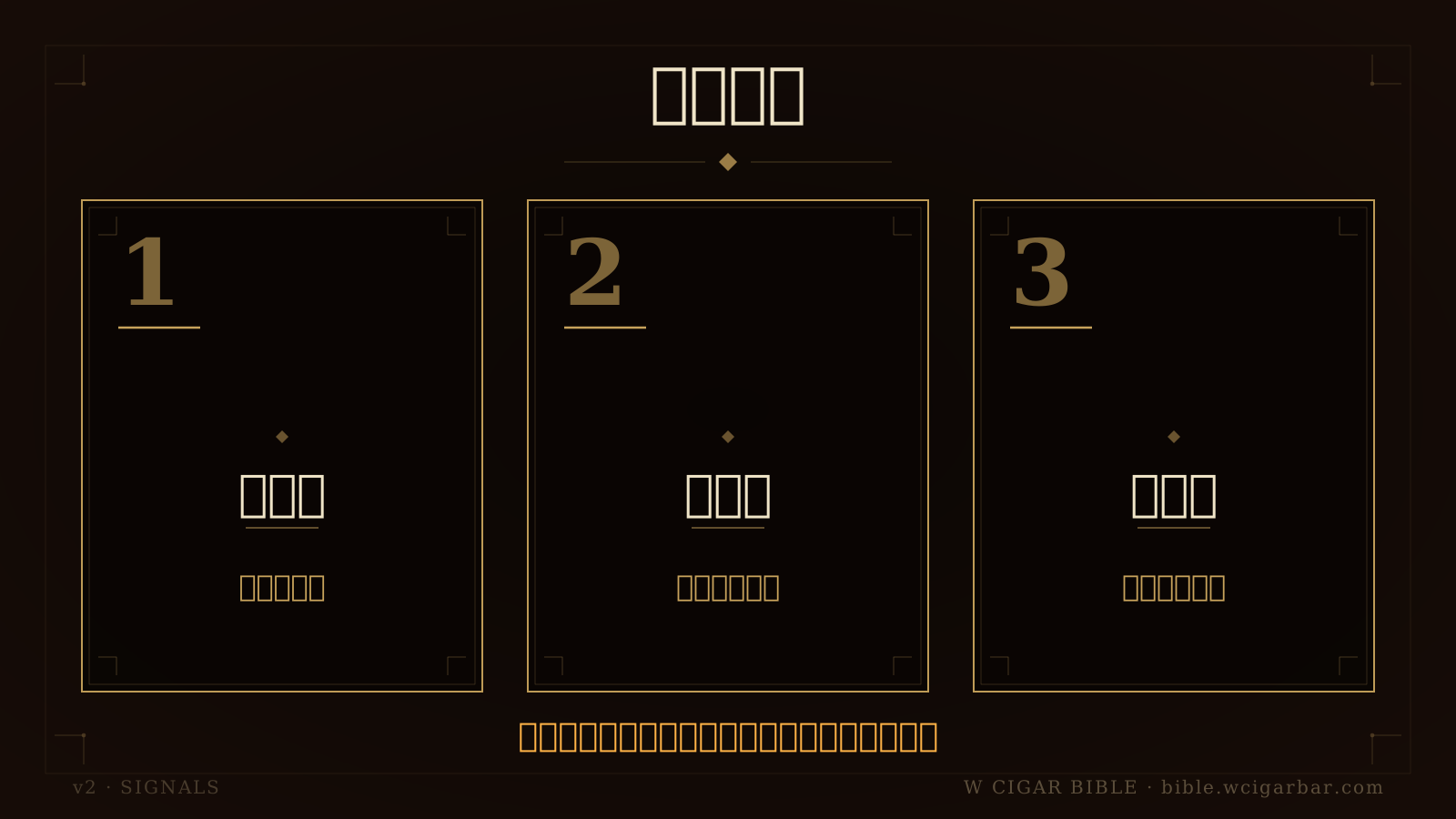
三張卡片整理雪茄文化中的時間場合與人際分寸
Industrialization and the Era of Branding: Cigars Move from Aristocratic Tables to Urban Middle Class
From the late 19th to the early 20th century, steamships, railways, printing packaging, and humidified wooden box technology allowed cigars to enter broader urban markets. By around 1900, the United States already had a large domestic cigar industry, with places like Tampa and Key West gathering many Cuban immigrant rollers, forming community cultures centered around cigar factories like "Ybor City."
Brand recognition also became important during this period. Band labels, wooden box labels, factory names, and origin stories began to allow consumers to judge quality through visual symbols. Romeo y Julieta, founded in 1875, later gained cultural association with the "Churchill" size due to Churchill's preference; this is the social memory formed by the combination of brand, person, and size. When cigars entered urban middle-class life, they transformed from aristocratic exclusives to a learnable language of taste.
For beginners, this means you don't have to see cigars as unattainable luxury. A more practical approach is to start with stable sizes, such as a Robusto with a ring gauge of about 50 and a length of about 124 mm, usually taking 45 to 70 minutes; a Corona is thinner and longer, with more linear flavor changes. Understanding size is understanding the arrangement of time and rhythm in social occasions.

矩陣比較宮廷會所與今日社交中的文化意義與禮儀差異
Revolution, Embargo, and the Cuban Myth: How Politics Changed Cigar Imaginations
The 1959 Cuban Revolution was one of the most critical turning points in modern cigar culture. After the revolution, the industry was nationalized, and many brands and families left Cuba, re-establishing production bases in the Dominican Republic, Nicaragua, and Honduras. The 1962 U.S. embargo on Cuba led to the long-term absence of Cuban cigars in the U.S. market, paradoxically enhancing their rare imagination and political symbolism.
Cohiba is the most representative case. It became Cuba's official high-spec brand around 1966 and only officially entered the general international market in 1982. From diplomatic gifts to high-end images, Cohiba's story has led many to associate Cuban cigars with power, secrecy, and national image. Cuban cigars are mythologized not only because of their terroir but also because political scarcity amplifies people's imagination.
However, mature taste should not stop at mythology. The Dominican Republic's Arturo Fuente, Nicaragua's Padrón, and Honduras's Camacho all developed distinctive styles in the latter half of the 20th century. If you only judge quality by origin, you might miss the complexity brought by different soils, fermentation, and blending. True advancement is being able to appreciate both historical aura and actual flavor.

三張卡片指出社交場合中急於展示批評與忽略規範的錯誤
From Dinners to Personal Rhythm: The Changing Occasions of Modern Cigar Socializing
Entering the 21st century, cigars are no longer confined to post-dinner salons or business clubs. Many adult enthusiasts incorporate them into travel, reading, anniversaries, gatherings with friends, or a period of quiet solitude. The social meaning has shifted from "displaying identity" to "arranging rhythm": a 60-minute cigar often allows conversation to settle more than a quickly consumed drink.
Modern etiquette values the feelings of others more than old-fashioned rules. You need to pay attention to whether the environment allows it, whether the ventilation is suitable, whether companions are comfortable, and avoid turning personal preferences into oppressive sharing. The maturity standard of contemporary cigar taste is not how much you own but whether you understand respecting occasions and others' boundaries.
Several basic principles are practical: don't flick cigar ash too frequently, as long ash represents stable burning; don't draw too hard, as overheating can amplify bitterness and spiciness; don't inhale cigars like cigarettes into your lungs. When tasting, pay attention to the changes in the front, middle, and back sections, such as how wood, nuts, leather, cocoa, coffee, or spice tones alternate.
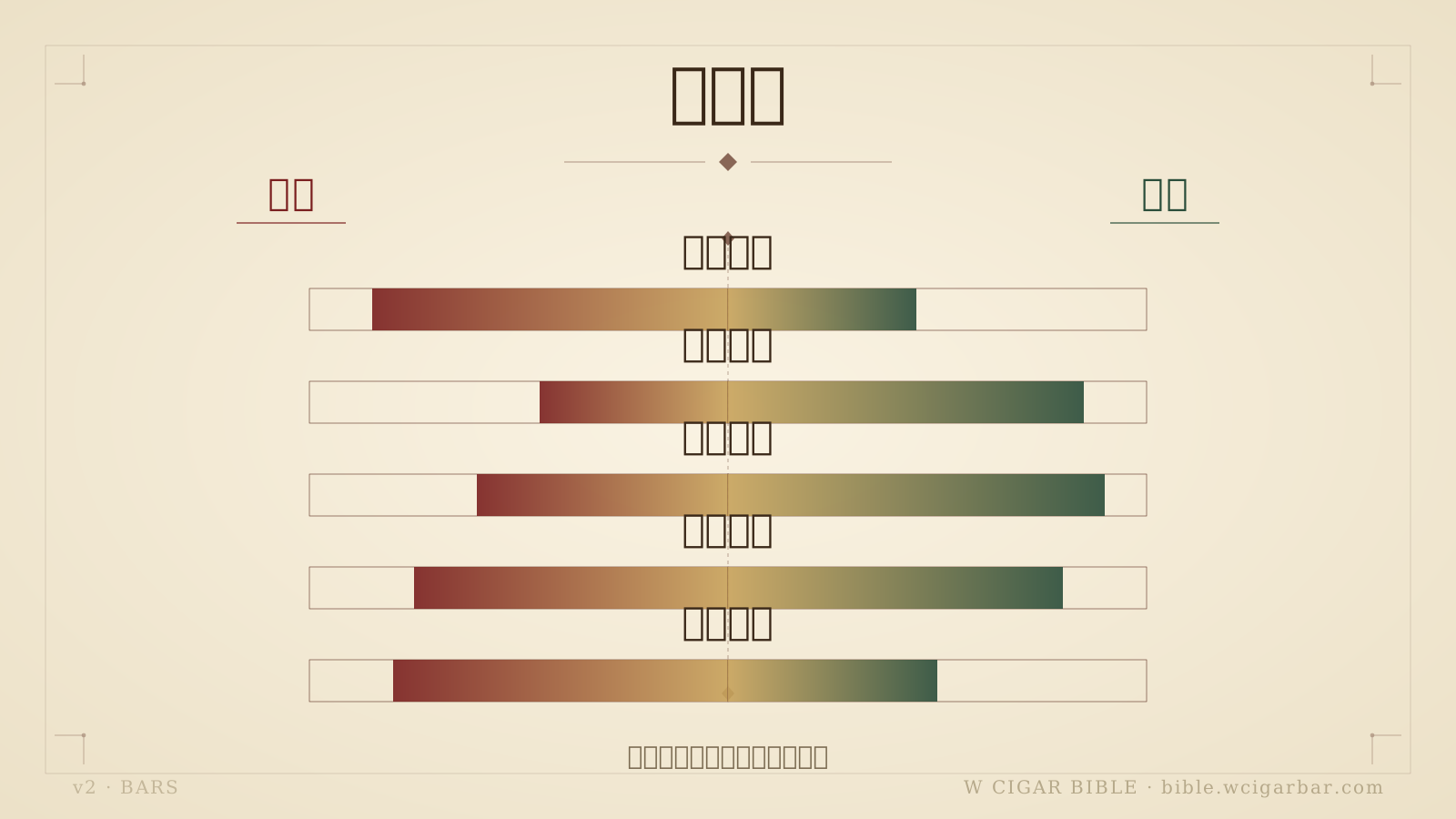
長條圖比較傳統與現代在身份節奏場合與談話上的取向
Class Symbols, Cultural Symbols, and Commercial Symbols: A Table to Understand the Evolution
Cigars have represented different meanings in different periods. From the 16th to 18th centuries, they were mostly linked to navigation, colonialism, and court novelty; in the 19th century, they were tied to officers, merchants, and political elites; after the 20th century, they were repackaged by movies, media, brand marketing, and international trade. Cigar culture is not a fixed tradition but a symbolic system constantly rewritten by social classes, political events, and commercial markets.
| Period | Main Social Scene | Representative Meaning | Typical Cases |
|---|---|---|---|
| 16–18th Century | European Courts, Colonial Trade | Exotic Knowledge, Power Display | Spanish Tobacco Tax System, Seville Factories |
| 19th Century | Gentlemen's Clubs, Officer Circles | Class Etiquette, Conversation Qualification | Partagás 1845, H. Upmann 1844 |
| Mid-20th Century | Political Diplomacy, Movie Images | Leader Aura, Scarcity Myth | Churchill Size, Cohiba 1966 |
| 21st Century | Personal Leisure, Diverse Communities | Rhythm Management, Lifestyle Taste | Robusto, Toro, Boutique Blends |
Beginners can use this table to establish a judgment framework: when seeing a cigar, don't just ask "is it good," but also "what does it want to convey." For example, Davidoff is often associated with cleanliness, elegance, precision; Padrón is often associated with Nicaraguan richness and family craftsmanship; Hoyo de Monterrey often gives a softer, traditional Cuban impression. Understanding symbols can make your choices more contextual.
Collection, Aging, and Preservation: How Taste Moves Toward Time Management
When cigars move from social objects to collectible items, the focus is not just on the immediate flavor but on origin, preservation, vintage, and condition. Many people pay attention to box codes, production years, limited series, or discontinued models, such as the Cuban Edición Limitada series which has been noted since 2000; but if talking about collection appreciation, it does not guarantee appreciation, still depending on source preservation and market. The first principle of collecting cigars is not to chase high but to be traceable, preservable, and understandable.
Preservation numbers need to be practical: relative humidity often falls between 65% to 70%, with a temperature of about 18 to 21°C being more ideal. Too high humidity can affect burning and increase the risk of mold, while too low can cause wrapper cracking and aroma thinning. Aging is not about leaving cigars unattended but allowing the tobacco state to slowly integrate in a stable environment.
I suggest beginners first establish simple records rather than rushing to fill a humidor:
- Record brand, size, origin, box code, or year.
- Record preservation humidity, temperature, and box opening date.
- Record front, middle, and back section flavors, burning state, and pairing drinks.
- Compare once every 3 to 6 months to observe aging changes.
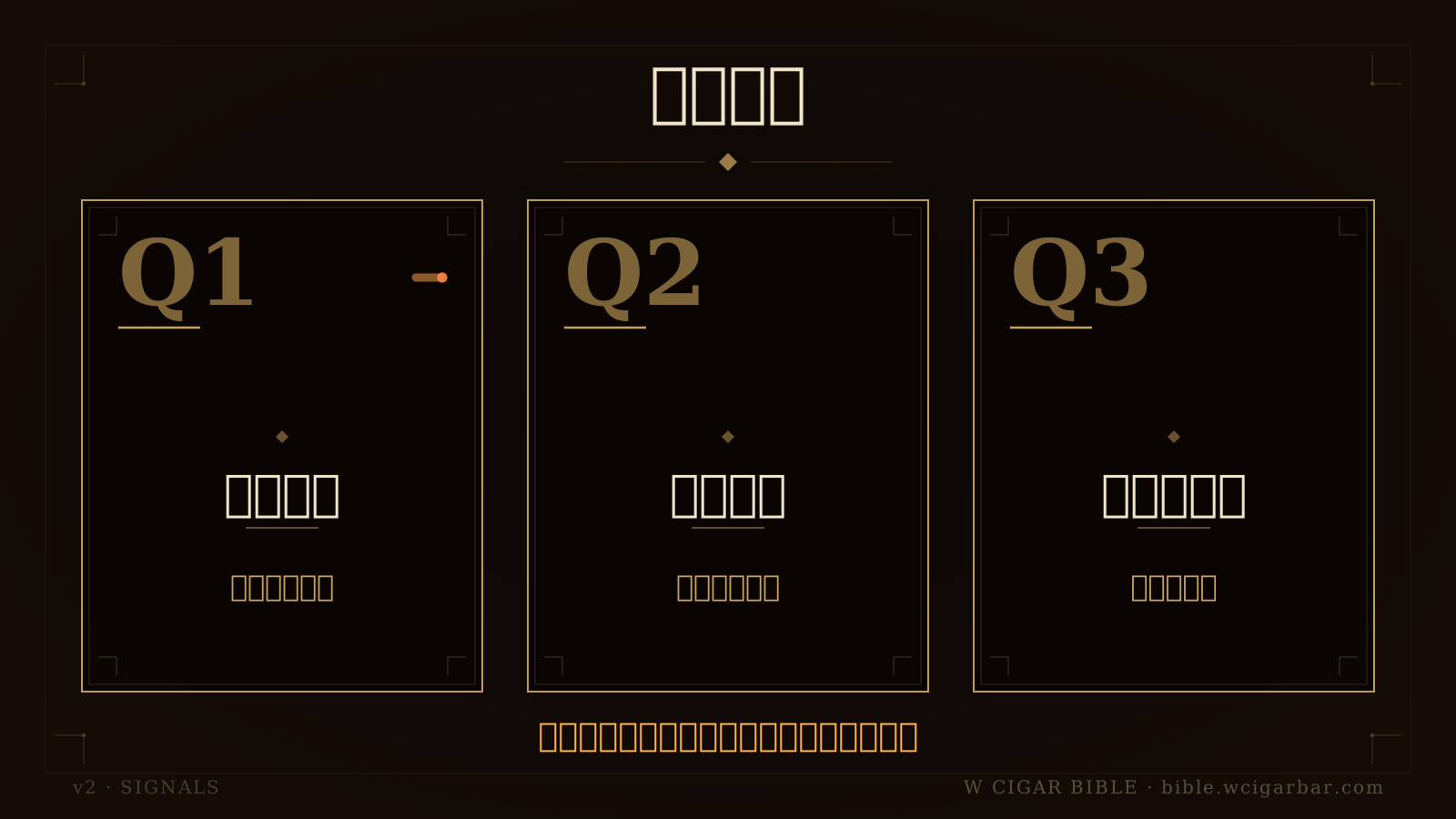
三張問答卡片回答古巴起步社交分寸與醇化判斷
Cultural Etiquette for Beginners: From "Understanding Flavor" to "Understanding the Scene"
Many beginners can already distinguish wood, cream, pepper, cocoa, but lose points in social scenes. The true test of cigar culture is overall judgment: what occasion is suitable, what topics are appropriate, when to share experiences, when to quietly enjoy. Understanding cigars is not about filling with jargon but about ensuring you don't burden others in any occasion.
In public or semi-public spaces, first confirm regulations and others' feelings. If with friends, avoid directly commenting on others' choices as "too mild" or "not high-end enough"; a better way to say it is: "This one is softer in the front, might be suitable for slowly observing the middle section." The difference in tone determines whether you are a sharer or an oppressor. Social taste often hides in these small details.
Pairing drinks also requires discretion. Whiskey, rum, coffee, tea can all form different dialogues, but don't treat alcohol content as a symbol of maturity. For example, a medium-strength Robusto paired with black coffee can highlight roasted, nutty, and cocoa notes; a fresher cigar paired with oolong tea can also make wood and floral aromas cleaner. The focus is not on expense but on balance.
Common Questions
The core of the social and cultural appreciation of cigars is understanding time, occasion, and interpersonal nuance, not just pursuing intensity or brand names.
1. Do beginners have to start with Cuban brands?
No need. Cuban brands have a deep history, but the Dominican Republic, Nicaragua, and Honduras also have mature blends. Beginners can start with medium-strength, stable-burning, and appropriately sized options to first establish their own flavor coordinates.
2. Why do many people say cigars represent gentleman culture?
This relates to 19th-century European clubs, officer circles, and business dinners. It was once placed in formal conversations and post-dinner etiquette, thus forming a gentleman image; but modern times emphasize respecting others and occasion judgment.
3. Does a more expensive cigar have more cultural value?
Not necessarily. Price may come from scarcity, brand, vintage, or market heat, but cultural value also includes historical context, craftsmanship stability, and personal memory. Being able to articulate reasons is more tasteful than just stating the price.
4. What is the most common mistake in social occasions?
The most common is rushing to display knowledge, criticizing others' choices, or ignoring environmental regulations. A mature approach is to observe first, then share; let conversations happen naturally rather than making cigars an overwhelming topic.
5. How long is aging just right?
There is no single answer. Some cigars become more harmonious after 6 to 12 months, while others are suitable for 3 to 5 years of observation. The key is stable preservation and record comparison, not blindly believing the longer the better.
6. Can collecting cigars be an investment?
You can study the market, but you cannot view it solely with an investment mindset. If talking about collection appreciation, it does not guarantee appreciation, still depending on source preservation and market. For most beginners, learning preservation and evaluation is more important than chasing trends.
In my view of cigar culture, the most precious aspect is not the external aura but the reminder to slow down. From courts, clubs to today's personal time, cigars have always been asking the same question: how do you use time, and how do you treat those around you. Being able to smoke a cigar quietly, appropriately, and clearly is true taste.
—Cigar Prince Wilson Tsai
Smoking is harmful to health. Under 20 years old is not allowed to smoke. Quitline: 0800-636363. This article is for reference on cigar culture, preservation, and regulations for adults over 20 years old only, not a tobacco advertisement, promotion, or purchase suggestion.
Like this article?Share with friends
Share this W Cigar Bible piece with friends who want to learn cigar culture, storage, and tasting.
想把這篇 化為實踐
雪茄聖經是知識;雪茄文化要在空間裡發生

W Cigar Bar 大安總店資訊
台北大安區 · 雪茄聖經總編輯 Wilson Tsai 主理的雪茄文化空間

33 座 24 小時恆溫恆濕醇化室
W Cigar Bar 提供的會員醇化空間 · 場地資訊請洽編輯部

雪茄剪 / 打火機 / 雪茄盒 / Boveda
W Cigar 配件官網 · 專營雪茄配件正品

加 LINE 好友 · 文化諮詢
文化空間資訊 · 紳士沙龍 · 私人包場
本網站內容僅供雪茄文化、歷史、收藏與品吸知識研究參考。菸品有害健康、未滿法定年齡者請勿吸菸。實際規範請依所在地法律為準。
吸菸有害健康・戒菸專線 0800-636363・本站僅供 20 歲以上成年人閱覽。
讀到這裡,你不只是路過的人
留下 Email,加入 W 雪茄聖經內圈——總編輯 Wilson Tsai 親選的學院深文與國際新訊,先你一步送到信箱。
· 教育用途非銷售 · 隨時一鍵退訂 · Email 絕不對外公開 · 由勝茄股份有限公司營運
同分類延伸閱讀


資料來源:W Cigar Bible 編輯部整理 · 雪茄王子 Wilson Tsai 親自審稿
本文僅供雪茄文化、歷史、收藏與品鑑知識研究,不作為菸品促銷、銷售或購買建議。吸菸有害健康,未滿二十歲不得吸菸。