雪茄的煙霧物理學:探索燃燒過程
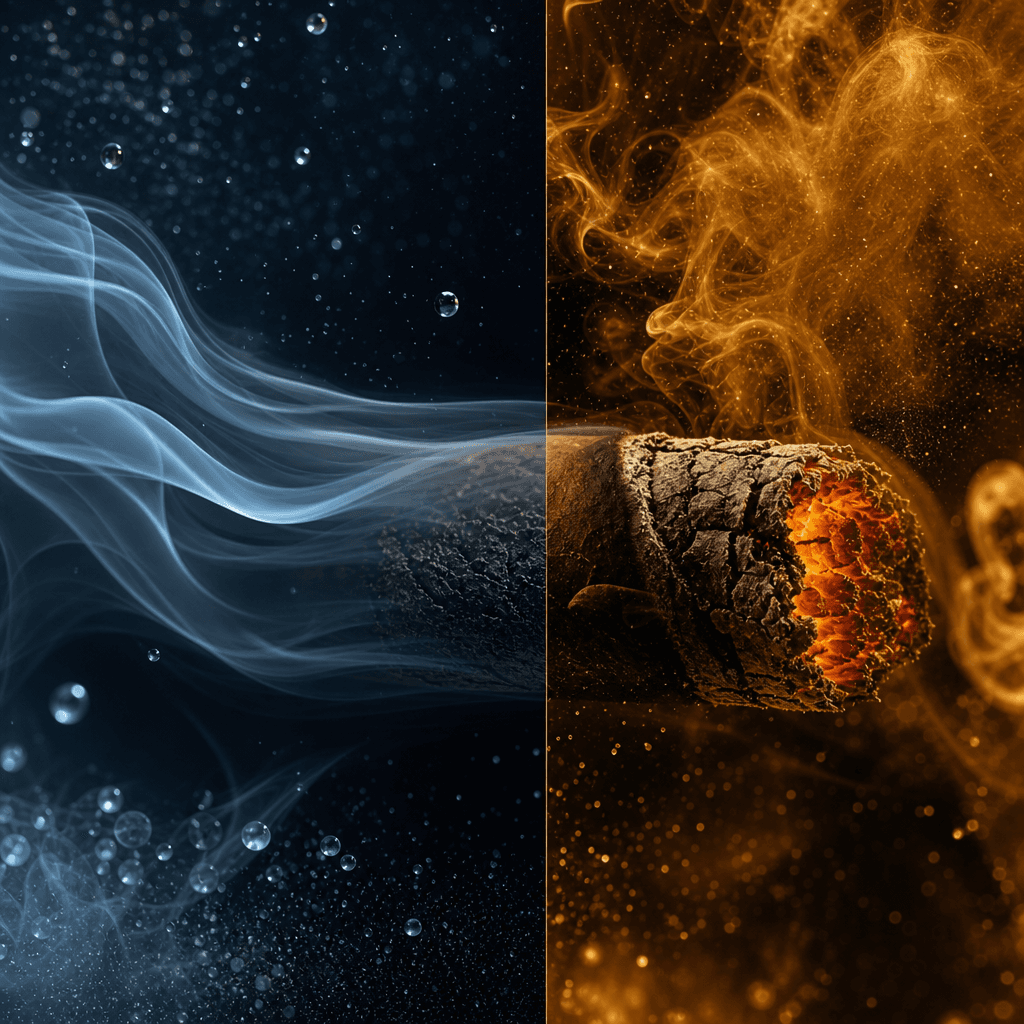
雪茄的燃燒過程是由多種因素影響的複雜化學反應,涉及溫度、濕度和氣流等。每支雪茄在不同的抽吸節奏下會展現出不同的風味,這是因為燃燒過程中香氣的釋放與熱分解、氧化的相互作用。適當的抽阻和濕度控制對於維持煙霧的質量至關重要,過高或過低的濕度都會影響燃燒效果。雪茄的包葉、束葉和芯葉各自扮演不同的角色,影響整體風味的層次感。了解這些基本原理,有助於提升雪茄的品味體驗。
- 雪茄燃燒過程中,火端溫度可達800度,影響味道與口感。
- 抽阻適度能讓煙霧冷卻與香氣完整展開,過鬆或過緊皆不理想。
- 濕度控制直接影響燃燒速度與香氣清晰度,需依產地與尺寸調整。
The Physics of Cigar Smoke: Exploring the Combustion Process
Cigar smoke, seemingly intangible, is actually the result of a series of temperature, humidity, airflow, and chemical reactions. After beginners learn the basics of tasting and exhaling, the next step is not to pursue stronger flavors, but to understand "why the same cigar can taste different at different rhythms."
I often say that cigar combustion is like a small laboratory: the fire end is the high-temperature reaction zone, the mouth end is the cooling and sensory interpretation zone, and the middle relies on the smoke channel to deliver aromas to the tongue, nasal cavity, and memory. As the editor of the "Cigar Bible," I want to use clearer physical language to dissect this journey for you.
時間線呈現點火灰化熱解冷卻到感官判讀
What Really Happens When a Cigar Burns
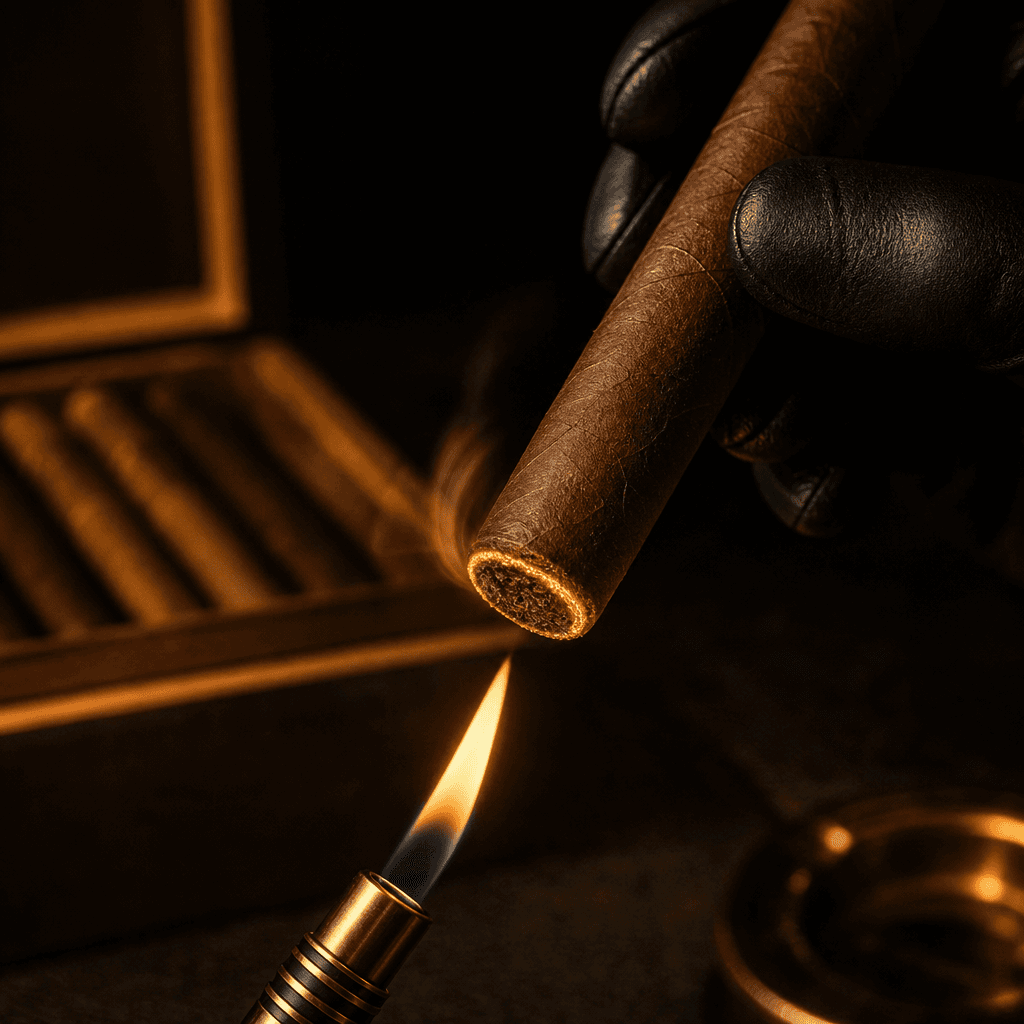
When a cigar is lit, the fire end is not at a single temperature. In general, when a handmade long cigar is burning steadily, the carbonized edge is about 400 to 650 degrees Celsius. If you draw rapidly and continuously, the central hotspot may approach 800 degrees or more. For example, with a Montecristo No.2, a 52-ring gauge torpedo, if the front end is overheated, the first flavors to appear are often not sweet but woody, spicy, and dry on the tongue.
Combustion can be divided into three layers: the front end is the ash zone, where fibers have turned into mineral ash; behind it is the pyrolysis zone, where the cellulose, sugars, proteins, and oils in the tobacco leaf decompose; further back is the unburned tobacco leaf being prepped by heat. Cigar aroma is not simply "burned out" but is the result of the combined effects of pyrolysis, oxidation, and cooling condensation.
This also explains why the same Romeo y Julieta Churchill may exhibit floral, tea, and creamy woody notes when smoked slowly, but become sharp if smoked too quickly. Since the 1950s, classic Cuban sizes have emphasized balanced combustion, not by chance, because length, ring gauge, and filler configuration all change the heat retention time and smoke concentration.
The Physical Relationship Between Airflow, Draw Resistance, and Smoke Density
The cigar's smoke channel is like a porous pipeline, with airflow passing through the gaps between the long filler leaves. If the draw resistance is too loose, air enters quickly, raising the combustion temperature, and the smoke particles are hotter and drier; if too tight, there is insufficient oxygen, the burn line is unstable, and it may taste stuffy, with ammonia or interrupted combustion. The draw resistance I find comfortable has resistance but is not laborious, about half the effort of drinking a thick milkshake through a straw.
For the Partagás Serie D No.4 in Robusto size, with a 50-ring gauge and 124mm length, it naturally accommodates more smoke cooling space than a slender Lancero. If you draw once every 30 seconds, the Robusto's smoke often appears rounder; the Lancero is more direct and focused, and more likely to overheat if the rhythm is too fast. The draw resistance is not better the more open it is; moderate resistance allows the smoke to cool and mix, fully unfolding the aroma.
Beginners often overlook the size of the cut. If a torpedo is cut too deeply, the smoke channel instantly enlarges, making the front half loose; if a Parejo straight cigar is only cut to the cap edge, the airflow is more concentrated, making the sweetness easier to gather on the tongue. These differences are not mysterious; they are essentially about flow rate, pressure difference, and heat exchange.
三張卡整理節奏抽阻與濕度對煙霧的影響
How Humidity Changes Combustion and Flavor
Cigar storage humidity usually falls between 65% to 72% relative humidity, but I adjust slightly based on origin and size. Cuban long cigars are often more stable around 68%, while the rich style of Nicaragua, like Padrón 1964 Anniversary, can become stuffy, spicy, and slow to burn if too moist; the Dominican Davidoff Signature series may lose herbal and creamy notes if too dry.
Moisture is a heat regulator. The higher the moisture content in the tobacco leaf, the more energy is used to vaporize the moisture during combustion, resulting in a lower but unstable burn line temperature; if too dry, the temperature rises too quickly, increasing smoke irritation and causing the ash column to become brittle. Humidity control is not just for preserving appearance but directly determines burn speed, smoke temperature, and aroma clarity.
In practice, a cigar just taken from a 70% environment, if left in an air-conditioned room for 10 to 20 minutes, will have its surface moisture slightly balanced, making it burn more evenly when lit. Conversely, if taken out from a high-humidity environment on a rainy day, it's best to give it more time. Since the 1990s, many cigar collectors have started using electronic hygrometers and two-way humidification packs, because a 5% humidity error is enough to give the same box of cigars different personalities.

矩陣比較羅布圖長矛型與魚雷型的冷卻與氣流差異
Wrapper, Binder, and Filler: How Aroma is Distributed
A handmade cigar is usually composed of a wrapper, binder, and filler. The wrapper, though thin, is the layer most exposed to air during combustion, greatly influencing the first impression. Connecticut Shade often carries creamy, hay, and almond notes; Ecuador Habano may lean towards pepper, roasted wood, and citrus peel; Maduro wrappers, due to longer fermentation and aging, often exhibit cocoa, molasses, and coffee tones.
The binder acts like a structural framework, controlling burn speed and shape; the filler determines the main body strength. For example, the Cohiba Siglo VI, with a 52-ring gauge and 150mm length, allows different fillers to express themselves in segments: the front is softer, the middle increases in vanilla, bean, and woody notes, and the back increases in concentration. True complexity comes from the sequential release of the three leaf positions at different temperatures, not from a single flavor becoming increasingly heavy.
Nicaraguan Estelí leaves often have strength and mineral notes, Jalapa leaves have a brighter sweetness, and Condega can bring herbal and nutty notes. The long-term emphasis on the Cuban Vuelta Abajo region is also related to soil, sunlight, rainfall, and fermentation management. Understanding the division of leaf roles, readers will find that "formula" and "size" are equally important when revisiting different sizes of the same brand.
三張卡提醒煙量節奏與剪口大小的常見誤解
Ash Column, Burn Line, and Canoeing: Reading the Signals from the Fire End
The ash column is not for showing off length; it is a record of the combustion state. Cigar ash contains potassium, calcium, magnesium, and other minerals. When the structure is stable, the ash is light gray with clear layers; if the burn is too hot, the ash column often becomes loose, with many cracks, and may even contain black unburned fibers. Generally, keeping about 1 to 2 centimeters of ash column can help maintain the fire end's temperature, but too long may cause it to suddenly fall off.
If the burn line deviates only 2 to 3 millimeters, there's usually no need to rush to correct it; let it naturally catch up. If the deviation exceeds half a circle, it may be due to uneven lighting, uneven humidity, or filler density differences. Observing the ash and burn line is the most direct way to judge the cigar's condition; the fire end will honestly tell you if the rhythm is correct.
I once compared the performance of the same box of H. Upmann Magnum 46 at different humidity levels: those stored at 66% had a neater burn line, with clear woody and tea notes; those stored at 72% were stuffier in the front, opening up only in the middle, with increased relighting. This is not about which is absolutely better, but illustrates how storage and environment can push the same cigar towards different expressions.
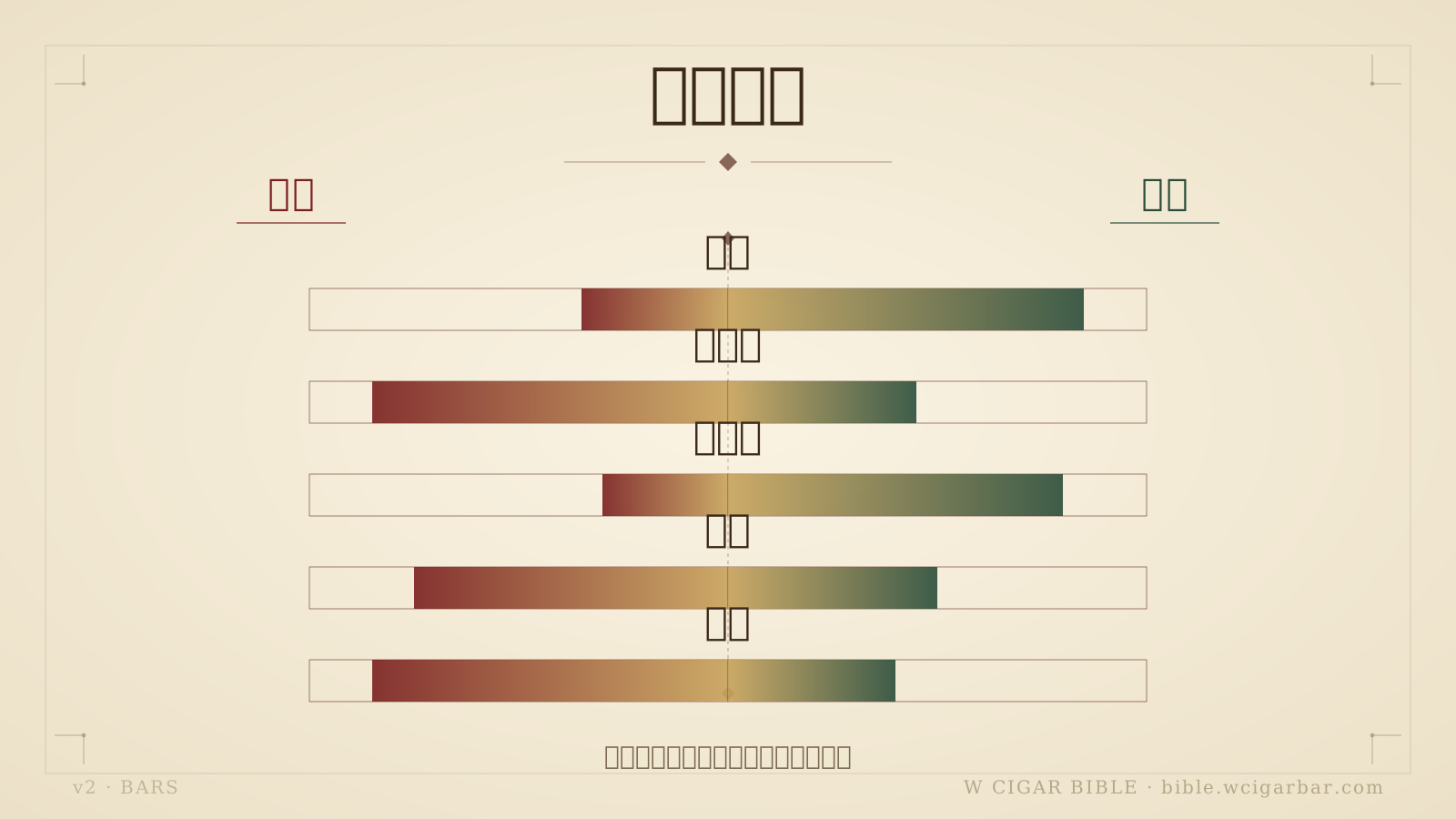
長條圖比較慢吸與急吸在溫度清晰度刺激感的差異
Rhythm and Etiquette: Keeping Smoke Temperature Comfortable
If I were to give beginners an operable rhythm, I would suggest one draw every 45 to 60 seconds, adjusting based on ring gauge. Thin ring gauges like 38 to 42 accumulate heat quickly, so the interval can be extended; large ring gauges like 54 to 56 have a larger smoke volume but should not be continuously forced. When the smoke starts to burn the lips, becomes spicier, and loses sweetness, it's a warning that the fire end is overheating.
The sensation in the mouth will also tell you the speed. Under a stable rhythm, the smoke entering should be warm and oily, and after exhaling, the nasal cavity should discern woody, nutty, spicy, or cocoa notes; if it becomes a single spicy taste, it's usually not that the cigar suddenly turned bad, but that the combustion conditions have been altered. A good rhythm is not so slow that it extinguishes, but allows the cigar to maintain a low and stable working temperature.
In terms of etiquette, avoid frequent draws like a cigarette, and do not tap the ash forcefully. If you need to pause, let it rest quietly on a cigar stand; if it goes out, gently blow out residual smoke, clean the ash end, and reheat the outer circle before lighting the center. This reduces the bitter taste and respects those present and the space.
Common Combustion Abnormalities and Correction Methods
Most combustion issues can be traced to three areas: lighting, humidity, and structure. Lighting only the center can cause tunneling; only roasting the outer circle may cause the center to lag. The correct method is to evenly roast the foot of the cigar, allowing the outer circle to glow slightly red, then complete the center ignition with a short flame, avoiding direct flame contact with the wrapper for too long.
Below is a table I compiled for beginners for quick judgment. When correcting combustion abnormalities, find the cause before relighting; blindly heating will only make the temperature more chaotic and the flavor coarser.
| Phenomenon | Possible Cause | Correction Method |
|---|---|---|
| Canoeing over half a circle | Uneven lighting, uneven wrapper humidity | Lightly roast the lagging side, slow down the rhythm |
| Tunneling | Center overheated, outer layer unburned | Clear ash, supplement the outer circle, pause for 30 seconds |
| Frequent extinguishing | Too moist, draw interval too long | Expel residual smoke, then evenly relight |
| Spicy smoke | Rhythm too fast, temperature too high | Rest for 1 to 2 minutes, reduce intake |
| Wrapper cracking | Too dry or temperature difference too large | Reduce hand pressure, adjust storage humidity |
In practice, do not treat every canoeing as a defect. Handmade cigars are agricultural and artisanal products; leaf veins, oil content, and rolling density all affect the burn line. If multiple cigars from the same box are severely unstable, check storage conditions and sources; if it's just an occasional single occurrence, patiently correct it.
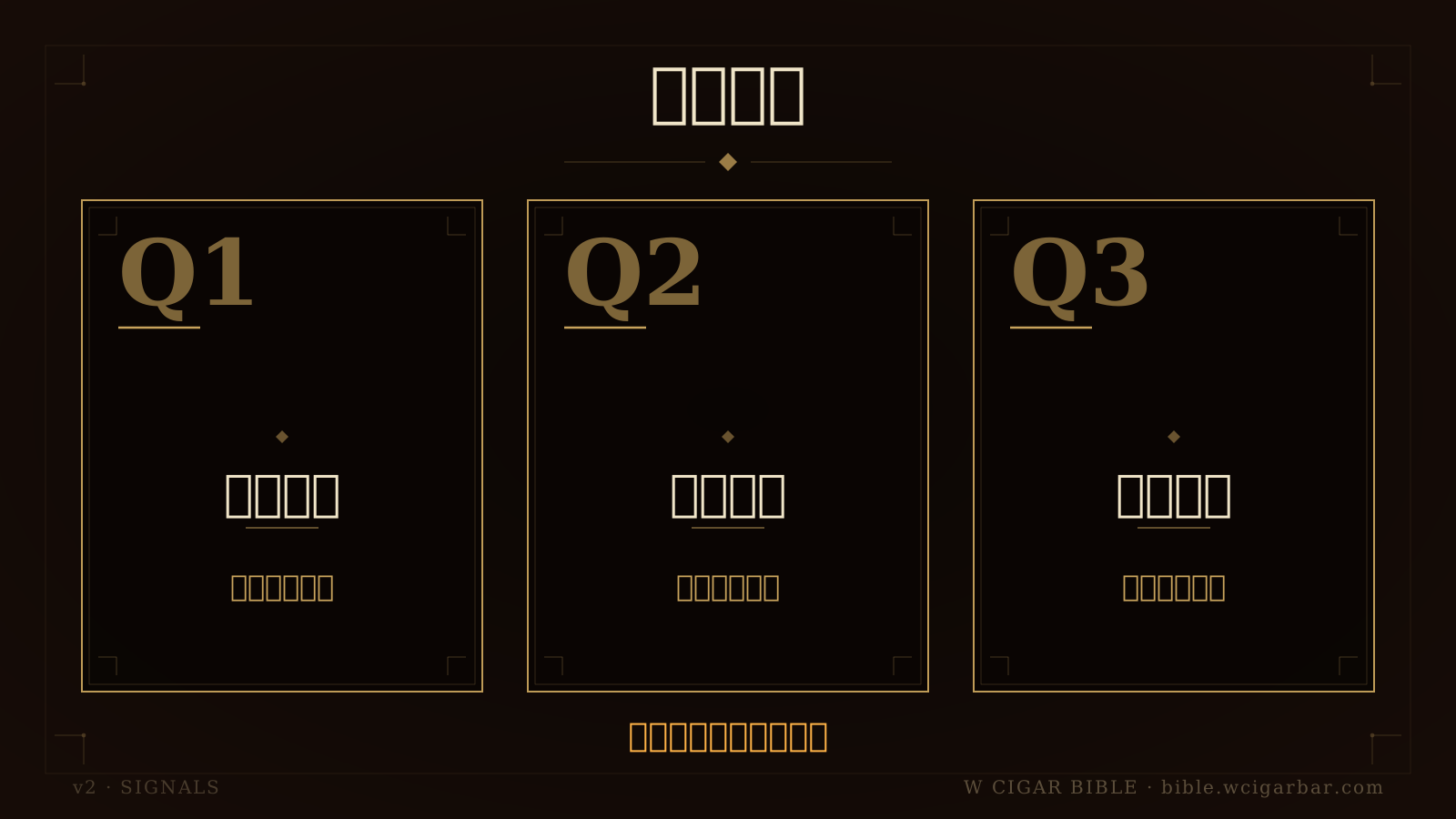
三張問答卡說明味道變化再點與苦味原因
Temperature, Time, and Aging: Why Older Cigars Are Often Milder
Cigars in the box over time are not static. The remaining irritating components after fermentation slowly integrate, ammonia decreases, and the oil and woody tones become rounder. For example, some Bolívar Belicosos Finos from around 2008 had noticeable strength, leather, and earthy notes when young; after years of good storage, the spicy edges are often enveloped by honey sweetness, aged wood, and coffee notes.
But aging requires stability; it's not just about keeping them for a long time. If the temperature is consistently above 24 degrees Celsius, it may increase the risk of pests; if humidity consistently exceeds 72%, the likelihood of mold and sluggish combustion increases. Conversely, too low humidity will cause oil loss, thinning the smoke. The essence of aging is slow integration, not myth; time must be paired with proper storage to be meaningful.
When discussing collectible value, I would remind: rare vintages, limited editions, and well-preserved full boxes of cigars may indeed attract market attention, but collecting appreciation does not guarantee appreciation; it still depends on source preservation and market. For me, the most reliable value is still that moment when you open the box lid: whether the aroma is clean, the burn is stable, and the memory is worth keeping.
Frequently Asked Questions
Why do the flavors of the same cigar differ in the front, middle, and back?
Because the fire end gradually approaches different filler areas, and the heat continues to accumulate. The front is cooler, often with herbal, creamy, and nutty notes; the middle enters balance; the back increases in caramel, woody, spice, and strength. The changes in the front, middle, and back are the natural result of combustion distance, temperature, and leaf position.
Does more smoke mean a better cigar?
Not necessarily. Smoke volume is related to ring gauge, humidity, draw resistance, and oil content, but quality depends on aroma clarity, burn line stability, and flavor balance. Large smoke accompanied by high temperature and spiciness can actually obscure details.
Can a cigar be relit after it goes out?
Yes, but handle the residual smoke first. Gently blow out the cooled bitter smoke, tap off loose ash, and evenly roast the fire end. If it has been left for several hours, the flavor usually changes significantly; I do not recommend expecting it to return to its original state.
Why does it sometimes become more bitter the more you smoke?
The most common reason is too fast a rhythm, overheating the fire end, or concentrated tar and moisture in the back. You can rest for 1 minute, and if necessary, cut off a very small amount of the moist soft part at the mouth end, but do not over-trim to avoid damaging the structure.
Which combustion technique should beginners practice the most?
First practice stable lighting and a fixed rhythm. Choose a familiar size, such as Robusto or Toro, and record humidity, lighting time, draw interval, and flavor changes. After comparing 5 cigars in a row, you will understand cigars better than relying solely on adjectives.
Does a larger ring gauge mean it's less likely to overheat?
Not necessarily. A larger ring gauge has a larger smoke capacity and more cooling space, but if you draw large puffs continuously, heat will still accumulate. Thin ring gauges are more sensitive, while larger ring gauges make it easier to underestimate smoke volume and nicotine strength.
For me, the most fascinating aspect of cigars is not just the origin, vintage, or brand story, but that this small cylindrical object in your hand can connect agriculture, craftsmanship, physics, and sensory experiences. Understanding combustion is not about turning enjoyment into an exam, but about making each lighting more composed. When you can read the ash column, burn line, and smoke temperature, you'll find that aroma is never accidental; it's the rhythm's response to you.
—Cigar Prince Wilson Tsai
Smoking is harmful to health. No smoking under the age of twenty. Quitline: 0800-636363. This article is intended for adults over the age of twenty as a reference for cigar culture, storage, and regulations, not as tobacco advertising, promotion, or purchase advice.
Like this article?Share with friends
Share this W Cigar Bible piece with friends who want to learn cigar culture, storage, and tasting.
想把這篇 化為實踐
雪茄聖經是知識;雪茄文化要在空間裡發生

W Cigar Bar 大安總店資訊
台北大安區 · 雪茄聖經總編輯 Wilson Tsai 主理的雪茄文化空間
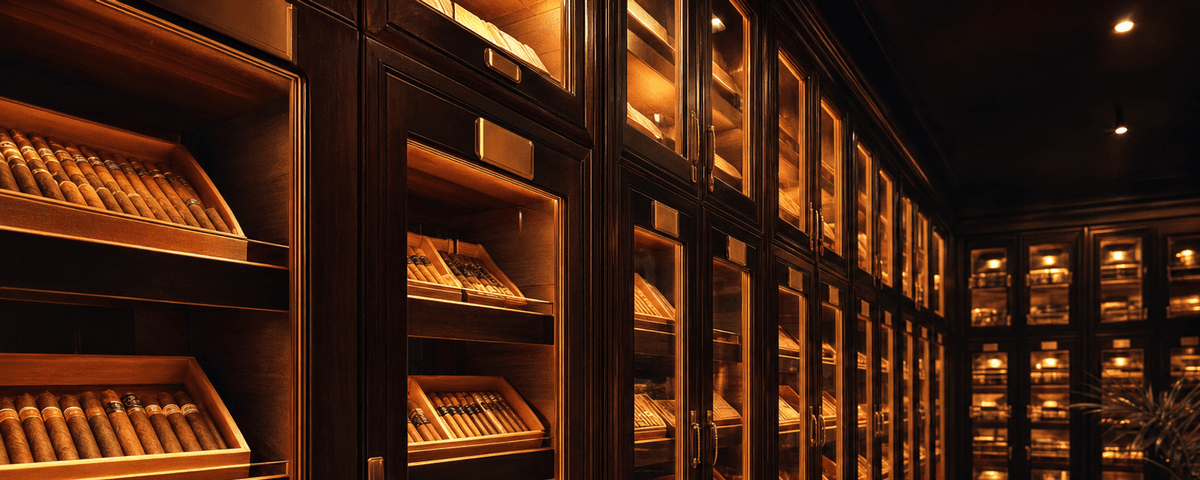
33 座 24 小時恆溫恆濕醇化室
W Cigar Bar 提供的會員醇化空間 · 場地資訊請洽編輯部
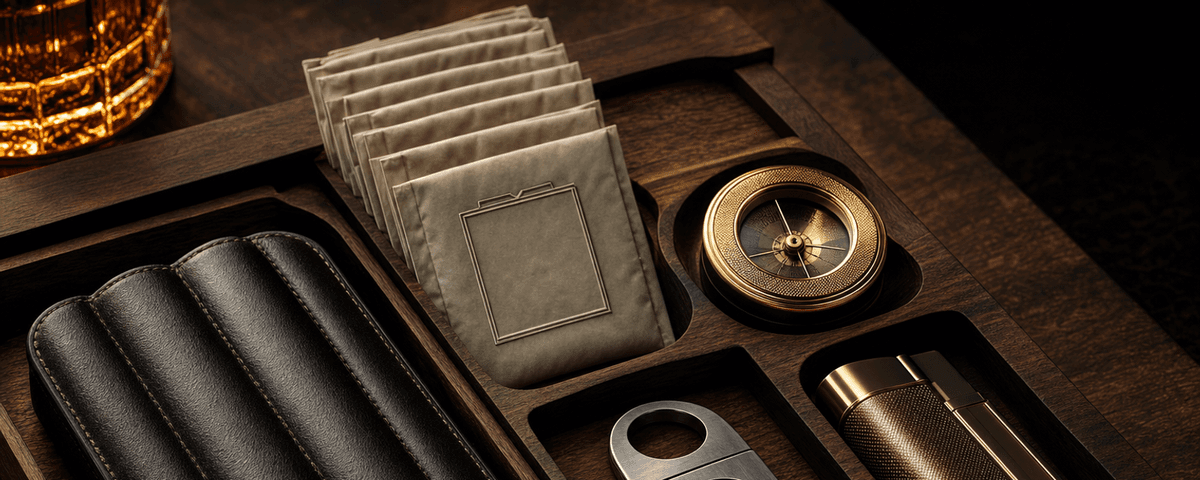
雪茄剪 / 打火機 / 雪茄盒 / Boveda
W Cigar 配件官網 · 專營雪茄配件正品

加 LINE 好友 · 文化諮詢
文化空間資訊 · 紳士沙龍 · 私人包場
本網站內容僅供雪茄文化、歷史、收藏與品吸知識研究參考。菸品有害健康、未滿法定年齡者請勿吸菸。實際規範請依所在地法律為準。
吸菸有害健康・戒菸專線 0800-636363・本站僅供 20 歲以上成年人閱覽。
讀到這裡,你不只是路過的人
留下 Email,加入 W 雪茄聖經內圈——總編輯 Wilson Tsai 親選的學院深文與國際新訊,先你一步送到信箱。
· 教育用途非銷售 · 隨時一鍵退訂 · Email 絕不對外公開 · 由勝茄股份有限公司營運
同分類延伸閱讀

資料來源:W Cigar Bible 編輯部整理 · 雪茄王子 Wilson Tsai 親自審稿
本文僅供雪茄文化、歷史、收藏與品鑑知識研究,不作為菸品促銷、銷售或購買建議。吸菸有害健康,未滿二十歲不得吸菸。