雪茄的產區特色:揭秘各地獨特風味的來源
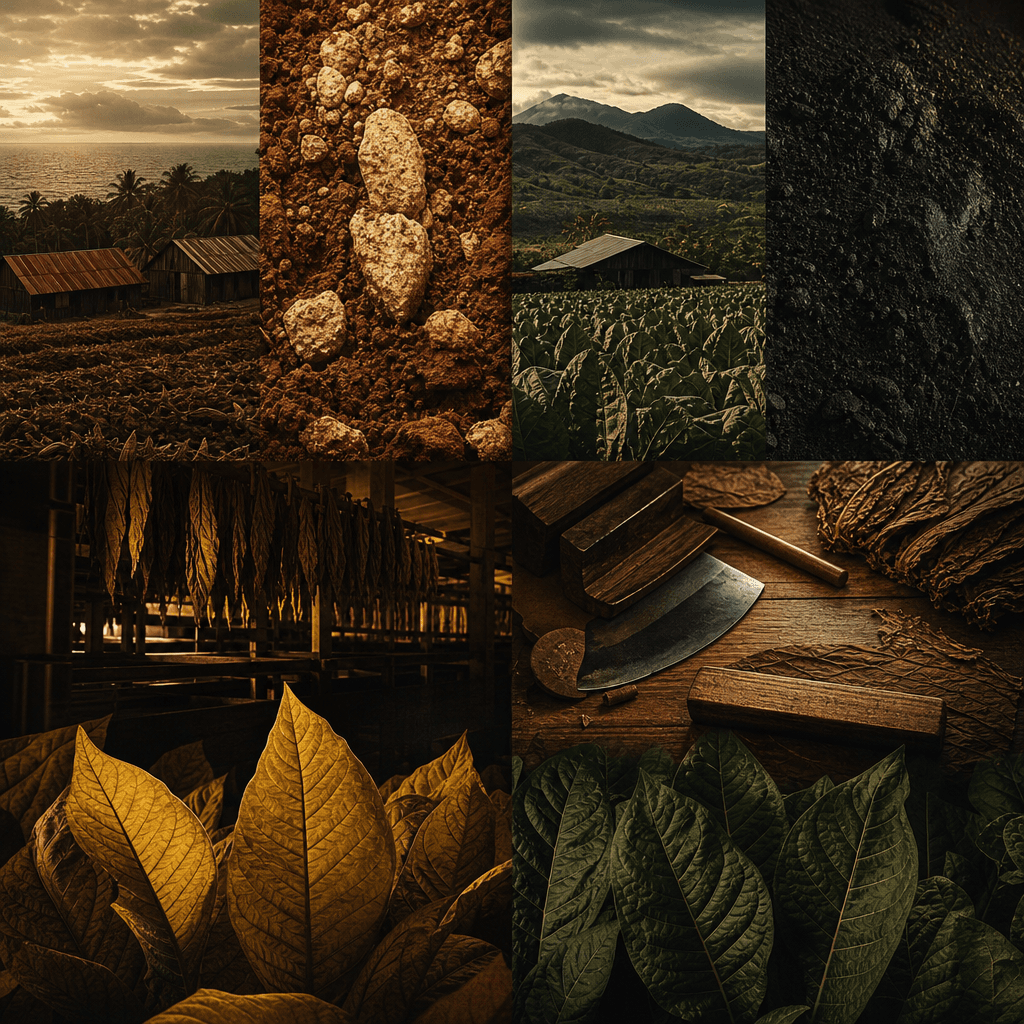
雪茄的風味受多種因素影響,尤其是產區的特性。不同的緯度、土壤和氣候條件造就了各具特色的雪茄風味。例如,古巴的Vuelta Abajo以其平衡感著稱,而多明尼加則以奶油和堅果的優雅層次著稱。尼加拉瓜和宏都拉斯則展現出強烈的口感,前者如直球般爆發,後者則如低音般穩重。了解這些產區特徵,能幫助雪茄愛好者更深入地品味每一支雪茄的獨特風味,並提升整體的品味體驗。
- 雪茄的風味來自產區的緯度、土壤與氣候等因素,了解產區有助於品味雪茄的獨特性。
- 古巴雪茄以平衡感著稱,常見的風味有木質、皮革與奶油,細節變化值得細心品味。
- 多明尼加雪茄強調優雅的層次,擅長奶油與堅果風味,力量隱藏在細緻的表現中。
The Characteristics of Cigar Regions: Unveiling the Sources of Unique Flavors
When discussing cigars, many beginners first remember the brand, size, and ring gauge, and then ask: "Why do cigars taste like cream, cedar wood boxes, black pepper, cocoa, or earth?" My answer is usually not to look at the price first, but to consider the region of origin.
As an editor of the "Cigar Bible," I have always believed that the flavor of cigars does not occur out of thin air; it is the sum of latitude, rainfall, soil, sunlight, fermentation, and rolling craftsmanship. Understanding the region is like adding a map to your taste buds.
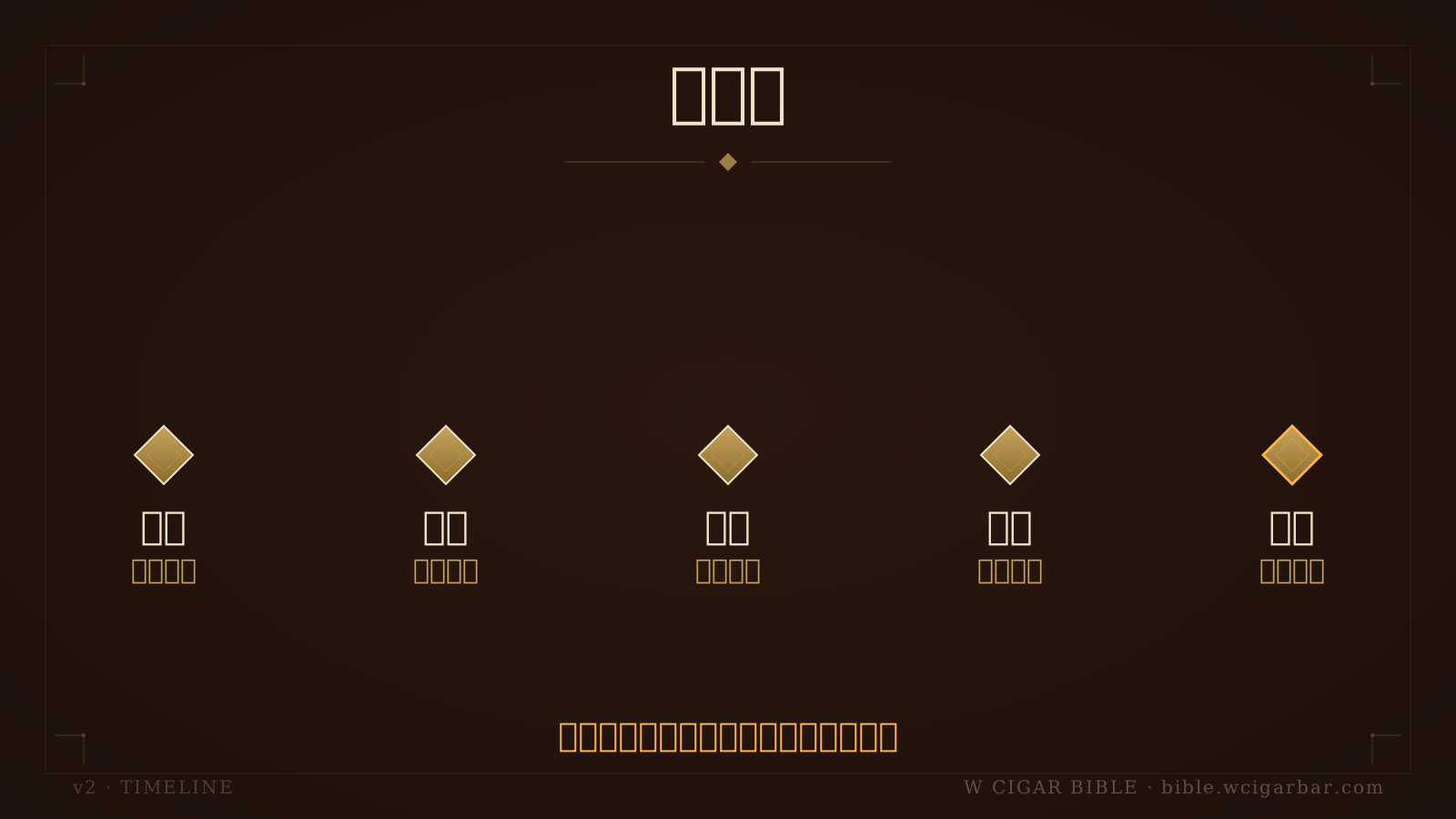
時間軸以五步驟呈現雪茄風味從土地到保存形成
Viewing Cigars from the "Terroir": Regions are Not Labels, but Flavor Formulas
The "terroir" of cigars can be broken down into several variables: latitude, altitude, day-night temperature difference, soil drainage, rainfall rhythm, and post-harvest fermentation and aging. Just as wine talks about terroir, so do cigars; however, cigars have an additional variable: a single cigar may consist of wrappers, binders, and fillers from different countries, and the characteristics of the region can be rearranged by the blender. Regions are not a single answer, but the first key to understanding the source of flavor.
In terms of latitude, the Caribbean and Central America around 20 degrees north latitude have stable heat and humidity, suitable for the slow growth of tobacco leaves. Cuba, Nicaragua, the Dominican Republic, and Honduras are all roughly in this flavor belt, but differences in volcanic ash, red soil, limestone, and sandy loam will make the same type of seed grow different expressions. This is why "Cuban seed" often presents more direct spice and intensity when it reaches Nicaragua.
Beginners can practice with three questions: First, where does the main wrapper of this cigar come from? Second, is the filler blended across countries? Third, when smoking to the middle, do the sweetness, spiciness, and woodiness change? For example, when Arturo Fuente OpusX was launched in 1995, one of the reasons it shocked the market was that it proved that the Dominican Republic could also grow highly rated wrappers. Don't just memorize brands; understand them in the context of land and climate.
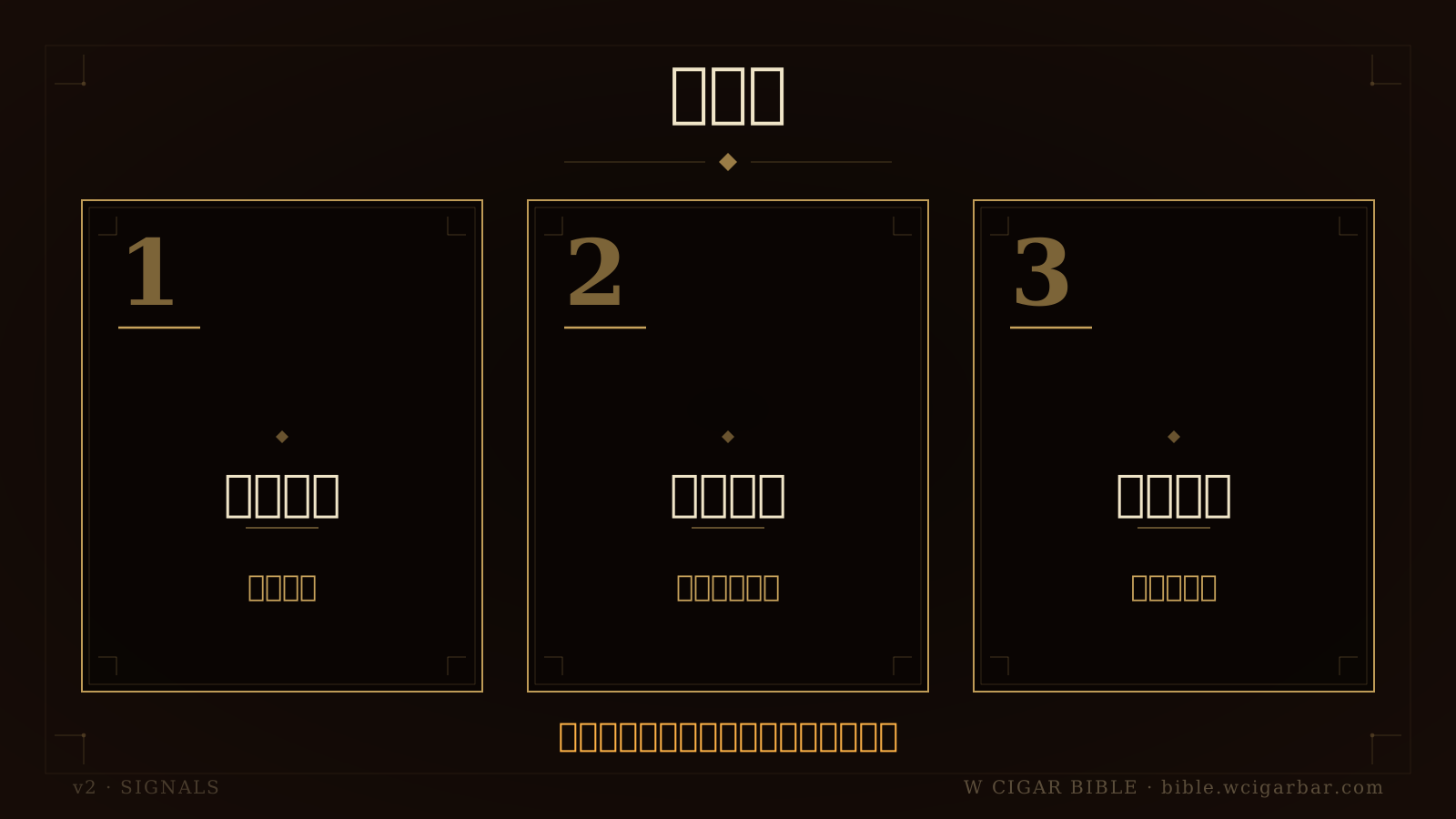
三張卡片整理產區土壤氣候與調配對風味的影響
Cuba: Limestone Red Soil, Sea Breeze, and Classic Balance
Cuba is considered the core textbook of the cigar world, with the key being Vuelta Abajo, especially around Pinar del Río. The soil here has good drainage and is rich in minerals, with distinct rainy and dry seasons, allowing the tobacco leaves to accumulate oils while avoiding excessive moisture that causes loose flavors. When Cohiba was born in 1966 and officially entered the international market in 1982, it became the entry point for many to understand the delicate layers of Cuba.
Cuban flavors are often described as cedar wood, leather, cream, honey, grass, and a faint mineral feel. The strength may not be the greatest, but the balance is extremely high. The torpedo shape of Montecristo No.2 and the Robusto size of Partagás Serie D No.4 make it easy to observe changes from the front to the middle and end: the front has more woody and herbal notes, the middle may show roasted nuts, and the end has leather and coffee. The charm of Cuba is not just in its richness, but in how the details slowly line up in a cigar.
However, Cuba also tests preservation the most. If humidity is above 72% for a long time, the draw can become heavy, and the aroma will be muffled; if below 62%, the loss of oils will make the taste thin. I personally recommend beginners observe at a relative humidity of 65% to 69%, especially for slender sizes like Lancero and Corona Especial, which can better show the impact of humidity changes on burn and aroma.
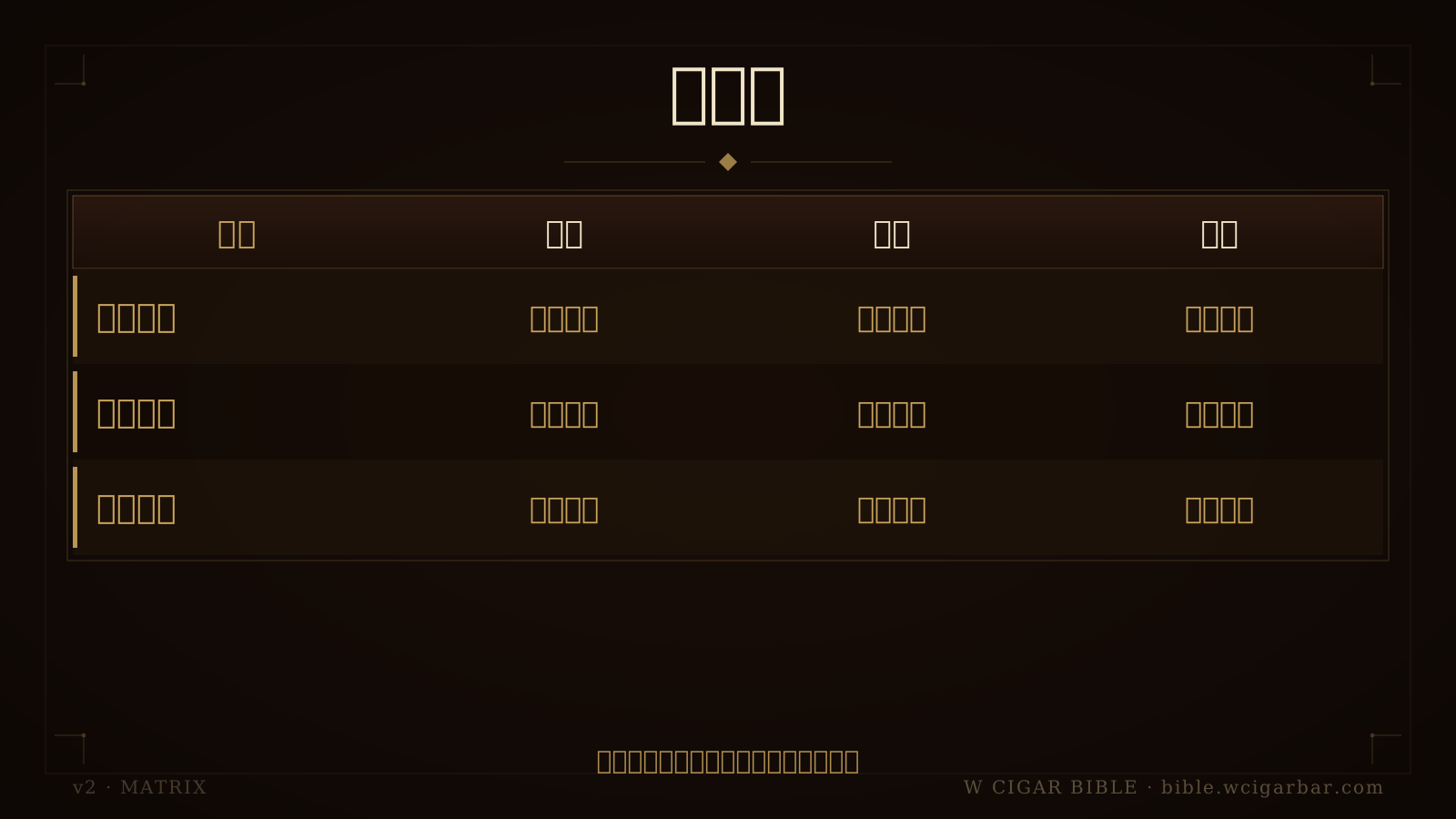
矩陣比較古巴多明尼加與尼加拉瓜宏都拉斯風味差異
Dominican Republic: Mildness is Not Blandness, but Elegant Layer Management
The Cibao Valley in the Dominican Republic is a tobacco leaf hub, with the valley terrain providing stable humidity and day-night temperature differences. The soil is mostly a mix of clay and limestone. It does not often use volcanic ash to bring out intense spiciness like Nicaragua, nor is it known for mineral and grassy notes like Cuba; the Dominican Republic excels in creamy, nutty, floral, hay, and slightly sweet woody expressions.
Davidoff's complete shift to Dominican production around 1991 was a significant turning point in cigar history. Many initially doubted whether the brand's spirit could be maintained after leaving Cuba, but later series like Davidoff Aniversario, Grand Cru, and Millennium proved that the cleanliness and balance of the Dominican Republic could support different levels of works. The brilliance of Dominican cigars lies in hiding strength within order, rather than putting spiciness at the forefront.
To train your palate, I would recommend starting with Connecticut Shade wrappers paired with Dominican fillers, then compare versions with Cameroon or Ecuador Habano wrappers. You will find that with the same filler framework, changing the wrapper results in significant differences in the sweetness and spice in the front. This is also the easiest way for beginners to understand that "the wrapper affects the first impression, but the filler determines endurance."
Nicaragua and Honduras: Two Expressions of Volcanic Soil and Strength
Nicaragua's reputation rose rapidly after 2000, with Estelí, Jalapa, and Condega each having their own character. Estelí has fertile soil and high heat, often bringing black pepper, strong coffee, and a thick mouthfeel; Jalapa is sweeter, often showing cocoa, dried fruit, and floral notes; Condega is between the two, with clearer herbal and woody notes. The launch of Padrón 1964 Anniversary and Oliva Serie V in 2007 made Nicaragua's high-intensity image more distinct.
Honduras is often underestimated. The Jamastrán Valley and Talanga areas have good soil drainage and more stable climates, with flavors often having earth, leather, roasted coffee, brown sugar, and a slight spiciness. After Camacho was founded in 1961, it long brought Honduras' intensity to the international market; the non-Cuban versions of Punch and Hoyo de Monterrey also introduced many to the thickness of Central American tobacco leaves.
Nicaragua is like a fastball, with explosive power; Honduras is like a bass, with steady earth and leather support. If you already know basic inhalation and rhythm control, you can use the Robusto size to compare the differences between the two regions: Nicaragua often shows spiciness in the first 10 minutes, while Honduras may not bring up coffee, earth, and caramel until the middle. Don't rush to conclusions; at least observe until the second ash before recording.
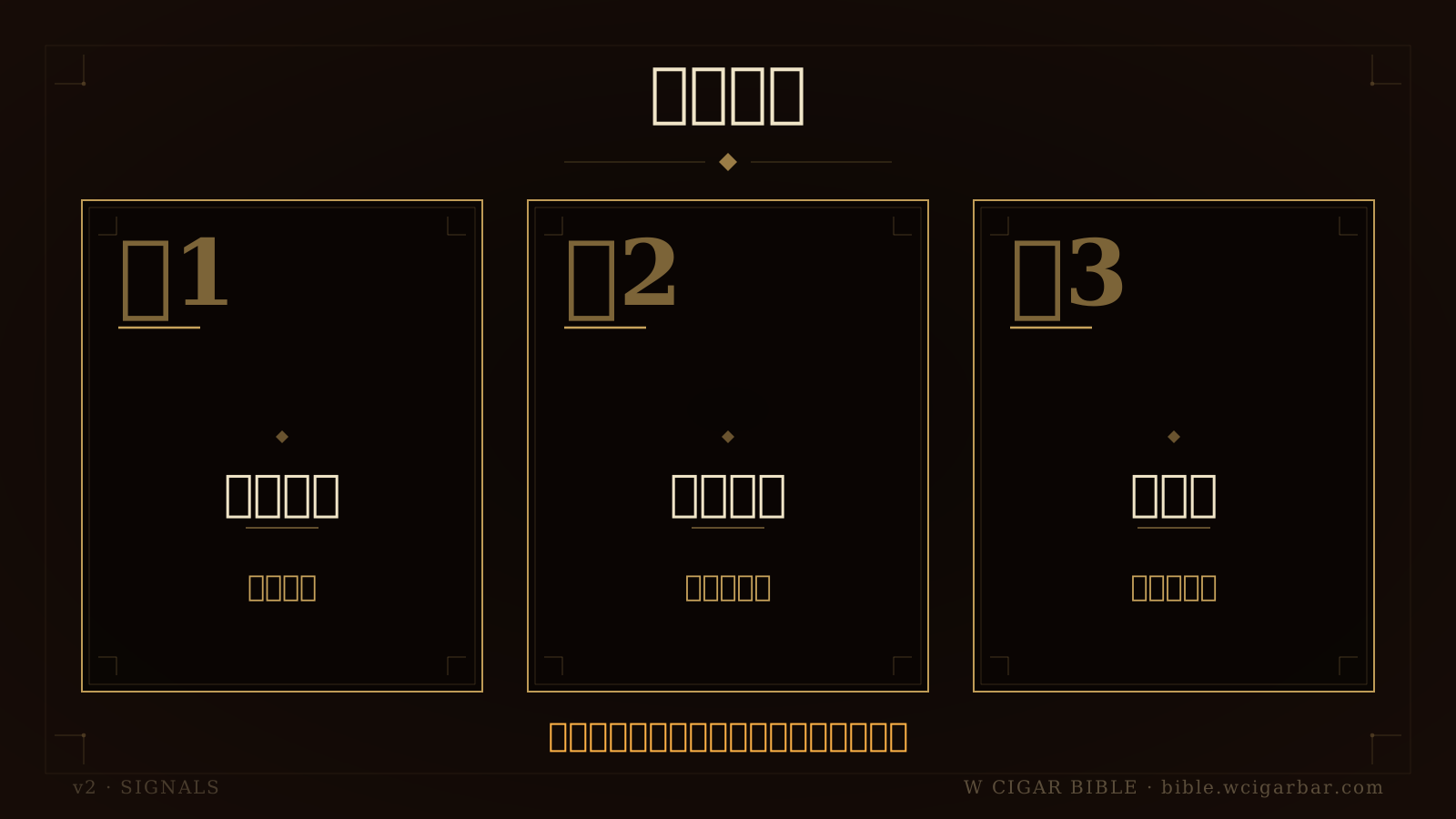
三張提醒卡指出產區品牌與抽吸節奏的常見誤解
Wrapper Regions: The Outer Language of Ecuador, Cameroon, Indonesia, and Mexico
The wrapper is the outermost layer of the cigar and is one of the first sources of aroma to contact the mouth and nose when burning. Ecuador, due to long-term cloud cover, naturally forms an environment similar to shade tents, allowing tobacco leaves to grow thin and elastic, commonly seen in Ecuador Connecticut, Ecuador Habano, and Ecuador Sumatra. These wrappers have been widely used by high-end brands since the 1990s because they are stable, beautiful, and have a clean flavor.
Cameroon wrappers are known for their delicate sweet aroma, often having roasted almonds, cinnamon, faint cocoa, and woodiness; the Arturo Fuente Hemingway series is often cited as a classic example of Cameroon wrapper. The Mexican San Andrés Maduro is different, dark, oily, and thick, often bringing black chocolate, coffee, earth, and licorice. The wrapper is not decoration; it often determines the opening and aroma profile of a cigar.
| Region/Wrapper | Climate and Soil Clues | Common Flavors | Representative Observation Cases |
|---|---|---|---|
| Ecuador Connecticut | Cloudy, soft sunlight | Cream, hay, light pepper | Davidoff, Avo various classic sizes |
| Ecuador Habano | Cloud-covered sunlight, good leaf oil | Wood, red pepper, cocoa | My Father, Oliva some series |
| Cameroon | Edge of tropical rainforest, delicate leaves | Cinnamon, nuts, sweet wood | Fuente Hemingway |
| Mexico San Andrés | Volcanic soil, dark thick leaves | Black chocolate, coffee, earth | Liga Privada, Alec Bradley some works |
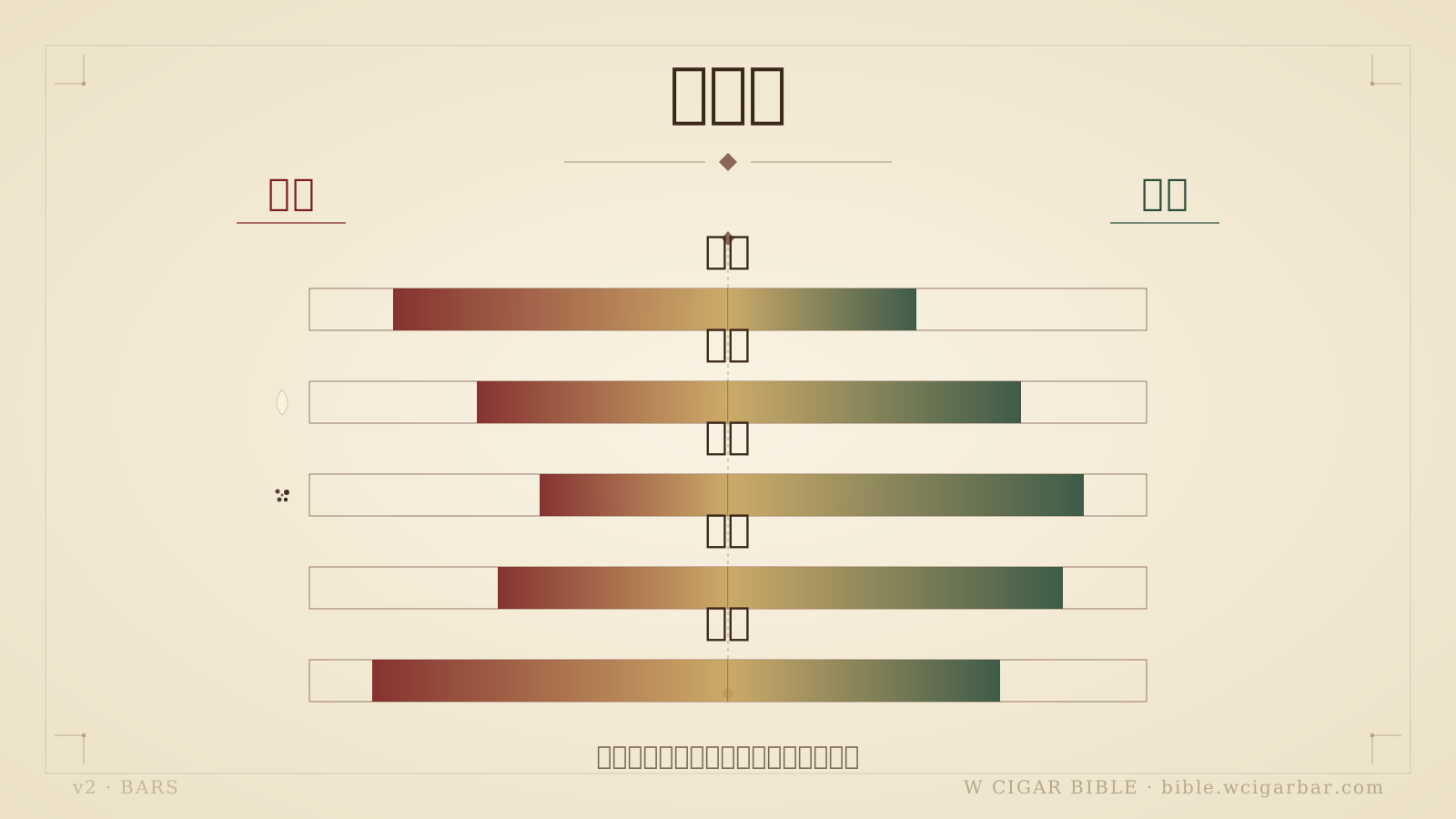
長條圖比較古巴與新世界在礦物奶油辛香濃度平衡差異
Soil, Fermentation, and Aging: Why the Same Leaf Can Differ Greatly
Regions provide raw materials, but flavor is completed by craftsmanship. When harvested, tobacco leaves are graded by position: lower Volado burns well, middle Seco has a fine aroma, and upper Ligero is strong, with higher nicotine and oils. If a cigar has a high proportion of Ligero, it usually burns slower, and the concentration is stronger in the later stages; but if the proportion is too high and fermentation is insufficient, it may have throat irritation, ammonia, or bitterness.
Fermentation is the core of turning roughness into roundness. Large tobacco leaf piles can reach 40 to 50°C, and masters need to turn the piles to control temperature and humidity, allowing proteins, sugars, and irritants to gradually transform. A frequently discussed point about the Padrón family is their habit of long-term aging of tobacco leaves; this is not just marketing language but the key to making rich Nicaraguan tobacco leaves smooth. A good region without good fermentation will only amplify flaws; good craftsmanship can refine the land's character into language.
Beginners can train judgment with "three-stage notes." Record the sweetness and spiciness of the wrapper in the front, check if the filler has thickness in the middle, and observe if bitterness is out of control in the end. If a cigar still has cocoa, coffee, wood, and a clean aftertaste in the end, it usually indicates that both the raw materials and craftsmanship are up to standard. If there is only spiciness, heat, and bitterness, it may not be a regional issue, but could be due to preservation, rhythm, or burning temperature.
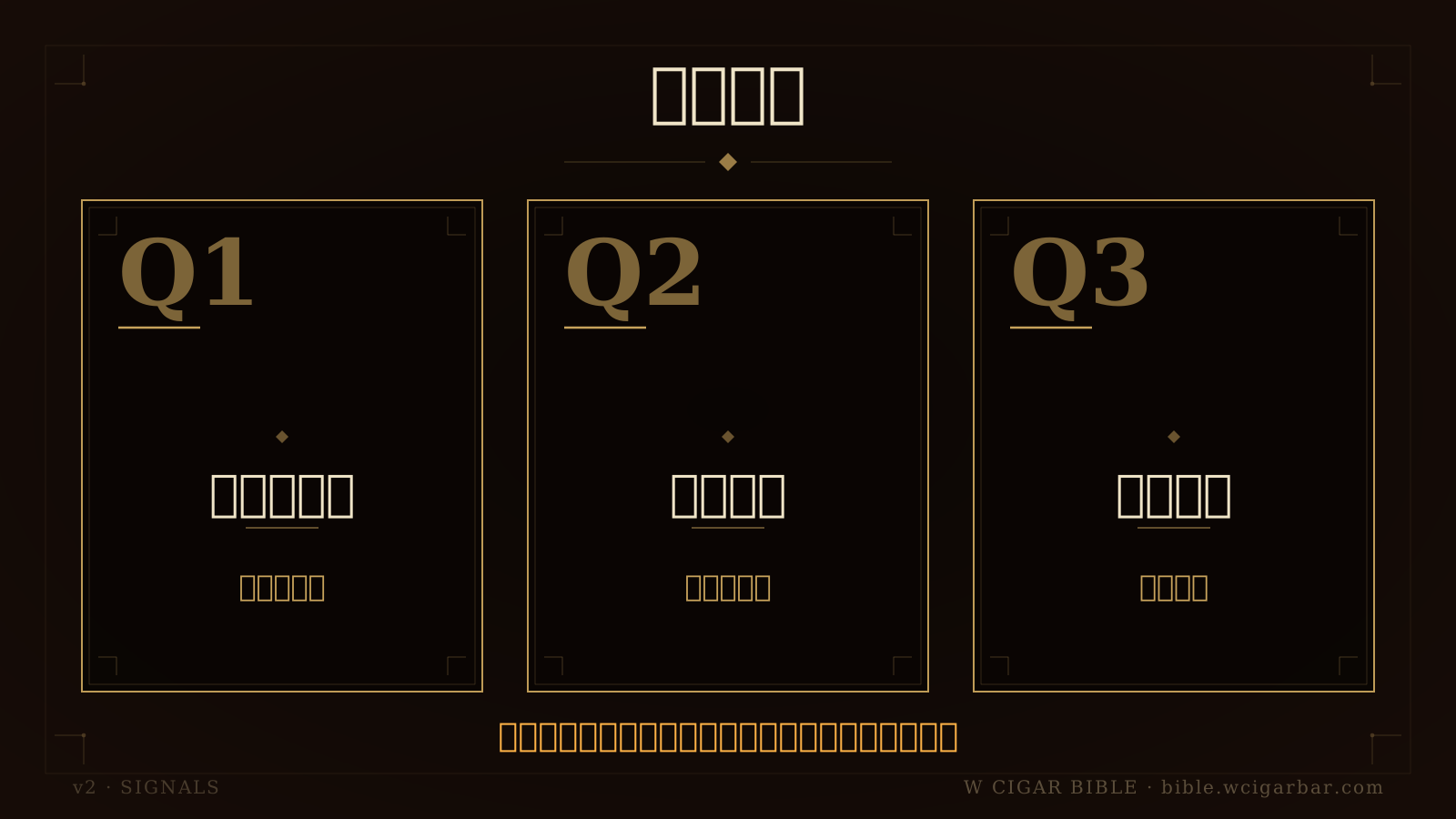
三張問答卡回答產區決定性新手起點與抽吸速度
A Beginner's Regional Tasting Map: Establish Your Database with Comparative Methods
Don't buy a bunch of lists at once when learning about regions; do comparisons. You can choose the same size, such as Robusto with about a 50 ring gauge and a length of 4.8 to 5 inches, and find one each from Cuban, Dominican, Nicaraguan, and Honduran styles, recording them on different days under the same humidity conditions. With consistent size, there are fewer variables, making regional differences easier to see.
I suggest not writing notes too mystically; you can use a 1 to 5 scale to record: sweetness, woodiness, spiciness, leather, coffee, cream, earthiness, and burn stability. By selecting a typical size from Montecristo, Davidoff, Padrón, and Camacho, you can initially establish a map. True progress is not memorizing region names but being able to say where you felt which differences.
There are three small principles for practice:
- Compare only one variable at a time, such as the same size from different regions or different wrappers from the same region.
- Keep humidity as constant as possible between 65% and 69% to avoid preservation status interfering with judgment.
- Don't smoke too fast; take a puff every 45 to 60 seconds, as overheating can turn sweetness into bitterness.
When you accumulate notes on more than 20 cigars, you will gradually know whether you prefer the smoothness of the Dominican Republic, the spiciness of Nicaragua, or the balance of Cuba. This is more useful than hearing someone say "this one is strong."
Common Questions
Can a region completely determine the flavor of a cigar?
No. The region provides direction, but the formula, fermentation, aging, rolling, and preservation will change the result. Even with the same Nicaraguan tobacco leaves, Estelí and Jalapa are different, and the blending ratio is also different. The region is the starting point, not the endpoint.
Why are Cuban cigars often said to have a "classic taste"?
Because Cuba has long accumulated planting, grading, fermentation, and brand systems, and the soil of Vuelta Abajo indeed has distinctiveness. Common cedar wood, herbal, leather, and mineral notes, but different years and preservation states will have variations.
Which region is suitable for beginners to start with?
If you want mild and delicate, you can start with the Dominican Republic or Ecuador Connecticut wrappers; if you want to clearly feel spiciness and intensity, you can choose Nicaraguan Robusto. The key is to slow down the pace and record the front, middle, and end stages.
Will the taste differ greatly between different origins of the same brand?
Yes. Brands have their own blending philosophy, but the origin determines the character of the raw materials. For example, when using Mexican San Andrés Maduro wrappers, the sweetness, black chocolate, and coffee tones are often more pronounced; switching to Connecticut may be softer.
Does the region affect the collectible value?
It affects market perception, but it does not guarantee appreciation; it still depends on source preservation and market. If preservation humidity is unstable, box condition is poor, or source records are unclear, even if it is a popular region or brand, it does not mean it has ideal collectible conditions.
How do I know if I'm smoking too fast?
If the cigar head is too hot, bitterness increases rapidly, and the tongue surface is dry, it is usually too fast a pace. You can extend it to 45 to 60 seconds per puff and observe if the ash is stable and if the burn line is excessively skewed. Slow is the most basic etiquette for understanding regional flavors.
When I look at regions, I don't just see names on a map, but how a leaf leaves behind the sun, rain, soil, and human craftsmanship. If beginners can start building a taste database from regions, they will gradually move away from just listening to brand names. The joy of cigars lies in how each puff can return to the land and also to one's own judgment.
—Cigar Prince Wilson Tsai
Smoking is harmful to health. Smoking is prohibited for those under twenty. Quitline: 0800-636363. This article is intended for adults over the age of twenty as a reference for cigar culture, preservation, and regulatory knowledge, not as tobacco advertising, promotion, or purchase advice.
Like this article?Share with friends
Share this W Cigar Bible piece with friends who want to learn cigar culture, storage, and tasting.
想把這篇 化為實踐
雪茄聖經是知識;雪茄文化要在空間裡發生
W Cigar Bar 大安總店資訊
台北大安區 · 雪茄聖經總編輯 Wilson Tsai 主理的雪茄文化空間
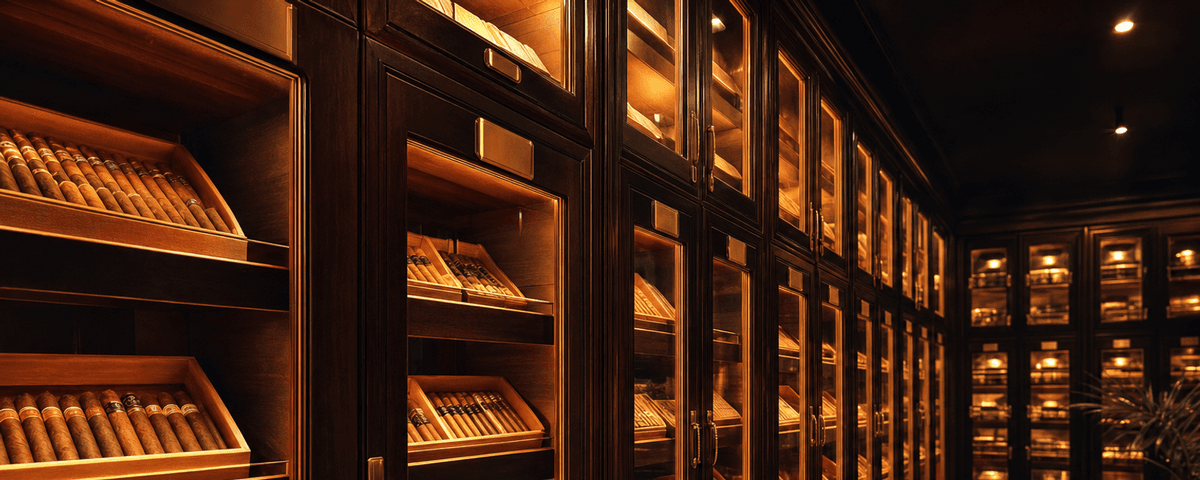
33 座 24 小時恆溫恆濕醇化室
W Cigar Bar 提供的會員醇化空間 · 場地資訊請洽編輯部
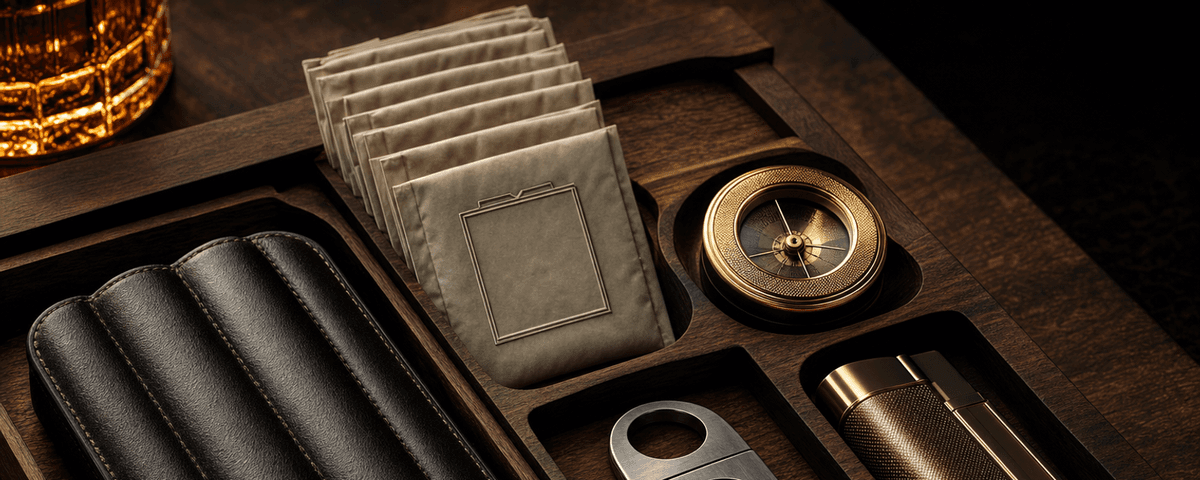
雪茄剪 / 打火機 / 雪茄盒 / Boveda
W Cigar 配件官網 · 專營雪茄配件正品
加 LINE 好友 · 文化諮詢
文化空間資訊 · 紳士沙龍 · 私人包場
本網站內容僅供雪茄文化、歷史、收藏與品吸知識研究參考。菸品有害健康、未滿法定年齡者請勿吸菸。實際規範請依所在地法律為準。
吸菸有害健康・戒菸專線 0800-636363・本站僅供 20 歲以上成年人閱覽。
讀到這裡,你不只是路過的人
留下 Email,加入 W 雪茄聖經內圈——總編輯 Wilson Tsai 親選的學院深文與國際新訊,先你一步送到信箱。
· 教育用途非銷售 · 隨時一鍵退訂 · Email 絕不對外公開 · 由勝茄股份有限公司營運
同分類延伸閱讀

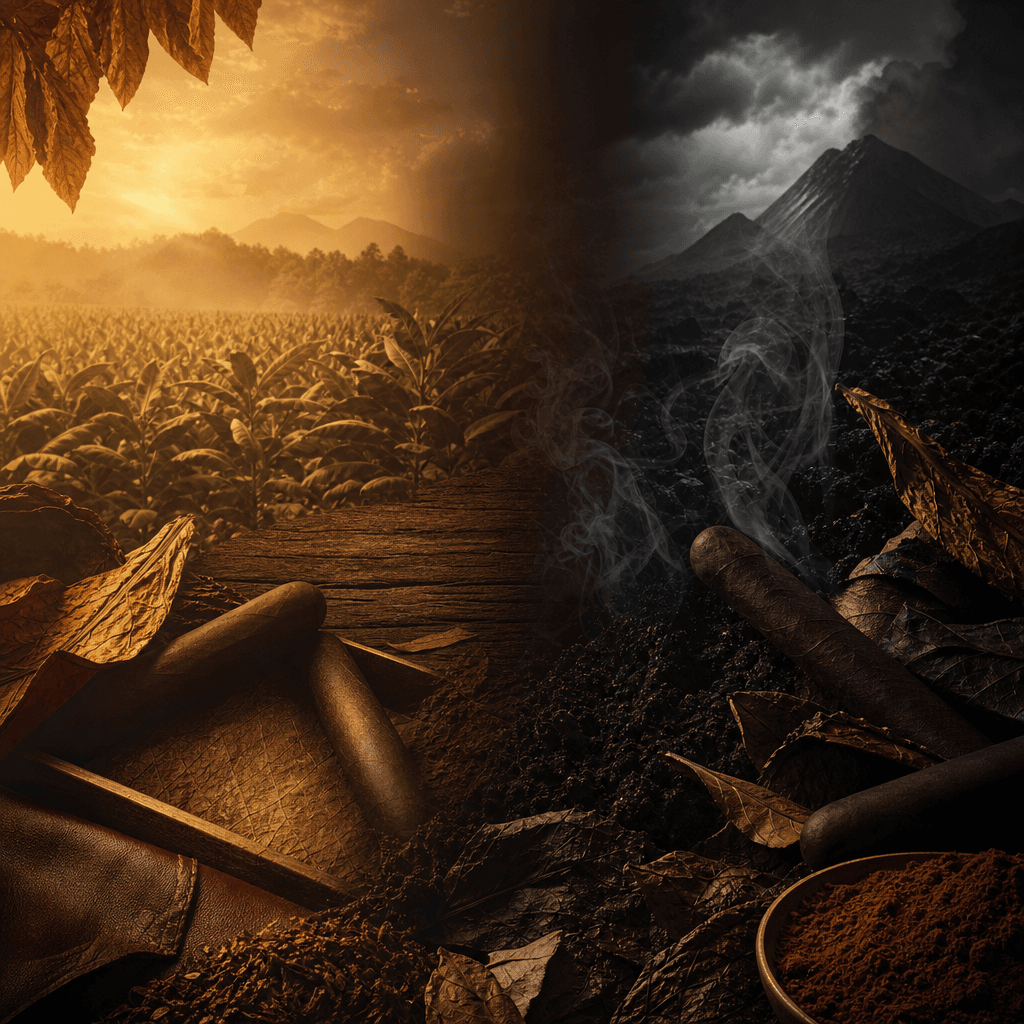
資料來源:W Cigar Bible 編輯部整理 · 雪茄王子 Wilson Tsai 親自審稿
本文僅供雪茄文化、歷史、收藏與品鑑知識研究,不作為菸品促銷、銷售或購買建議。吸菸有害健康,未滿二十歲不得吸菸。