雪茄的製作過程:從種植到捲製的藝術
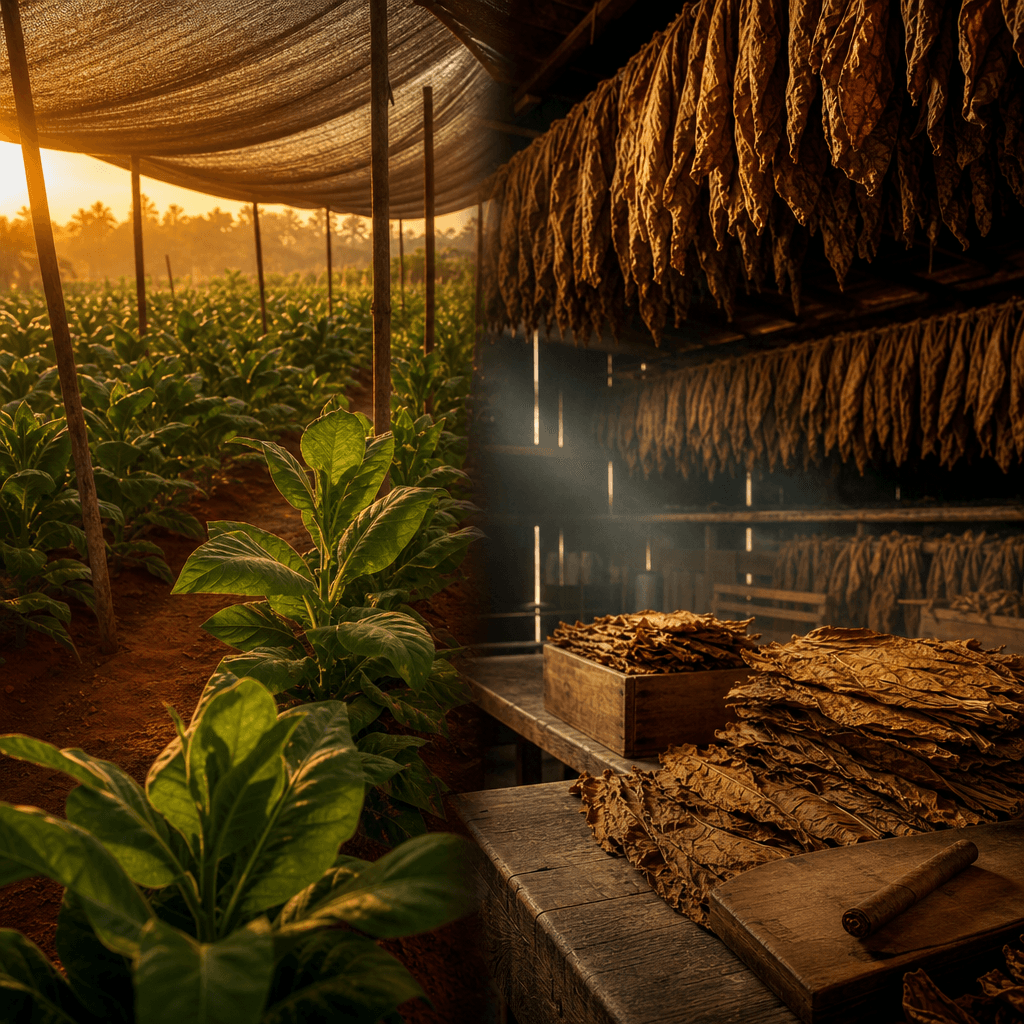
雪茄的製作過程複雜,從種子到成品經歷多道工序。每一支雪茄的風味來自於產區的獨特風土,例如古巴的Pinar del Río和尼加拉瓜的Estelí,各具特色。採收時,根據葉位分批摘取,影響最終的口感與強度。晾乾與發酵過程中,菸葉的香氣逐漸展開,這些細節決定了雪茄的品質。分級與醇化則是進一步提升風味的關鍵,時間與選材的精細管理更是影響價格的重要因素。了解這些過程,能讓雪茄愛好者更深入地欣賞每一支雪茄的
- 雪茄的風味在種植過程中已經確定,產區的土壤與氣候影響葉片的特性。
- 採收雪茄菸草時,依葉位分批摘取,影響最終的香氣與力度。
- 發酵過程能降低粗糙感,釋放香氣與甜感,對雪茄口感至關重要。
The Cigar Making Process: The Art from Cultivation to Rolling
A cigar is never just "rolled tobacco leaves." As the editor of the "Cigar Bible," I often remind beginners: the Robusto, Churchill, or Torpedo in your hand has gone through multiple stages, including cultivation, harvesting, drying, fermentation, grading, aging, rolling, and maintenance.
Truly understanding cigars is not just about identifying notes of wood, leather, coffee, or pepper, but knowing where these flavors originate. When you understand every detail from the farm, warehouse, and rolling table, each cut, light, and puff becomes more deliberate.
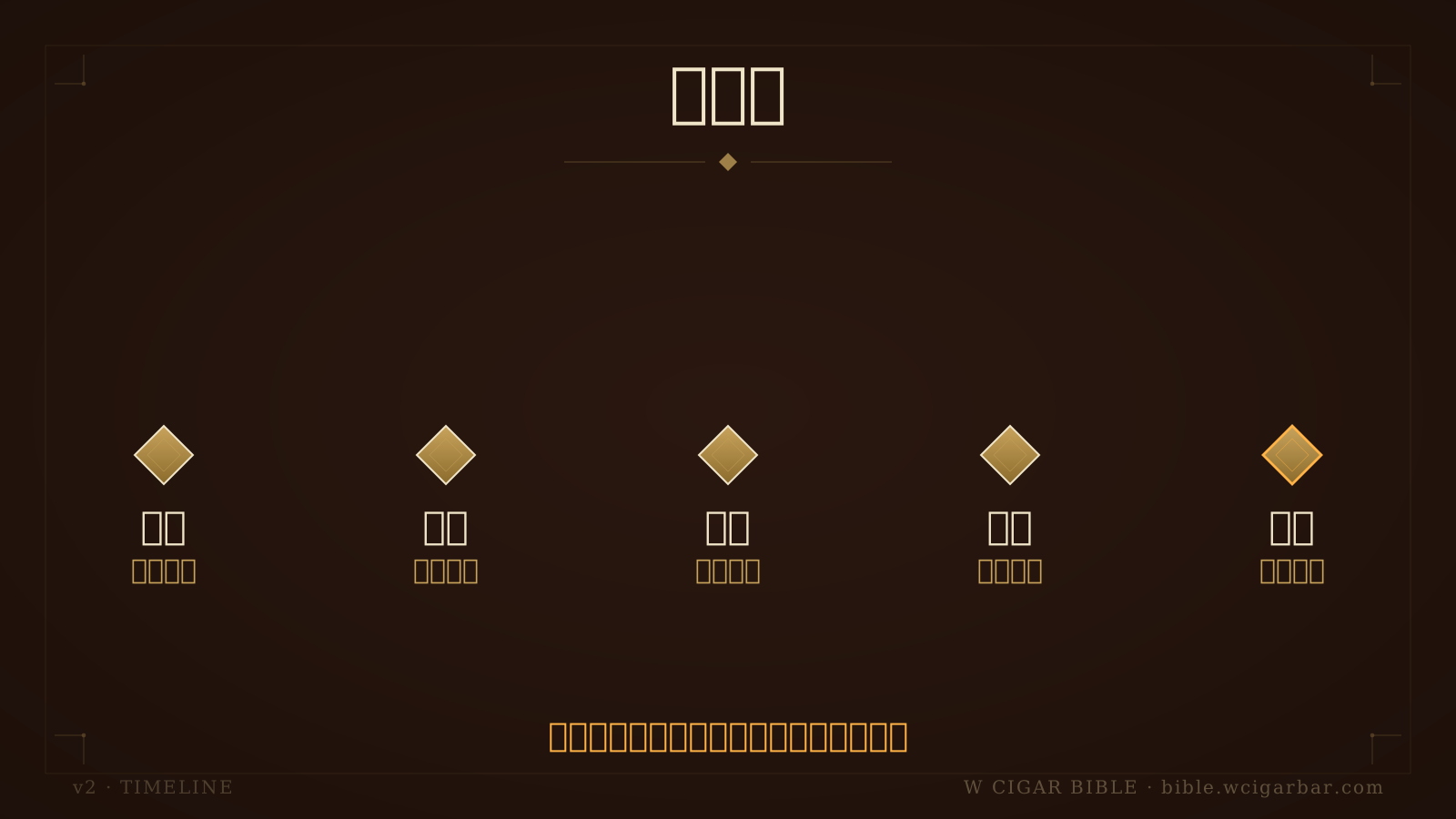
時間線列出種植採收晾乾發酵與捲製養護流程
Starting from a Seed: Terroir Determines the Backbone of a Cigar
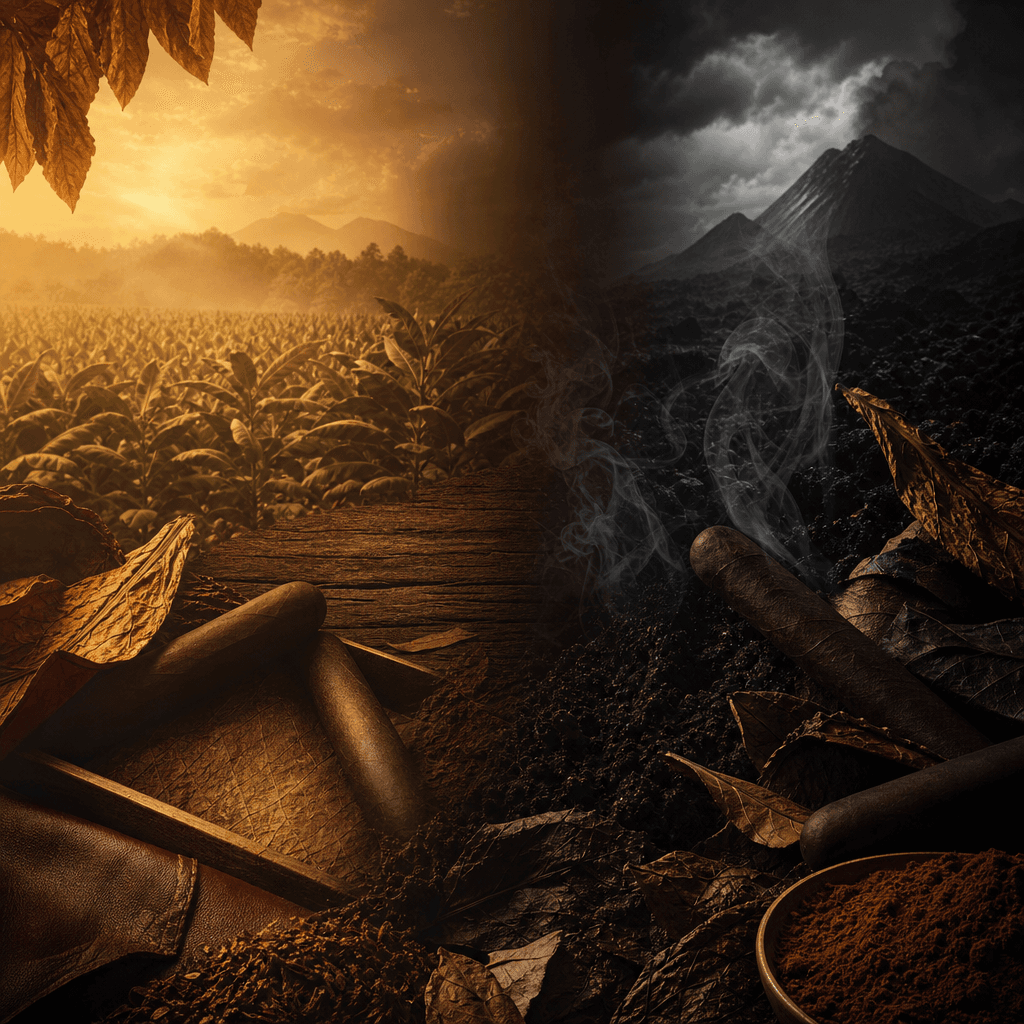
The story of a cigar begins with seeds and land. Regions like Cuba's Vuelta Abajo, Nicaragua's Estelí, Honduras' Jamastrán, and the Dominican Republic's Cibao Valley are well-known among cigar enthusiasts. For example, the red soil, temperature variations, and humidity of Cuba's Pinar del Río province have long been considered crucial for high-quality cigar tobacco; whereas Nicaragua's Estelí is known for its rich, spicy, and mineral characteristics.
Tobacco farmers usually start with seedbeds, transplanting seedlings into fields after about 35 to 45 days. After transplanting, they must manage irrigation, weeding, topping, and pest control, as each action affects the thickness and oil content of the leaves. Shade-grown wrapper leaves often use nets to reduce sunlight, making the leaves thinner and more delicate; sun-grown leaves receive more sunlight, resulting in thicker structures and more direct flavors.
The flavor of a cigar is not created in the factory but is determined in the field. For instance, Arturo Fuente developed Chateau de la Fuente in the Dominican Republic, which later produced the Fuente Fuente OpusX, sparking discussions when it was released in the mid-1990s, proving that the Dominican Republic could also produce high-quality wrappers. These cases remind us that the region is not just a label but a fingerprint left by terroir, technique, and time.
Harvesting is Not Done All at Once: Leaf Position Determines Strength and Role
Cigar tobacco is usually harvested not by cutting down the entire plant but by picking leaves in batches according to their position. Common concepts from bottom to top include Volado, Seco, Viso, and Ligero. Bottom leaves receive less sunlight and burn well; middle leaves have more stable aromas; top leaves receive the most sunlight, with higher oil and nicotine content, often responsible for strength and body in the final third. Traditionally, Cuba harvests in multiple stages, which can extend over several weeks.
This batch harvesting allows blenders to arrange the layers of filler leaves like a chef using different ingredients. For example, Cohiba, which became a symbol of high-end Cuban cigars in 1966, owes its classic image not only to its reputation but also to the strict selection of tobacco leaves and unique processing methods. Beginners often think that the stronger the cigar, the higher the quality, but too much Ligero can burn slowly and taste bitter, with an imbalanced ratio disrupting the rhythm.
Leaf position is not about hierarchy but about different functions; a good cigar relies on balance, not just strength. The robust feel you experience in a Partagás Serie D No.4 and the soft woody notes in a Hoyo de Monterrey Epicure No.2 often stem from differences in leaf position ratios and regional characteristics. Learning to understand the logic of leaf positions is closer to professional understanding than simply asking "Is it strong?"
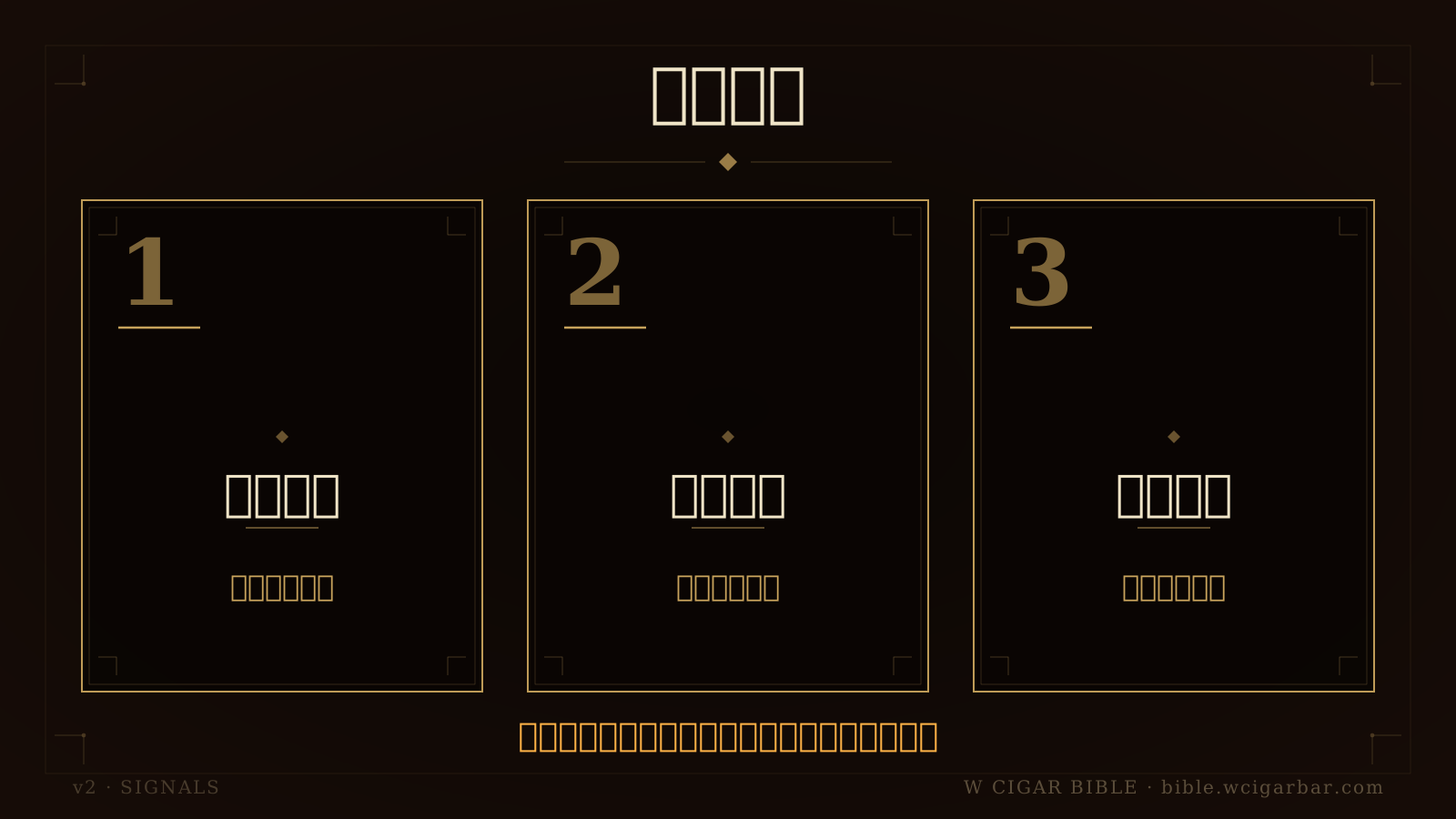
三張重點卡說明風土葉位與發酵的關鍵作用
Drying and Fermentation: Transforming Green Notes into Aroma
Freshly picked tobacco leaves cannot be rolled immediately; the first step is curing, or drying. The leaves are hung in a curing barn, where natural ventilation and temperature and humidity control gradually turn the green leaves yellow, brown, and dark brown. This process usually takes 40 to 60 days, depending on the climate and leaf thickness. If dried too quickly, the aroma may not develop; if too slowly, mold may occur.
Next is fermentation. The leaves are piled into a pilón, where microbial activity raises the internal temperature, requiring workers to regularly turn the pile, measure temperature, and adjust humidity. Long filler leaves may undergo one or more fermentations, with high-end wrappers requiring meticulous control. Cohiba's famous extra fermentation concept is often cited to explain why some cigars have a smoother taste and less stimulation.
The purpose of fermentation is not to age the tobacco but to reduce roughness, release sweetness, and develop aroma. If fermentation is insufficient, the cigar may have ammonia, grassy, or pungent notes when lit; if over-fermented, it may lose vitality. This is why, even with the same Havana, Dominican, or Nicaraguan label, different brands and batches can vary. From farm to warehouse, patience itself is part of the craft.

矩陣比較底葉中葉與頂葉在日照角色及特性的差別
Grading, Aging, and Inventory Management: Invisible Yet Time-Consuming
After fermentation, the tobacco leaves are graded. Workers classify them by size, color, thickness, elasticity, veins, and damage. The requirements for wrappers are the strictest, needing to be visually complete, evenly colored, shiny, and flexible; binders require structural stability; fillers prioritize burn, aroma, and strength. These classifications determine whether a leaf becomes a wrapper, binder, or filler.
After grading, the leaves are often stored in bales or tercios, entering an aging period. Many factories allow the leaves to rest for months to years, stabilizing moisture and chemical changes. The Padrón 1964 Anniversary series emphasizes the use of Nicaraguan tobacco aged for years; Davidoff's style in the Dominican Republic is often described as clean, delicate, and rhythmically stable, closely related to raw material management.
| Stage | Main Purpose | Common Timeframe | Observable Results for Beginners |
|---|---|---|---|
| Drying | Remove moisture, change color | About 40 to 60 days | Reduced green notes, color turns brown |
| Fermentation | Reduce stimulation, develop aroma | Weeks to months | Reduced ammonia, smoother taste |
| Aging | Stabilize flavor and burn | Months to years | More organized layers, fewer off-flavors |
What is truly expensive is not a brand name but time, selection rate, and inventory costs. While cigar collecting is sometimes discussed in terms of market price changes, this does not guarantee appreciation; it still depends on source preservation and market conditions. For beginners, learning to identify the condition—whether the wrapper is too dry, whether there are cracks, whether the aroma is clean—is more honest than chasing stories.
Blending: A Cigar is Like a Musical Composition with Rhythm
A blender's job is to combine tobacco leaves from different regions, positions, years, and processing methods into a cigar with rhythm. The filler may include 3 to 5 types of long filler leaves, the binder fixes the structure, and the wrapper influences the first impression and aroma expression. Some say the wrapper only accounts for a small part of the total weight, so it's not important; this is a misconception. The wrapper directly contacts the tongue and burn line, significantly affecting the aroma.
Looking at the classic sizes of Habanos, a Robusto is about 50 ring gauge, 124 mm, with a burn time often between 45 to 70 minutes; a Churchill is about 47 ring gauge, 178 mm, with a longer rhythm and more transitions. The same blend in different sizes can taste completely different. After Trinidad expanded into the international market in 1998, its delicate and sweet style was often used to discuss how size and blend shape each other.
A blend is not just piling good leaves together but ensuring burn speed, aroma, strength, and aftertaste all work together. Beginners can practice by recording changes in the first, middle, and final thirds, rather than just writing "good smoke" or "very strong." For example:
- First third: Are wood, cream, and light pepper notes evident?
- Middle third: Do sweetness, nuts, and leather unfold?
- Final third: Is bitterness controlled, is the aftertaste clean?
- Burn: Are there uneven burns, extinguishing, or draw issues?
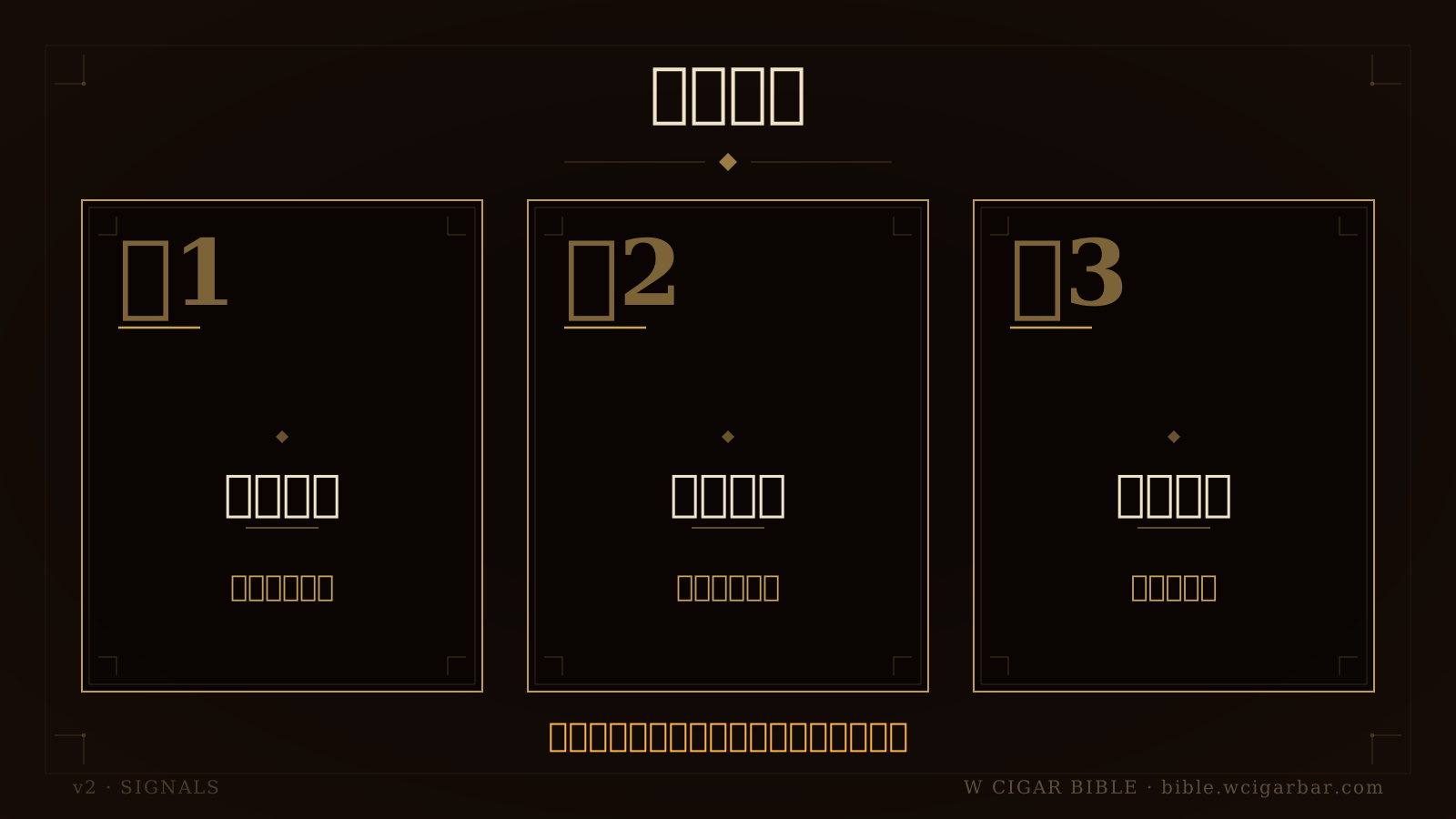
三張卡整理手工深色與久放三種常見誤解
Hand Rolling: The Strength and Rhythm of the Torcedor
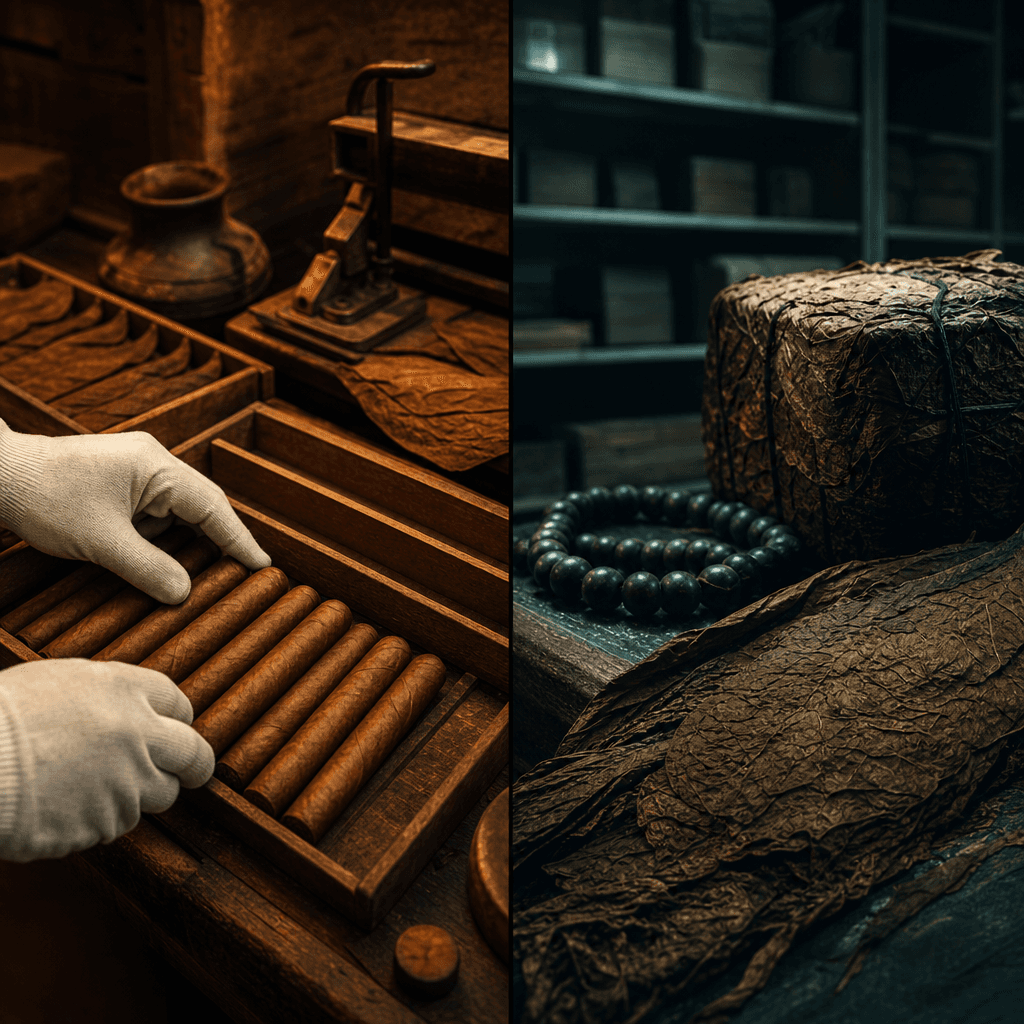
Once at the rolling table, the torcedor selects the filler, arranging the long filler leaves according to the blend. Skilled rollers control leaf direction and density for even smoke channels. Then, they wrap it with a binder, place it in a wooden mold to shape, and complete the final appearance with a wrapper. The cap's handling, especially the triple cap common in Cuba, tests the touch, appearing simple but challenging to perfect.
If rolled too loosely, it burns quickly, the smoke is airy, and it overheats; if too tight, the draw is difficult, and it may extinguish easily. High-end factories use draw testing machines to measure the airflow resistance of each semi-finished product. Since 2000, many non-Cuban factories have adopted more stable quality control, allowing Nicaraguan, Dominican, and Honduran brands to grow rapidly in the international market. This is why today, when discussing cigars, one cannot judge solely by origin.
The beauty of handmade cigars lies in the subtle differences within consistency, not machine-like uniformity. If you observe the foot of different brands, you'll find varying tightness in filler arrangement and color interspersed. These details affect lighting speed, smoke volume, and layers. If beginners encounter tight draws, don't rush to blame the brand; it may be a combination of single-stick condition, humidity, cut size, or storage conditions.
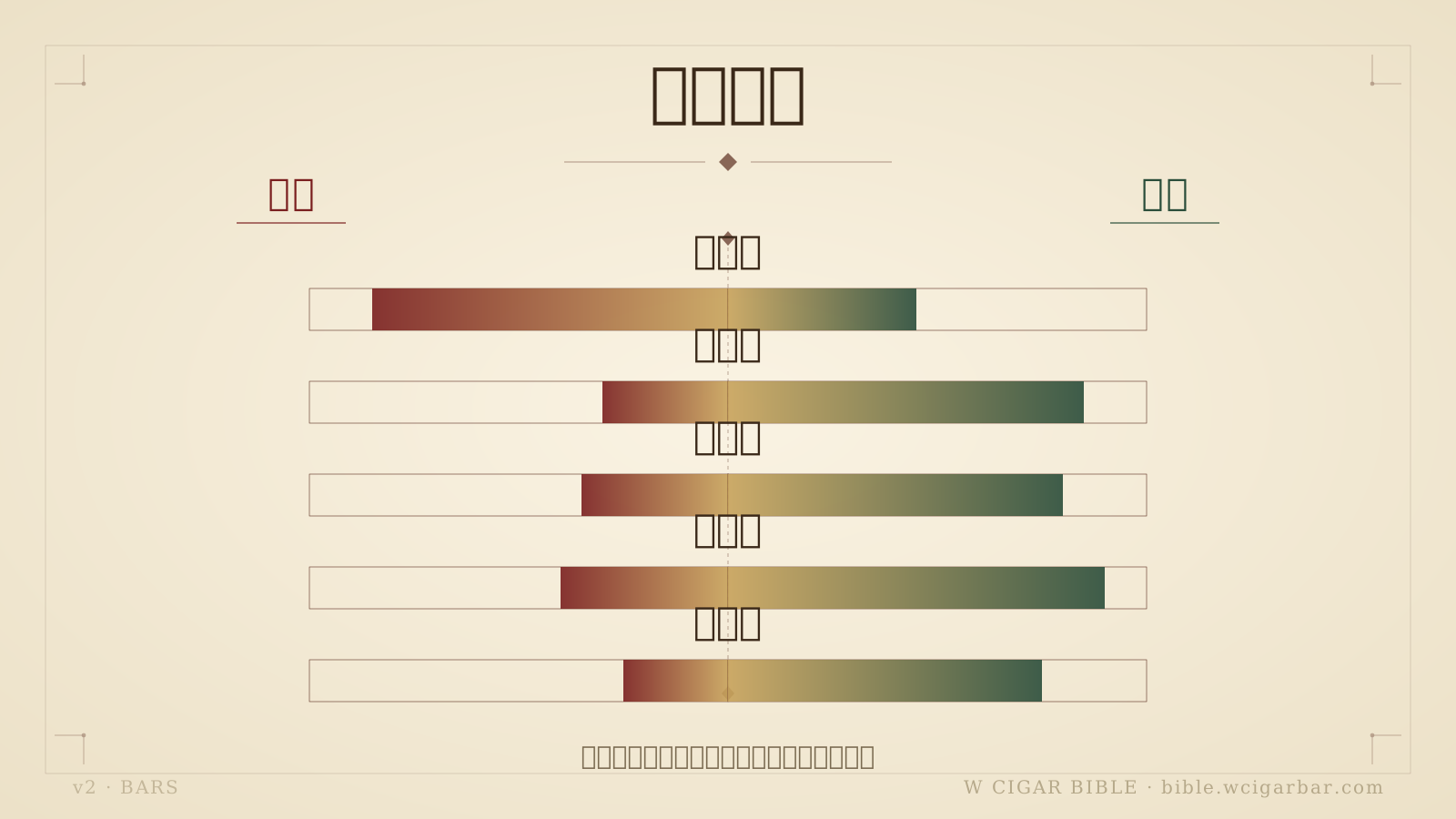
長條比較新手與熟手在濃度葉位風土濕度與批次觀察差異
Post-Completion Care: Changes from Factory to Humidor
After rolling, cigars do not immediately reach their final state; they are usually placed in an aging room to rest, allowing the wrapper, binder, and filler to rebalance moisture. Only then are they color-matched, banded, and boxed. When you open a box of cigars, you'll often see closely matched colors, a result of factory sorting, not natural randomness. High-end brands are more sensitive to color differences within the same box because appearance is also a language of quality.
Once in the consumer's hands, storage remains crucial. Generally, relative humidity should be controlled between 65% to 70%, with a temperature of about 18 to 21°C; in Taiwan's summer, temperature management is more important than just humidity. Too humid leads to larger draw resistance, unstable burn lines, and muted flavors; too dry can cause wrapper cracks and sharp smoke. Many beginners think cigars taste bitter due to brand issues, but it's often incorrect storage conditions.
Even after being boxed, cigars will slowly integrate; proper storage can stabilize flavors, while incorrect storage can ruin the craftsmanship. If you collect limited or vintage cigars, remember: market discussions about collection prices do not guarantee appreciation; it still depends on source preservation and market. Clear provenance, complete box labels, and stable humidity records are more reliable than just listening to vintage stories. The last mile of craftsmanship is often in your humidor.
How Beginners Can Apply Craft Knowledge to Tasting and Etiquette
Understanding the production process makes cigar tasting more methodical. When cutting, don't remove too much of the cap, or the wrapper may loosen; when lighting, toast the foot's edges first, then light evenly, without rushing to take big puffs. The recommended smoking rhythm is one puff every 45 to 60 seconds to maintain stable burn temperature. Smoking too quickly increases tar sensation, with sweetness overshadowed by bitterness, unrelated to the blend's quality but caused by usage.
In terms of etiquette, beginners should learn to respect the space and fellow attendees. Cigar ash doesn't need to be flicked off frequently; a stable ash column helps maintain burn temperature, but don't let it fall on the table to show off. When interacting with others, you can say "I sense roasted nuts and light leather in the middle," without rushing to dismiss others' descriptions. Everyone's taste memory is different; professionalism is not about volume but about detailed observation.
Once you understand the craft, you'll be more willing to slow down, as each puff corresponds to years of accumulated work. Beginners are advised to keep simple notes:
- Brand, series, size, and vintage information
- Storage humidity and resting time after removal
- Cutting method, lighting method, draw resistance
- Flavor and burn condition in the first, middle, and final thirds
- Whether you'd like to taste it again under the same conditions
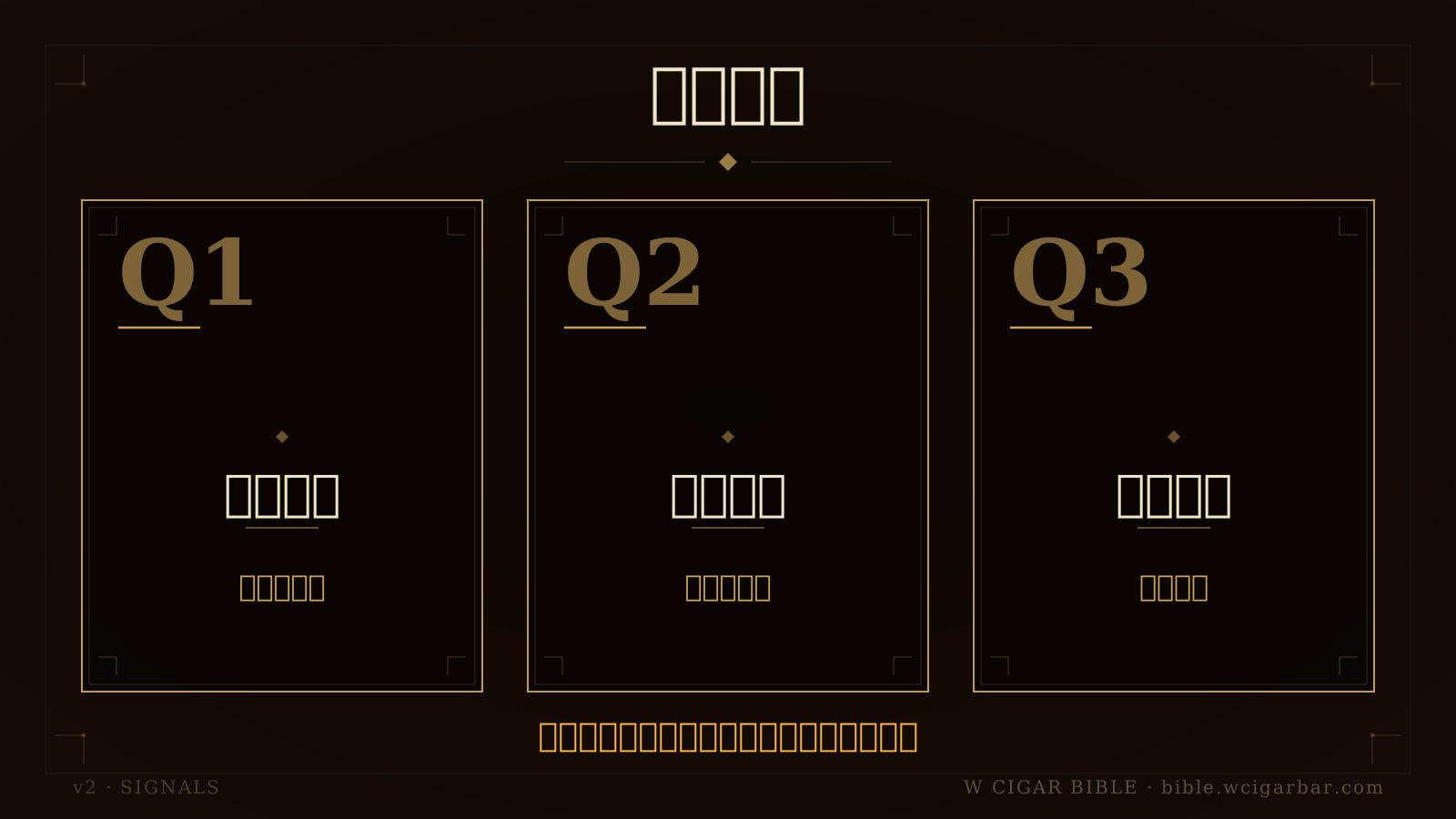
快問快答卡整理手工差異同盒落差與存放時間
Frequently Asked Questions
1. Are handmade cigars always better than machine-made cigars?
It's not necessary to use "always" to judge. Handmade long filler cigars usually offer richer layers, burn rhythm, and flavor changes because they use whole leaves and are controlled by rollers. Machine-made cigars focus on stability, efficiency, and price range, often using short filler or reconstituted materials. For those interested in learning about the craft, handmade long filler cigars present more details of cultivation, fermentation, and blending.
If your goal is to understand the agricultural and rolling art behind cigars, handmade long filler cigars are a better learning target. However, beginners don't need to blindly pursue high prices; choosing stable condition, moderate size, and clear style is more important. Robusto, Corona Gorda, and Petit Corona are sizes that are easy to manage in terms of time and rhythm.
2. Why can cigars from the same box taste different?
Because cigars are agricultural products and handmade products. Even from the same box, the leaves themselves have natural differences, and the rolling density may vary slightly. Combined with box position, moisture distribution, transportation, and storage conditions, each cigar's condition may have subtle differences. This is not a defect but a real part of handmade cigars.
When judging a cigar, don't rely on a single experience to determine the entire brand or series' level. I recommend recording at least 2 to 3 cigars on different days and similar humidity to form a more stable opinion. Especially for vintage or limited editions, storage conditions should be part of the judgment.
3. How long should cigars be aged to improve?
This depends on the raw material, fermentation level, boxing time, and storage environment. Some cigars are quite balanced upon release and can perform stably after resting for 2 to 3 months; some rich Nicaraguan or Cuban styles, after 1 to 3 years of good aging, may have reduced stimulation, with sweetness and aroma more integrated. But not all cigars will improve indefinitely.
Collecting and long-term storage require reverse thinking. Price and rarity do not guarantee appreciation; it still depends on source preservation and market; flavor does not mean the longer the better. If storage humidity fluctuates greatly or temperature is too high, aging only depletes aroma. For beginners, managing the humidor well is more practical than pursuing vintage.
4. Does a darker wrapper mean a stronger cigar?
Not entirely correct. Dark wrappers like Maduro and Oscuro often have cocoa, coffee, molasses, or roasted notes, but strength still depends on the filler leaf positions and blend. Some dark cigars are sweet and medium-bodied; some light-colored Colorado Claro are impactful due to strong filler.
Beginners can view color as a clue but not a conclusion. A more accurate method is to observe the region, brand style, size, ring gauge, and personal records. Especially for large ring gauge cigars, the filler proportion is high, and the filler may have a more significant impact on the overall; for thin ring gauge, the wrapper's performance is often magnified.
5. Why does my cigar often burn unevenly or extinguish?
Common reasons include too high humidity, uneven lighting, too slow smoking rhythm, or uneven rolling density. If the cigar is too humid, the burn line may progress in waves, and the smoke may become muted; if the foot is not evenly lit at the start, it may burn unevenly throughout. Minor uneven burns can be slowly corrected without immediately adding a lot of fire.
Burn issues are often caused by a combination of storage, lighting, and rhythm, not just a single factor. You can first let the cigar rest in stable humidity for 2 to 4 weeks, briefly remove it from the humidor before tasting, allowing the surface moisture to balance slightly. Be patient when lighting, rotate it, and maintain a stable draw, which usually improves most issues.
6. Which production knowledge should beginners learn first?
I would choose "leaf position and fermentation." Leaf position helps you understand strength, burn, and aroma roles; fermentation helps you understand why some cigars are smooth while others are harsh. When you know the functions of Ligero, Seco, and Viso, and then taste different brands, you won't just use strength to make a single rating.
Next, learn about size and storage. Size affects burn time and wrapper proportion, and storage affects each puff's performance. If beginners can connect these four things: leaf position, fermentation, size, and humidity, they are closer to a true understanding of cigars than just memorizing brand names.
Conclusion: The Cigar Craft I See
For me, the most fascinating aspect of cigars is how they condense agriculture, time, hands, and etiquette into a small cylinder. From seed to rolling, no step can achieve greatness alone; without patience, even the most precious leaves are just form. May you, next time you pick up a cigar, see not only the brand and band but also the sunlight in the fields, the temperature in the warehouse, and the rhythm left by the roller's fingertips.
—Cigar Prince Wilson Tsai
Smoking is harmful to health. Smoking is prohibited for those under twenty. Quitline: 0800-636363. This article is intended for adults over twenty as a reference for cigar culture, preservation, and regulations, not as an advertisement, promotion, or purchase suggestion.
Like this article?Share with friends
Share this W Cigar Bible piece with friends who want to learn cigar culture, storage, and tasting.
想把這篇 化為實踐
雪茄聖經是知識;雪茄文化要在空間裡發生

W Cigar Bar 大安總店資訊
台北大安區 · 雪茄聖經總編輯 Wilson Tsai 主理的雪茄文化空間
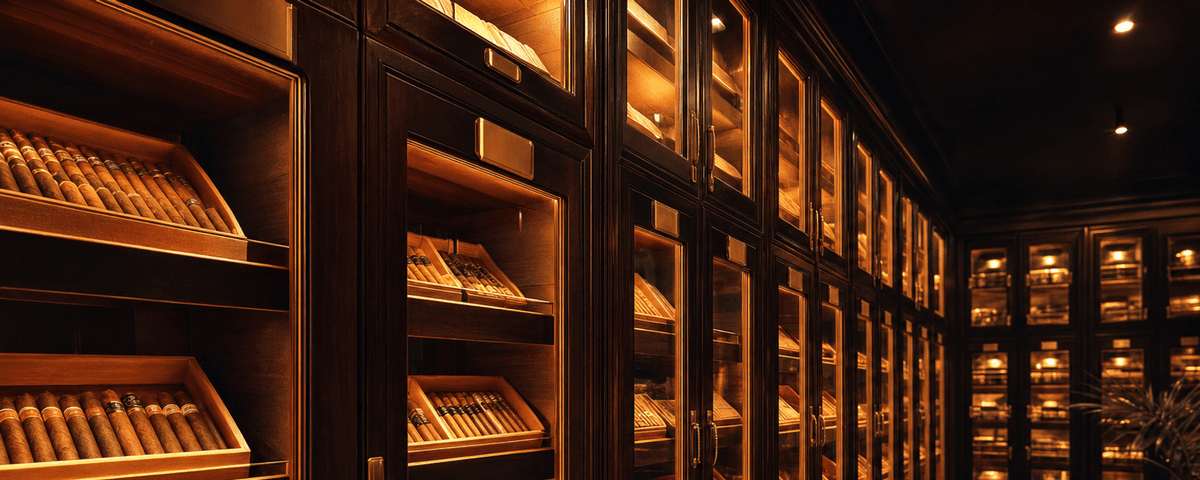
33 座 24 小時恆溫恆濕醇化室
W Cigar Bar 提供的會員醇化空間 · 場地資訊請洽編輯部
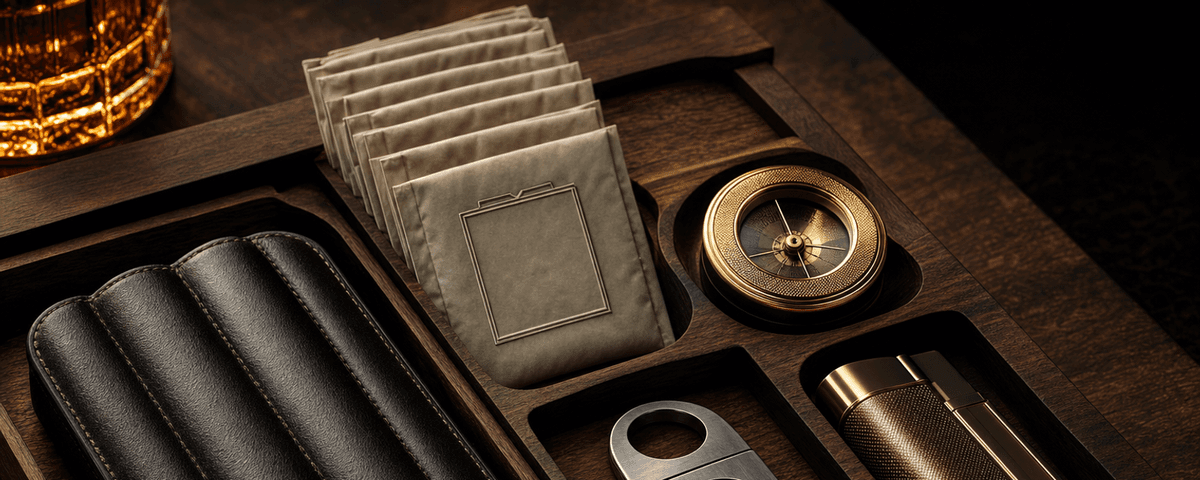
雪茄剪 / 打火機 / 雪茄盒 / Boveda
W Cigar 配件官網 · 專營雪茄配件正品

加 LINE 好友 · 文化諮詢
文化空間資訊 · 紳士沙龍 · 私人包場
本網站內容僅供雪茄文化、歷史、收藏與品吸知識研究參考。菸品有害健康、未滿法定年齡者請勿吸菸。實際規範請依所在地法律為準。
吸菸有害健康・戒菸專線 0800-636363・本站僅供 20 歲以上成年人閱覽。
讀到這裡,你不只是路過的人
留下 Email,加入 W 雪茄聖經內圈——總編輯 Wilson Tsai 親選的學院深文與國際新訊,先你一步送到信箱。
· 教育用途非銷售 · 隨時一鍵退訂 · Email 絕不對外公開 · 由勝茄股份有限公司營運
同分類延伸閱讀

資料來源:W Cigar Bible 編輯部整理 · 雪茄王子 Wilson Tsai 親自審稿
本文僅供雪茄文化、歷史、收藏與品鑑知識研究,不作為菸品促銷、銷售或購買建議。吸菸有害健康,未滿二十歲不得吸菸。