雪茄的獨特風味組合:探索不同葉片的搭配技術

雪茄的風味結構源於葉片的精細搭配,而非單一葉片的優劣。茄衣、茄套與茄芯的不同組合,影響著雪茄的香氣、強度及燃燒特性。茄衣雖占全支重量不多,卻對入口香氣有重大影響,決定了雪茄的整體印象。茄芯的比例則關乎風味的層次與轉折,調配者需掌握不同葉片的特性,以達到甜、苦、辛等風味的平衡。透過對古巴及尼加拉瓜雪茄的研究,我們能更深入理解其獨特的風味表現,並提升品味的層次感。
- 雪茄的風味來自於不同葉片的搭配,重點在於配方的層次與時間點。
- 茄衣對雪茄的香氣方向有重要影響,選擇合適的茄衣能提升整體風味。
- 茄芯的比例與來源決定雪茄的強度與口感,調配時需考量各葉片的角色。
The Unique Flavor Combination of Cigars: Exploring the Art of Leaf Blending
As the editor of the "Cigar Bible," I am often asked by seasoned smokers the same question: Why do some cigars, despite having the same cocoa, woody, peppery, and leathery notes, resemble a symphony, while others are just a pile of flavors? The answer usually lies not in a single leaf but in the logic of blending.
Cigar recipes are not just about adding good leaves together. From the wrapper, binder to filler, different regions, parts, fermentation years, aging conditions, and sizes affect the order of flavors. The true advanced pleasure is understanding how the blender allows a cigar to unfold in stages over 45, 70, or 100 minutes.
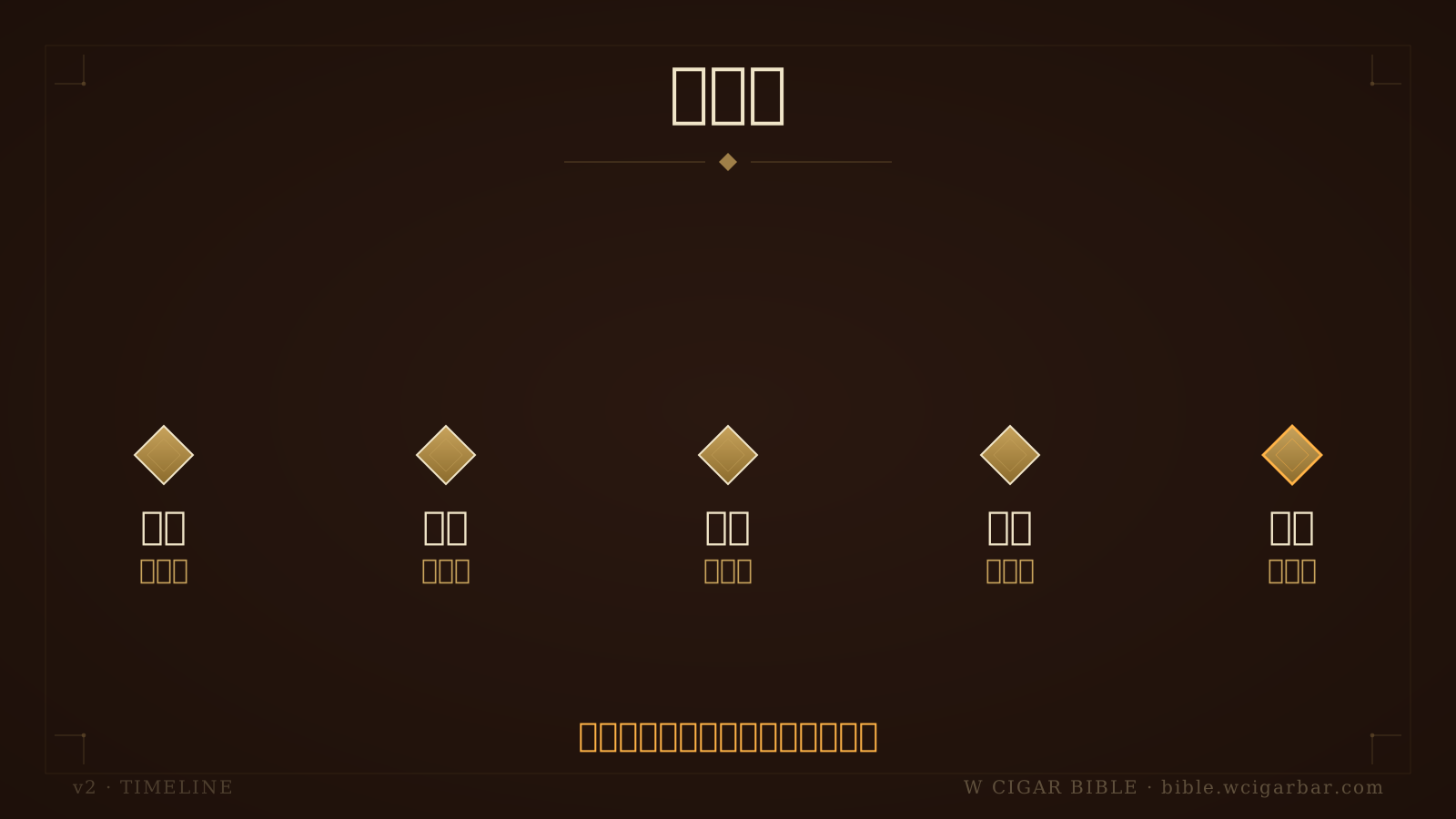
時間軸呈現從冷聞到尾韻的判讀步驟
Understanding Flavor Structure Through Leaf Roles
A long cigar is not a single source of flavor but a combination of three layers of leaves working together. The wrapper usually accounts for only about 8% to 12% of the total weight but has a significant impact on the initial aroma and first impression; the binder is responsible for structure, burn stability, and mid-palate taste; the filler determines the body, strength, and length of the finish. Experienced smokers judge a blend not by asking "which leaf smells the best" but by asking "which leaf speaks at what time."
Taking the commonly seen Vuelta Abajo region in Cuba as an example, Ligero often comes from the upper part of the plant, receiving more sunlight, with higher nicotine and oil content; Seco usually has a delicate aroma, with noticeable herbal and floral notes; Volado has good combustibility and is often used to stabilize the burn line. If a Robusto uses a higher proportion of Ligero, it may feel rich in the first 20 minutes, but if there is insufficient Volado, it may become hot, bitter, and uneven in the latter part.
In my research on different batches of Cohiba Siglo VI, Partagás Serie D No.4, and Hoyo de Monterrey Epicure No.2 from 2006 to 2016, the most noticeable differences were often not "strong or weak," but the order of layers. Partagás often builds its structure with earthy, peppery, and roasted woody notes; Hoyo lays out with creamy, floral, and hay notes; if Cohiba is in good condition, it intersperses bean aroma, sweet grass, and mineral notes.
Precise leaf blending is somewhat like tuning. If the wrapper is too sweet and the filler too heavy, it will be like bass overpowering the melody; if the binder burns too quickly, the flavors will enter the high-temperature phase before they have fused. The value of a mature blend lies in allowing sweet, bitter, spicy, sour, salty, and oily sensations to have precedence and pauses, rather than crowding the tongue simultaneously.
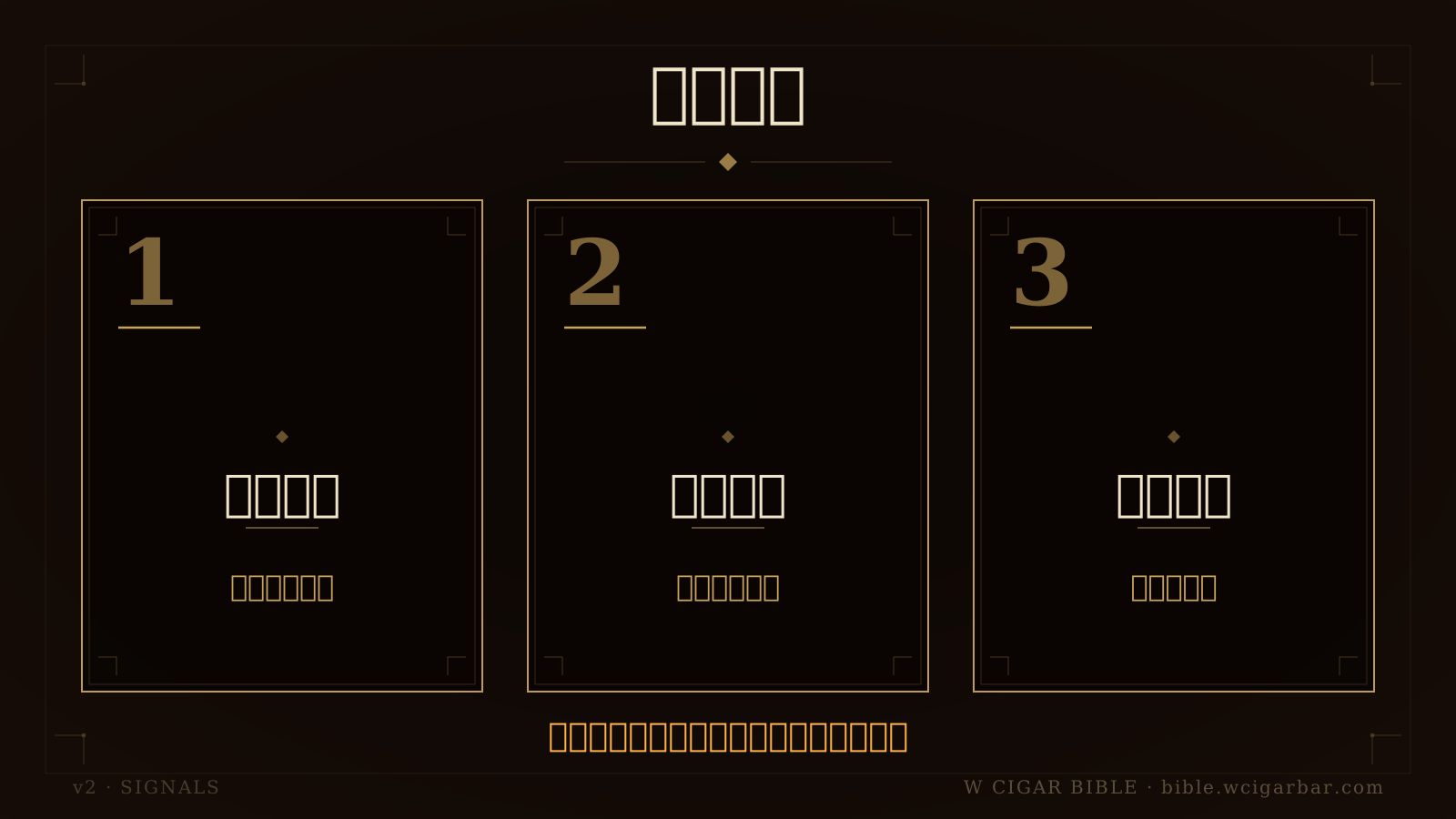
三張卡整理葉片分工節奏與風味平衡
The Wrapper is Not Just Decoration: The Switch for Entry Aroma and Sweetness
Many seasoned smokers know the importance of the wrapper but often underestimate its control over the "aroma direction." Connecticut Shade often brings cream, nuts, hay, and a hint of white pepper; Ecuador Habano tends to present leather, cinnamon, and roasted aromas; San Andrés Maduro often has dark cocoa, coffee grounds, molasses, and damp earth. These are not absolute formulas but are enough as a starting point for interpreting a blend.
Taking the Arturo Fuente Hemingway series as an example, its Cameroon wrapper often exhibits dry wood, cinnamon, and slightly sweet spicy notes in many vintages, forming a soft yet robust profile with Dominican filler. If replaced with Connecticut Broadleaf Maduro, the sweetness and thickness will increase, but the delicate spice notes may be suppressed. The wrapper is like the top note of a perfume, deciding whether you want to continue listening to the story this cigar tells.
However, a darker wrapper does not mean it is stronger. Maduro is just a darker color after processing and aging, which can be sweet, thick, or just bitter. Many Nicaraguan brands have used dark wrappers in large quantities since 2010, but truly successful ones, like Padrón 1964 Anniversary Maduro, rely not on color but on the wrapper's sweetness complementing the Nicaraguan filler’s pepper, coffee, and nutty notes.
When judging wrapper pairing, I particularly look at three points: first, whether the cold draw has a clear direction; second, whether the first centimeter is clean; third, whether the sweetness still exists after halfway. If the front is beautiful and the back is only charred bitterness, it often means the wrapper and filler rhythm are inconsistent, or the burning temperature exceeds the blend's tolerance.
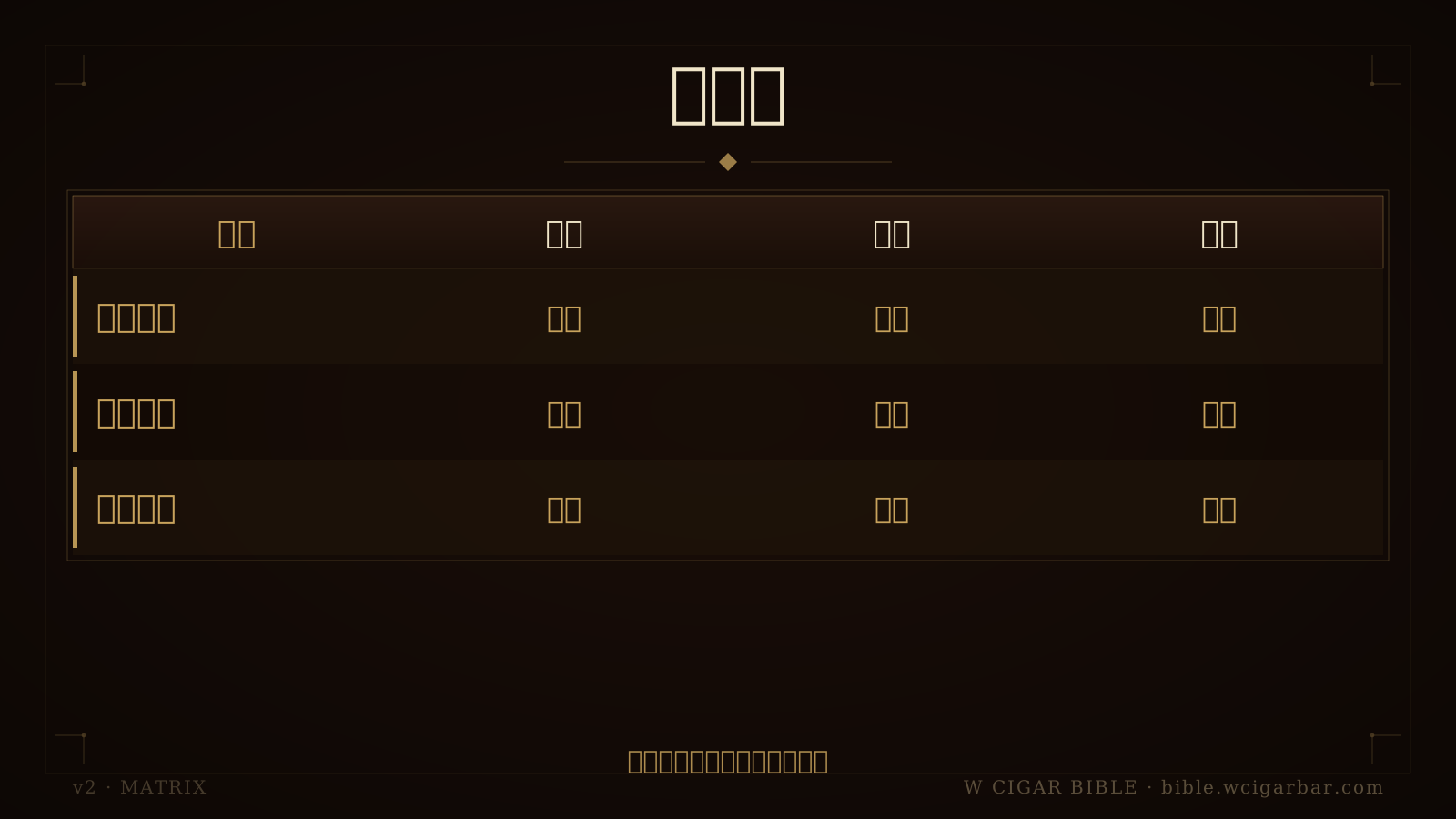
矩陣比較茄衣茄套茄芯的角色差異
Filler Proportion: The Balancing Technique of Ligero, Seco, and Volado
The filler is the main engine of the blend, especially for sizes over 124 mm in length and 50 ring gauge, where the filler combination determines flavor transitions. Ligero provides strength, depth, and oiliness; Seco provides aroma and detail; Volado provides combustion and smoothness. Advanced blending is not about adding more Ligero but ensuring Ligero still has order when it appears in the latter part.
For a typical 5 x 50 Robusto, if using 2 Ligero leaves, 1 Seco, and 1 Volado, it burns slowly and has high concentration, but the front may be slightly tight; if changed to 1 Ligero, 2 Seco, and 1 Volado, the aroma opens up, strength decreases, and floral, nutty, and woody notes are more likely to emerge. Traditional Cuban sizes like Corona Gorda, with a ring gauge of about 46, have a smaller burning cross-section, so a small amount of Ligero can bring out enough tension.
Nicaraguan Estelí Ligero often has black pepper, mineral, and strong coffee notes; Jalapa Seco is more commonly sweet wood, red pepper, and cocoa; Condega often carries herbal and nutty notes. If a blender wants to create a "strong but not sharp" structure, they often use Estelí to provide the backbone, Jalapa to pull out sweetness, and finally rely on the binder and Volado to control combustion.
I have compared Oliva Serie V, My Father Le Bijou 1922, and AJ Fernandez New World, all in the 6 x 52 Toro size. All three have a Nicaraguan backbone, but Oliva Serie V leans more towards black coffee and leather lines, My Father concentrates on pepper and cocoa, and New World has more pronounced soil and sweet spice. The difference lies in the Ligero source, proportion, and how the wrapper catches the strength.
Flavor Strength, Aroma Density, and Burn Rate Formula
Many people equate "strong" with "good," which is the easiest place to get stuck on the advanced path. Strength refers to physiological sensation and nicotine pressure, aroma density refers to whether the aroma is full, and mouthfeel thickness is the texture of the smoke. The three can overlap or separate. A cigar can be strong but empty, or soft but deep; the real brilliance of a blend is turning strength into layers.
The table below is a framework I often use when organizing blend notes. It does not replace actual experience but can help you turn "seems very strong," "bitter at the end," "very fragrant at the beginning" into technical language for discussion.
| Blend Variable | Common Flavor Impact | Possible Risk | Brand Example |
|---|---|---|---|
| Increased Ligero Proportion | Pepper, coffee, leather, oil increase | High temperature, bitterness at the end | Oliva Serie V |
| Increased Seco Proportion | Floral, hay, nut, spice clearer | Body tends to be thin | Hoyo Epicure No.2 |
| Maduro Wrapper | Cocoa, molasses, damp earth, sweetness increase | Sweetness or charred bitterness | Padrón 1964 Maduro |
| Increased Ring Gauge | Smoke volume and roundness increase | Change speed slows | Cohiba Siglo VI |
| Strong Binder Combustion | Stable burn line, clean taste | Aroma thinned | Dominican light-medium blend |
In actual use, I break a cigar into three segments for recording: the front 0 to 30%, middle 30% to 70%, and back 70% onwards. If the front is high in aroma, the middle is empty, and the back is spicy, it is often due to insufficient blend connection; if the front is bland, the middle opens up, and the back is long, it may require a slower pace and suitable humidity.
This is also why the same brand can vary greatly in different sizes. Montecristo No.2's torpedo head and about 52 ring gauge concentrate the front and expand the middle; Montecristo No.4, with about 42 ring gauge, burns faster, with wood and coffee more direct. Size is not just packaging specifications but part of the blend.
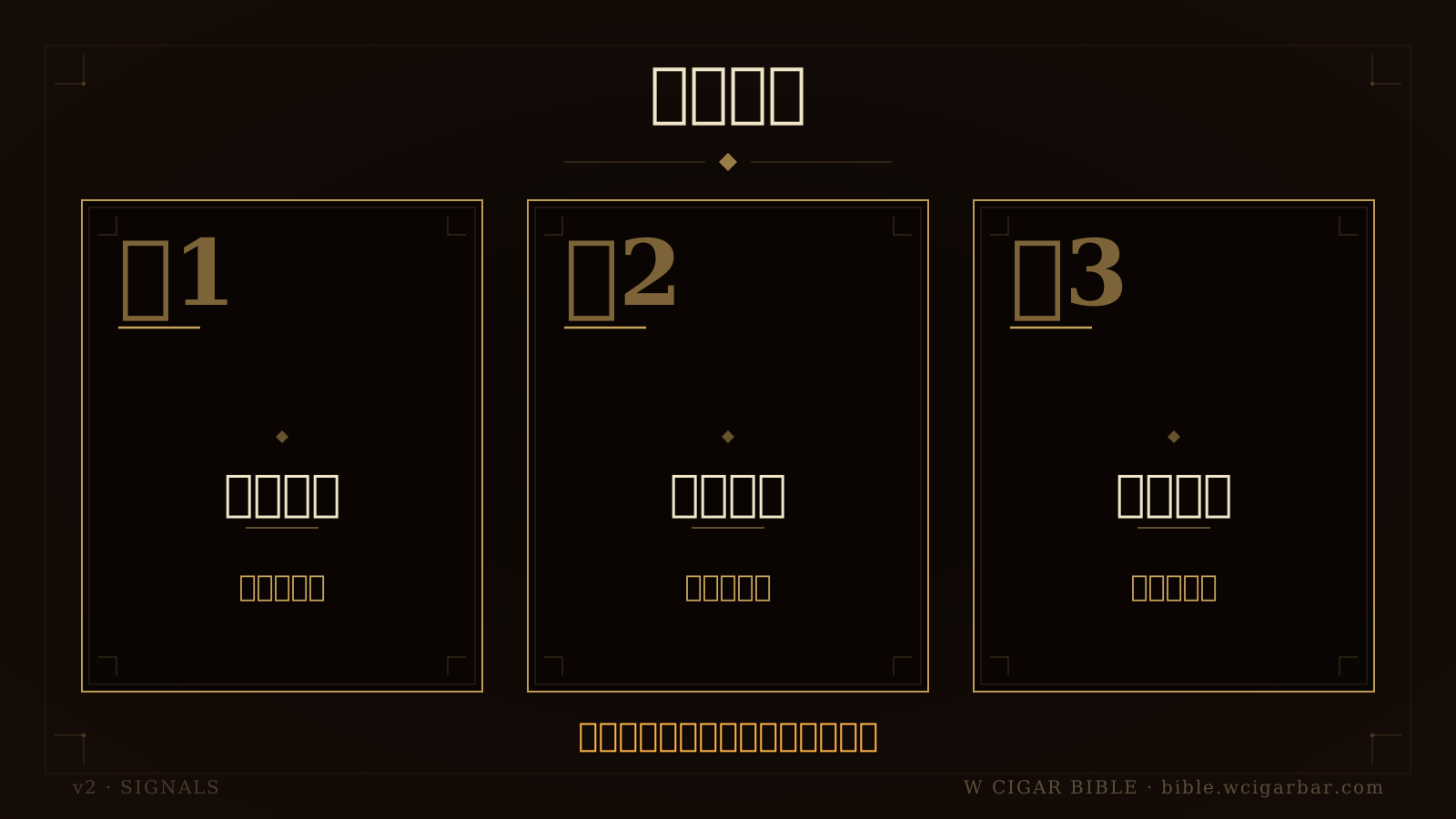
三張卡標示深色強度年份與比例誤解
The Subtlety of Cuban Blends: Less is More in Layer Control
Cuban cigar enthusiasts often talk about "Cuban flavor," but to be precise, it is not a single taste but an intertwining of herbal, honey, mineral, leather, coffee, and salty notes in moderate strength. Especially from 1998 to 2003, due to differences in production, quality control, and preservation status, many cases are worth studying. The charm of Cuban blends lies in often using less strength to create more transitions.
Taking Cohiba Behike 52 as an example, officially launched in 2010, it was widely discussed for incorporating Medio Tiempo leaves. Medio Tiempo is a small leaf that may appear at the top of a few plants, with high oil and concentration, but if used roughly, it can make the cigar heavy. When Behike succeeds, the front has cream, bean aroma, sweet grass, the middle has cocoa and mineral, and the back still retains brightness, exemplifying precise control of strong leaves.
Partagás Lusitanias is another language. This Double Corona, about 194 mm and 49 ring gauge, slowly unfolds earthy, peppery, woody, and roasted bread notes over time. If well-preserved, over 10 years of aging can turn spiciness into rounder leather and dried fruit; but collection value does not guarantee appreciation, still depending on source preservation and market.
Romeo y Julieta Churchill is often underestimated. It does not win by explosiveness but by floral, cedar, light red tea, and creamy notes. If you are used to high-concentration Nicaraguan blends, you may initially find it not stimulating enough; but after slow-burning for 90 minutes, you will find its strength lies in maintaining detail, not in single-point impact.
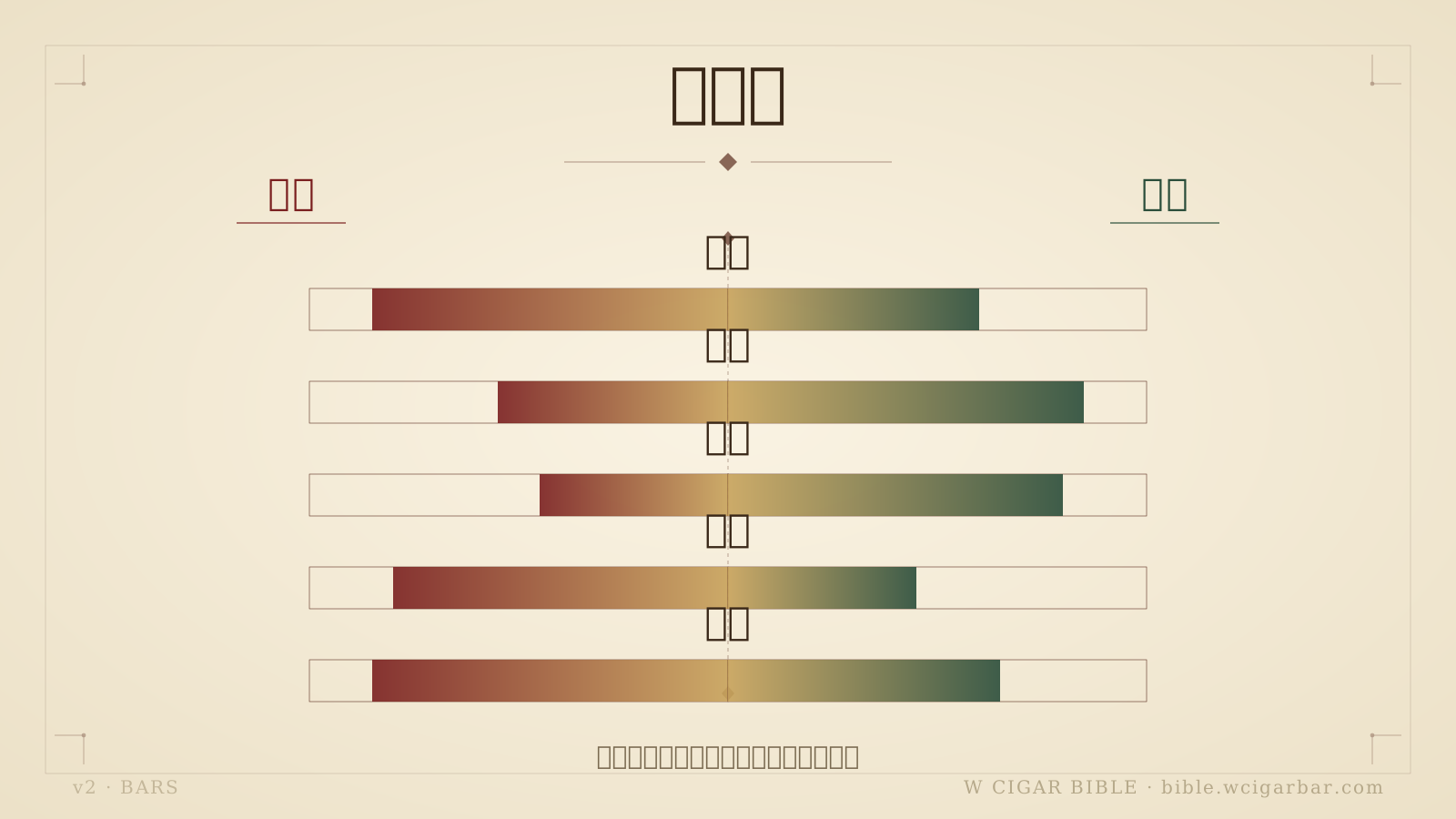
橫條圖比較古巴與新世界的風格取向
New World Blending: Creating More Distinct Personalities with Regional Combinations
Cross-regional combinations of Dominican, Nicaraguan, Honduran, Ecuadorian, and Mexican tobaccos give New World cigars greater blending freedom. Compared to Cuba, which often seeks layers within a single country, the New World often resembles a cocktail, combining different soils, sunlight, and fermentation styles. The core advantage of New World blends is creating distinct profiles through regional differences, but the risk is too many elements losing focus.
Davidoff Nicaragua is a great example. Davidoff has long been known for Dominican elegance, and after launching Nicaragua in 2013, it added Nicaraguan leaves' sweet pepper, coffee, and dark wood while retaining the brand's clean lines. This shows that richness does not have to be rough, and as long as the wrapper, binder, and filler proportions are restrained, Nicaragua can also achieve delicacy.
Fuente Fuente OpusX represents another path for high-end Dominican leaves. Launched in 1995, it proved that the Dominican Republic can also produce strength, oil, and complex spices. A good OpusX will have orange peel, cinnamon, leather, sweet wood, and thick creaminess; if too young, spiciness and grassy notes will be more pronounced, requiring time for the layers to blend.
I suggest seasoned smokers analyze New World blends starting with the following steps:
- First, identify the main aroma of the wrapper: which appears first, sweet, spicy, earthy, woody, or cocoa.
- Then see if there are second regional characteristics in the middle, such as Estelí pepper or Jalapa sweet wood.
- Finally, observe if the back remains balanced or if only nicotine pressure remains.
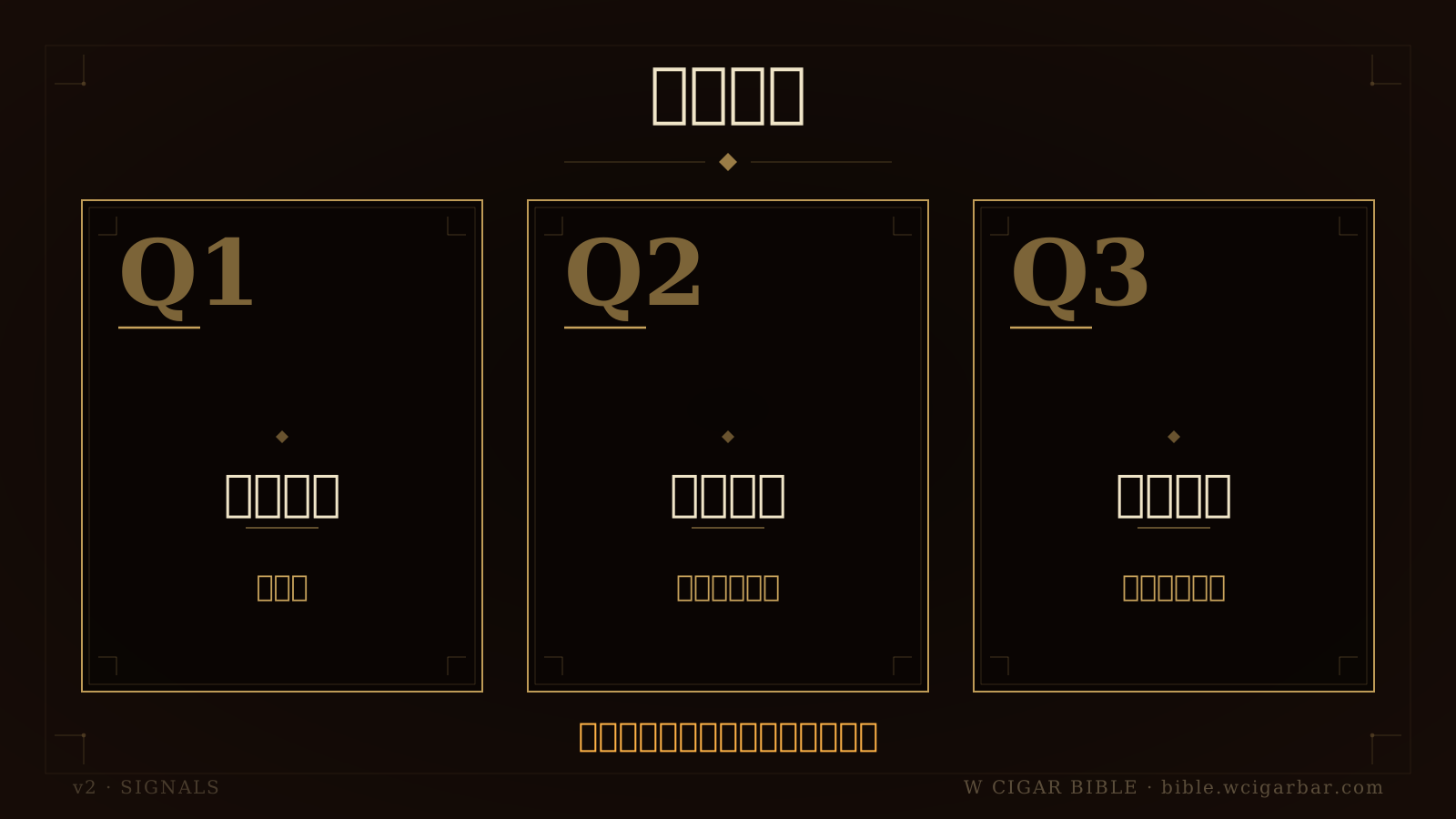
三張問答卡回答深色年份與醇化疑問
Aging, Humidity, and Size: Allowing Blends to Truly Fuse
After leaf blending is complete, time and environment are still needed to allow flavors to fuse. The first 6 to 18 months after boxing are often when ammonia, grassy notes, and sharp spiciness gradually decrease; 3 to 5 years may enter a more stable sweetness and roundness period; over 10 years depends on the original blend, storage humidity, and leaf strength. Aging is not magic; it can only amplify the harmony of a good blend and cannot save an imbalanced leaf combination.
Humidity directly changes your judgment of a blend. At relative humidity above 70%, the smoke may be thick, but burning is slow, and flavors are dull; 65% to 67% often makes Cuban cigar aromas clearer; New World rich blends sometimes perform more rounded at 67% to 69%. If the temperature is consistently above 24°C, the risk increases, and the aroma may appear loose.
Size also affects fusion speed. Lancero, about 38 ring gauge, has a high wrapper proportion, amplifying detail but requiring high burning technique; Robusto, about 50 ring gauge, is balanced and stable; Gordo, over 60 ring gauge, has large smoke volume but slow pace, and if the blend is not three-dimensional enough, it can easily appear monotonous. Choosing a size is actually choosing how to listen to the leaf proportion.
If you have different sizes of the same brand, such as Cohiba Siglo III, IV, VI, or Padrón 1926 No.35, No.9, No.2, you can compare under the same year and similar storage conditions. Don't just remember preferences, remember "which size makes the wrapper more prominent" and "which size makes the back cleaner," this will build your own blend interpretation ability.
Common Questions
The most important skill for advanced players is to break down feelings into four variables: leaf, size, storage, and time, rather than just concluding with like or dislike. The following questions are the blind spots I most often discuss with seasoned smokers.
Does a dark wrapper mean the flavor is always stronger?
Not necessarily. Dark wrappers often carry cocoa, molasses, coffee, or damp earth, but the concentration still depends on the filler proportion, fermentation degree, and burning temperature. Poorly handled Maduro will only bring charred bitterness; well-handled will connect sweetness and thickness to the middle and back.
Why do the same cigars vary greatly in different years?
Crops are affected by rainfall, sunlight, harvest, and fermentation batches each year. Looking at different batches of Nicaraguan leaves from 2014, 2017, and 2020, the pepper and sweetness may differ significantly. Brands will try to maintain style, but complete consistency is unrealistic.
How long does aging take to see leaf fusion?
Light to medium blends usually show clear changes in 2 to 5 years; high Ligero or dark wrapper blends may be more complete in 5 to 8 years. Over 10 years depends on the original concentration; if the blend was initially thin, aging too long may cause aroma decline.
Can Cuban and New World cigars be rated with the same standard?
The same structural table can be used, but the same performance cannot be expected. Cuban cigars often focus on detail, transitions, and salty mineral notes; New World cigars often focus on profile, concentration, and regional stitching. Ratings should incorporate brand language, not just compare strength.
Does collecting have investment value?
Some limited, discontinued, or well-preserved boxed cigars do have price changes in the market, such as Cohiba, Trinidad, or some Regional Editions. But collection value does not guarantee appreciation, still depending on source preservation and market. For me, understanding the blend first, then talking about collection, prevents being led by the rarity.
The world of leaf blending becomes more humble the deeper you go. Every good cigar is not the victory of a single leaf but the balance completed by land, fermentation, rolling, aging, and size. I enjoy when seasoned smokers not only talk about brand reputation but can discuss who appears first, who supports, and who leaves the finish in a puff of smoke. Understanding deconstruction leads to true appreciation; understanding appreciation prevents being led by strength and price.
—Cigar Prince Wilson Tsai
Smoking is harmful to health. Smoking is prohibited for those under twenty. Quitline: 0800-636363. This article is for reference by adults over the age of twenty for cigar culture, preservation, and regulatory knowledge, not a tobacco advertisement, promotion, or purchase suggestion.
Like this article?Share with friends
Share this W Cigar Bible piece with friends who want to learn cigar culture, storage, and tasting.
想把這篇 化為實踐
雪茄聖經是知識;雪茄文化要在空間裡發生
W Cigar Bar 大安總店資訊
台北大安區 · 雪茄聖經總編輯 Wilson Tsai 主理的雪茄文化空間
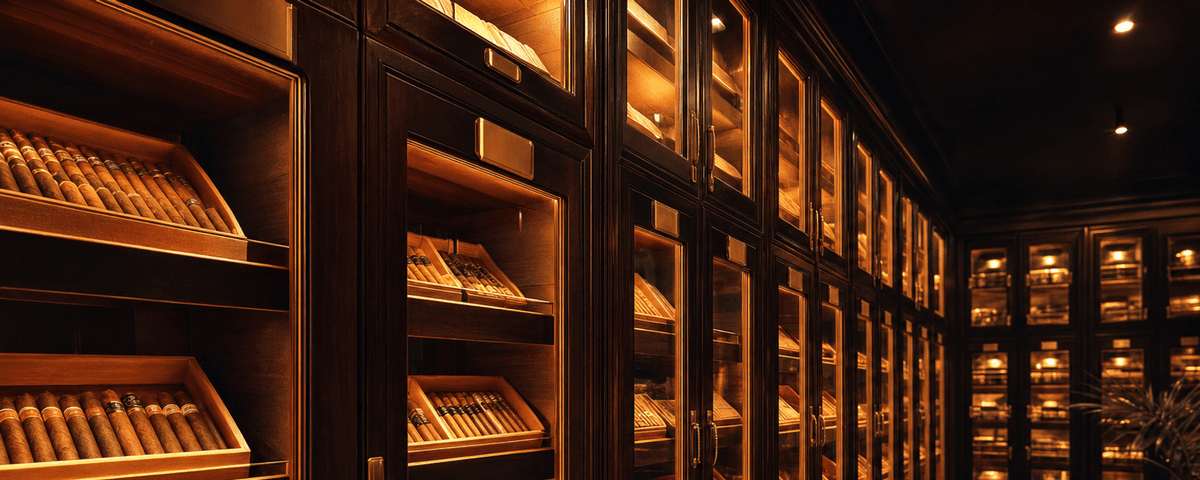
33 座 24 小時恆溫恆濕醇化室
W Cigar Bar 提供的會員醇化空間 · 場地資訊請洽編輯部
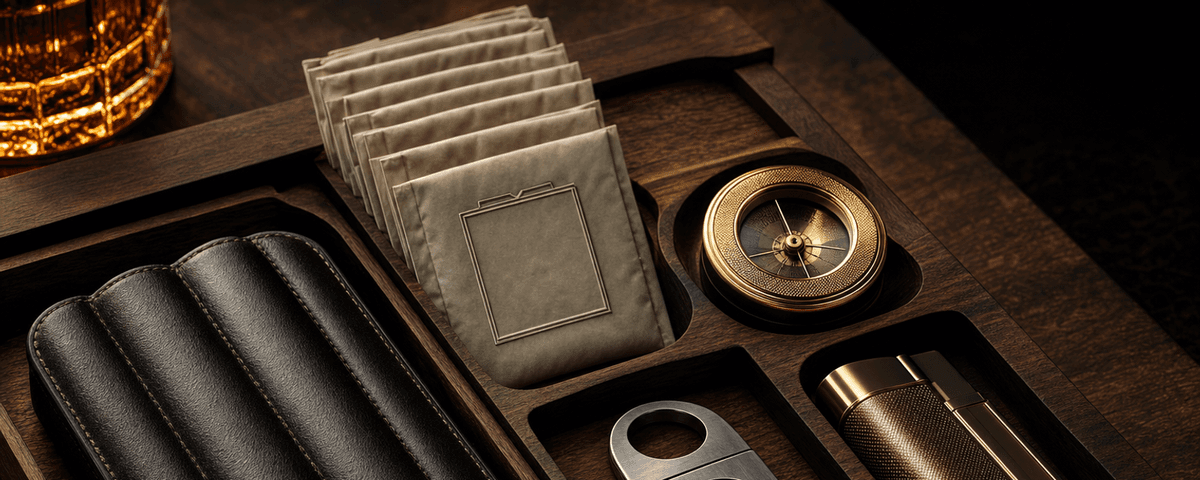
雪茄剪 / 打火機 / 雪茄盒 / Boveda
W Cigar 配件官網 · 專營雪茄配件正品
加 LINE 好友 · 文化諮詢
文化空間資訊 · 紳士沙龍 · 私人包場
本網站內容僅供雪茄文化、歷史、收藏與品吸知識研究參考。菸品有害健康、未滿法定年齡者請勿吸菸。實際規範請依所在地法律為準。
吸菸有害健康・戒菸專線 0800-636363・本站僅供 20 歲以上成年人閱覽。
讀到這裡,你不只是路過的人
留下 Email,加入 W 雪茄聖經內圈——總編輯 Wilson Tsai 親選的學院深文與國際新訊,先你一步送到信箱。
· 教育用途非銷售 · 隨時一鍵退訂 · Email 絕不對外公開 · 由勝茄股份有限公司營運
同分類延伸閱讀
資料來源:W Cigar Bible 編輯部整理 · 雪茄王子 Wilson Tsai 親自審稿
本文僅供雪茄文化、歷史、收藏與品鑑知識研究,不作為菸品促銷、銷售或購買建議。吸菸有害健康,未滿二十歲不得吸菸。