雪茄的切割技巧與風味影響
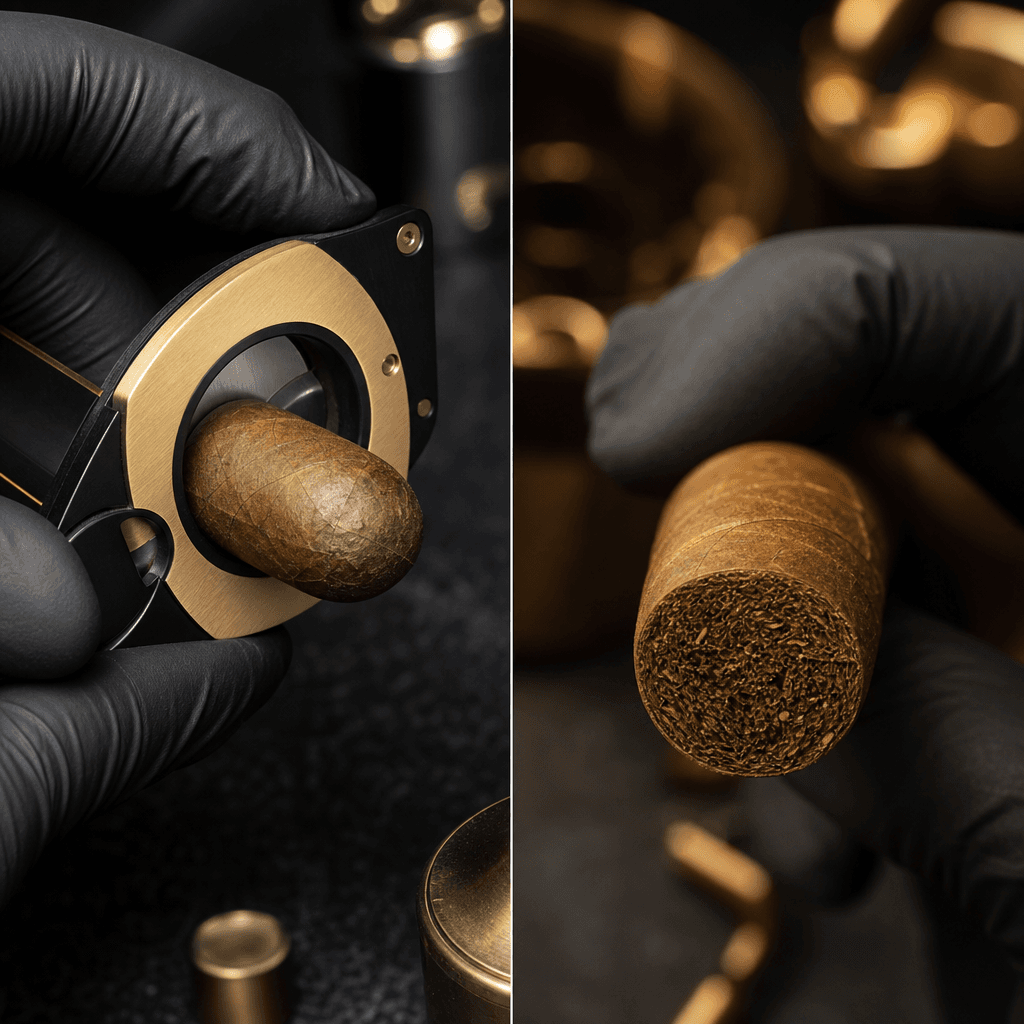
雪茄的切割技術對於品味體驗至關重要。切割不僅影響吸阻與煙氣溫度,還能改變香氣的層次感。了解雪茄頭部結構,選擇合適的切割方式,能讓煙道穩定,避免煙帽脫落。直切、V切和Punch圓孔切各有優缺點,適合不同環徑的雪茄。直切提供清晰的風味,V切則集中煙氣,而Punch則保持煙帽完整。對於尖頭雪茄,應小心調整切割深度,以避免影響吸阻。掌握切割技巧,能讓雪茄的風味更加豐富。
- 切割深度應控制在煙帽邊線上方約1毫米,以避免煙帽鬆脫。
- 直切適合直身雪茄,能呈現雪茄的原本風味比例。
- V切適合環徑較大的雪茄,能集中煙氣並保留煙帽完整度。
Cigar Cutting Techniques and Flavor Impact
I often say that the first puff of a cigar doesn't start with fire, but with the cut. Cutting may seem like just opening a hole, but it actually changes the draw resistance, smoke temperature, oil concentration, and even affects how you perceive the different stages of a cigar.
After beginners learn to taste and exhale, the next step is to turn "cutting" into a controllable technique. As the editor of "Cigar Bible," I've seen too many people ruin a good cigar with a bad cut, and I've also seen a simple cut transform a mediocre performance into something clear and clean.
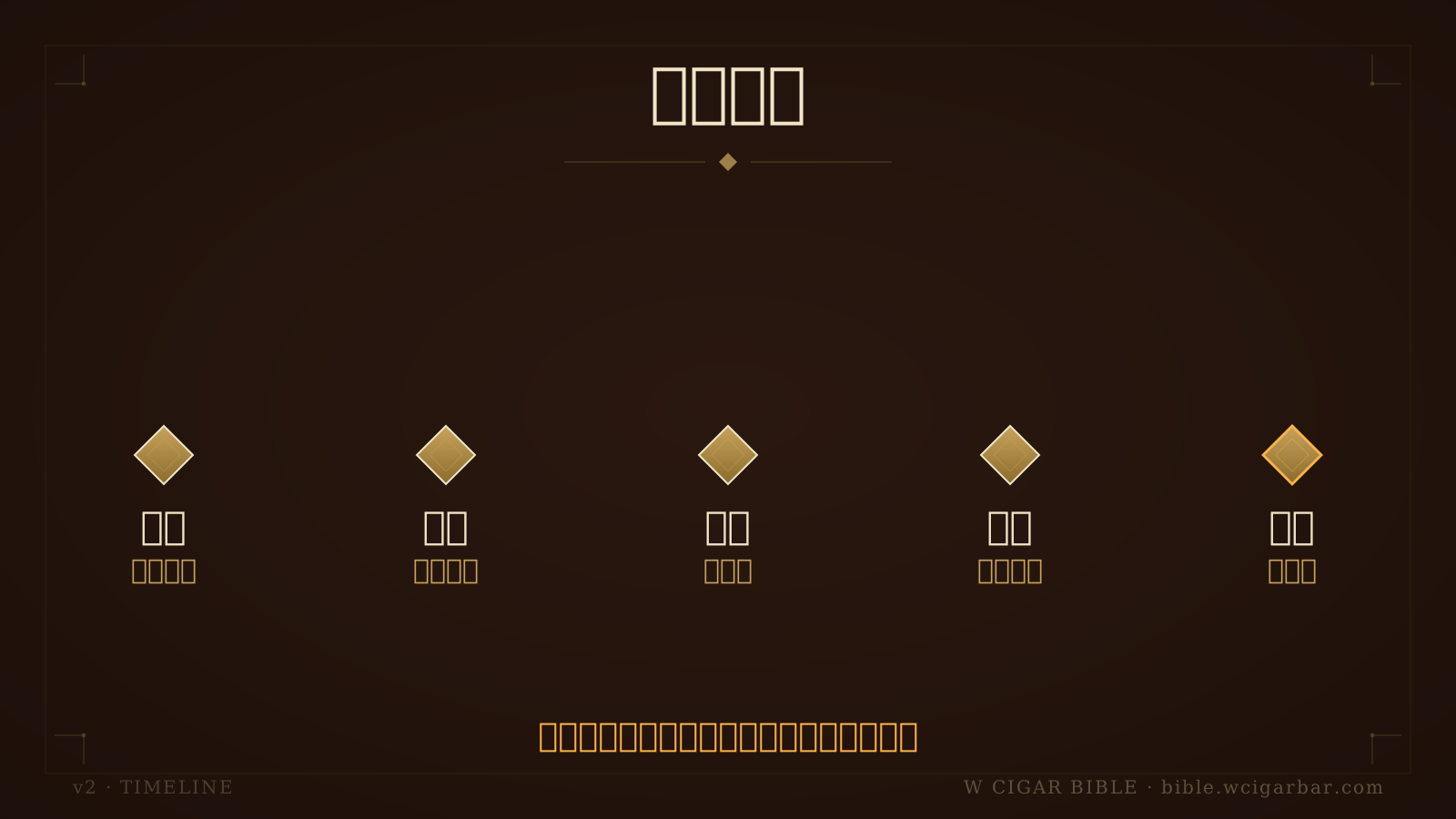
流程圖呈現看帽判濕選刀下刀與冷吸微調
Understanding the Cigar Head: Cutting the Structure, Not Just the Wrapper
The head of a cigar has one or more caps, usually referred to as the cap, which serves to secure the wrapper and seal the head end. For common parejo straight cigars, such as the 50-ring gauge Hoyo de Monterrey Epicure No.2, the cap line is about 2 to 4 millimeters from the head end. If the cutting depth exceeds this line, the wrapper may loosen, and each subsequent bite and rotation could enlarge the crack.
The core of cutting is not to make a big hole but to establish a stable smoke channel without damaging the cap. This is why the same cigar can have different expressions with different cutting methods: the larger the cut surface, the more smoke volume, and the sweetness and spiciness may be more direct; the smaller the cut surface, the more concentrated the draw, and the aroma layers may be finer, but it could also be stifled.
When I was organizing records from 2017 to 2023 of multiple batches of Montecristo No.2 and Partagás Serie D No.4, the most common mistake was not a dull blade but cutting too deep. Especially beginners worried about a smooth draw, cutting more than 5 millimeters on the first cut, resulting in the cap falling off, tar accumulating on the lips, and the original cocoa, woody, and creamy notes turning into a wet bitter taste.
When judging the cutting position, you can first find the circular seam of the cap and let the blade fall about 1 millimeter above the seam. Dry cigars are more brittle, while cigars with higher humidity are more prone to being crushed; if the storage environment is between 65% and 69% RH, the head end is more elastic, and the cut is cleaner. A good cut should be smooth, uncracked, and with controllable draw resistance, not just pursuing large smoke volume.
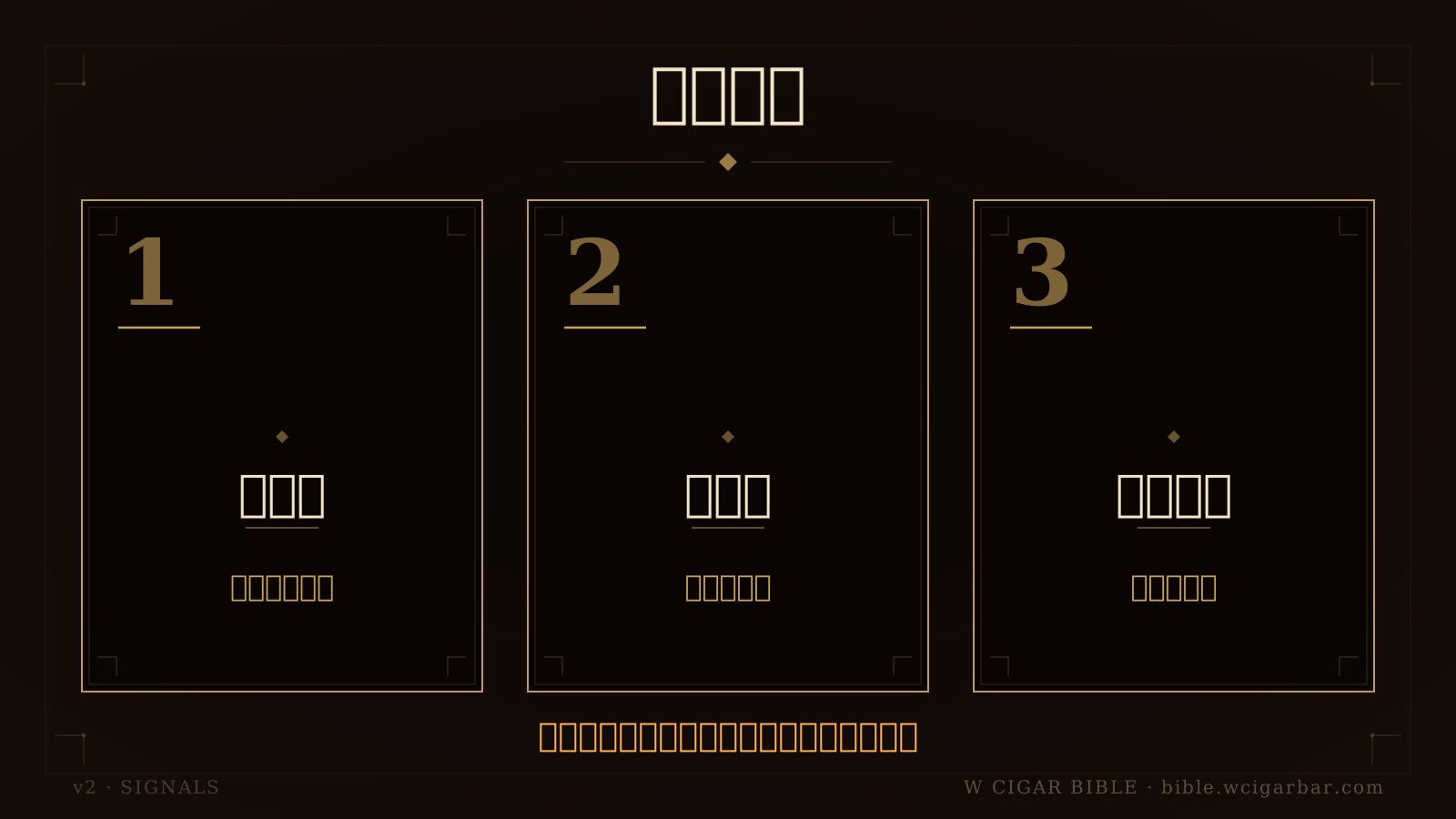
三張卡整理看煙帽控吸阻與利刃快切重點
Straight Cut: The Standard, Yet Most Testing of Skill
The straight cut is the most common method using double-bladed, single-bladed cutters, and cigar scissors, suitable for Robusto, Toro, Churchill, and other straight styles. For example, with the 52-ring gauge and 150-millimeter length of Cohiba Siglo VI, if the straight cut is controlled above the cap line, it can provide an open smoke channel, and the early grass, honey, and roasted grain notes are usually clearer; if the cut surface is too large, the smoke becomes hot, and bitterness will appear earlier in the later stages.
The straight cut best presents the original proportions of the cigar, but the premise is that the blade is sharp, the angle is correct, and the cut is decisive. Many people use a dull blade and repeatedly make additional cuts, which is more dangerous than cutting too deep at once, because each additional cut pulls the wrapper fibers once. In 2020, I compared samples from the same box of H. Upmann Magnum 46, and those cut with a sharp blade retained nutty and light coffee notes in the middle section; those crushed by a dull blade showed obvious tongue burn after 20 minutes.
There are also details in the straight cut. The head end of the cigar can be slightly moistened but not softened; before cutting, place the cigar horizontally into the blade, with the line of sight parallel to the cap line. If using a tabletop guillotine, you can let the head end stick to the flat surface before cutting to reduce slant cuts. Double-bladed cutters are usually easier to achieve a clean cut than single-bladed cutters because both sides are stressed simultaneously, preventing the cigar from being pushed to one side.
I recommend beginners start with a straight cut to establish a baseline, especially for cigars with a ring gauge of 46 to 52. Cigars like Ramón Allones Specially Selected, Bolívar Royal Coronas, and Davidoff Aniversario No.3 can let you clearly feel the relationship between the size of the cut surface and the diffusion of flavor. The straight cut is not the most glamorous method, but it is the most honest.
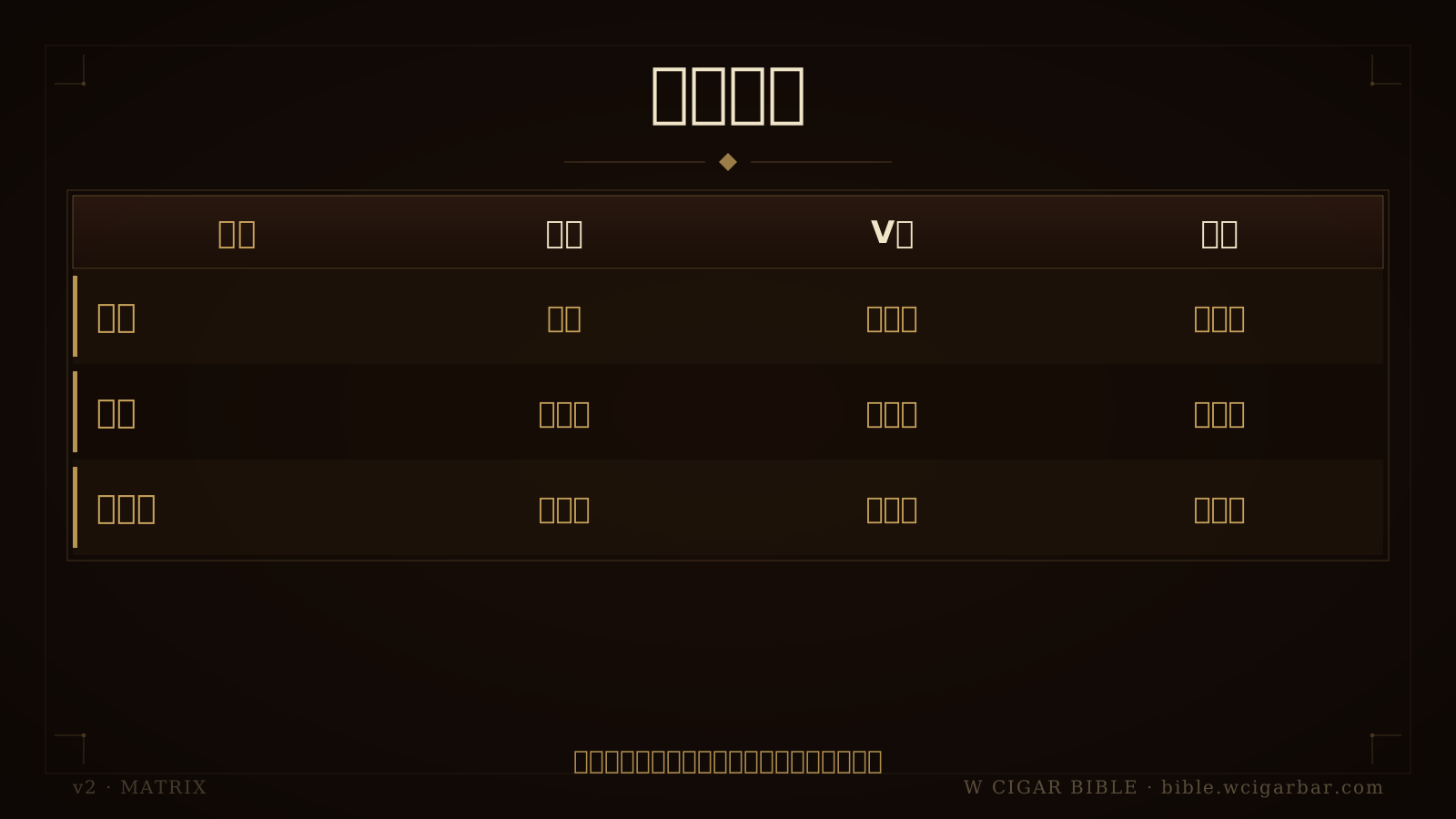
矩陣比較直切V切與孔切的切面煙氣風味
V Cut: Concentrating Smoke, Focusing Sweetness and Spiciness
The V cut creates a wedge-shaped groove at the head end, with the cut surface usually smaller than a deep straight cut, but the smoke channel is concentrated in the center. This method is suitable for larger ring gauge cigars, such as Toro Gordo and Double Robusto with a ring gauge of 54 or more. For the 54-ring gauge Trinidad Vigía, the V cut can concentrate cream, wood, and a hint of citrus peel on the center of the tongue, and the draw resistance is looser than a small punch.
The advantage of the V cut is that it gives direction to the smoke, but the disadvantage is that if cut too deep, bitterness and tar will accumulate at the bottom of the groove. In 2019, I recorded the same batch of Padrón 1964 Anniversary Exclusivo, and the natural straight cut had a more substantial performance, while the V cut made the cocoa and black pepper sharper, with high recognizability in the first 30 minutes, but if the smoking pace is too fast, the heat in the later stages also rises more obviously.
The V cut is particularly suitable for those who want to maintain the integrity of the cap. Because it doesn't shave off the entire head end but digs a groove in the center, the contact surface with the lips still has support. For cigars with a ring gauge of 50 or more and a thinner wrapper, this is very helpful, such as Romeo y Julieta Wide Churchills, where a too-large straight cut can easily affect the wrapper edge due to lip moisture; the V cut can reduce the chance of unraveling.
But small ring gauge cigars may not be suitable for a deep V. For Corona and Petit Corona with a ring gauge of 38 to 42, the V cut can easily reach the cap support point, and the smoke can become overly concentrated, amplifying the spiciness. If using a V cut, I would choose a shallow V, just enough to penetrate the cap without pursuing a very deep groove.
Punch Cut: Conservative, Clean, But Not Suitable for All Cigars
The punch cut creates a circular hole at the head end, with common sizes of about 7, 9, and 11 millimeters. Its advantage is preserving the integrity of the cap, providing a clean taste, and preventing leaf fragments from entering the mouth. For round-headed cigars with a ring gauge of 50 or more, such as Hoyo de Monterrey Epicure No.2 or Quai d’Orsay No.50, a 9-millimeter punch usually provides mild and stable draw resistance.
The punch reduces the smoke channel, so the flavor often appears delicate, but it can also make rich cigars feel stifled, wet, and hot. For example, Partagás Serie D No.4 has leather, pepper, and earthy notes, and if only a small hole is punched, the early stages may feel heavy and not unfold; switching to an 11-millimeter or double-hole punch, the spice notes will open up more, but the cap can still remain intact.
There are two things to note with the punch cut: first, it is not suitable for pointed cigars; second, it is not suitable for cigars with a dry head end or a wrapper that already has cracks. The punch is a rotary force, and if too much force is used, the wrapper will crack radially along the edge of the hole. In 2021, I saw this situation with a batch of Montecristo Open Master in a dry environment; when the humidity was below 62% RH, edge cracks appeared more easily than with a straight cut.
If you want more variation with the punch, you can use the double-hole method: punch a hole in the center and another beside it to form a wider smoke channel. This method is suitable for Nicaragua or Dominican large ring gauge cigars with a ring gauge of 54 or more, such as Arturo Fuente Don Carlos Eye of the Shark, which is not suitable for a punch due to its unique head shape; but Oliva Serie V Melanio Double Toro can use a double hole to make the rich sweetness smoother.
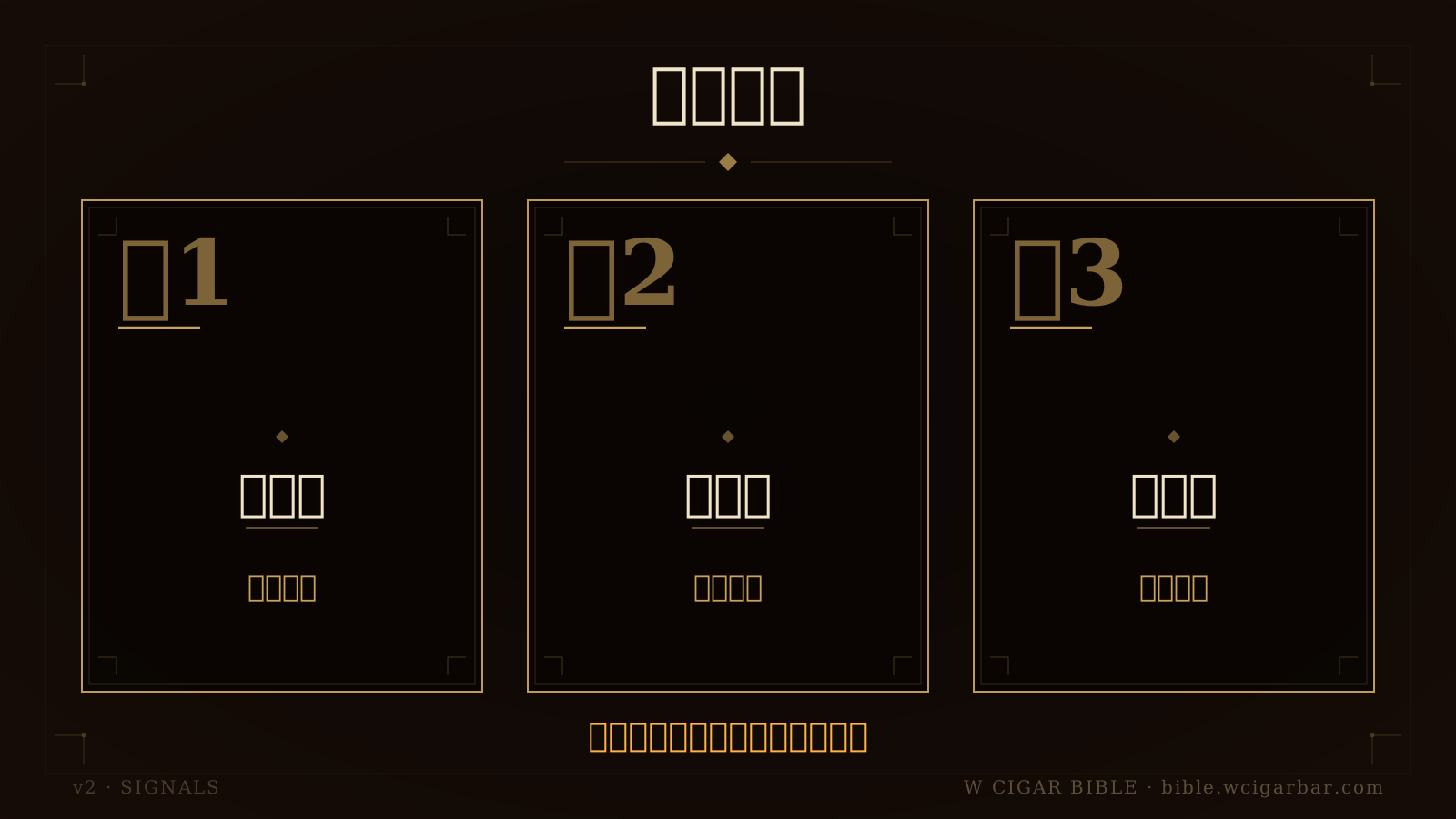
三張卡列出切太深鈍刀鋸與追大煙錯誤
Figurado, Torpedo, and Belicoso: Slope and Depth Determine Draw Resistance
Cutting pointed cigars is more interesting and easier to make mistakes than straight cigars. Montecristo No.2, Partagás Serie P No.2, and San Cristóbal de La Habana La Punta are typical torpedo or belicoso directions. Their heads gradually taper, and a difference of 2 millimeters forward or backward in the cutting position can make a significant difference in draw resistance.
Do not cut too much at once with pointed cigars; start with a small cut and then adjust to control draw resistance. I usually cut off about 3 millimeters of the tip to make a small flat surface with a diameter of about 6 to 8 millimeters and first feel the cold draw. If the draw resistance is too tight, I make an additional cut of 1 millimeter. This method is safer than cutting to a large flat surface at once because the smoke channel area increases rapidly the further back you cut on pointed cigars.
A slant cut is also a usable technique, especially on torpedoes. By angling the blade slightly at 30 degrees, an elliptical cut surface can be formed, giving direction to the smoke on the tongue. For example, with a 2022 Vegas Robaina Unicos, the wood and grass notes were tighter with a small straight cut; after a slant cut, the smoke was wider, and the sweet earth and coffee notes became open. However, a slant cut increases the force on one side of the wrapper, and a dull blade can easily tear it.
The etiquette for torpedoes is not to bite open the tip. A bitten cut has uneven fibers, and when the humidity rises, it will stick to the lips, and the later stages are more likely to accumulate bitterness. If there is no suitable tool, it is better to use sharp small scissors to make a clean small cut within the cap line rather than tearing with teeth. The structure of a good cigar is craftsmanship, and the cut should also respect this structure.
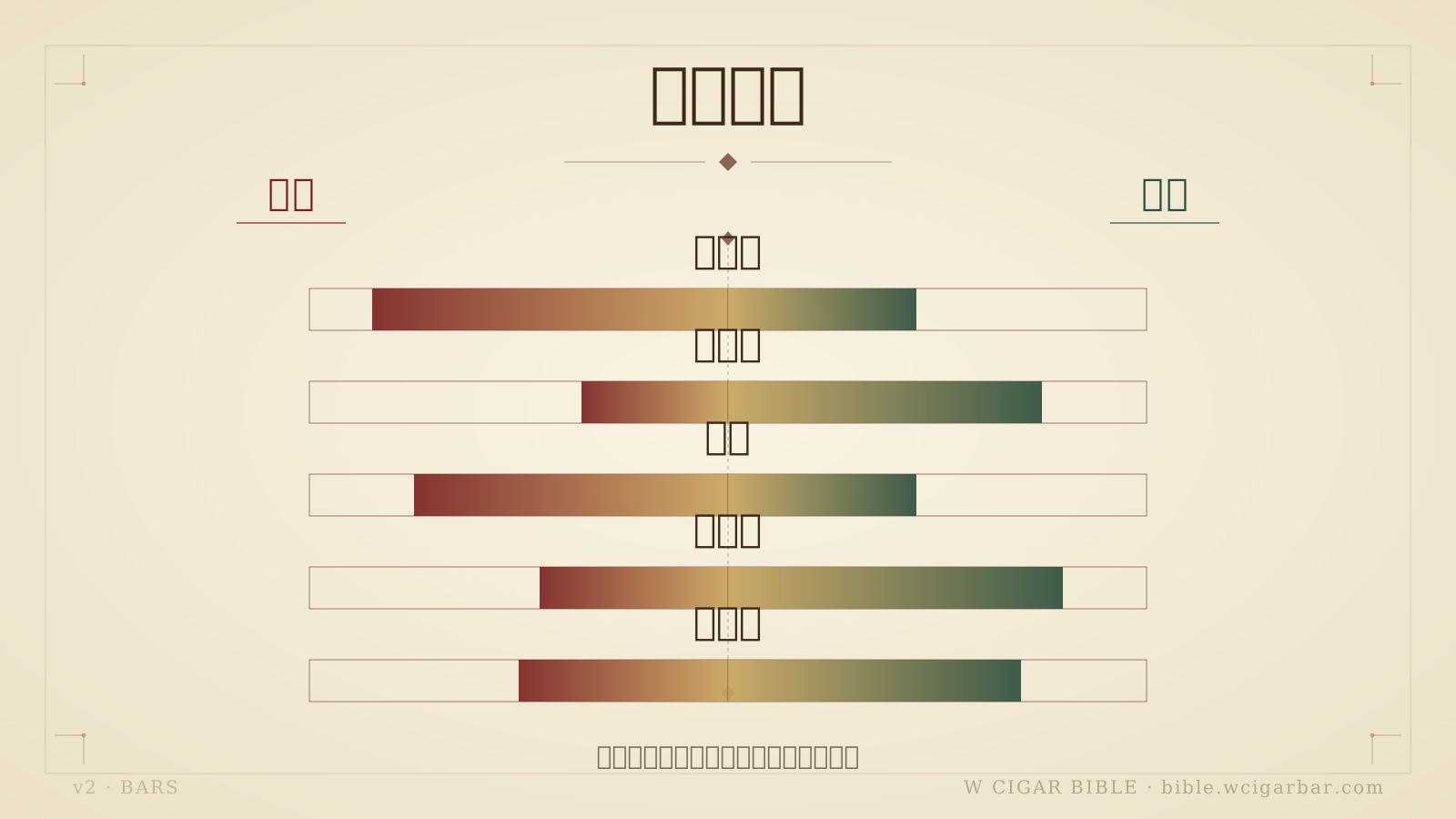
長條圖對比大切與小切在煙氣吸阻溫度的差異
Tools, Humidity, and Rhythm: Making Cutting a Stable Process
Even the best method requires tools to complete. Double-bladed guillotines, V cutters, punches, and cigar scissors each have their advantages; but regardless of which one, blade cleanliness and sharpness are more important than brand names. After cutting oily cigars, the blade surface will retain smoke oil and fine debris, which over time will make the cut sticky, causing crushing instead of cutting.
A stable cutting process involves first observing the cap, then selecting the tool, making a small cut, and finally confirming with a cold draw, rather than relying on habit to cut all the way through. Below is a simple table I use in my daily records, especially suitable for friends who already understand basic tasting and exhaling and want to establish their judgment system.
| Cigar Shape / Ring Gauge | Suggested Cutting Method | Flavor Impact | Notes |
|---|---|---|---|
| Robusto 50 | Straight cut or 9mm punch | Balanced, moderate smoke volume | Cut above the cap line |
| Toro 52-54 | Straight cut or V cut | More open sweetness, concentrated spices | Do not cut V too deep |
| Double Robusto 54+ | V cut or double-hole punch | Concentrated smoke but not stifled | Control smoking pace |
| Petit Corona 40-42 | Shallow straight cut | Clear aroma, avoid overheating | Deep V not recommended |
| Torpedo / Belicoso | Small straight cut and then adjust | Draw resistance can be gradually opened | First cut about 3mm |
The actual operation can establish stability with four steps:
- Observe the cap seam and wrapper cracks.
- Confirm storage conditions, ideally between 65% and 69% RH.
- Be conservative when choosing the cutting method, especially for pointed and aged cigars.
- Decide whether to make additional cuts after the cold draw, without rushing to enlarge the cut surface.
If you find the draw resistance is tight after cutting, do not immediately cut deeper. You can first gently squeeze the cigar from the foot to the head to check for hard spots; you can also use a fine needle to tidy the smoke channel. In 2018, with a batch of well-aged Punch Punch, I encountered a case where the head was perfectly cut, but the middle section was tightly rolled, and additional cuts could not solve it, instead increasing the heat.
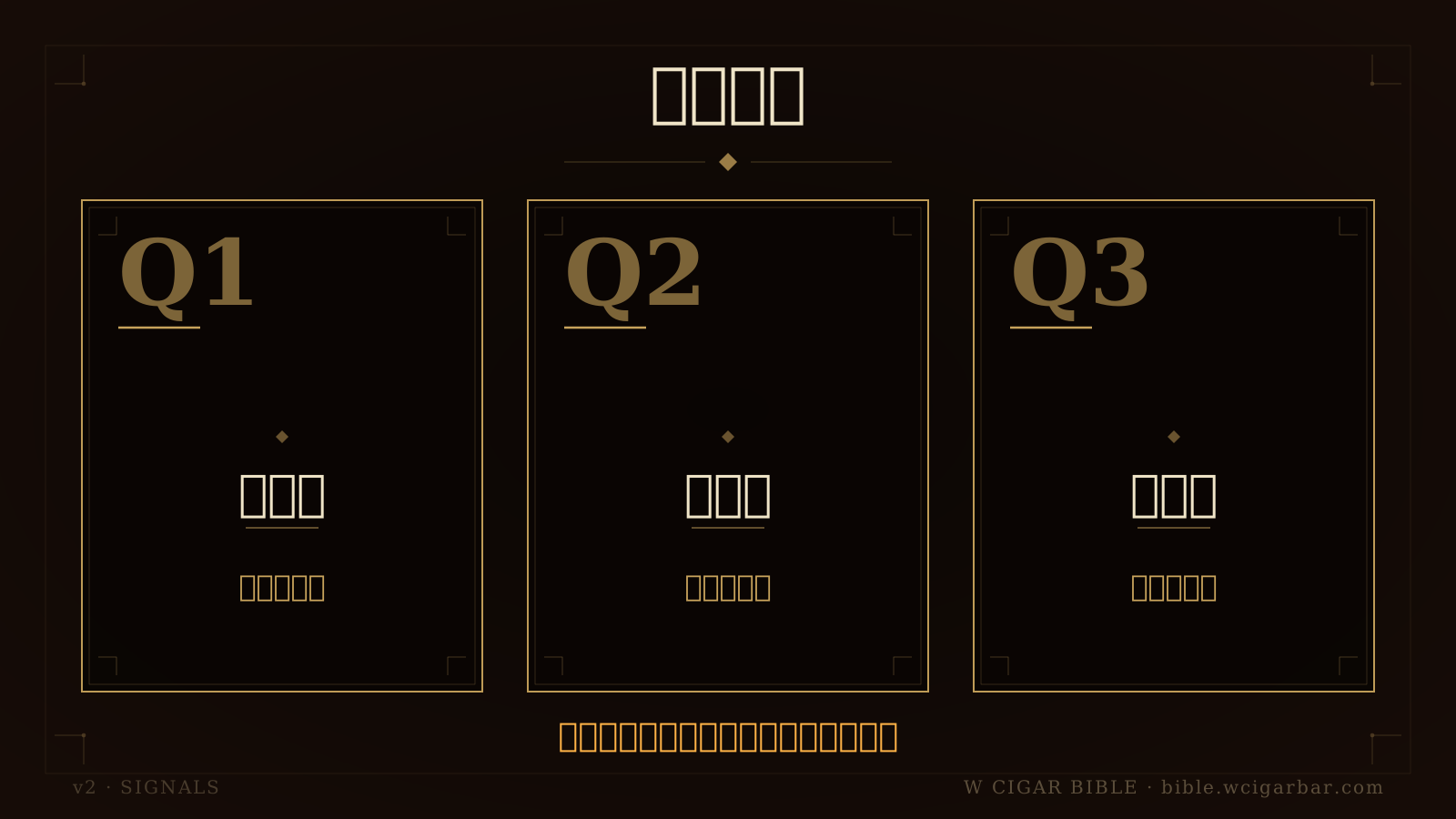
快問快答卡片整理切太淺切太深與無工具處理
Different Flavor Types Respond Differently to Cutting
Elegant cigars are often suitable for smaller, cleaner cuts. Cigars like Quai d’Orsay No.54 and H. Upmann Connoisseur No.1, with creamy, almond, hay, and light woody styles, may have their early delicate notes overwhelmed by smoke volume if the cut surface is too large. I would use a shallow straight cut or a 9-millimeter punch to let the aroma unfold slowly, rather than opening a large smoke channel from the start.
The more delicate the cigar, the more restrained the cut needs to be; the more robust the cigar, the cut can be gradually widened depending on draw resistance and ring gauge. For rich cigars like Liga Privada No.9, Oliva Serie V, and Padrón 1926, using too small a punch can sometimes compress the dark chocolate, coffee, and pepper into a single thick bitterness; switching to a straight cut or V cut, the layers are often easier to identify.
The vintage and aging status also affect the choice. Cuban robustos produced around 2014, if well-preserved, often have more harmonious leaf oils and moisture, but the wrapper may also be more fragile; I would avoid a violent punch and use a sharp shallow straight cut instead. Conversely, newer, larger ring gauge non-Cuban cigars often have a solid structure, and a V cut can quickly bring out the sweet and spicy notes.
It also depends on what you want to read. If the goal is to observe aroma layers, I prefer a conservative cut to keep the smoke temperature lower; if emphasizing mouthfeel, straight cuts and V cuts are more direct. Cutting is not a fixed answer, but a flavor tuning. The knife in your hand is the first tuning knob.
Common Questions
What if the cut is too shallow?
A shallow cut is usually not a disaster; just make a cold draw judgment first. If the draw resistance is obviously tight, make an additional cut of 0.5 to 1 millimeter. Additional cuts should be small and frequent, not cutting past the cap line out of impatience. Once the wrapper unravels, it's hard to restore the original structure.
Can a deep cut be remedied?
If the cap falls off, you can use a small amount of vegetable cigar glue to repair the edges or reduce biting and rotating while smoking. Do not keep pushing the cut with your tongue, as humidity will enlarge the crack. A deep cut often brings heat, bitterness, and tar, which can only be alleviated by reducing the pace.
Why does the taste change when using different cutting methods on the same cigar?
The cut changes the smoke volume, flow rate, and the area of contact with the tongue. A straight cut is more open, a V cut is more concentrated, and a punch is more restrained. Flavor is not only determined by the tobacco leaves; the way smoke passes through the cut also changes your perception.
Does a larger ring gauge mean a larger cut?
Not necessarily. For ring gauges of 54 or more, consider a V cut or a larger punch, but still check the rolling tightness. If the cold draw is already smooth, the cut does not need to be enlarged. Large ring gauge cigars already have a lot of smoke volume, and cutting too large can make the later stages heat up faster.
What can be done without professional tools?
In an emergency, you can use a clean, sharp small pair of scissors to make a flat small cut within the cap line. Do not bite with your teeth or use a dull blade to saw. A rough cut will let leaf fragments enter the mouth and will destroy the wrapper support, affecting the entire experience.
Which is more suitable for beginners, V cut or punch?
If choosing only one, I would first recommend learning with a V cut alongside a straight cut because it has a wider range of applications. The punch is very clean, but it has more limitations with small ring gauges, pointed cigars, or tightly rolled cigars. The most important thing for beginners is to establish judgment, not to blindly trust tools.
Cutting is the quietest step in cigar etiquette, and it most reveals skill. I like to think of it as the opening handshake: too light, and the other party doesn't respond; too heavy, and it loses its measure. Knowing how to look at the cap, the ring gauge, the condition, and then choosing the cutting method, the flavor naturally becomes more three-dimensional. May each cut be more accurate and composed than the last.
—Cigar Prince Wilson Tsai
Smoking is harmful to health. No smoking under twenty years old. Quit smoking hotline: 0800-636363. This article is for reference only for adults over twenty years old regarding cigar culture, storage, and regulations, and is not a tobacco advertisement, promotion, or purchase suggestion.
Like this article?Share with friends
Share this W Cigar Bible piece with friends who want to learn cigar culture, storage, and tasting.
想把這篇 化為實踐
雪茄聖經是知識;雪茄文化要在空間裡發生

W Cigar Bar 大安總店資訊
台北大安區 · 雪茄聖經總編輯 Wilson Tsai 主理的雪茄文化空間

33 座 24 小時恆溫恆濕醇化室
W Cigar Bar 提供的會員醇化空間 · 場地資訊請洽編輯部
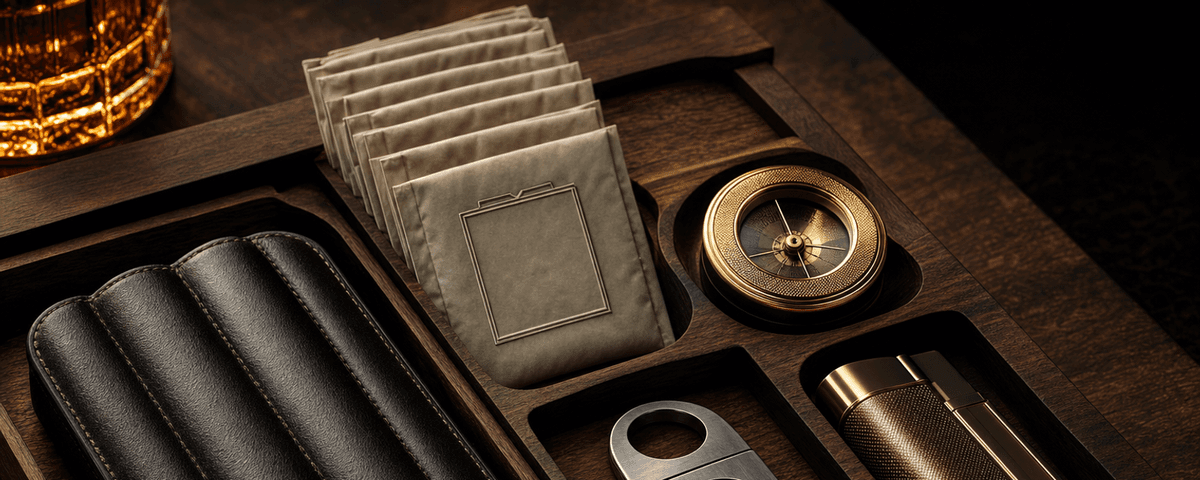
雪茄剪 / 打火機 / 雪茄盒 / Boveda
W Cigar 配件官網 · 專營雪茄配件正品

加 LINE 好友 · 文化諮詢
文化空間資訊 · 紳士沙龍 · 私人包場
本網站內容僅供雪茄文化、歷史、收藏與品吸知識研究參考。菸品有害健康、未滿法定年齡者請勿吸菸。實際規範請依所在地法律為準。
吸菸有害健康・戒菸專線 0800-636363・本站僅供 20 歲以上成年人閱覽。
讀到這裡,你不只是路過的人
留下 Email,加入 W 雪茄聖經內圈——總編輯 Wilson Tsai 親選的學院深文與國際新訊,先你一步送到信箱。
· 教育用途非銷售 · 隨時一鍵退訂 · Email 絕不對外公開 · 由勝茄股份有限公司營運
同分類延伸閱讀



資料來源:W Cigar Bible 編輯部整理 · 雪茄王子 Wilson Tsai 親自審稿
本文僅供雪茄文化、歷史、收藏與品鑑知識研究,不作為菸品促銷、銷售或購買建議。吸菸有害健康,未滿二十歲不得吸菸。