雪茄的切割與熄滅藝術:進階技巧與實踐
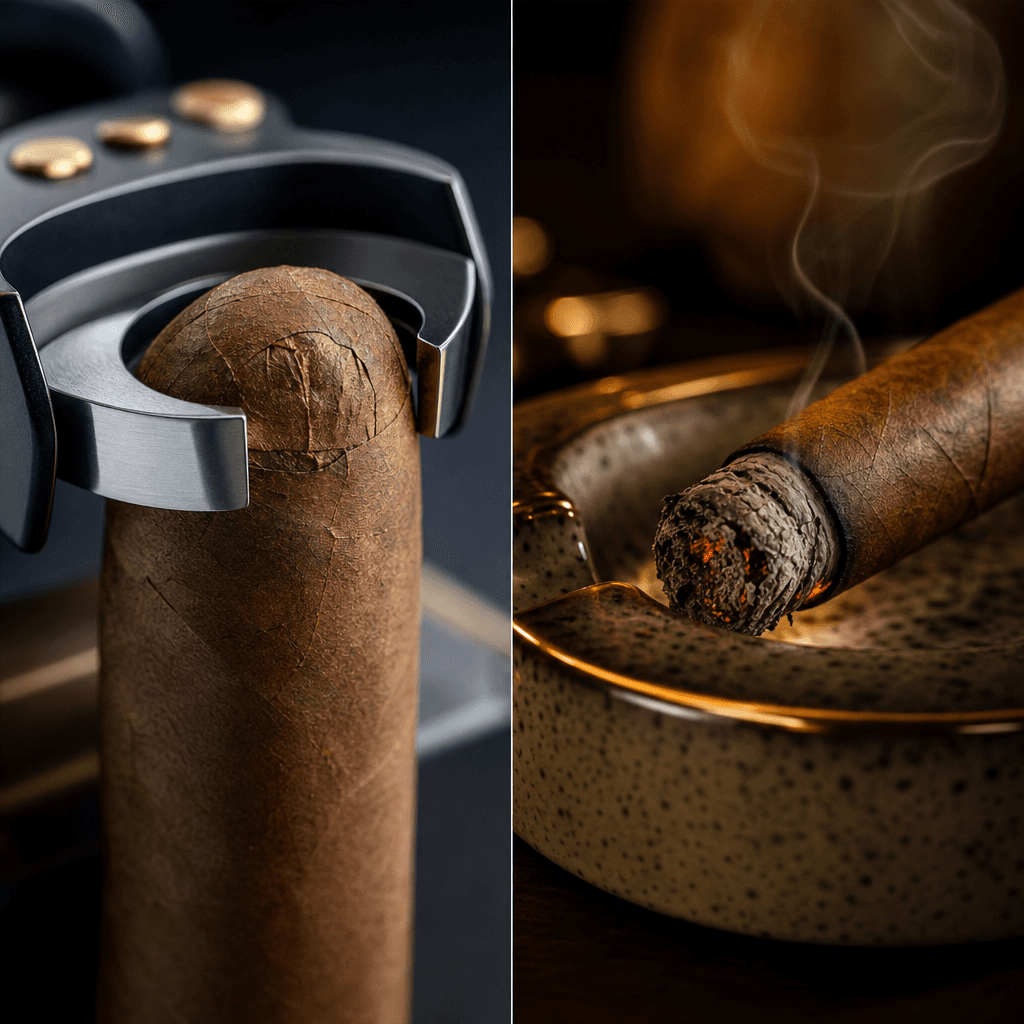
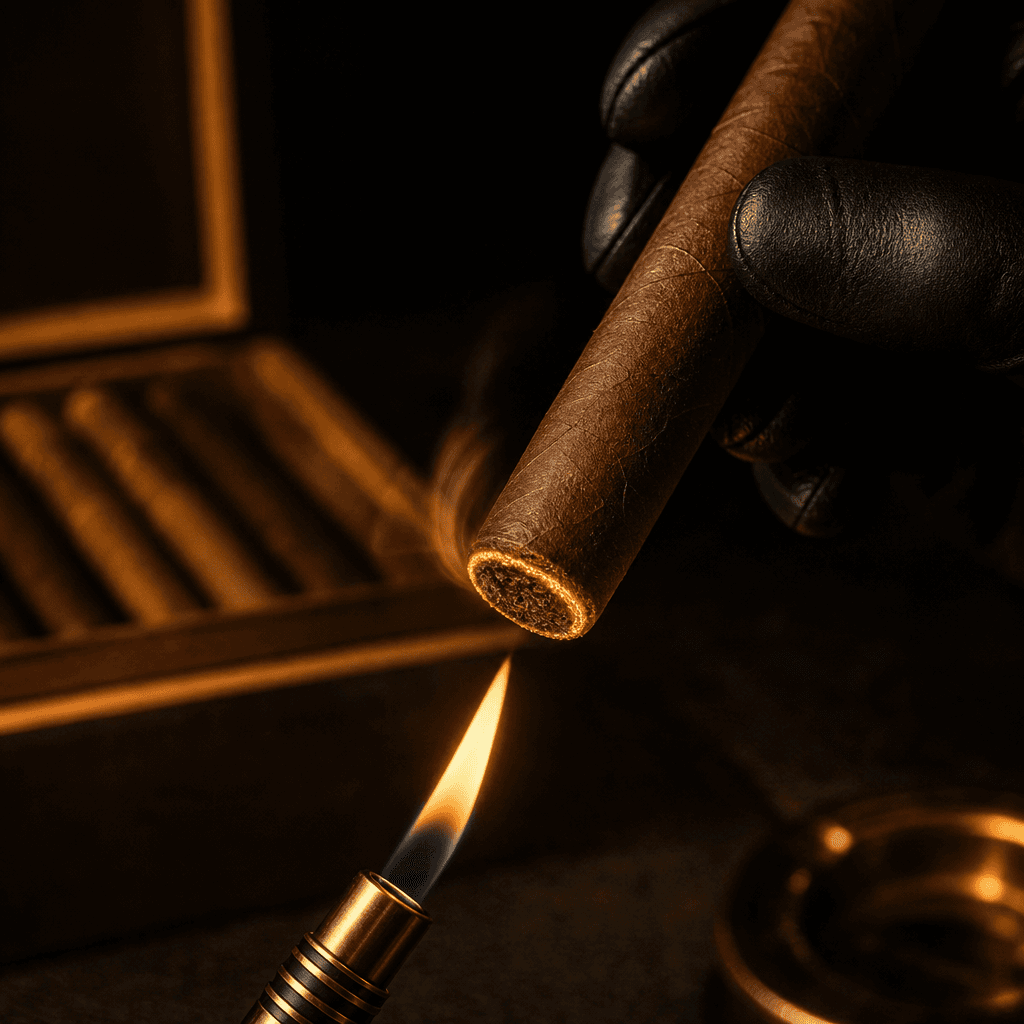
雪茄的切割與熄滅是品味的關鍵,影響風味與燃燒表現。切割時需考量帽蓋結構,適當的切口深度可保留氣流與口感,避免過度鬆開或集中。工具的選擇如直切、V切或打孔,會改變煙氣的流動與風味展現,需根據雪茄的尺寸與形狀調整。切割前的濕度判斷同樣重要,不同的濕度會影響切口的乾淨度與燃燒穩定性。最後,熄滅時應避免壓扁,讓雪茄自然停止燃燒,以保持其香氣與風味。
- 切割時需保留帽蓋結構,避免過深切割以免影響氣流與口感。
- 切割前應判斷雪茄濕度,65%至67% RH適合細膩風味,72% RH則可能影響燃燒。
- 熄滅時應讓雪茄自然停止燃燒,避免用力壓扁以減少刺鼻氣味。
The Art of Cutting and Extinguishing Cigars: Advanced Techniques and Practice
Cutting and extinguishing cigars are often seen as introductory rituals; however, for seasoned enthusiasts, they are precise techniques for controlling flavor, burn, rhythm, and the cleanliness of the finish. A millimeter difference in the cut or a ten-second wait can alter the airflow, tar accumulation, and bitterness in the latter part of a cigar.
I often say that the cut before lighting determines the performance of the first twenty minutes, and how you extinguish it at the end determines whether you truly understand cigars. This article doesn't discuss superficial rituals but rather advanced methods that can be repeatedly verified.
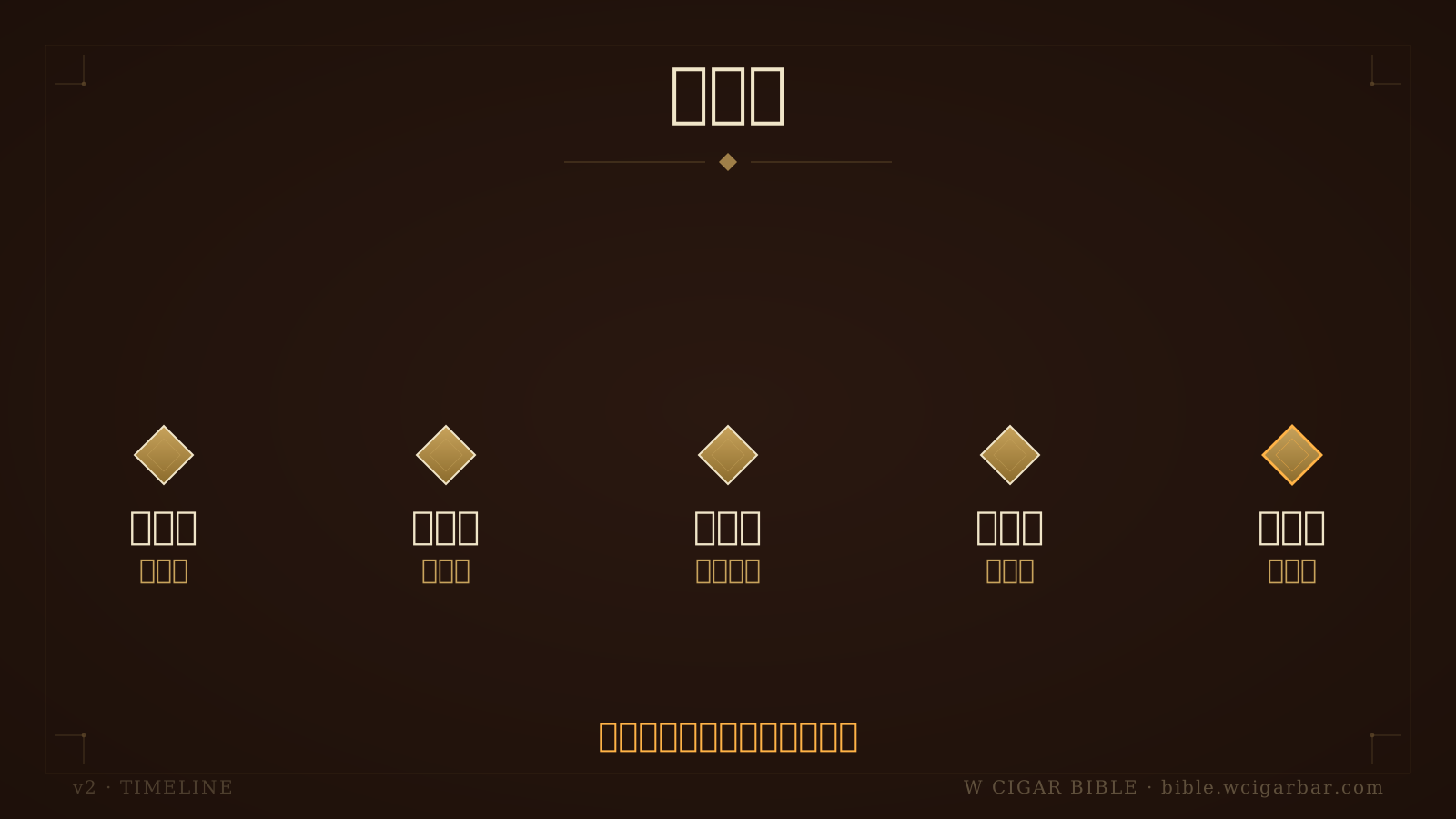
流程圖依序列出觀帽線測濕態到靜放熄滅
Understanding "Where to Cut" from the Cap Structure
Most handmade long cigars have one to three layers of caps at the head. The triple cap, common in Cuban cigars, is especially noticeable in brands like Cohiba, H. Upmann, and Partagás. Take the Cohiba Siglo VI with a 52 ring gauge as an example: cutting below the first cap line can cause the wrapper to gradually loosen during the initial smoking phase; cutting off only a very thin layer may result in concentrated airflow and sharp taste.
The core of advanced cutting is not "cutting larger for smoother smoke," but preserving the cap structure and opening just enough for airflow. My standard is to observe the cap line first. When making a straight cut, I usually retain the shoulder, cutting about 1 to 2 millimeters; for torpedo-shaped cigars like the Montecristo No.2, I initially cut 3 millimeters to test and then adjust based on resistance.
In 2019, I compared the same box of Partagás Serie D No.4, with a 50 ring gauge and 124 millimeters in length, using both deep and shallow cuts. The deeply cut cigar produced more smoke in the early stage but developed bitterness after 25 minutes as the moisture at the lip increased; the shallow cut required a slower pace but retained layers of leather, toasted bread, and pepper into the mid-stage. The cut is not about being as open as possible but about coordinating the burning speed with moisture content.
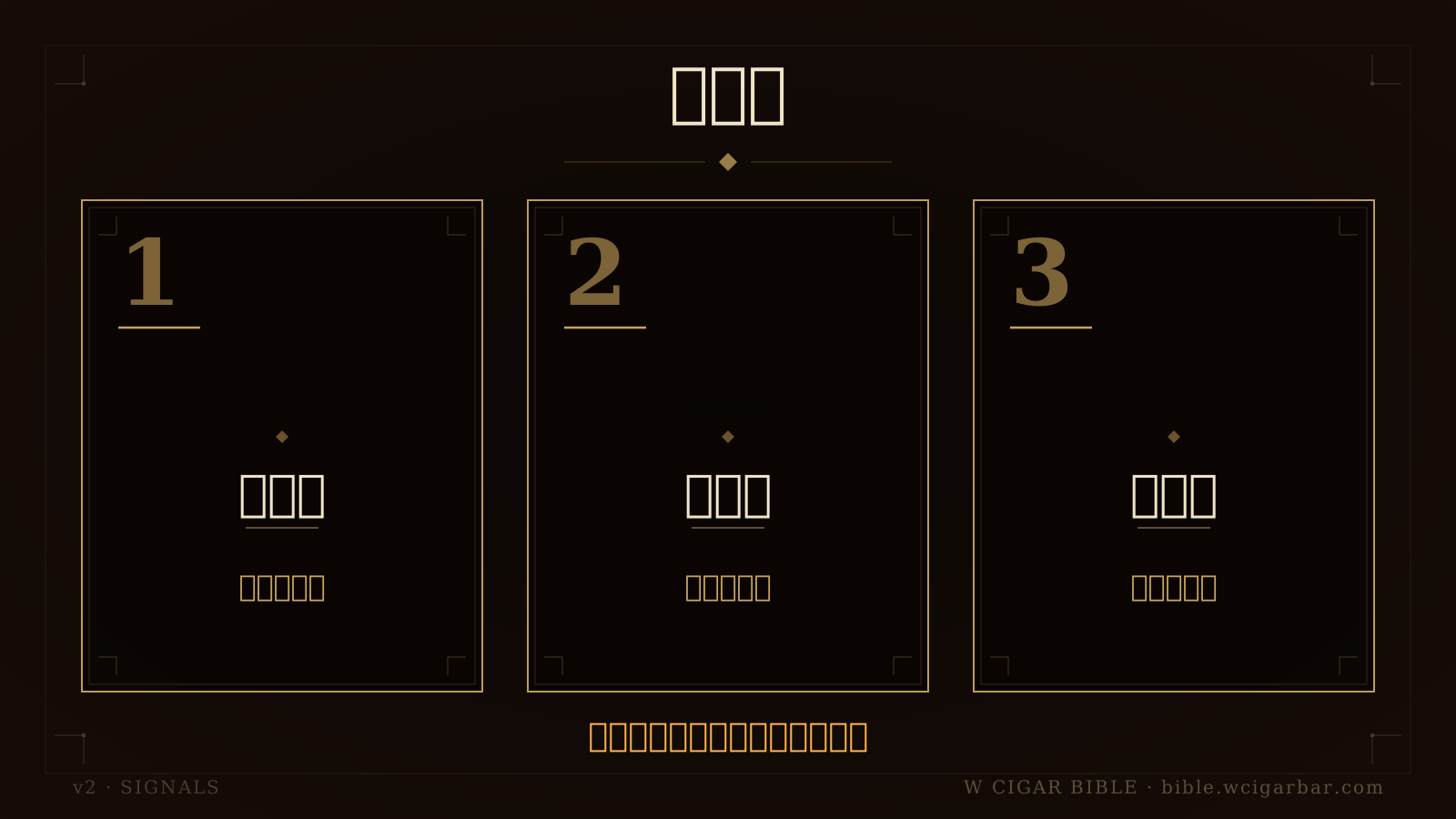
三張重點卡說明帽蓋濕度與收尾判斷
Straight Cut, V Cut, Punch: How Tools Change Flavor Pathways
The straight cut is the most honest, as it opens the entire cross-section, allowing you to immediately feel the density of the filler and the rolling condition. A double-bladed guillotine is suitable for most sizes like Robusto, Corona Gorda, and Churchill; the blade must cut through cleanly in one go, not slowly press like cutting paper. Slow pressing can flatten the head, causing the airflow to become elliptical, often resulting in a dry taste.
The V cut is interesting on cigars with a 52 to 56 ring gauge, such as the Cohiba Behike 52 or Romeo y Julieta Wide Churchill introduced in 2010. It doesn't simply increase the smoke volume but forms a groove that concentrates the smoke on the midline of the tongue, enhancing sweetness and spice. The same cigar, a V cut often makes the early stage more concentrated, while a straight cut allows the flavor to expand.
Punching is suitable for cigars with a complete cap, a rounded head, and a larger ring gauge, such as short and fat sizes above a 54 ring gauge. The downside is that tar tends to concentrate at the hole, and if the pace is too fast, it becomes noticeably bitter after 40 minutes. I personally punch less on classic sizes like the 46 ring gauge Punch Punch, as the hole-to-channel ratio is poor, compressing the originally delicate woody and floral notes.
| Tool | Suitable Size | Flavor Tendency | Main Risk |
|---|---|---|---|
| Guillotine Cutter | 38–56 ring gauge | Open, balanced, easy to judge resistance | Cutting too deep can loosen the wrapper |
| V Cut | 50–60 ring gauge | Concentrated, noticeable sweetness, thick smoke | Too deep a groove can accumulate moisture |
| Punch | 52 ring gauge and above | Clean entry, complete head | Tar concentration, early bitterness in the latter part |
| Cigar Scissors | Long cigars, torpedo head | Controllable, delicate | Dull blades can crack the cap |
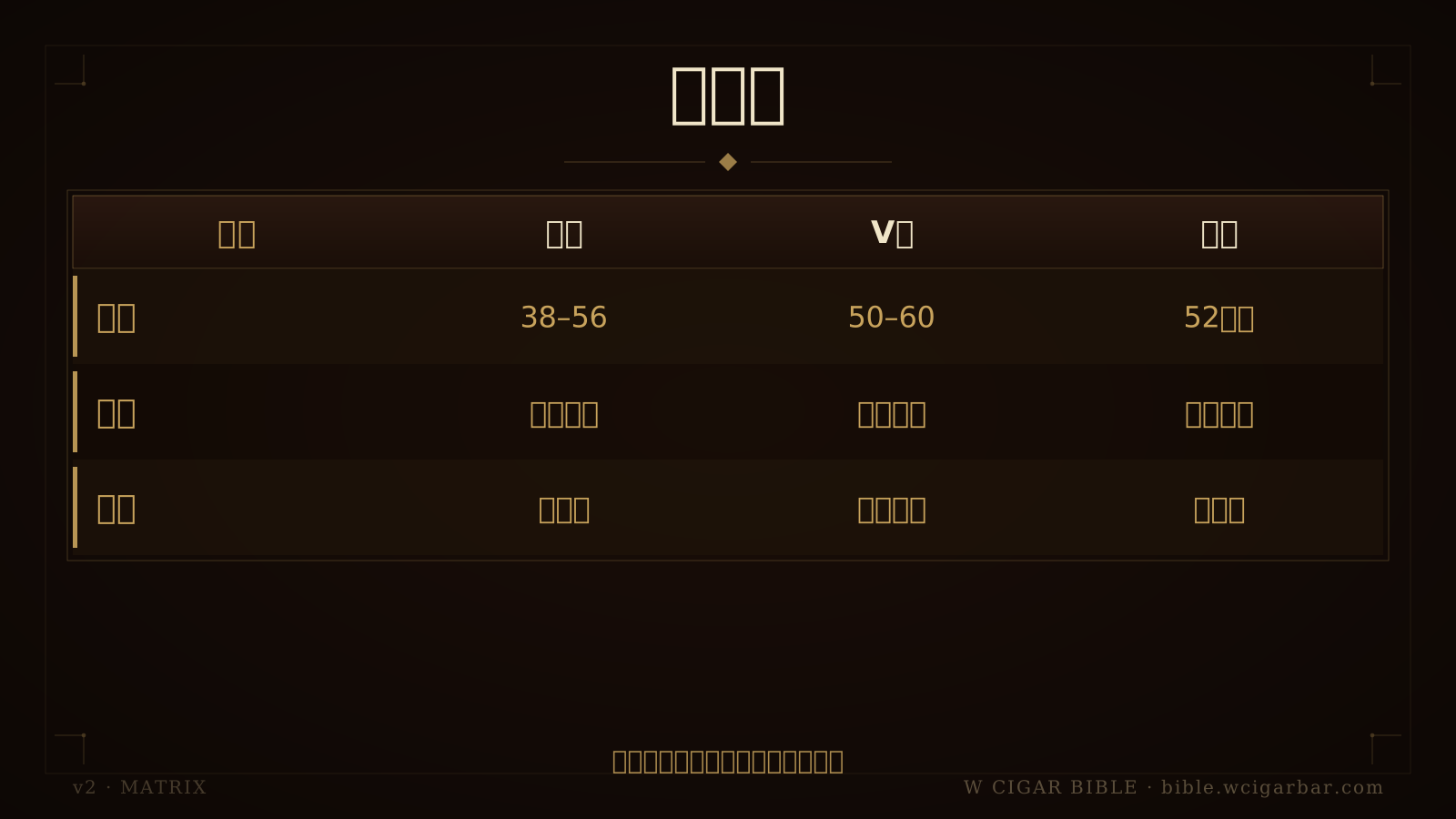
矩陣表比較直切V切與打孔的適合尺寸風味風險
Judging Humidity Before Cutting: The Difference Between 65% and 72%
Many seasoned enthusiasts blame the cutter when the real issue is humidity. The same Hoyo de Monterrey Epicure No.2, if stored at 72% RH, the cut tends to be slightly sticky, and the smoke is thick but not clean when inhaled; if stabilized at 65% to 67% RH for 30 days, the cut is clean, the burn line is usually more stable, and floral and creamy notes are clearer.
Judging the cigar's condition before cutting is more important than choosing which cutter to use. I habitually do three things before cutting: lightly pinch the foot to check for rebound, observe if the head is swollen, and use my nose to detect if the wrapper has excessive ammonia or damp cardboard smell. If the cap is slightly bulging due to high humidity, it's not advisable to cut deeply immediately; a shallow cut or V cut is safer.
In 2021, I divided a box of H. Upmann Magnum 46 into three groups stored at 65%, 69%, and 72% for two weeks. The 69% group was the most balanced; the 72% group had increased draw resistance within 10 minutes after cutting, requiring relighting; the 65% group burned cleanly but was slightly tight in the early stage. This illustrates that cutting has no fixed answer; temperature, humidity, ring gauge, and filler density must all be considered simultaneously.
- 65%–67% RH: Suitable for tightly structured, delicately flavored long cigars
- 68%–70% RH: Safe range for most Cuban and Dominican cigars
- 71% and above: Slower burn, increased risk of wet cuts and lip moisture
Torpedo, Perfecto, and Small Ring Gauge: Atypical Head Cutting Techniques
The torpedo head should never be cut all the way through in one go. Montecristo No.2, Partagás Serie P No.2, and H. Upmann No.2 all have tapered heads, and the real benefit is the ability to adjust airflow in segments. The first cut should only open the tip; if the draw is tight, expand by 1 millimeter increments. This method preserves the tapered structure, allowing the smoke to naturally concentrate before entering.
Perfecto or Figurado requires even more patience. For cigars like the Cuaba Salomones, with a 57 ring gauge and 184 millimeters long, the foot is naturally narrow, and if the head is cut too deeply, the early stage may overheat due to the significant difference in airflow between the two ends. The cutting of shaped cigars should respect the original design, not rush to transform it into a regular Robusto.
Small ring gauges are the opposite, such as the Trinidad Fundadores or Cohiba Lancero, with a ring gauge of about 38, leaving very limited space at the head. These cigars require only a very thin straight cut, and the blade must be extremely sharp; if using a punch, the hole size is disproportionately large, easily damaging the cap. The charm of small ring gauges lies in their linearity and detail; too large a cut will increase burning temperature, quickly turning woody, herbal, and sweet aromas bitter.
When handling small ring gauges, I consider the post-cut cold draw as part of the formal adjustment. If there is a noticeable blockage during the cold draw, I first use a fine needle to gently probe along the center, not immediately enlarging the cut. Once a cut is too deep, it cannot be restored, but the internal channel can still be adjusted; this is the biggest difference between seasoned enthusiasts and those in a hurry.
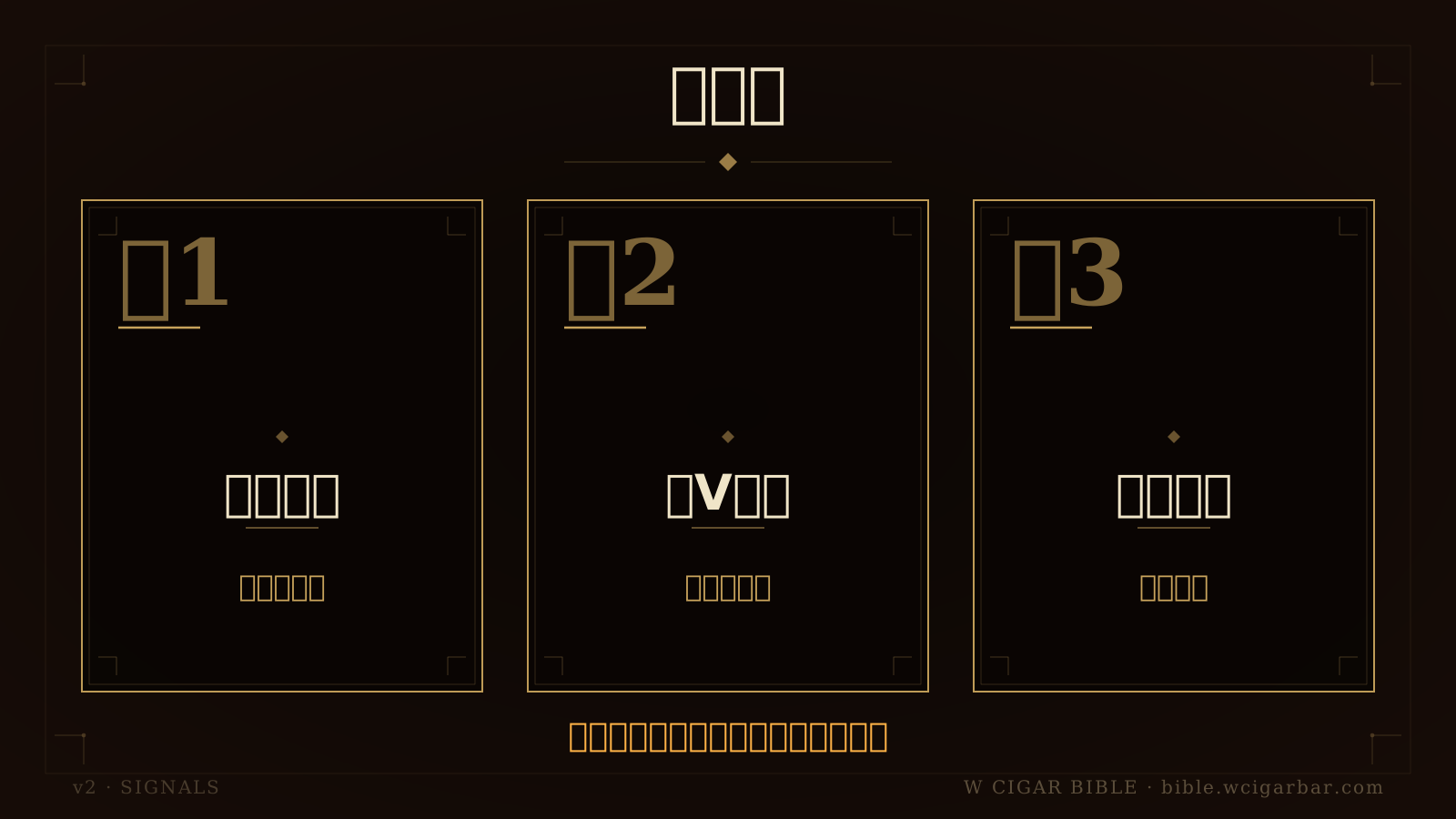
三張錯誤卡指出補切深V與追到燙手的問題
Cold Draw, First Puff, and Correction: Judgment Begins After Cutting
Cutting does not mean completion; it marks the beginning of the diagnostic phase. The cold draw can tell you three things: resistance, expected aroma, and whether there are any noticeable off-flavors. A well-preserved Ramón Allones Specially Selected may have notes of raisins, wood, and a hint of cocoa during the cold draw; if there's only a damp paper smell, don't rush to light it, let it sit at room temperature for 10 to 15 minutes before judging.
The ideal resistance of a cold draw is like sipping a thick milkshake through a straw, neither hollow nor strenuous. If it's too loose, it indicates the cut is too large or the filler is too loose, and you should reduce the smoking frequency to about one puff every 60 to 90 seconds; if it's too tight, you can first expand the cut by 0.5 to 1 millimeter, and if it still doesn't improve, use a needle. Never test by taking consecutive hard puffs, as that will wet the head before lighting.
In 2022, I handled a Bolivar Belicosos Finos, cutting very conservatively at first. The cold draw had cedar and black pepper notes, but the resistance was tight. I didn't immediately recut but first used a needle to gently push 4 centimeters from the center of the head, then rotated 15 degrees and withdrew; after lighting, the early stage was very stable, and the mid-stage leather and coffee notes were complete. If I had directly cut deeper, I might have only gotten a large smoke volume but lost the delicate layers.
Correction has an order: wait first, then ventilate, and only then enlarge the cut. Seasoned enthusiasts should treat the cutter as the final calibration tool, not reflexively cutting again at the first sign of resistance. Each correction changes the airflow ratio and the burning temperature.
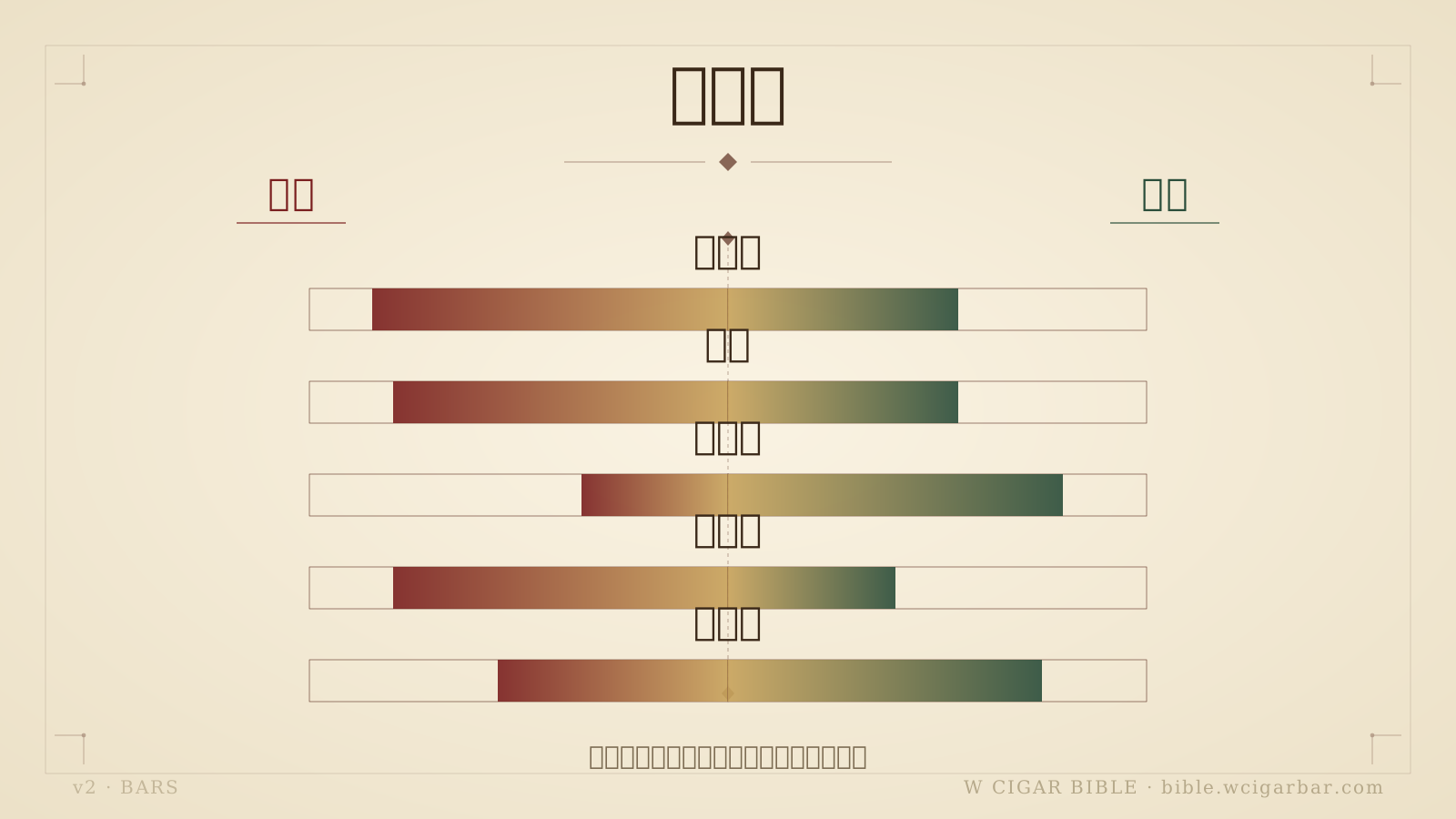
橫條圖比較深切與淺切在氣流帽蓋與濕端差異
The Science of Extinguishing: Why Not to Press Out Like a Cigarette
A cigar is not a rolled cigarette; the burning volume, moisture content, and oils are completely different. The center temperature of the burning end can reach about 700°C, with the outer circle being lower; when you press it into the ashtray, unburned tar, ammonia, and moisture are pushed back into the cigar, leaving a pungent smell. This is also a major reason why many people find the room's smell heavy the next day.
The cleanest way to extinguish a cigar is to let it naturally stop burning, not to press it out forcefully. When you decide to finish, gently tap off the ash, lay the cigar flat in the ashtray groove, and stop inhaling; it will usually extinguish naturally within 2 to 5 minutes. The larger the ring gauge and the higher the moisture content, the longer the embers last; a large 60 ring gauge size may take up to 7 minutes.
Etiquette-wise, pressing out releases unpleasant smoke, which is inconsiderate to others. In a well-ventilated cigar space, letting it end quietly is the most elegant approach. In 2018, I saw a customer crush a Partagás Lusitanias in an old cigar room in London; the staff didn't reprimand him, they simply replaced the ashtray immediately; at that moment, I was more certain that the way of extinguishing reflects the level of understanding.
If you only pause for 3 to 5 minutes, no special treatment is needed; if leaving for more than 10 minutes, you can gently blow a puff to expel some hot smoke before placing it down. This is not a performance but a practical action to reduce internal smoldering and bitterness accumulation.
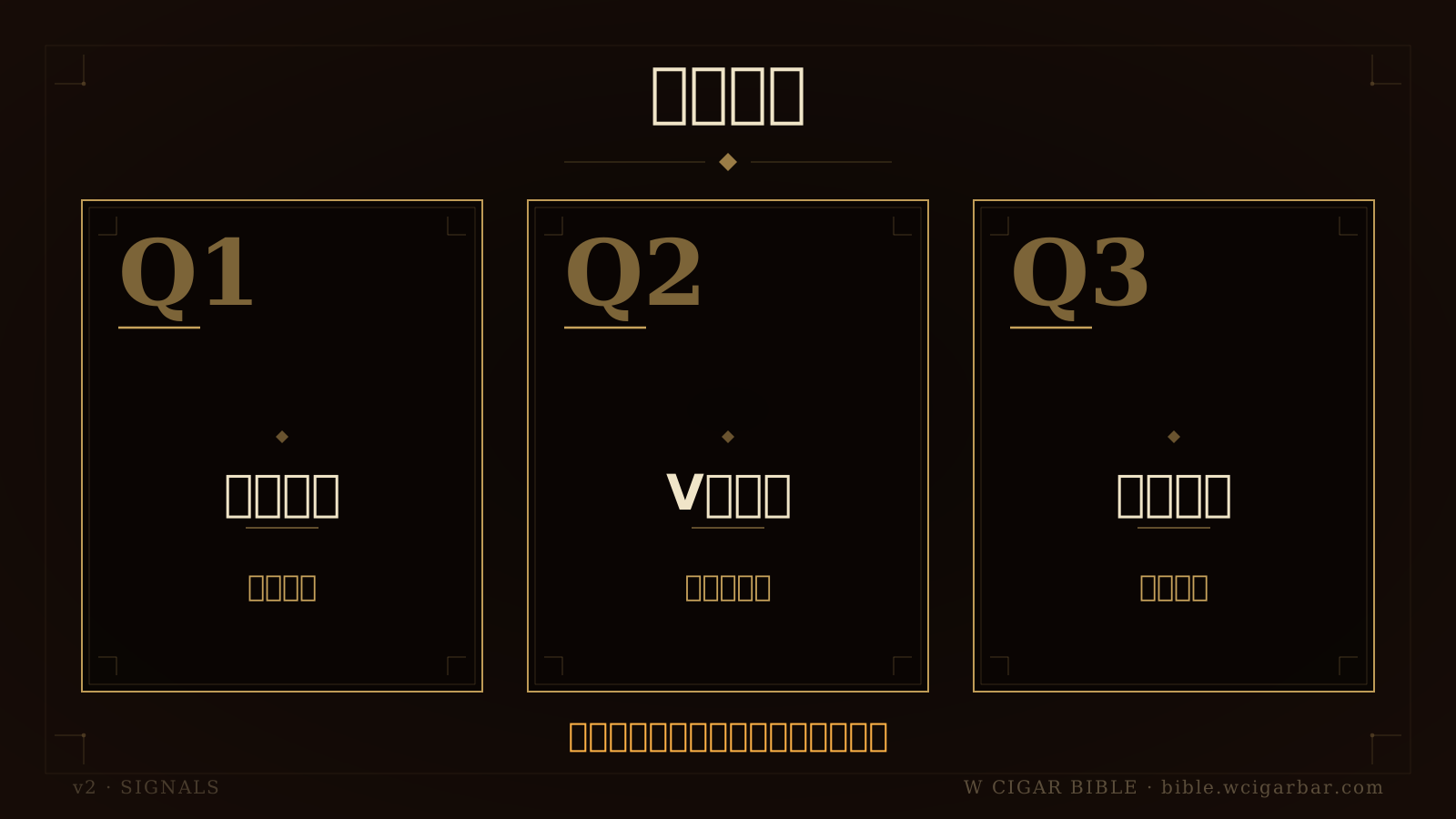
三張問答卡整理抽阻太鬆V切積油與停止時機
Midway Breaks and Relighting: The Boundary of Preserving Flavor
Relighting is a practical issue often encountered by seasoned enthusiasts. My boundary is clear: if extinguished within 15 minutes and not significantly cooled, you can clean the ash and relight directly; beyond 30 minutes, especially if the latter part is already halfway smoked, the flavor usually becomes dull. If more than 2 hours have passed before relighting, in most cases, only tar, wet wood, and bitterness remain, not worth forcing.
The focus before relighting is to remove cold ash and bitter substances, then re-establish an even fire ring. The method is to lightly shave 1 to 2 millimeters off the burning end with a cigar cutter or guillotine, exposing a cleaner core; then toast the foot first, not rushing to inhale. Keep the flame 1 to 2 centimeters away, slowly rotating, and once the edges glow red, take two light puffs.
I once compared using a Davidoff Millennium Blend Robusto: one cigar relit after 12 minutes retained cream, nut, and white pepper notes; another relit after 45 minutes had a noticeable charcoal taste for the first 5 minutes, which only slightly recovered later, but the layers were not as original. This shows that relighting is not impossible but comes with a cost.
The relighting steps can be simplified to:
- Lightly tap or scrape off loose cold ash
- Shave 1–2 millimeters off the burning end if necessary
- Toast the foot first, not directly inhaling hard
- Reduce frequency in the first minute to stabilize temperature
- If bitterness persists for more than 5 minutes, decisively end
Common Questions
Is there a remedy if the draw is too loose after a straight cut?
There is a remedy, but it cannot be solved by additional cutting. A loose draw usually indicates the cut is too large or the filler is too loose; in this case, slow down the frequency to at least one puff every 90 seconds and avoid taking large consecutive puffs. The correction for loose resistance is not to make the smoke larger but to lower the burning temperature. You can slightly tilt the cigar to reduce excessive oxygen intake at the burning end.
Does a V cut tend to accumulate more tar?
Yes, especially with deep V cuts and high humidity cigars. The groove increases the contact surface at the lip and is more prone to moisture accumulation. If bitterness occurs after 40 minutes, you can lightly touch the outer edge of the cut with a tissue, avoiding wiping into the groove. A 52 to 56 ring gauge is most suitable for V cuts; below 42 ring gauge is usually not recommended.
Is punching the least damaging to the cap?
Not necessarily. Punching may seem gentle, but if the cap is dry, rotating can actually tear the wrapper. When using a punch, go straight in and out, without wobbling; a hole diameter of about 7 to 9 millimeters is suitable for most large ring gauges. The tool itself is not superior or inferior, only whether it fits the size and condition.
How far should a cigar be smoked before stopping?
There is no strict rule, but I usually stop when the flavor noticeably becomes hot, salty, or bitter, rather than pursuing smoking until it burns the fingers. A Robusto often reaches a turning point when about 3 to 4 centimeters remain; a Churchill, being longer, can be given more time in the latter part. If the taste remains clean, of course, you can continue; if only spiciness remains, it's time to gracefully put it down.
Can a cigar be taken away and smoked the next day after extinguishing?
Technically yes, but flavor-wise, it's often not ideal. Overnight, cold tar and moisture seep back into the core, and even if you shave the burning end, it's challenging to restore the original layers. If you really want to preserve it, let it cool completely first, then store it in a sealed tube separately to avoid contaminating other cigars; however, I don't recommend making this a regular practice.
Why do some cigars burn unevenly even with a neat cut?
The cause may lie in lighting, humidity, or rolling, not necessarily the cut. If one side burns faster, first rotate the cigar so the slow-burning side faces down, using the rising heat to correct it; if necessary, lightly touch up the slow-burning side with a flame. Don't start with large-scale touch-ups, as that will raise the local temperature, causing bitterness to appear earlier in the latter part.
As the editor of "The Cigar Bible" and a PCC special distributor, what I care about most is not making cigars mysterious but ensuring every action has a reason. Cutting is a respect for structure, and extinguishing is a respect for flavor and space. A truly mature enthusiast not only knows how to start but also when to stop and how to finish.
—Cigar Prince Wilson Tsai
Smoking is harmful to health. Smoking is prohibited for those under 20 years old. Quitline: 0800-636363. This article is intended for adults over 20 years old as a reference for cigar culture, preservation, and regulatory knowledge, not as tobacco advertising, promotion, or purchase advice.
Like this article?Share with friends
Share this W Cigar Bible piece with friends who want to learn cigar culture, storage, and tasting.
想把這篇 化為實踐
雪茄聖經是知識;雪茄文化要在空間裡發生

W Cigar Bar 大安總店資訊
台北大安區 · 雪茄聖經總編輯 Wilson Tsai 主理的雪茄文化空間

33 座 24 小時恆溫恆濕醇化室
W Cigar Bar 提供的會員醇化空間 · 場地資訊請洽編輯部
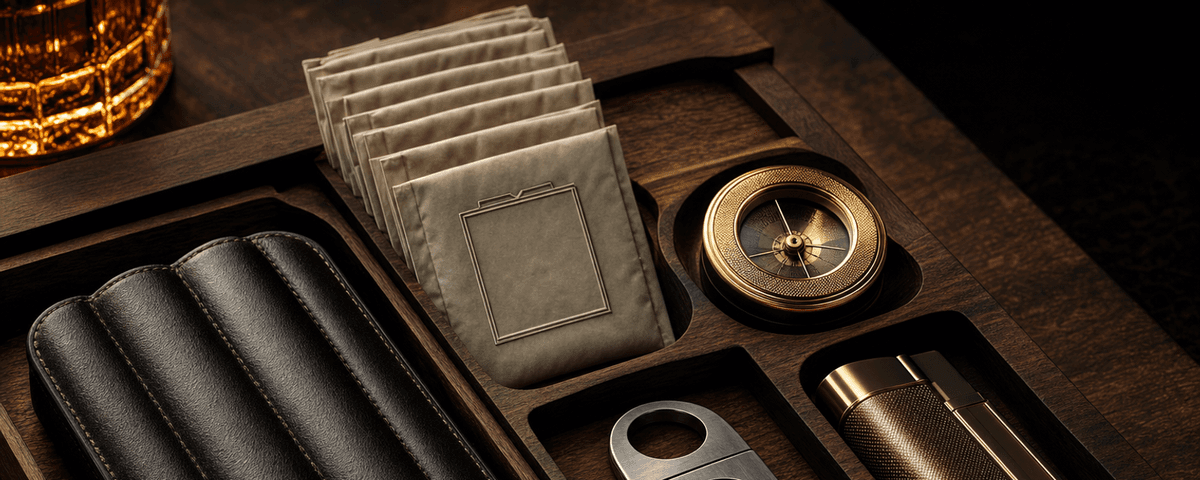
雪茄剪 / 打火機 / 雪茄盒 / Boveda
W Cigar 配件官網 · 專營雪茄配件正品

加 LINE 好友 · 文化諮詢
文化空間資訊 · 紳士沙龍 · 私人包場
本網站內容僅供雪茄文化、歷史、收藏與品吸知識研究參考。菸品有害健康、未滿法定年齡者請勿吸菸。實際規範請依所在地法律為準。
吸菸有害健康・戒菸專線 0800-636363・本站僅供 20 歲以上成年人閱覽。
讀到這裡,你不只是路過的人
留下 Email,加入 W 雪茄聖經內圈——總編輯 Wilson Tsai 親選的學院深文與國際新訊,先你一步送到信箱。
· 教育用途非銷售 · 隨時一鍵退訂 · Email 絕不對外公開 · 由勝茄股份有限公司營運
同分類延伸閱讀


資料來源:W Cigar Bible 編輯部整理 · 雪茄王子 Wilson Tsai 親自審稿
本文僅供雪茄文化、歷史、收藏與品鑑知識研究,不作為菸品促銷、銷售或購買建議。吸菸有害健康,未滿二十歲不得吸菸。