雪茄與不同類型的咖啡搭配藝術

雪茄與咖啡的搭配是一門藝術,重點在於風味的互補與對比。老手會從甜、苦、酸、脂四個維度來探索兩者的交會。雪茄的甜感來自發酵的菸葉,而咖啡的甜味則源自烘焙過程。苦味的辨識也至關重要,分為「乾苦」與「甘苦」。酸質與油脂則能影響搭配的開啟程度,適當的酸度能提升雪茄的甜感。選擇咖啡的烘焙度與雪茄的強度時,應著重於結構的平衡,而非單純的濃度。透過這些細節,愛好者能夠更深入地享受雪茄與咖啡的獨特風味。
- 雪茄與咖啡搭配需考慮甜、苦、酸、脂四個風味軸,尋求互補或對比效果。
- 搭配時應關注烘焙度與雪茄強度,避免誤判深焙咖啡與強勁雪茄的關聯。
- 手沖咖啡能細緻拆解雪茄層次,觀察酸質如何影響草本與甜感的表現。
The Art of Pairing Cigars with Different Types of Coffee
The relationship between cigars and coffee is not just about "bitter with bitter." What true connoisseurs seek is the intersection of sweetness, acidity, oiliness, woodiness, spiciness, and aftertaste between the two: sometimes complementary, sometimes contrasting, and sometimes revealing a new side of a familiar cigar.
I often say, cigars are slow, coffee is fast; a Robusto lasts about 45 to 60 minutes, while an espresso might end in just three sips. To match the rhythm, the key lies in the concentration, temperature, roast level, and the stage of cigar burning.
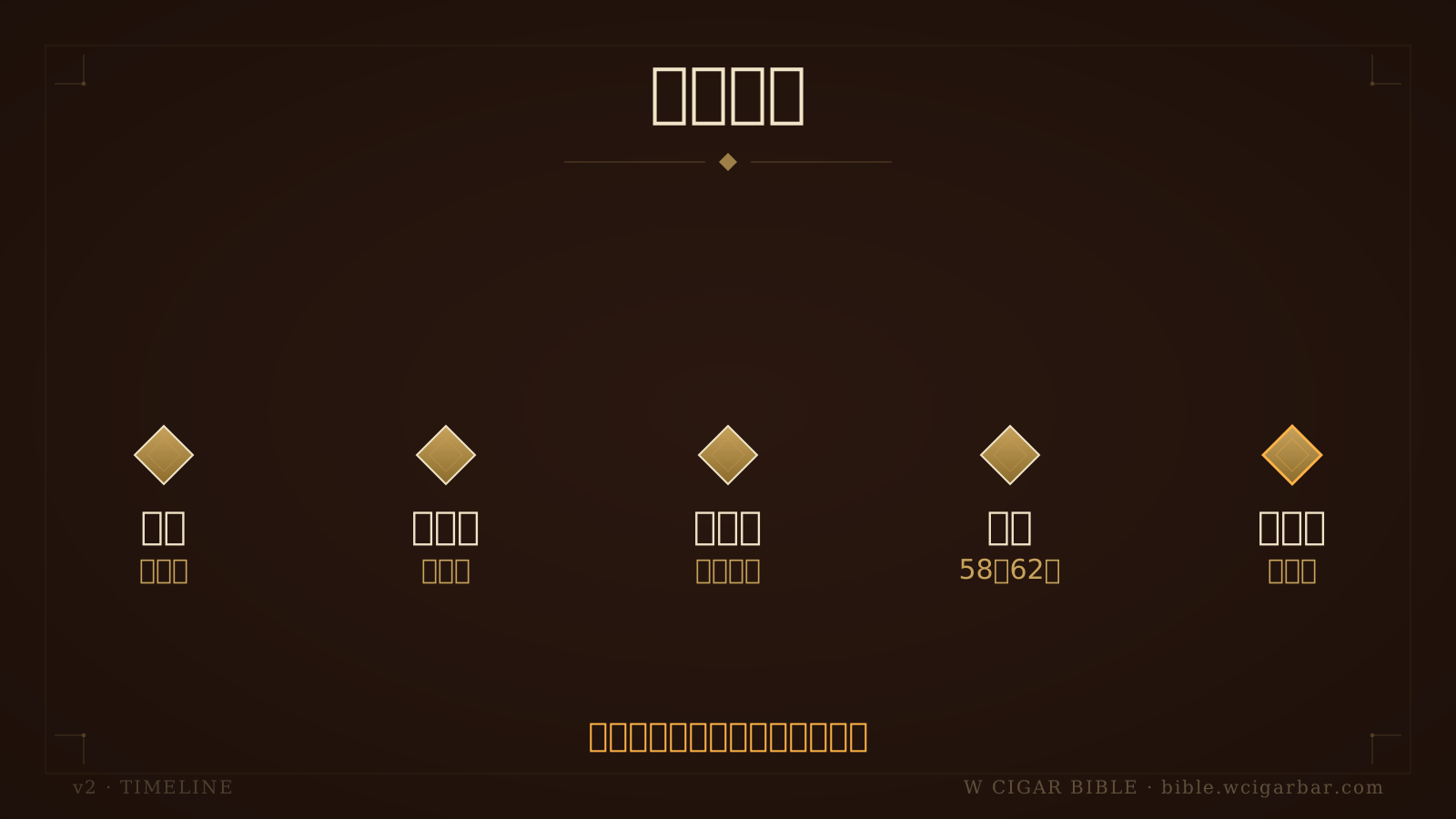
時間軸呈現先清口再觀察前段到記錄餘韻
The Four Axes of Flavor Complementation: Sweet, Bitter, Acidic, Oily
When pairing cigars with coffee, don't start with the brand, but with the structure. The sweetness of a cigar may come from the honey, licorice, cocoa, or dried fruit notes after the fermentation of the tobacco leaves; the sweetness of coffee may come from the sugar sensation, caramelization, ripe fruit, or chocolate. Taking the commonly seen medium-dark roasted Brazilian Cerrado after 2021 as an example, the nutty and dark chocolate tones can easily complement the leather, earth, and pepper of a Partagás Serie D No.4.
Bitterness is the second axis, but connoisseurs must distinguish between "dry bitterness" and "sweet bitterness." Over-extracted espresso can result in astringency like a wooden tongue, which can amplify the ammonia or burnt bitterness in the latter part of a cigar; but a good 18g powder, 36g liquid, 25 to 30 seconds espresso, if it has cocoa and caramel, can make the coffee bean, toasted bread, and cedar of a Montecristo No.2 more three-dimensional. A truly high-level pairing does not let one side overpower the other, but turns bitterness into sweetness.
Acidity and oiliness determine whether the pairing can "open up." Ethiopian Yirgacheffe washed beans often have citrus, jasmine, and bergamot, which might seem floating when paired with a strong Nicaraguan full-leaf roll, but when paired with a Romeo y Julieta Wide Churchills, the floral and creamy notes will be elevated. Conversely, the rich oiliness of a Padrón 1964 Anniversary Maduro is suitable for cutting through the heaviness with the red fruit acidity of a medium-roasted Colombian Huila. Acidity is not the enemy; it is a tool to bring out the sweetness of the cigar.
Roast Level and Cigar Strength: Don't Just Look at "Strength"
Many people equate dark roasted coffee with strong cigars, which is the most common misjudgment. Dark roasting brings smokiness, caramel, dark chocolate, and low acidity, but if roasted to the late second crack, sweetness decreases, bitterness increases, and pairing with a cigar with a high Ligero proportion can become monotonously bitter in the latter part. Take Oliva Serie V Melanio Figurado as an example; it has cocoa, coffee, spice, and creaminess, and pairing it with extremely dark roasted espresso can flatten the layers.
Medium roast is the best position for connoisseurs to play with. Guatemalan Antigua medium roast often has cocoa, nuts, orange peel, and slight smokiness, and pairing it with an H. Upmann Magnum 46 can make the malt, cream, and wood of the cigar cleaner. If it's a Magnum 46 with stable condition from 2019 to 2022, the front is creamy, the middle turns to almond and herbal, and at this time, the coffee should not be too hot, about 58 to 62°C is the best to present roundness.
Strength should be divided into three types: nicotine strength, flavor strength, and mouthfeel weight. Davidoff Nicaragua Toro's nicotine is not out of control, but the flavor density is high, with white pepper, cocoa, and roasted nuts; if paired with Costa Rican Tarrazú honey-processed, the honey sweetness of the medium roast will soften the spiciness. When pairing, look at the structural weight, not just who is stronger. Connoisseurs who can break down the roast level and the front, middle, and back stages of a cigar will take fewer detours.
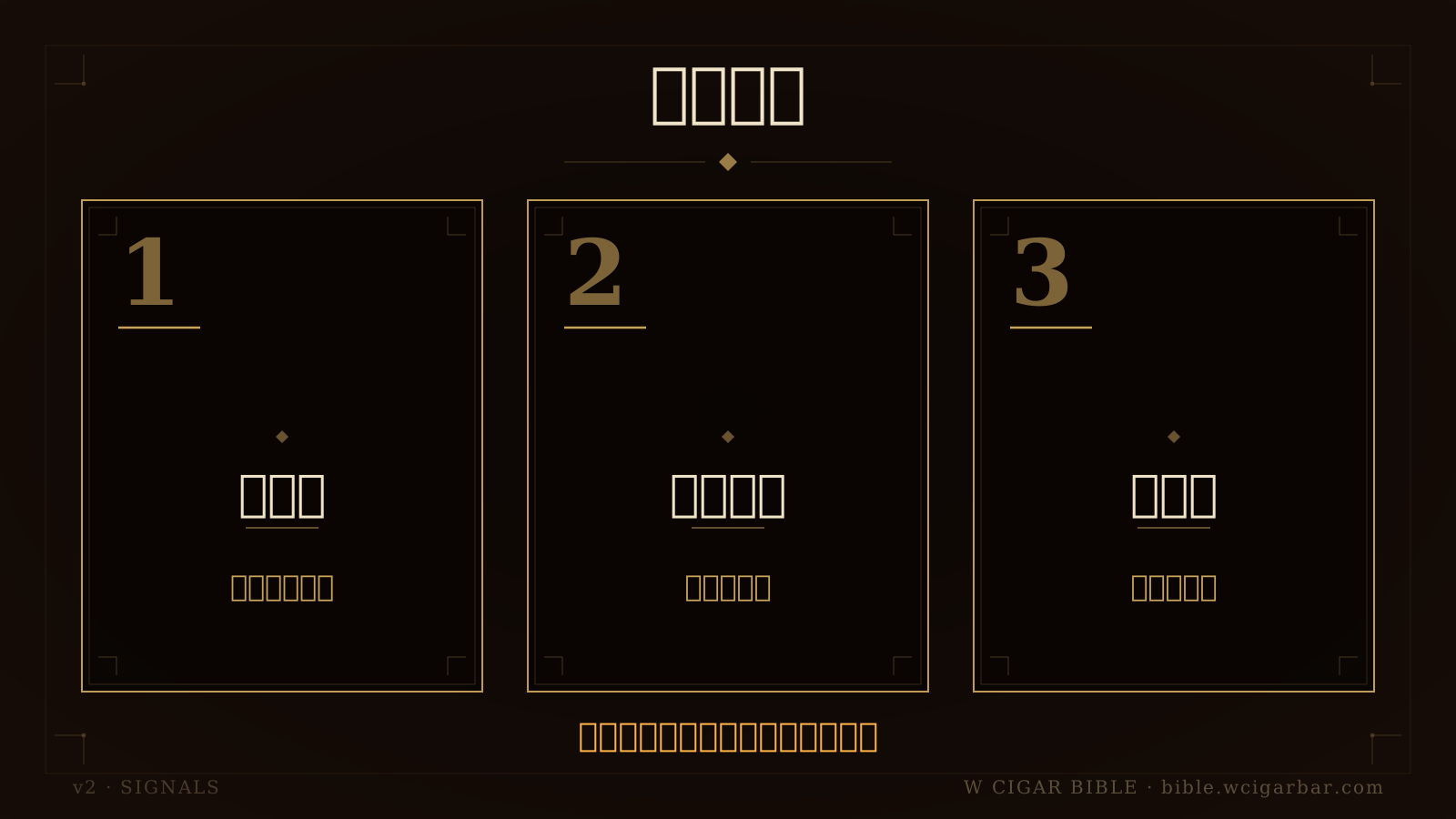
三張卡片列出結構中焙與筆記三個搭配重點
Regional Pairing Map: The Intersection of Coffee Soil and Tobacco Terroir
Coffee has altitude, processing method, variety, and roasting; cigars have region, tobacco leaf part, fermentation, and aging conditions. Both are not single flavors but are the superposition of agriculture, craftsmanship, and time. Taking the tobacco leaves of Cuba's Vuelta Abajo as an example, common earthy, cedar, honey, and herbal notes; if encountered with Sumatran Mandheling wet-hulled beans, the soil feeling will be magnified, suitable for those who like deep styles.
The table below is not a formula but a "starting point" I have compiled over the years. Different batches, years, and storage conditions of the same brand will change the result; coffee will also vary greatly due to the roaster's curve. The core of regional pairing is to find a common language first, then adjust with acidity or sweetness.
| Coffee Region/Type | Common Flavors | Suggested Cigar Direction | Specific Combination Case |
|---|---|---|---|
| Ethiopian Yirgacheffe Washed | Citrus, Floral, Tea-like | Medium Strength, Floral or Creamy | Romeo y Julieta Wide Churchills |
| Brazilian Cerrado Sun-dried/Medium-Dark Roast | Nutty, Dark Chocolate, Low Acidity | Cuban Medium Strength, Leather and Cocoa | Partagás Serie D No.4 |
| Colombian Huila Medium Roast | Red Fruit, Caramel, Bright Acidity | Maduro or Oily | Padrón 1964 Anniversary Maduro |
| Sumatran Mandheling | Herbal, Earthy, Heavy | Earthy, Woody, Spicy | Montecristo No.2 |
| Guatemalan Antigua | Cocoa, Orange Peel, Smoky | Creamy, Malt, Cedar | H. Upmann Magnum 46 |
Connoisseurs can use this table as a calibration tool. If the cigar feels too thick, choose coffee with higher acidity; if the cigar feels too sharp, choose coffee with enough sweetness and oiliness. Collection and vintage can be referenced, but collection value does not guarantee appreciation, it still depends on source preservation and market, and the current state is more important when pairing.
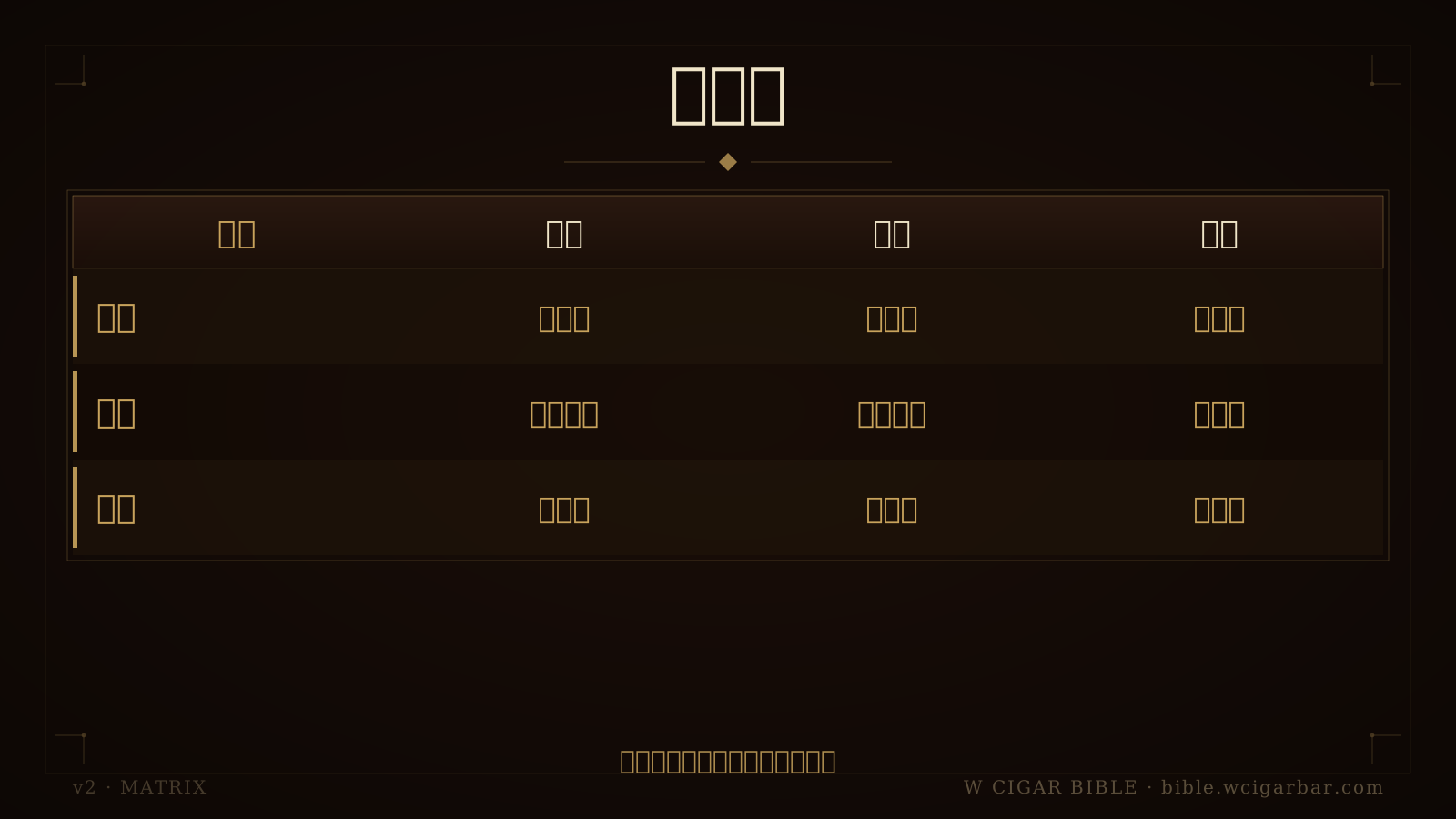
矩陣比較濃縮手沖拿鐵的節奏風味與適合方向
Espresso: Amplifying the Mid-section of a Cigar in the Shortest Time
Espresso is suitable for pairing with the mid-section of a cigar because the flavor density of espresso is high and the time is short, it can shine a spotlight on the core tones of a cigar. Based on 18g powder, 36g liquid, about 28 seconds extraction, if the beans are a blend of Brazilian and Colombian from the 2023 season, medium-dark roast with cocoa, hazelnut, and caramel, it is most suitable for Montecristo No.2, Partagás Serie D No.4, or Trinidad Vigía, which have obvious mid-section transitions.
But espresso is also the easiest to go wrong. Under-extraction will have sharp acidity and saltiness, which can make the herbal taste in the early part of a Cuban cigar seem green; over-extraction will have dry woodiness, which will amplify the burnt bitterness after the burning temperature rises in the latter part. My approach is to arrange espresso about 12 to 20 minutes after lighting the cigar, which is when the early part is stable, but the mid-section has not fully unfolded. Espresso is not a background sound from start to finish, but a precise tool intervening in the mid-section.
If it's a latte or cappuccino, the milk fat will change the game. Whole milk can soften pepper and leather, making the spiciness of My Father Le Bijou 1922 like cinnamon and cocoa; but too much milk will cover more delicate floral notes. It is recommended for connoisseurs to use a small cup latte of 150 to 180 ml, not a large cup. When the coffee temperature drops to about 55°C, the lactose sweetness is most pronounced, and there will be a beautiful connection with the cream, malt, and caramel of the cigar.
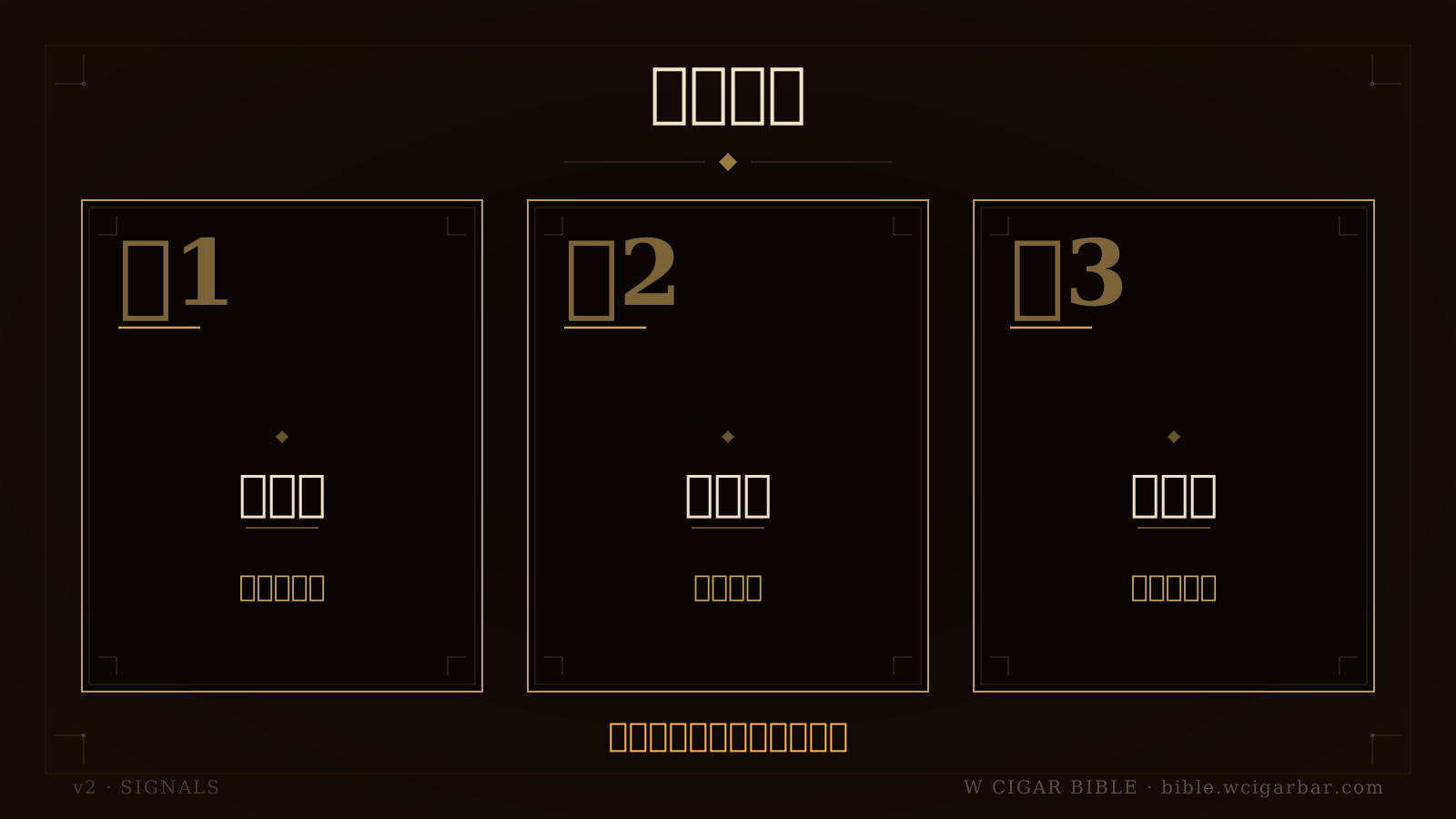
三張錯誤提醒卡說明只看濃過深焙與空腹搭配
Pour-over Single Origin: Using Acidity and Aroma to Deconstruct Cigar Layers
Pour-over is the most suitable coffee form for studying details. V60 can use 15g powder, 240g water, 92°C, total extraction 2 minutes 30 seconds to 3 minutes as a basis; if it's Kenya AA, it is recommended to slightly lower the water temperature to 90°C to avoid overly sharp blackcurrant acidity. The high acidity and tomato, berry sensation of Kenya, paired with the thick oiliness of Arturo Fuente Don Carlos, can push the woodiness and sweet pepper aroma to a brighter position.
Ethiopian washed beans are suitable for floral or creamy cigars. Trinidad Media Luna's honey, cream, and light spice align with Yirgacheffe's jasmine, lemon peel, and tea-like sensation; but if paired with strong Maduro, the floral notes are often swallowed. Panama Geisha is more picky, especially the high-altitude batches from 2021 to 2024 often have white flowers, bergamot, and honey, suitable for elegant, clean-burning cigars, not heavy-flavored spicy types.
The rhythm of pour-over should be slow, not a cup to the end. My habit is to drink 1/3 in the early part of the cigar, observing how acidity affects herbs and sweetness; drink 1/3 in the mid-section, seeing if the coffee aroma can extend the aftertaste; only small sips for correction in the latter part, no longer drinking in large quantities. The value of pour-over is to let you see the details in the cigar that are usually covered by heavy mouthfeel. If the coffee is too bright, you can adjust the grind finer by one notch or increase the powder-to-water ratio to 1:14 to make the mouthfeel more concentrated.
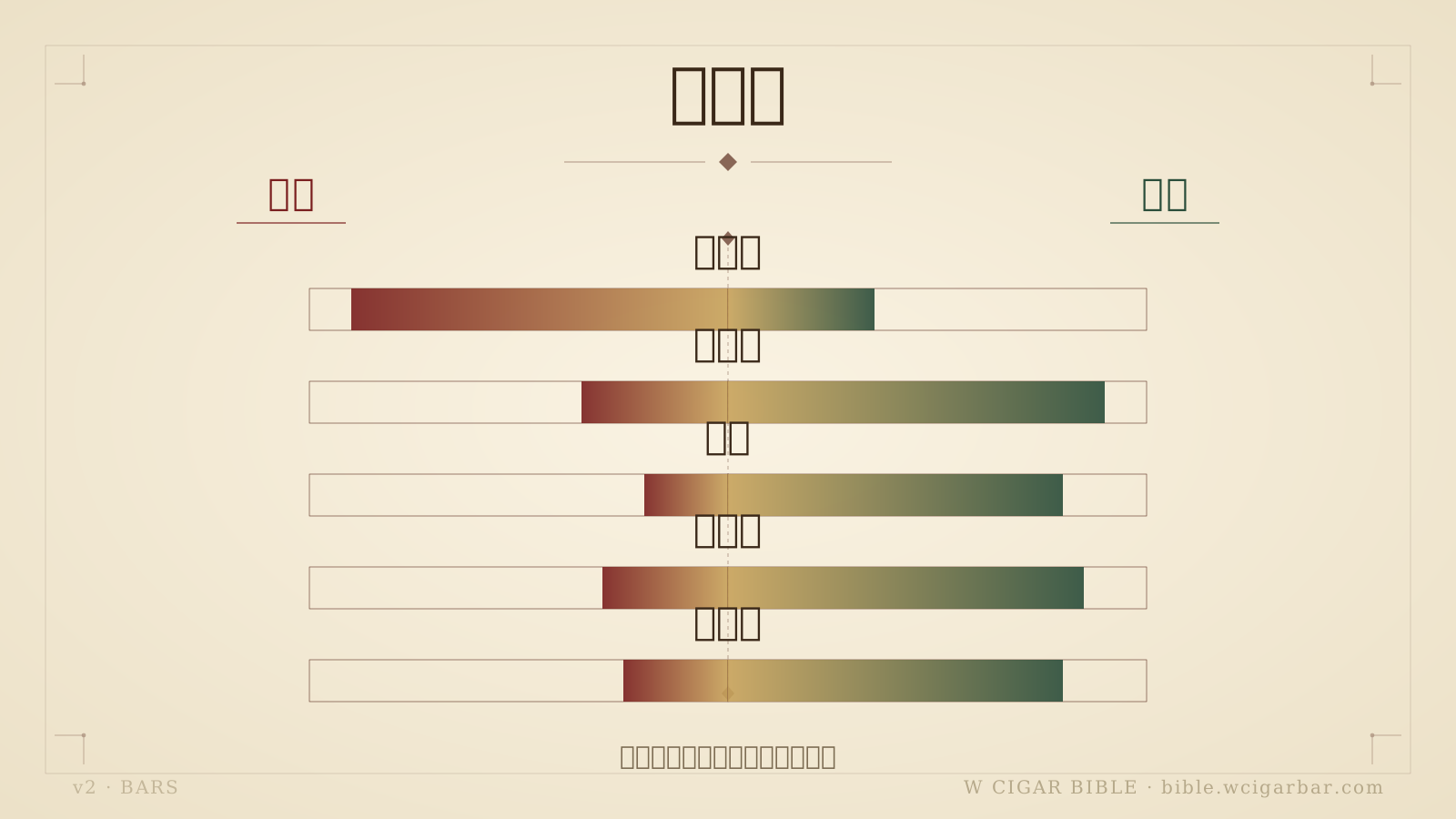
橫條圖對比新手與老手在五個搭配軸線的差異
Iced Coffee, Cold Brew, and Climate: Temperature Will Rewrite Taste
In humid and hot cities like Hong Kong, Taipei, or Singapore, iced coffee is often used to pair with cigars, but temperature is a double-edged sword. Low temperature will suppress aroma volatilization, making acidity crisp and bitterness reduced; for heavier Maduro or Nicaraguan cigars, this is a way to cleanse the palate. If cold brew is made with a 1:10 powder-to-water ratio, room temperature or refrigerated for 12 to 16 hours, it often presents chocolate, nuts, and low acidity, suitable for Plasencia Alma Fuerte Sixto I, which is rich and sweet.
But ice melting will dilute the flavor, especially when pairing with more delicate Cuban cedar, floral, and herbal notes, overly light iced coffee will make the mouth feel empty. If I want to pair with Hoyo de Monterrey Epicure No.2, I would choose Japanese iced pour-over: hot water extraction about 60%, pre-place ice cubes in the lower pot about 40%, retaining aroma and having a cool feeling. This can preserve citrus and floral notes better than long-soaked cold brew.
Humidity will also affect pairing. If cigars are stored at 65% to 69% relative humidity, the burning is more stable; if too wet, the acidity of the coffee will make the damp feeling more pronounced. Iced coffee is suitable for modifying heaviness, not for saving cigars in poor condition. Connoisseurs can record the room temperature, humidity, and coffee ice amount of the day, and after a few times, they will find that the same combination performs completely differently at 22°C and 31°C.
Practical Process: A Time Table for Pairing One Cigar with One Cup of Coffee
If only pairing with one cup of coffee, I would first decide what role this cup of coffee will play: opening, transition, or ending. Taking the Robusto size as an example, burning about 45 to 60 minutes, the first 10 minutes the cigar is still unfolding, not suitable for letting overly strong coffee take the lead; the 15 to 35 minutes is the mid-section main stage, coffee can most push the layers; the last 10 minutes is mainly for cleansing the palate and small sips, avoiding the accumulation of bitterness.
The following is a repeatable process, suitable for calibrating different combinations:
- Drink room temperature water before lighting to confirm the state of the mouth.
- Observe the first 5 to 10 minutes of the cigar's early part, without rushing to drink coffee.
- Drink the first sip of coffee between 12 to 20 minutes, recording changes in sweetness, acidity, bitterness, and oiliness.
- Take small sips every 5 to 8 minutes in the mid-section, not letting coffee become the main character.
- If bitterness rises in the latter part, switch to water, no longer increasing coffee concentration.
For example, if Cohiba Siglo VI is stable, the early part often has grass, honey, and cream, the mid-section enters cedar, cocoa, and light spice. I would use Guatemalan Antigua medium roast pour-over, not espresso, because Siglo VI's elegance does not need to be pushed too quickly. The significance of the timetable is to let you know which sip of coffee is changing which part of the cigar. What connoisseurs really need to practice is putting the feeling back on the timeline, not just writing "delicious, smooth, strong".
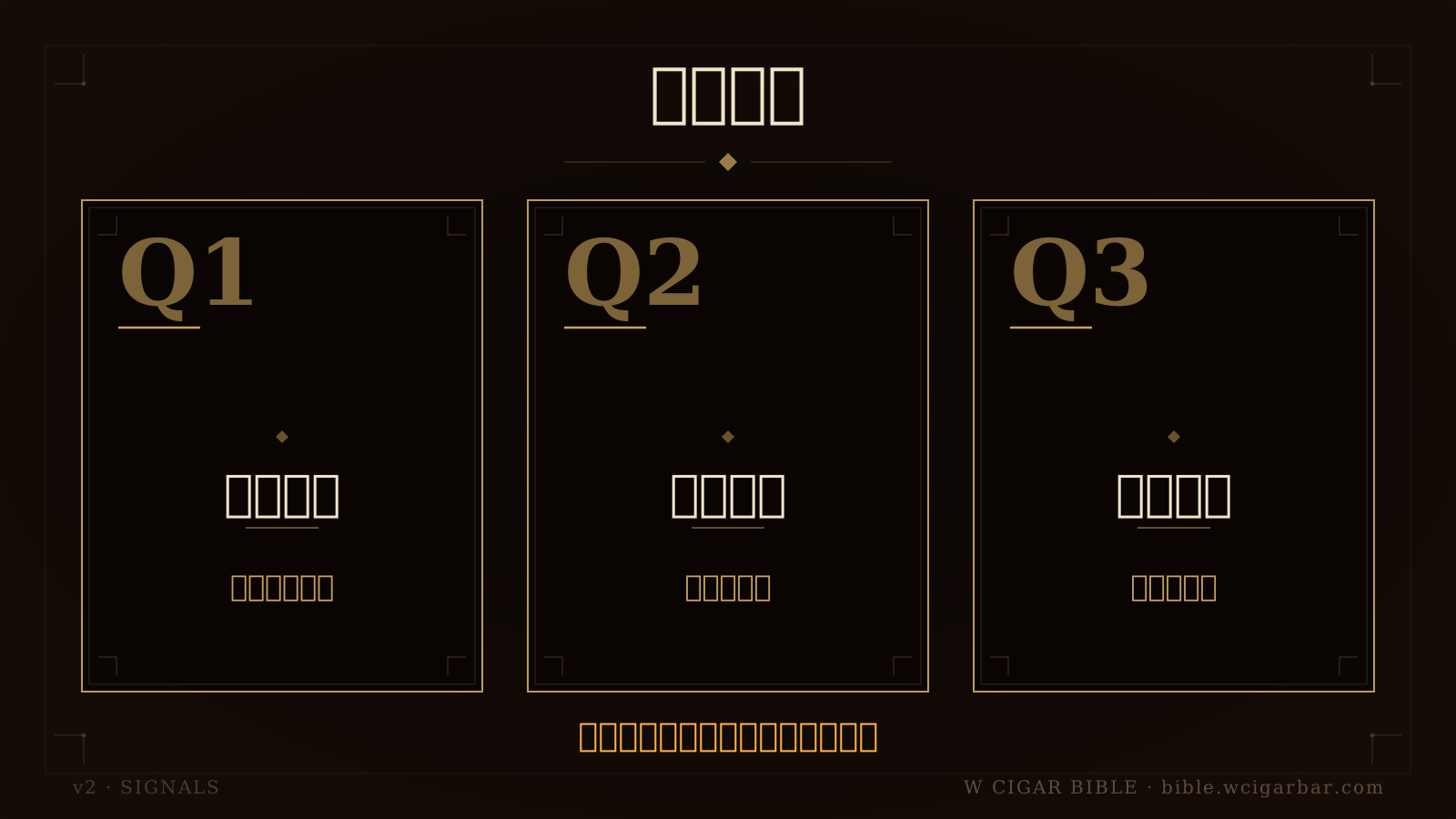
三張問答卡回答深焙前段飲用與拿鐵搭配問題
Classic Combination Cases: Detail Adjustments from Brand to Cup Type
Montecristo No.2 and Sumatran Mandheling is a classic dark tone pairing. No.2's earth, coffee bean, leather, and cedar, when encountering Mandheling's herbal, dark chocolate, and heavy mouthfeel, will form a very complete low frequency. It is recommended to use medium-dark roast, French press, or metal filter to retain oiliness; if over-cleaned with paper filter, this pairing will lack thickness.
Partagás Serie D No.4 is suitable for Brazilian Cerrado medium-dark roast espresso. D4's pepper, leather, cocoa, and salty sweetness need the nut and caramel of coffee to round the edges. If it's the younger state commonly seen after 2020, the early part's spiciness will be more outgoing, at this time cappuccino is safer than pure espresso; the milk fat can turn spiciness into cinnamon and roasted cocoa. H. Upmann Magnum 46 and Guatemalan Antigua pour-over is a more gentlemanly combination, malt, cream, cedar, and orange peel will be very clean.
In the non-Cuban aspect, Padrón 1964 Anniversary Maduro and Colombian Huila medium roast are worth studying. Padrón's cocoa, brown sugar, pepper, and oiliness thickness, encountering Huila's red fruit acidity and caramel sweetness, will have a black chocolate raspberry effect. Classic combinations are not about memorizing brands, but understanding why these flavors can support each other. Once you know the reason, you can transfer the same logic to different sizes, different years, and different coffee batches.
Common Questions
Is dark roasted coffee the most suitable for cigars?
Not necessarily. Dark roast can provide dark chocolate and caramel, but too deep will be dry bitter. Medium roast often has more layers, especially when paired with delicate styles like H. Upmann, Trinidad, Romeo y Julieta. Roast level should serve the cigar, not overpower it with concentration.
Can you drink coffee immediately in the early part of a cigar?
You can, but it is not recommended to drink high-concentration espresso at the beginning. The first 5 to 10 minutes of the early part is the time to observe burning, humidity, and initial aroma, calibrating the mouth with water can more accurately judge the subsequent pairing.
Will a latte ruin the cigar flavor?
No, provided the cup size is small, the milk foam is fine, and the sweetness is natural. A small cup latte of 150 to 180 ml is suitable for cigars with spiciness or leather, but not for extremely delicate floral combinations.
Is cold brew suitable for Cuban cigars?
Suitable for some medium-strength cigars, but be careful of aroma being suppressed by low temperature. If it's Hoyo de Monterrey or Trinidad, I usually choose Japanese iced pour-over, not low-acid heavy cold brew.
Will caffeine affect the cigar experience?
Yes. Both caffeine and nicotine will affect the body's feeling, especially on an empty stomach. Connoisseurs should also control the cup size, one Robusto with one cup of 150 to 240 ml coffee is usually sufficient.
Is it necessary to record pairing notes?
Yes. Record brand, size, year, humidity, coffee region, roast date, powder-to-water ratio, and extraction time, three months later you will see your preference pattern, which is much more reliable than relying solely on memory.
When I look at cigars and coffee, I never put two high-end terms together, but study how crops, fermentation, roasting, aging, and time converse. As the editor of "Cigar Bible," I care more about whether each pairing makes people understand themselves better: whether you like heavy, bright, sweet, or spicy, the answer is actually hidden in those few sips. Slow down, write it down, the next one will be clearer.
—Cigar Prince Wilson Tsai
Smoking is harmful to health. Under 20 years old is not allowed to smoke. Quit smoking hotline: 0800-636363. This article is for reference by adults over 20 years old as knowledge of cigar culture, preservation, and regulations, not a tobacco advertisement, promotion, or purchase suggestion.
Like this article?Share with friends
Share this W Cigar Bible piece with friends who want to learn cigar culture, storage, and tasting.
想把這篇 化為實踐
雪茄聖經是知識;雪茄文化要在空間裡發生
W Cigar Bar 大安總店資訊
台北大安區 · 雪茄聖經總編輯 Wilson Tsai 主理的雪茄文化空間
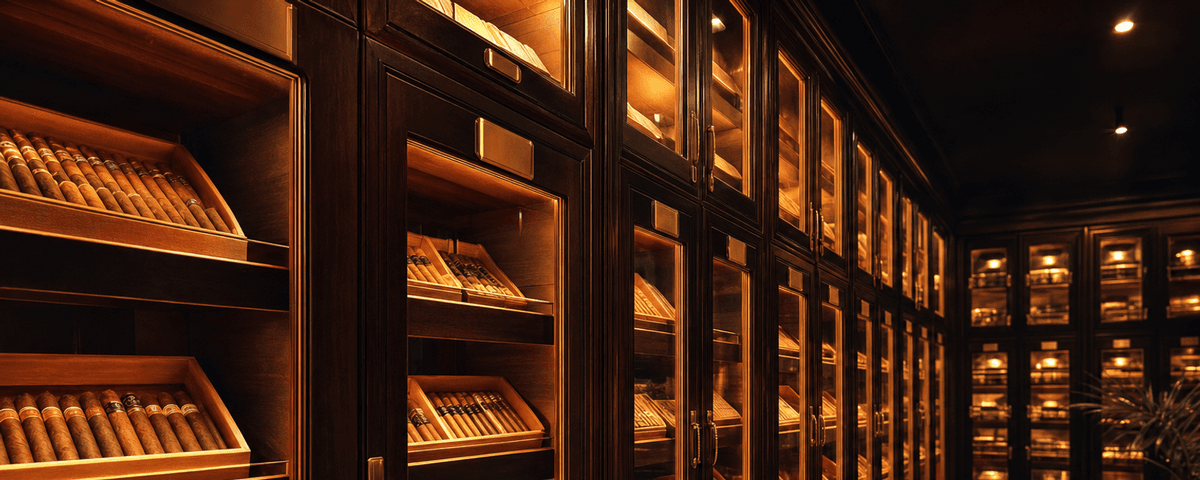
33 座 24 小時恆溫恆濕醇化室
W Cigar Bar 提供的會員醇化空間 · 場地資訊請洽編輯部
雪茄剪 / 打火機 / 雪茄盒 / Boveda
W Cigar 配件官網 · 專營雪茄配件正品
加 LINE 好友 · 文化諮詢
文化空間資訊 · 紳士沙龍 · 私人包場
本網站內容僅供雪茄文化、歷史、收藏與品吸知識研究參考。菸品有害健康、未滿法定年齡者請勿吸菸。實際規範請依所在地法律為準。
吸菸有害健康・戒菸專線 0800-636363・本站僅供 20 歲以上成年人閱覽。
讀到這裡,你不只是路過的人
留下 Email,加入 W 雪茄聖經內圈——總編輯 Wilson Tsai 親選的學院深文與國際新訊,先你一步送到信箱。
· 教育用途非銷售 · 隨時一鍵退訂 · Email 絕不對外公開 · 由勝茄股份有限公司營運
同分類延伸閱讀
資料來源:W Cigar Bible 編輯部整理 · 雪茄王子 Wilson Tsai 親自審稿
本文僅供雪茄文化、歷史、收藏與品鑑知識研究,不作為菸品促銷、銷售或購買建議。吸菸有害健康,未滿二十歲不得吸菸。