雪茄與咖啡的深度配對藝術
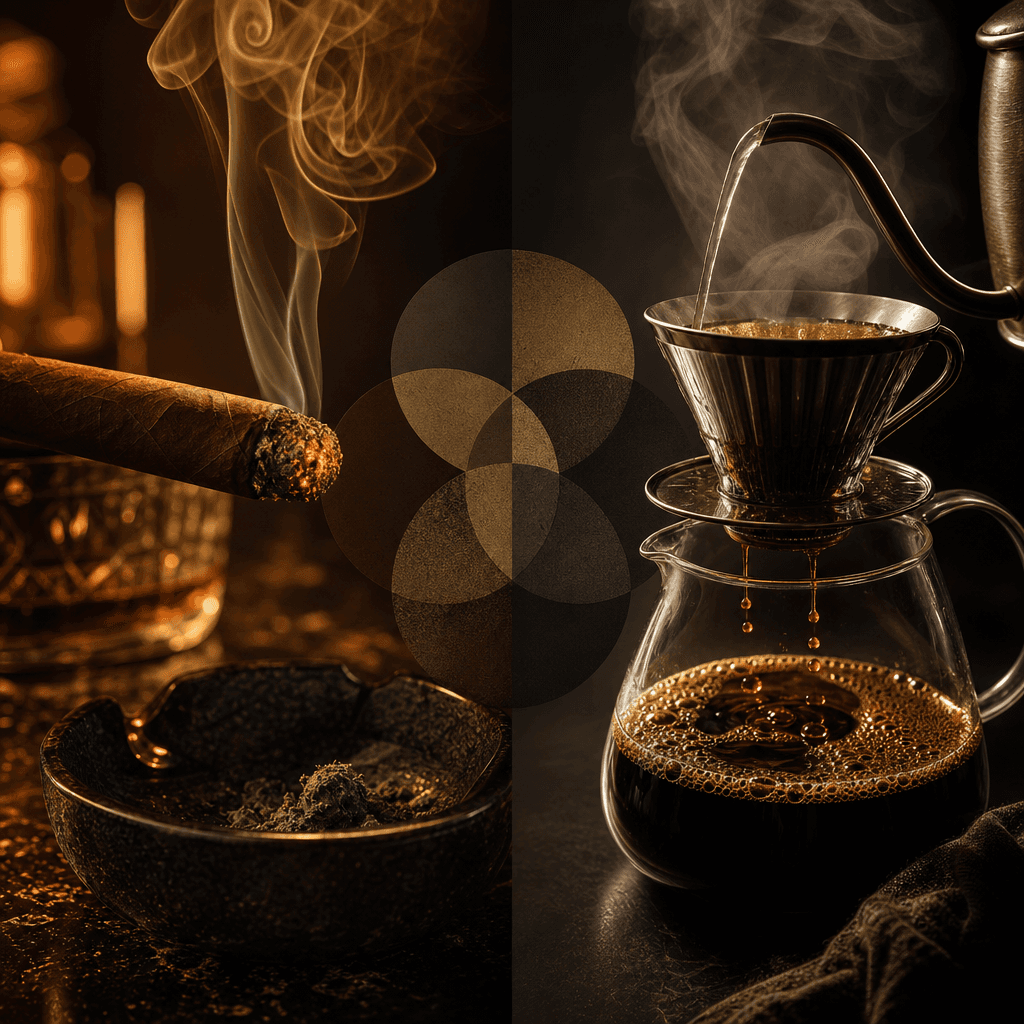
雪茄與咖啡的配對是一門藝術,老手需從「強度、甜度、酸質、油脂」四個軸線出發,避免簡單的直線思考。古巴雪茄的風味如泥土、木質與香料,適合搭配中美洲咖啡,特別是瓜地馬拉與哥斯大黎加,能夠提升其清雅感。相對地,尼加拉瓜與多明尼加雪茄則需搭配深焙咖啡,控制風味的強度。沖煮方式對於配對結果至關重要,V60、法壓壺或義式濃縮的不同手法會影響口感層次。老手應該學會根據雪茄的不同階段與咖啡的溫度變化進行調整,才能
- 配對雪茄與咖啡時,應建立在強度、甜度、酸質、油脂四個軸線上,而非僅依產地。
- 古巴雪茄與中美洲咖啡的組合,能提供焦糖、可可等風味,特別適合搭配。
- 沖煮方式會影響咖啡與雪茄的配對效果,V60、法壓、義式濃縮各有不同的風味表現。
Smoking is harmful to health. Persons under the age of twenty may not smoke. Smoking cessation hotline: 0800-636363. This article is provided solely for adults aged twenty and above as a reference on cigar culture, storage, and regulatory knowledge. It is not tobacco advertising, promotion, or purchase advice.
Pairing cigars with coffee, for experienced smokers, is not as simple as "strong with strong". It is about reading five time-based crafts - combustion, fermentation, maturation, roasting, and extraction - on the same flavor map. Cuban cigars are often built around earth, leather, cedar, honey, and minerality. Nicaragua, Honduras, and the Dominican Republic may show cocoa, pepper, nuts, cream, and dried fruit. Coffee is the same: the floral aroma of Ethiopia, the blackcurrant of Kenya, the citrus and tea-like quality of Panama Geisha, and the herbal thickness of Indonesia Mandheling will all change the layers of a cigar in the mouth. This article discusses technique, proportion, and interpretation from an experienced perspective, rather than simply listing combinations.
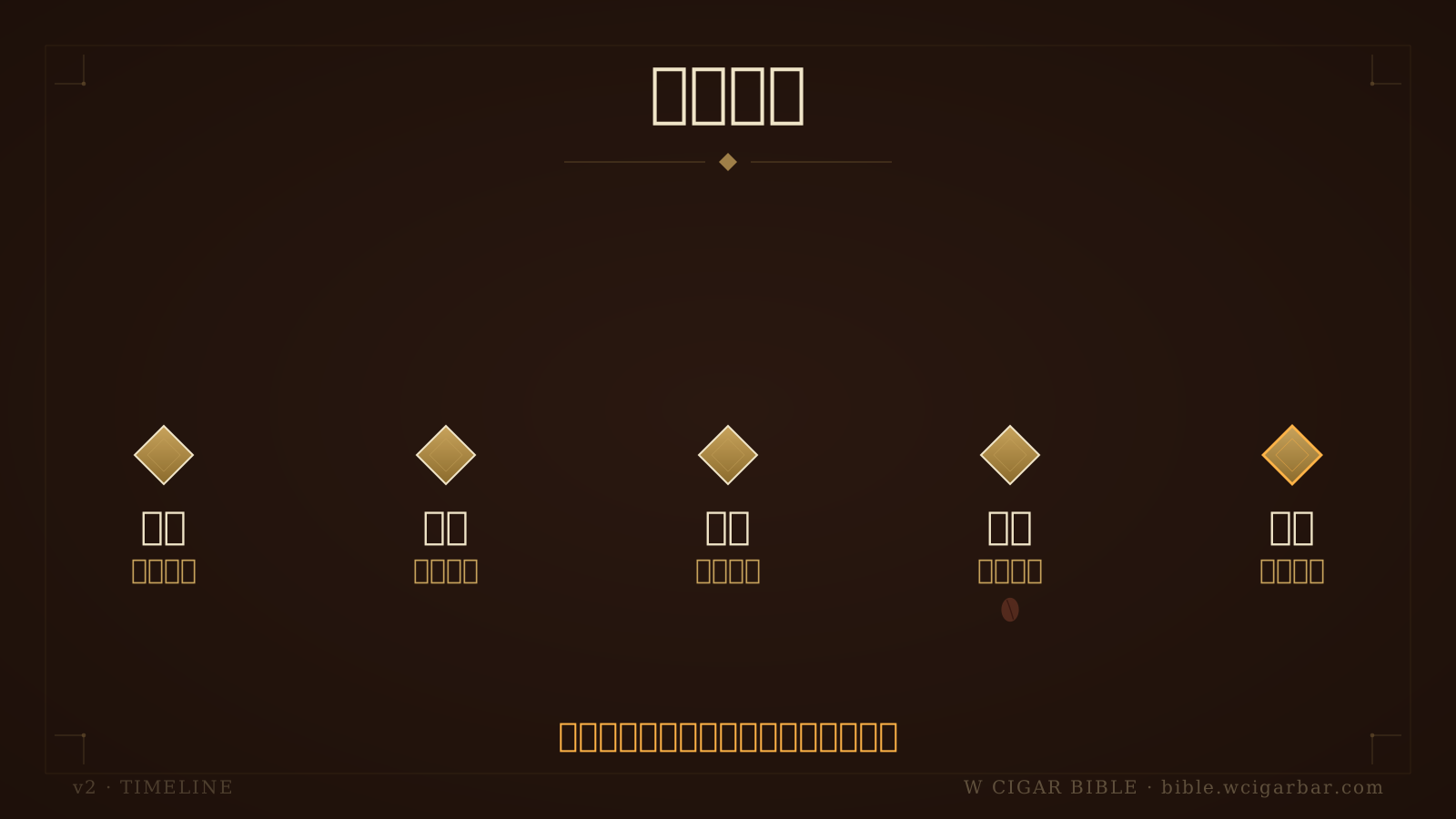
時間軸呈現燃燒發酵醰化烘焙萃取五個配對環節
I. First establish four axes: strength, sweetness, acidity, and oiliness, instead of looking only at origin
When experienced smokers pair cigars and coffee, the first thing to set aside is linear thinking such as "Cuban cigars go with Cuban-style coffee" or "strong cigars go with dark roast". Truly stable judgment should be built on four axes: the strength of the cigar, the sweetness of the coffee, the shape of the coffee's acidity, and the oily mouthfeel of both. Take Partagás Serie D No.4 as an example. This Robusto size, with a 50 ring gauge and 124mm length, usually has wood, coffee bean skin, and slight pepper in the first third, with cocoa and roasted nuts appearing in the middle third. If paired with the lightly roasted washed Ethiopia Yirgacheffe commonly seen after 2019, the floral aroma may be beautiful, but it may cut the earthy feel in the cigar's middle third too thin. By contrast, Guatemala Antigua medium roast, grown at about 1500-1700 meters and often showing cocoa, caramel, and delicate smokiness, can better support the body of the D4.
Coffee acidity is not the enemy. The key is the texture of the acidity. Kenya AA often has sharp acidity of tomato, blackcurrant, and grapefruit peel. If it meets a structurally strong Robusto such as Bolivar Royal Corona, with deep earth and an iron-like finish, the first 15 minutes may be very exciting. But in the later stage, if the coffee temperature drops and the acidity becomes hard, it can make the cigar's finish seem dry and astringent. My method is to record the first, middle, and final thirds of the cigar first, then cross-compare them with the hot, medium-temperature, and cooling stages of the coffee. For a 60-minute cigar, the coffee should ideally provide a stable window of 25-35 minutes, rather than being beautiful only in the first 5 minutes.
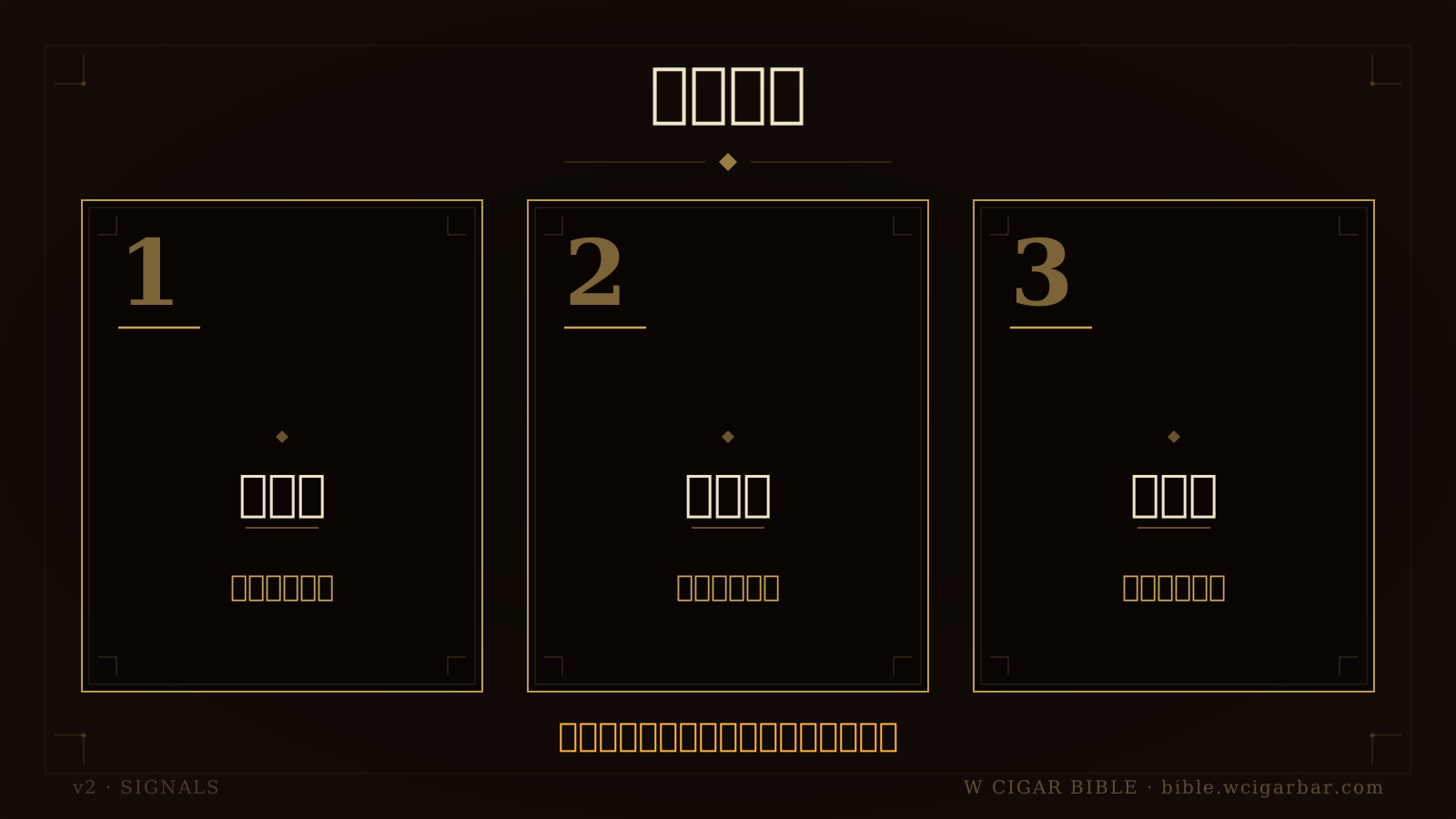
三張卡片列出四軸判讀中焙基準與分段比對重點
II. Cuban cigars and Central American coffee: the safest classic combination, and also the easiest to underestimate
Cuban cigars are often described as having "lines": not a single burst, but a continuous progression of earth, wood, honey, leather, and spice. Central American coffee, especially from Guatemala, Honduras, and Costa Rica, provides caramel, cocoa, hazelnut, and clean acidity, making it particularly friendly to Cuban cigars. Take Hoyo de Monterrey Epicure No.2 as an example: 124mm, 50 ring gauge, with a style leaning toward cream, cedar, and light floral honey. If paired with Costa Rica Tarrazú honey-processed medium roast, using a brew ratio of 1:15, 92°C, and a washed filter dripper finished in 2 minutes 40 seconds, it can provide gentle support of honey, brown sugar, and nuts without overpowering Hoyo's elegance.
Another common case is Cohiba Siglo VI, 150mm, 52 ring gauge, introduced in 2002 and long regarded as one of the representative sizes of Linea 1492. Its grassiness, cream, sweet wood, and refined minerality suit Guatemala Antigua or Panama Boquete medium roast, and should not be pressed down from the start with the intense burnt bitterness of espresso. If the coffee is brewed with V60, I suggest 20g of coffee, 300g of water, and a total extraction time of about 3 minutes, with the grind slightly coarser than a typical light-roast setting, so that sweetness is higher than acidity. The point of this pairing is not to make coffee the protagonist, but to give the cigar's changes every 10 minutes a clean background wall. If experienced smokers only pursue "thickness", they can easily miss the most charming subtle turns of Cuban cigars.
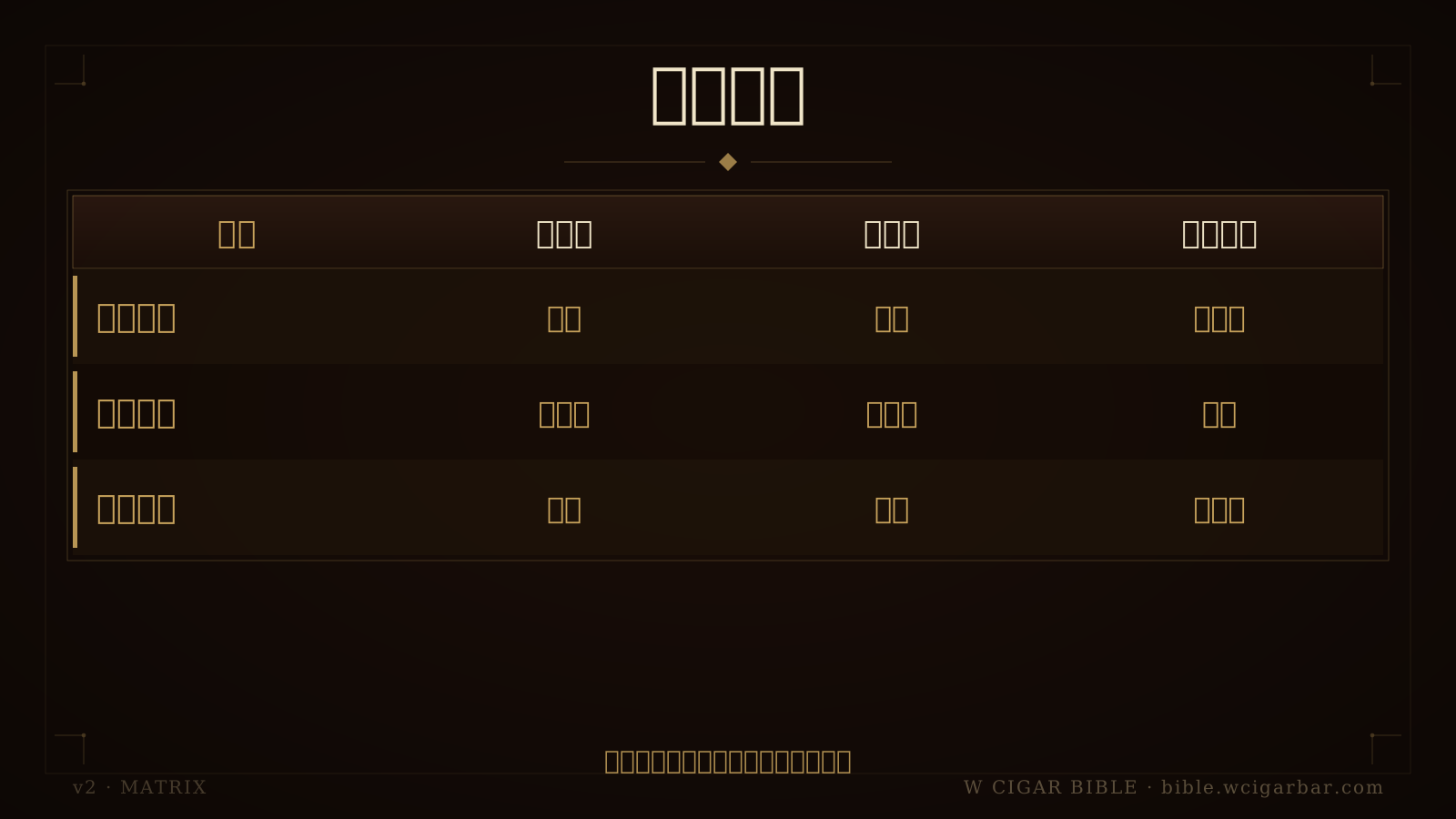
矩陣比較古巴強勁非古柔和雪茄與三種咖啡走向
III. Nicaraguan, Dominican, and Honduran cigars: controlling power with dark roast, espresso, and Mandheling
The flavor language of non-Cuban cigars is broader, especially in the three major Nicaraguan regions of Jalapa, Estelí, and Condega, which often bring black pepper, cocoa, roasted grain, and dense smoke. Cigars such as the Padron 1964 Anniversary series, Oliva Serie V, and My Father Le Bijou 1922 can easily end up "speaking past each other" when paired with coffee that is too acidic or too floral. At this point, dark roast coffee, espresso, or Indonesia Mandheling can be useful, but the key is to avoid excessive burnt bitterness. Using 18g of coffee to extract 36g of espresso in 27-30 seconds as a baseline, if obvious charcoal and bitter medicinal flavors appear, they will amplify the nicotine feel and back-of-tongue bitterness in the cigar's final third.
Dominican cigars such as Arturo Fuente Hemingway Short Story, a small Perfecto size, usually have wood, sweet spice, and creaminess. It can pair with medium-dark roast Colombia or Brazil Cerrado, and does not necessarily require espresso. Honduras Camacho Corojo is different. The Corojo varietal brings spice, dry wood, and more direct strength, making it suitable for Mandheling G1 medium-dark roast. Use a French press at 1:14, steep for 4 minutes, then press gently to preserve oiliness and herbal thickness. Experienced smokers should remember: dark roast is not a pairing cure-all. It is only a tool that provides low acidity, high oiliness, and high Maillard-reaction aroma. If the cigar itself is already very strong, the coffee should act as a "stabilizer", not add more fire.
IV. Brewing method determines the success or failure of a pairing: with the same cigar, V60, French press, and espresso are completely different
Coffee origin is certainly important, but the brewing method is often the final judge of a pairing. The same Guatemala Antigua medium roast may show caramel, orange peel, and refreshing cocoa with V60. With a French press, it has thicker oiliness, nuts, and mouthfeel from fines. When made into espresso, caramelization and bittersweetness become concentrated, greatly increasing the influence on the middle and final thirds of a cigar. Take Montecristo No.2, a Pirámide of 156mm and 52 ring gauge, as an example. The first third often has creamy wood, while coffee, cocoa, and light leather appear in the middle third. If V60 is used, it can make the first third more elegant. If changed to French press, the middle third becomes thicker. If espresso is used, it is better to drink it after the cigar enters the second third, rather than letting it seize the nasal space from the very beginning.
The following is an operating table I often use. It is suitable as a calibration reference for experienced smokers who already have fixed cigar preferences:
| Cigar style | Coffee suggestion | Brewing parameters | Suitable timing |
|---|---|---|---|
| Elegant Cuban style, such as Hoyo Epicure No.2 | Costa Rica honey-processed medium roast | V60, 1:15, 92°C, 2:40-3:00 | First third to middle third |
| Structured Cuban style, such as Bolivar Royal Corona | Guatemala Antigua medium roast | V60 or Kalita, 1:14.5, 91°C | Most stable in the middle third |
| Powerful Nicaraguan style, such as Padron 1964 | Brazil or Mandheling medium-dark roast | French press, 1:14, 4 minutes | Middle to final third |
| Sweet-spiced Dominican style, such as Fuente Hemingway | Colombia medium roast | Pour-over, 1:15.5, 90-91°C | Suitable throughout |
| Rich large-ring style, such as 54 ring gauge or above | Espresso or Americano made from espresso | 18g in, 36g out, 27-30 seconds | After the second third |
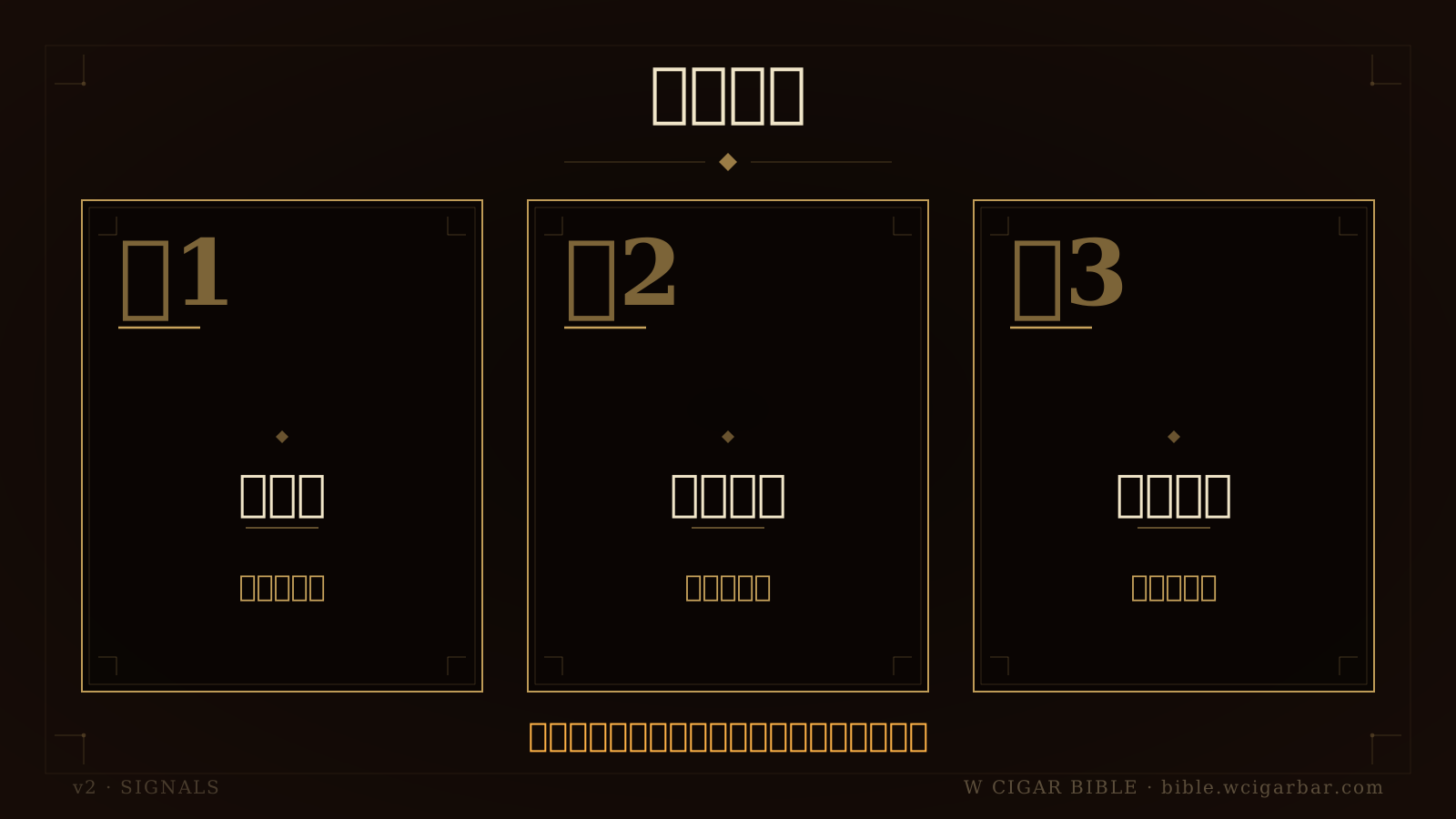
三張錯誤卡提醒黑咖啡淺焙與濃縮時機的誤解
V. Think in time slices: the crossing curves of first third, middle third, final third, and coffee temperature
A cigar is not a drink, but a combustion narrative of 45 to 120 minutes. A Robusto often falls within 45-65 minutes, a Toro about 70-90 minutes, and a Churchill may exceed 100 minutes. Coffee moves from the hot-drinking stage of around 65°C, gradually into the sweetness-opening stage around 45°C, and then to the final stage below 35°C, where acidity and off-flavors become more obvious. If a pairing works only on the first sip, that does not mean it works for the whole session. Take Ramon Allones Specially Selected, familiar to many experienced smokers after 2014, as an example. Its first third has sweet wood and slight spice, the middle third shows more obvious prune, cocoa, and earth, and the final third may turn intense. If paired with Kenya washed medium-light roast, blackberry and brown sugar may be beautiful when hot, but sharp acidity can appear at medium temperature. By the cigar's final third, it may instead make the tongue surface dry and astringent.
I suggest dividing the cigar into three thirds, pairing each third with only 3-5 sips of coffee, and avoiding continuous heavy drinking. Use coffee in the first third to confirm sweetness, in the middle third to amplify structure, and in the final third to refine bitterness and spiciness. For large ring gauges such as 54 or 56, combustion temperature, draw resistance, and smoke volume make the coating sensation in the mouth stronger, so the coffee should have enough oiliness, such as French press Mandheling or Brazil medium-dark roast. For sizes with a more linear character, such as Lonsdale or Corona Gorda, the coffee should be cleaner, avoiding fines and heavy-roast bitterness that damage detail. The precision of an experienced smoker does not lie in how much they drink, but in knowing with every sip which layer of flavor it has changed.
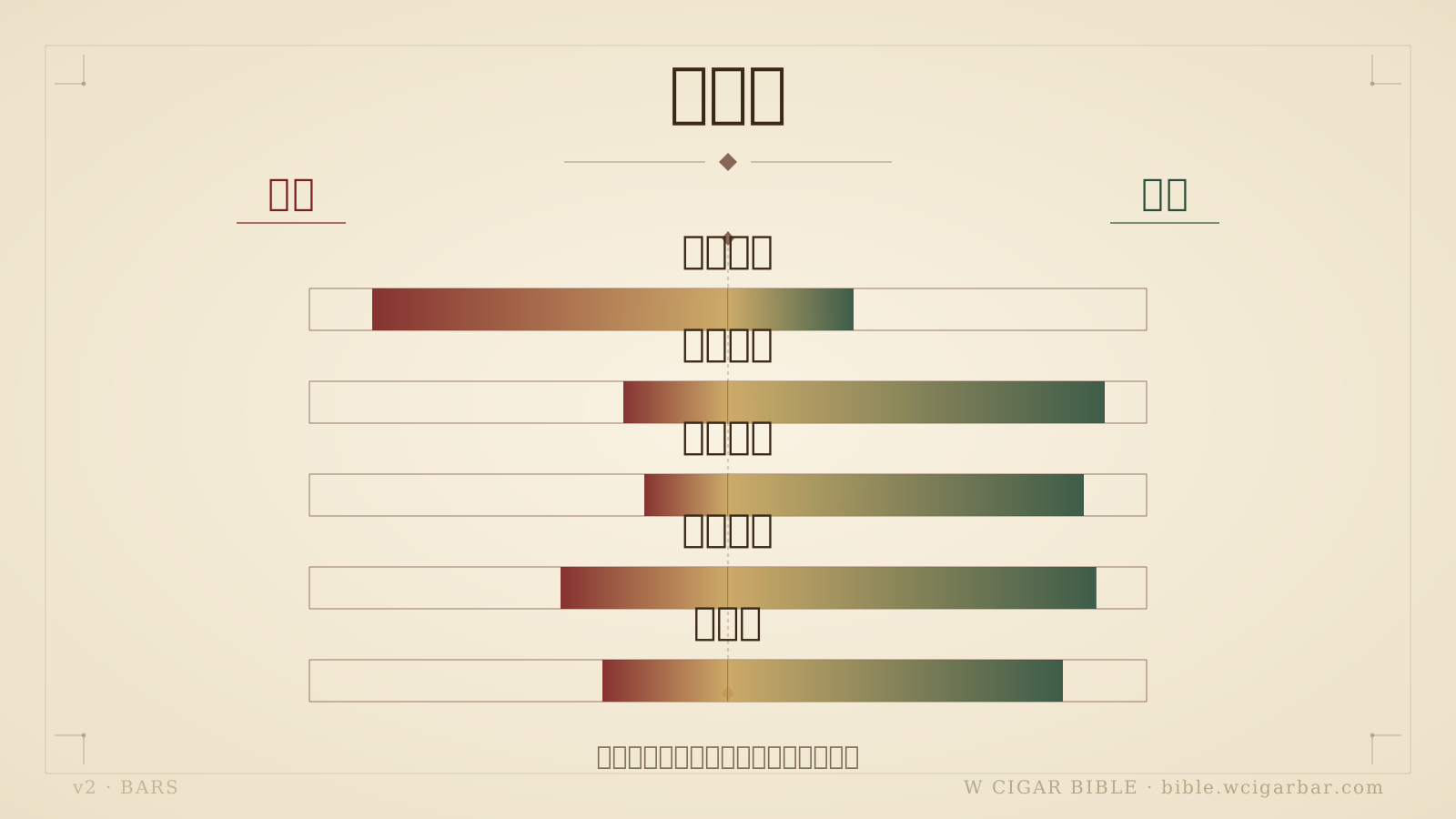
橫條圖比較新手與老手的五項配對取向
VI. Origin flavor map: how Ethiopia, Kenya, Panama, and Indonesia influence cigar language
Ethiopian coffee is often misunderstood by experienced cigar smokers as "too light", but if you choose natural processing and roast it to the early stage of medium roast, its blueberry, floral aroma, and black tea character can make elegant cigars more three-dimensional. When paired with Quai d’Orsay No.50 or H. Upmann Magnum 46, natural Ethiopia can make creamy wood brighter. But when it meets Partagás, Bolivar, and other lines with heavier earth and spice, the floral-fruity feel may seem floating. Kenya is high-risk and high-reward. The SL28, SL34 varieties often have blackcurrant and bright acidity, making them suitable for use in the first third of a cigar, especially with the sweet wood, rose, and gentle spice of Romeo y Julieta Wide Churchills, where they can have a complementary effect.
Panama Geisha, especially the Geisha variety that became globally known after the Best of Panama competition following 2004, has jasmine, bergamot, white peach, and tea-like qualities. It has both high price and high fame, but not every cigar is suitable for it. It suits cigars that are refined, low to medium in strength, and clean-burning. If paired with powerful Nicaragua, it is often overwhelmed by smoke. Indonesia Mandheling is the opposite: low acidity, herbal, spicy, and thick in mouthfeel, able to support strong cigars. But if handled improperly, it can have a muddy feel and overlap too much with the earthy flavor of Cuban cigars. Rare coffees or limited cigars are often discussed in terms of collection value, but collectible appreciation does not equal guaranteed appreciation, and still depends on source, storage, and market. To me, what truly matters is whether the flavor in the moment has a reason to be recorded.
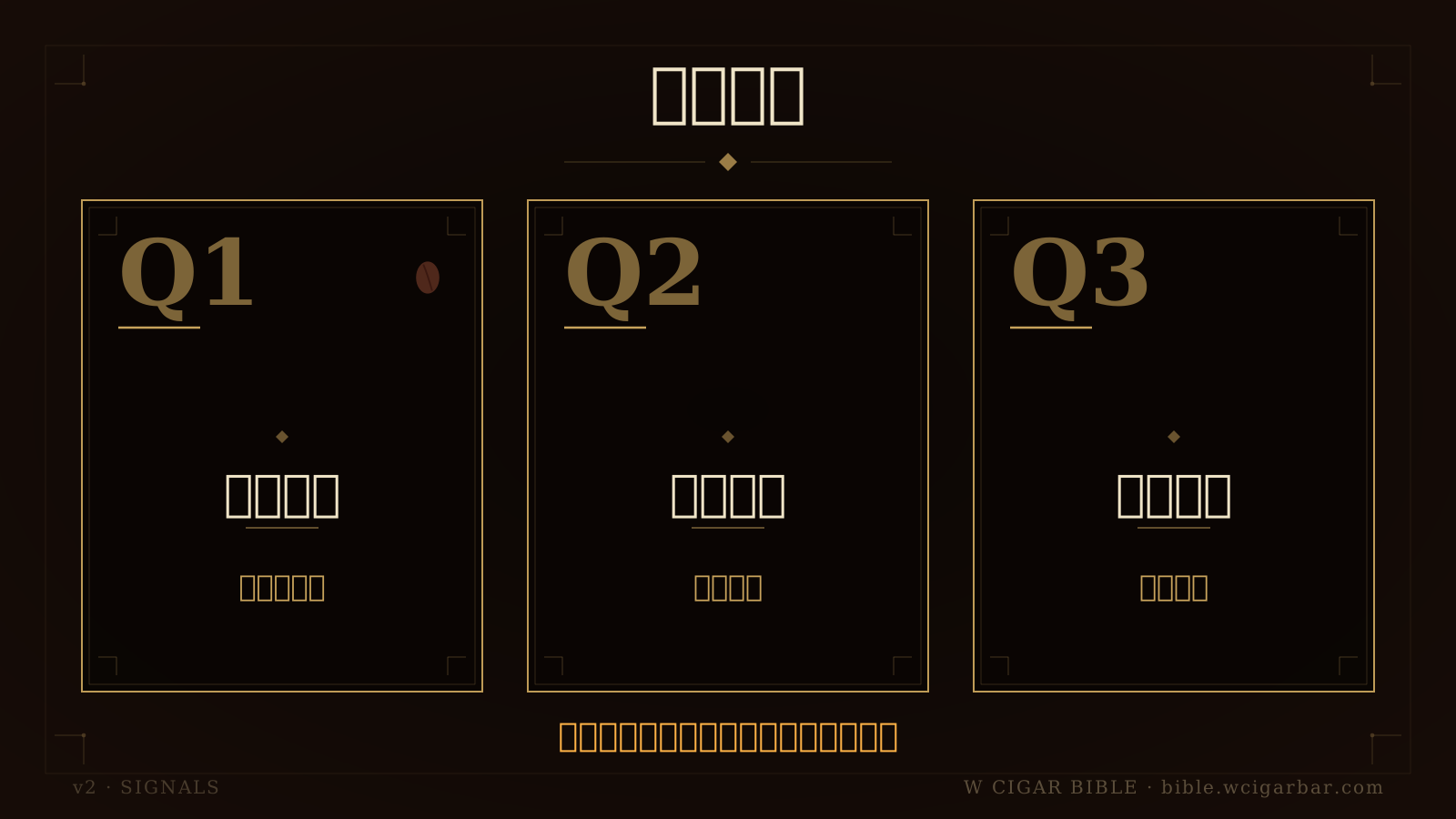
三張問答卡整理黑咖啡淺焙與濃縮時機
VII. Advanced practice for experienced smokers: build your own 30-cell pairing notes instead of believing in a single answer
What advanced smokers should do most is not memorize "this cigar goes with this coffee", but build their own 30-cell pairing notes. The method is simple: choose 5 cigars you know well, such as Montecristo No.2, Partagás Serie D No.4, Hoyo Epicure No.2, Padron 1964 Maduro, and Arturo Fuente Hemingway. Then choose 6 coffee variables, such as Guatemala medium roast, Colombia washed medium roast, Ethiopia natural medium-light roast, Kenya AA, Brazil medium-dark roast, and Mandheling medium-dark roast. Change only one variable each time, and record the date, cigar box code or year of purchase, storage humidity, coffee roast date, brewing water temperature, brew ratio, and total extraction time.
Storage conditions should also be written down. If cigars remain stable over the long term at 65-69% relative humidity and 18-21°C, combustion and aroma become more predictable. If coffee is consumed on the 7th-21st day after roasting, carbon dioxide release is usually more stable, and extraction is more accurate. If a cigar feels tight in the draw, do not immediately blame the coffee. If the coffee is under-extracted, do not conclude that a certain origin is unsuitable. My notes use a 1-5 score to record "degree of complementarity, degree of conflict, cleanliness of finish, and performance in the second third". Looking back after three months, you will find that your own taste preferences are more reliable than online ratings. This is also what I value most as a PCC authorized distributor and long-term writer: letting judgment have a basis, instead of letting fame make decisions for the tongue.
Frequently Asked Questions
1. Must cigar and coffee pairings use black coffee?
Not necessarily, but black coffee makes structure easiest to see clearly. Milk increases milk fat and sweetness, making it suitable for gentle cigars such as H. Upmann or Fuente Hemingway. But with cigars that have obvious earth, leather, and pepper, the milky flavor may dull the finish. If using a latte, I suggest choosing medium roast Brazil or Colombia, and keeping the milk ratio from being too high.
2. Is light roast coffee unsuitable for cigars?
No. The problem with light roast is not that it is "too acidic", but that if the acidity is sharp, it can make the final third of a cigar dry and astringent. Floral and tea-like cigars can pair with Ethiopia or Panama Geisha, but powerful Nicaraguan cigars and Cuban cigars with deep earthiness are usually more suitable with medium to medium-dark roast.
3. When is the best time to drink espresso?
In most cases, it is more stable after the cigar's second third. If espresso is used first in the opening third, caramel, bittersweetness, and thick oiliness will seize the initial aromas. If the cigar is a powerful type such as Padron 1964 or Oliva Serie V, espresso can serve as support in the middle to final third, but the extraction must not be overly bitter.
4. Does coffee temperature affect pairing?
It has a major effect. When hot, aromas rise. At medium temperature, sweetness is clearest. After cooling, acidity and off-flavors are easily amplified. Experienced smokers should drink coffee in stages, rather than judging an entire pairing from one cup from start to finish. If the coffee becomes sharp after cooling, it is better to stop, to avoid misjudging the cigar's own finish.
5. Is there a safest all-purpose combination?
If I could choose only one direction, I would choose Guatemala Antigua or Colombia medium roast pour-over, with a brew ratio of 1:15 and water temperature of 91-92°C. They have cocoa, caramel, nuts, and moderate acidity, covering most Cuban and medium-strength non-Cuban cigars, and they are a good starting point for building a taste baseline.
The beauty of cigars and coffee does not lie in showing off technique to each other, but in leaving space for one another. What experienced smokers ultimately pursue is not something stronger, rarer, or more expensive, but knowing when to let the coffee step back and when to let the cigar speak. Every act of combustion and extraction is an intersection of time, land, and craft. Only by understanding how to record can one understand true appreciation.
- Cigar Prince Wilson Tsai
Smoking is harmful to health. Persons under the age of twenty may not smoke. Smoking cessation hotline: 0800-636363. This article is provided solely for adults aged twenty and above as a reference on cigar culture, storage, and regulatory knowledge. It is not tobacco advertising, promotion, or purchase advice.
Like this article?Share with friends
Share this W Cigar Bible piece with friends who want to learn cigar culture, storage, and tasting.
想把這篇 化為實踐
雪茄聖經是知識;雪茄文化要在空間裡發生
W Cigar Bar 大安總店資訊
台北大安區 · 雪茄聖經總編輯 Wilson Tsai 主理的雪茄文化空間
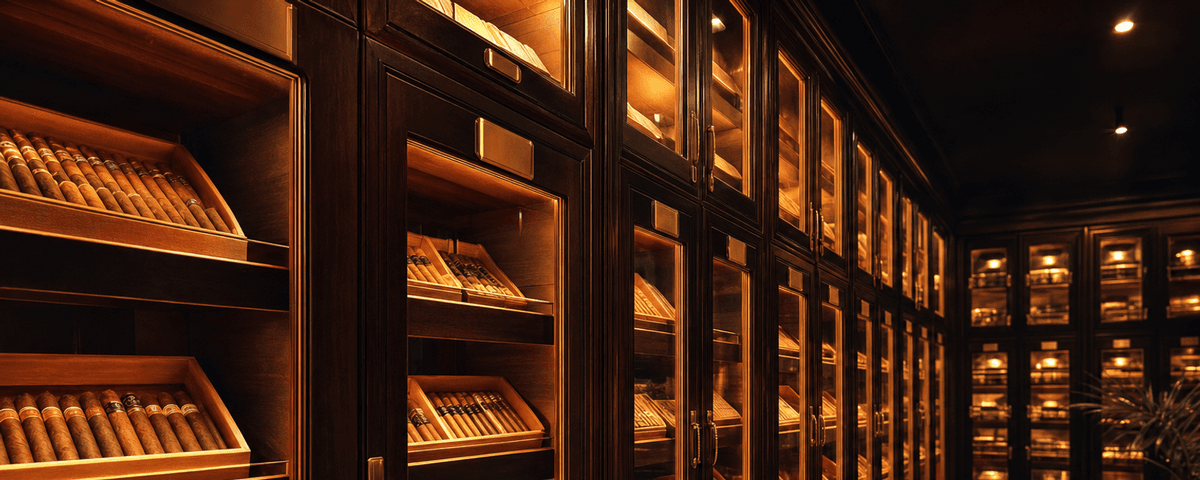
33 座 24 小時恆溫恆濕醇化室
W Cigar Bar 提供的會員醇化空間 · 場地資訊請洽編輯部
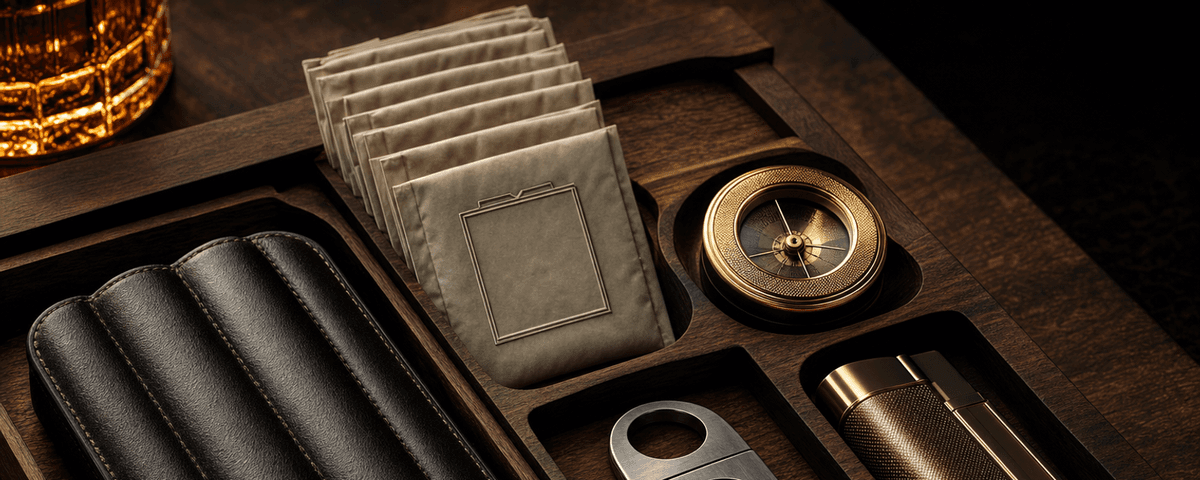
雪茄剪 / 打火機 / 雪茄盒 / Boveda
W Cigar 配件官網 · 專營雪茄配件正品
加 LINE 好友 · 文化諮詢
文化空間資訊 · 紳士沙龍 · 私人包場
本網站內容僅供雪茄文化、歷史、收藏與品吸知識研究參考。菸品有害健康、未滿法定年齡者請勿吸菸。實際規範請依所在地法律為準。
吸菸有害健康・戒菸專線 0800-636363・本站僅供 20 歲以上成年人閱覽。
讀到這裡,你不只是路過的人
留下 Email,加入 W 雪茄聖經內圈——總編輯 Wilson Tsai 親選的學院深文與國際新訊,先你一步送到信箱。
· 教育用途非銷售 · 隨時一鍵退訂 · Email 絕不對外公開 · 由勝茄股份有限公司營運
同分類延伸閱讀

資料來源:W Cigar Bible 編輯部整理 · 雪茄王子 Wilson Tsai 親自審稿
本文僅供雪茄文化、歷史、收藏與品鑑知識研究,不作為菸品促銷、銷售或購買建議。吸菸有害健康,未滿二十歲不得吸菸。