原桶強度威士忌完整解析:桶陳原液與加水的藝術,搭配 Cohiba Behike 52 的頂級對決

原桶強度威士忌不是單純追求酒精濃度,而是保留桶陳原酒在裝瓶前的分子密度與結構張力。本文從 Cask Strength、單桶威士忌、批次桶強、加水品飲與 IB 文化談起,再精準拆解 Cohiba Behike BHK 52 的 medio tiempo 油脂、奶油、黑巧克力、松露與蜂蜜線索,說明兩者相遇時如何形成原液級的風味對決。
- 原桶強度的核心在於保留桶陳原酒結構,而非單純追求高酒精濃度。
- 加水品飲與慢抽開香互為鏡像,關鍵是找到香氣釋放的臨界點。
- BHK 52 的 medio tiempo 油脂能承接桶強威士忌的果酯、木質與辛香張力。
Complete Analysis of Cask Strength Whisky: The Art of Barrel-Aged Spirit and Water Addition, and the Ultimate Pairing with Cohiba Behike 52
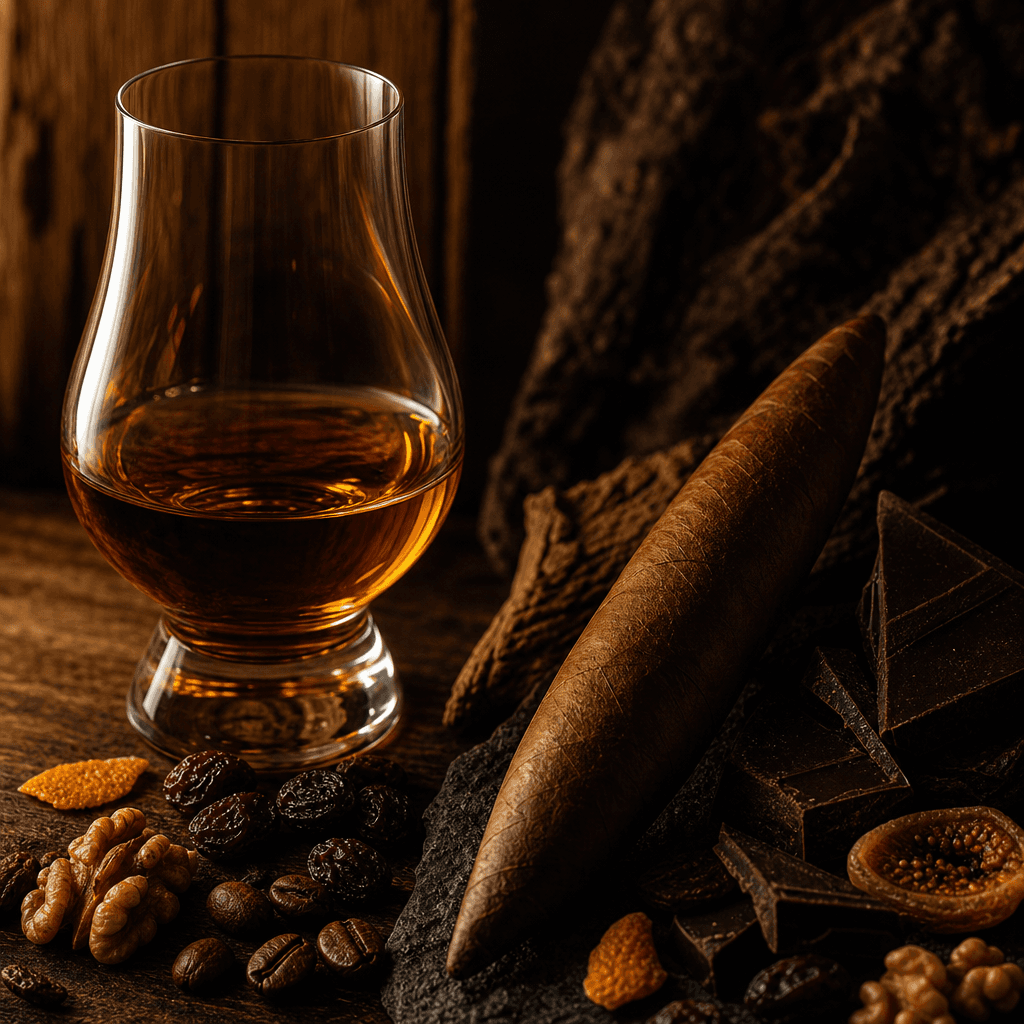
The encounter between cask strength whisky and Cohiba Behike BHK 52 is never about the crude logic of "heavy with heavy." As an editor of the "Cigar Bible," I often say that true high-level pairing is not about putting two strong entities on the same table, but about seeing if they can reveal the details hidden deep within each other's structure. Cohiba Behike BHK 52 (Cuba, Laguito No.4, 52 × 119mm): Cream, dark chocolate, truffle, honey, medium-strong cigar body, rare formula of medio tiempo top leaves, is just the cigar that can withstand the molecular pressure of cask strength whisky.
The English term for cask strength, often seen at 55-65% bottling alcohol concentration, is fundamentally about a more serious issue: whether the distillery leaves the final interpretation of the barrel-aged spirit to the drinker. The slow draw and aroma release of BHK 52 follows a similar logic, where the ignition, draw resistance, rhythm, and smoke temperature can rewrite the order of appearance of cream, dark chocolate, and truffle aromas. In this article, I won't talk about general luxury but will discuss molecules, structure, craftsmanship, and the actual flavor changes that occur when the two meet.
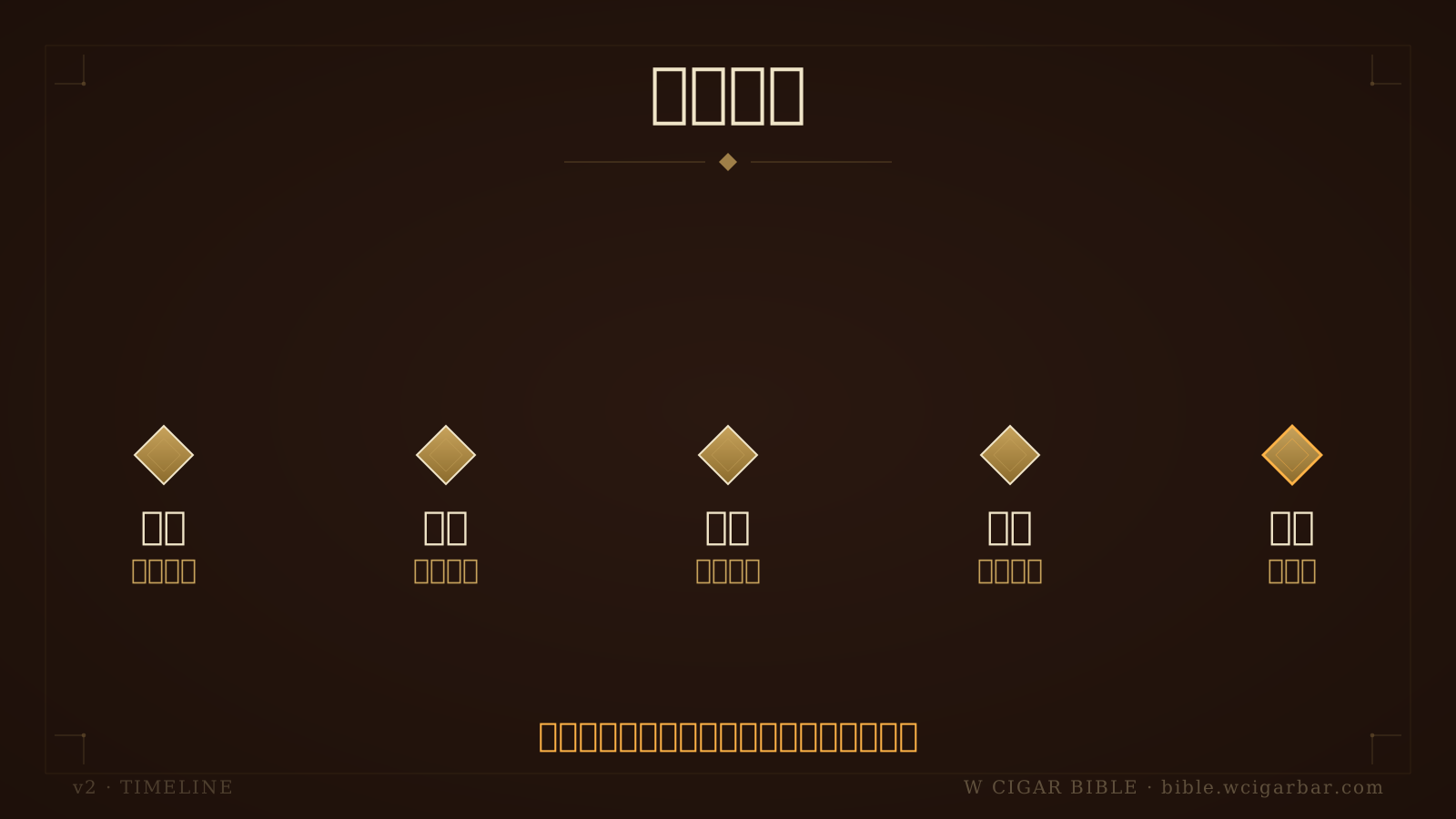
流程圖依序呈現原液靜置短聞加水與中段搭配
Cask Strength is Not Just an Alcohol Number, But the Undiluted Structure of Barrel-Aged Spirit
Cask strength usually refers to whisky that, after leaving the oak barrel, is bottled in a state close to its original form without regular water dilution. Scottish single malt often falls between 55-65%, while bourbon or those matured in high-temperature, dry warehouses (like Kentucky, USA) may have higher alcohol content due to water evaporating faster than alcohol. However, the number itself is not the focus. The focus is on alcohol, water, fatty acid esters, aldehydes, phenols, lactones, and lignin degradation products being locked in a highly concentrated ratio in the same liquid phase.
For general 40-46% whisky, the distillery has already completed dilution, integration, and stabilization for you. Cask strength is like an unflattened topographic map, with peaks and valleys more distinct, testing the nasal and tongue interpretation ability. Cask strength is not brute force but a structural language that returns the dilution right to the drinker.
From a craftsmanship perspective, cask strength bottling skips the process of adjusting the batch to a fixed alcohol concentration, but this does not mean it is more rough. On the contrary, the distillery must more precisely evaluate the barrel's activity, maturation period, warehouse location, evaporation rate, and sulfur residue. If the structure of the barrel-aged spirit itself is loose, high concentration will only magnify the defects; if the base spirit and oak interaction is complete, high concentration will present a three-dimensional compression of fruit, grain, oil, and wood aromas.
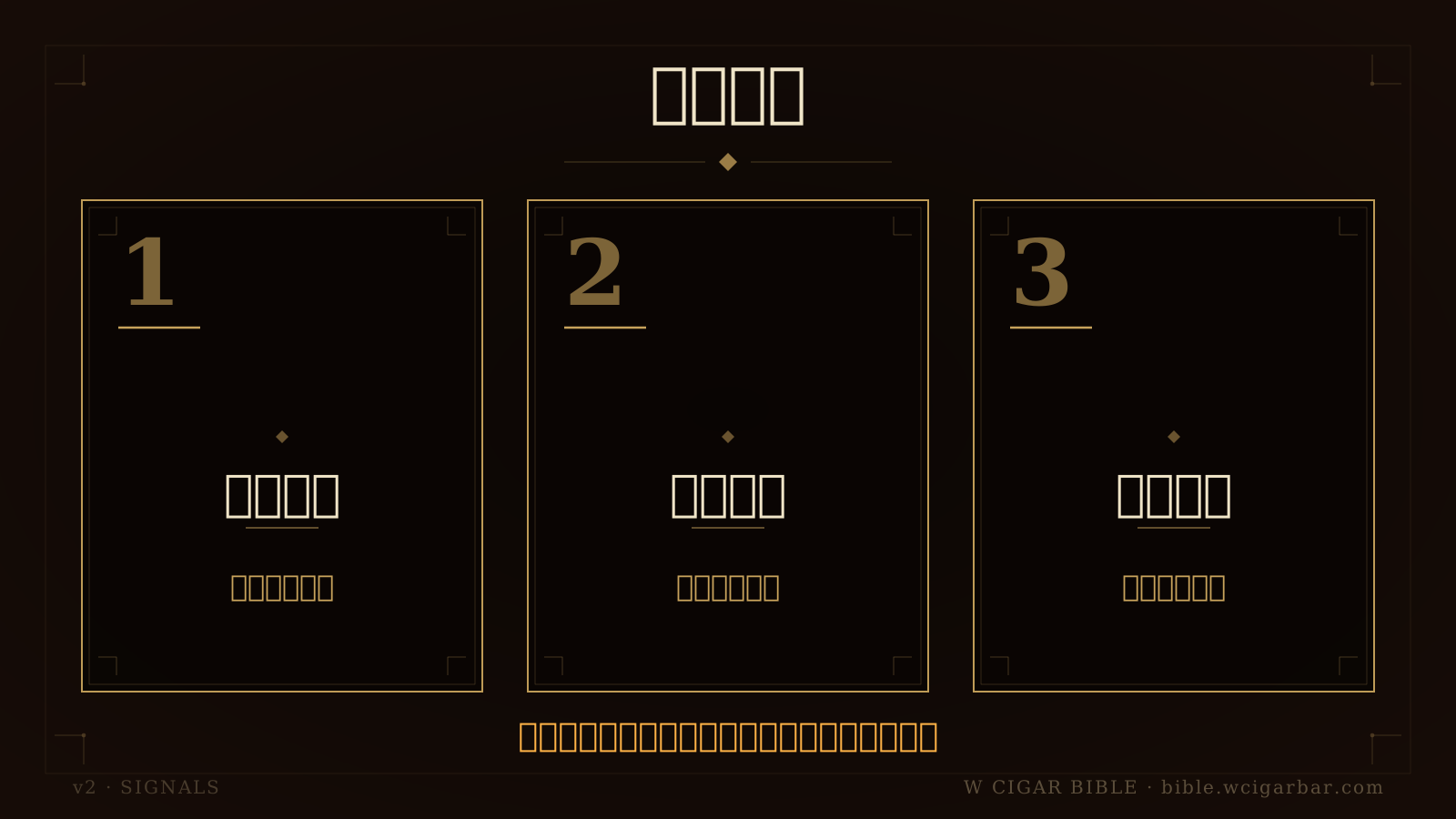
三張重點卡說明水滴開香慢抽控溫與結構優先
The Aroma Science of Cask Strength: Alcohol, Esters, and Volatility Threshold
Alcohol concentration changes the release speed of aroma molecules, which is the first key to understanding cask strength. Ethanol is both a solvent and a carrier, capable of encapsulating hydrophobic aroma molecules in liquid, temporarily holding down fruit esters, coconut lactones, eugenol, vanillin, and smoky phenols. When the alcohol concentration is high, the nose first feels the stimulation of ethanol, and the real fruit and wood aromas may not unfold immediately.
This is why advanced drinkers do not rush to judge the first nose. The first layer of cask strength is often alcohol vapor and high-volatility esters, with the second layer being dark fruits, caramelized sugars, roasted nuts, and dried spices brought by maturation. If it is a peated cask strength, phenol, cresol, and guaiacol will parallel with seaweed, iodine, and charcoal ash; if it is sherry cask matured, furfural, 5-methylfurfural, and oxidized dried fruit tones will be more prominent.
Higher alcohol concentration does not necessarily mean louder aroma, but rather requires the correct release conditions. This statement also applies to BHK 52 because the aromatic compounds, pyrazines, wood decomposition aromas, and tobacco oils in cigar smoke also need stable combustion temperature to develop. If cask strength whisky has not been opened with water, and BHK 52 is smoked too quickly, both sides will only be left with spiciness, heat, and monotonous woodiness.
Therefore, when smelling cask strength whisky, I first use short nasal breaths to capture the outline, then observe changes with the glass at rest. If the glass shape is too narrow, high-concentration ethanol tends to concentrate, obscuring details; if the glass mouth is slightly wider, aroma molecules are more likely to layer. This is not a stacking of ritual sense but avoiding letting ethanol take the lead.
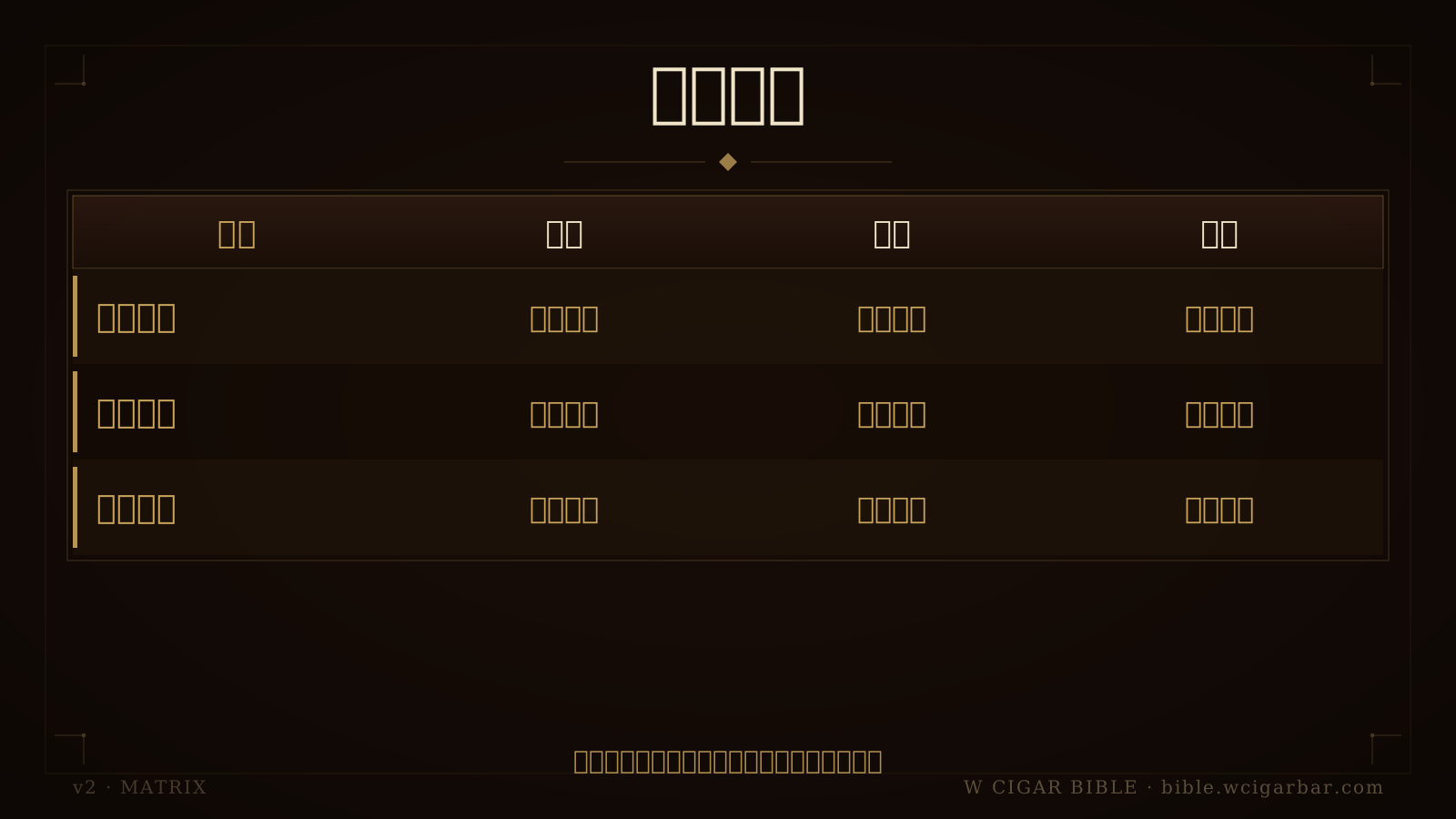
比較表呈現原液微水過水在香氣酒體與段落的差異
Single Cask Whisky and Batch Cask Strength: Personality, Calibration, and Flavor Risk
Single cask whisky refers to bottling from a single oak barrel, theoretically best presenting the personality of a particular barrel under specific warehouse, year, and wood interaction. It may have amazing blackcurrant, leather, waxy or tropical fruit, or it may retain unmodified sulfur match, green wood, or thin body. The charm of a single cask lies in its lack of retreat.
Batch cask strength, on the other hand, blends multiple high-concentration barrel-aged spirits and bottles them undiluted or with minimal adjustment. It retains the strength and density of cask strength but corrects the sharpness of a single cask through blending. For distilleries, batch cask strength is a style declaration; for drinkers, it usually better presents a distillery's stable profile.
Single cask whisky is like a solitary peak, batch cask strength like a mountain range; the former tests the fate of the barrel, the latter tests the blender's judgment. When pairing with BHK 52, this difference is crucial. If a single cask has a significant sherry sulfur note, it may deepen the truffle and damp earth aromas of BHK 52 or cover the honey and cream; if batch cask strength has a balance of fruit esters and wood, it usually more easily reveals the oil lines of medio tiempo.
I often suggest experienced cigar enthusiasts use the same BHK 52 to compare two types of cask strength, rather than just looking at the year and region on the label. The first choice is a bourbon cask or refill cask to observe the connection of vanilla, coconut, honey, and cream; the second choice is a batch with deeper sherry cask or wine cask influence to observe the expansion of dark chocolate, dried fruit, and truffle. Such comparison accumulates interpretation ability more than simply chasing rare words.
Oak Barrel Craftsmanship: Bourbon Casks, Sherry Casks, and the Framework of Barrel-Aged Spirit
Whisky maturation is not just about putting the spirit into wood but involves extraction, oxidation, concentration, and subtraction simultaneously. American white oak often brings vanillin, coconut-toned β-methyl-γ-octalactone, caramel, and roasted woodiness, while European oak is more likely to present tannins, dried fruits, spices, and deeper wood bitterness. Sherry cask influence also involves residual pre-filled liquid, barrel toasting level, and warehouse humidity, not just summarized by the word "sweet."
In a high-concentration state, these wood extracts in barrel-aged spirit are not completely softened. Vanillin may resemble dried vanilla pods, lactones more like coconut shells and creamy wood, and tannins may present as cocoa powder, tea notes, and walnut skin. If the distillery's new make spirit is oily, such as longer fermentation or heavier-bodied malt whisky, the cask strength state will lock this layer of waxiness and fruit aroma more tightly.
The true framework of barrel-aged spirit is the tension jointly formed by grain oils, distillation copper contact, and oak extraction. This tension particularly dialogues with the medio tiempo of BHK 52 because medio tiempo is not simply increasing concentration but providing thicker tobacco oils and deeper aromatic layers. When the vanillin of cask strength whisky meets the cream of BHK 52, it forms a similar vanilla buttercream nose; when wood tannins meet dark chocolate, the bitterness becomes cleaner rather than heavier.
If choosing peated cask strength, the phenol residue and maturation cask type must also be considered. Young peated cask strength tends to have iodine, charcoal ash, smoked meat, and rubber edges, which will suppress the honey sensation of BHK 52; longer maturation or sherry cask peat may bring truffle, damp earth, and dark chocolate to deeper levels. Peat phenols × tobacco smoke resonance is a beautiful yet dangerous pairing because if excessive, details will be swallowed by smoke.
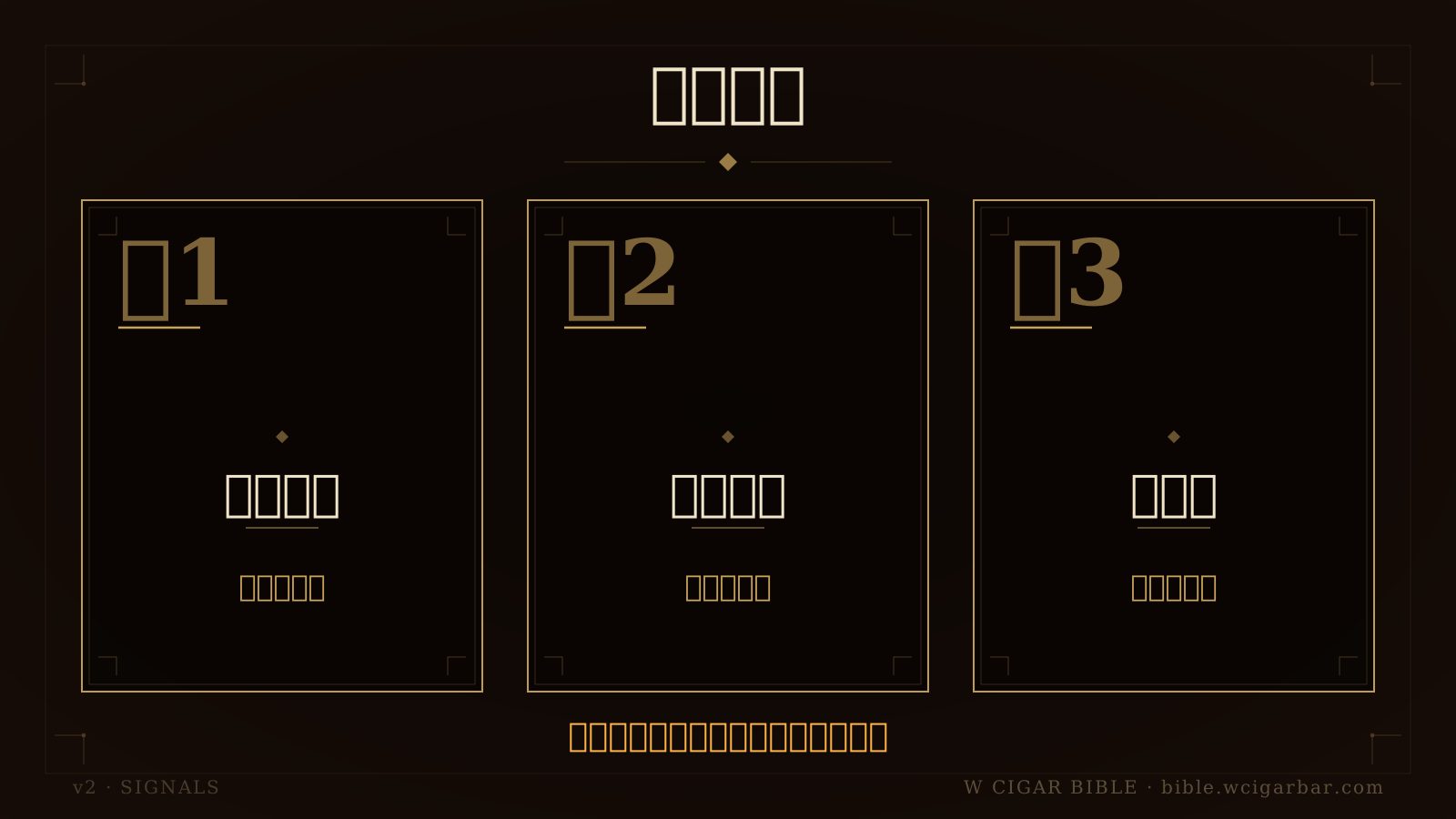
三張誤區卡提醒越強越好一次加水與抽太急
Water Addition Tasting: Finding the Bloom Point of Cask Strength Drop by Drop
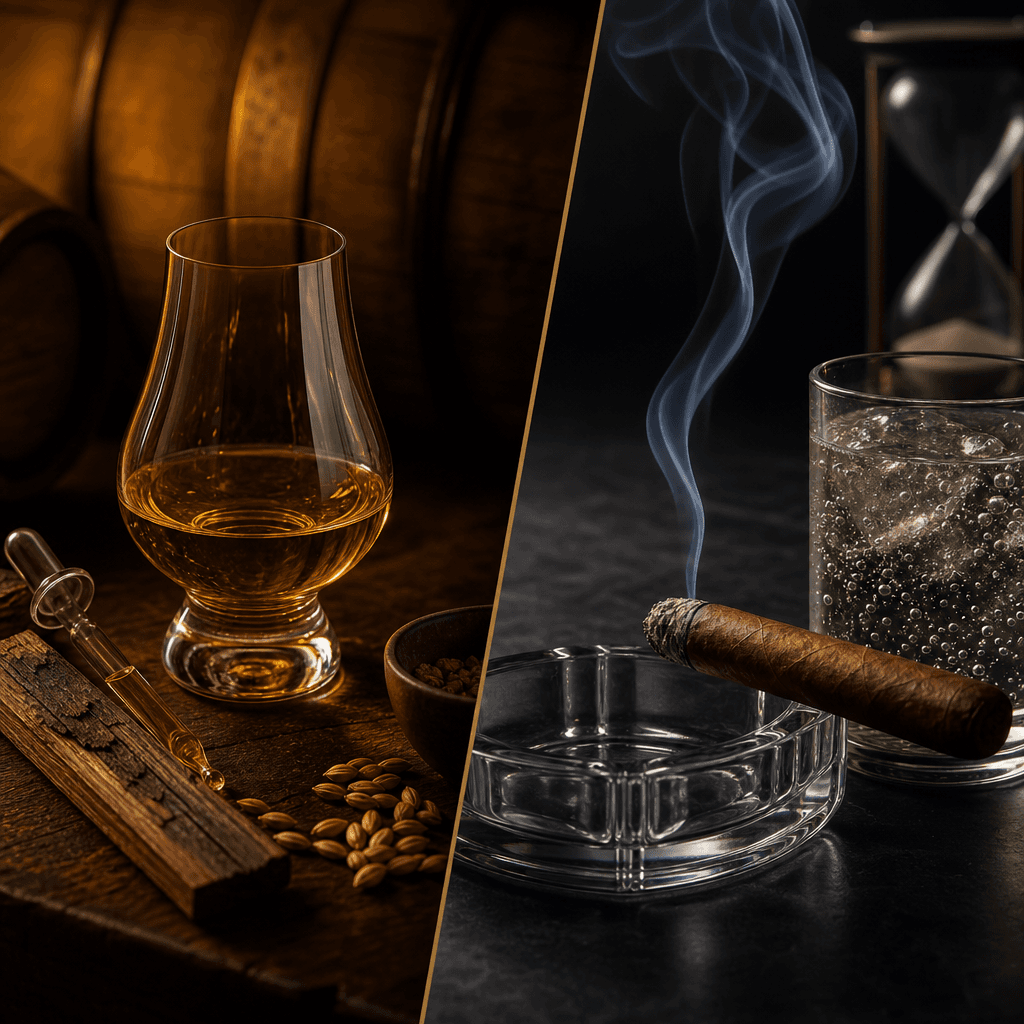
Water addition tasting is not turning cask strength into regular concentration but slightly changing the ethanol and water ratio to rearrange encapsulated aroma molecules. My approach is to first smell and sip the undiluted spirit, then use a dropper to add one to three drops of room temperature water, gently swirl the glass, and let it sit for half a minute. Do not rush to lower the alcohol sensation because some cask strengths' most beautiful moments appear when dropping from 58% to about 55%, not all the way down to 46%.
Common changes after water addition include the decrease in high-volatility ethanol pressure, and fruit esters and wood aromas starting to emerge. Isoamyl acetate's banana and pear sensation, ethyl hexanoate's pineapple or tropical fruit aroma, vanillin, and furfural's sweet woodiness will stretch from the originally tight body. If it's a sherry cask strength, water will make raisins, prunes, orange peel, and cocoa powder more three-dimensional but may also release sulfur or wood dryness.
The so-called bloom point is the moment when aroma unfolds, and structure has not yet loosened. This mirrors the slow draw aroma release of BHK 52: the front part is cream and honey, the middle part sees dark chocolate, truffle, and roasted woodiness emerge, and the latter part reveals the deep oils and spices of medio tiempo. Excessive water will make the spirit lose its spine, and uncontrolled slow draw will overheat the cigar, both not adding more details but collapsing the structure.
I divide a glass of cask strength into three states: undiluted, slightly watered, and more watered. When pairing with the front part of BHK 52, just smelling the undiluted spirit is enough to establish the bridge of cream and honey; as the middle part enters dark chocolate and truffle, let the whisky enter the slightly watered state. This way, the fruit library of the spirit and the oils of the cigar will meet head-on in the middle part, rather than suppressing each other from the start.
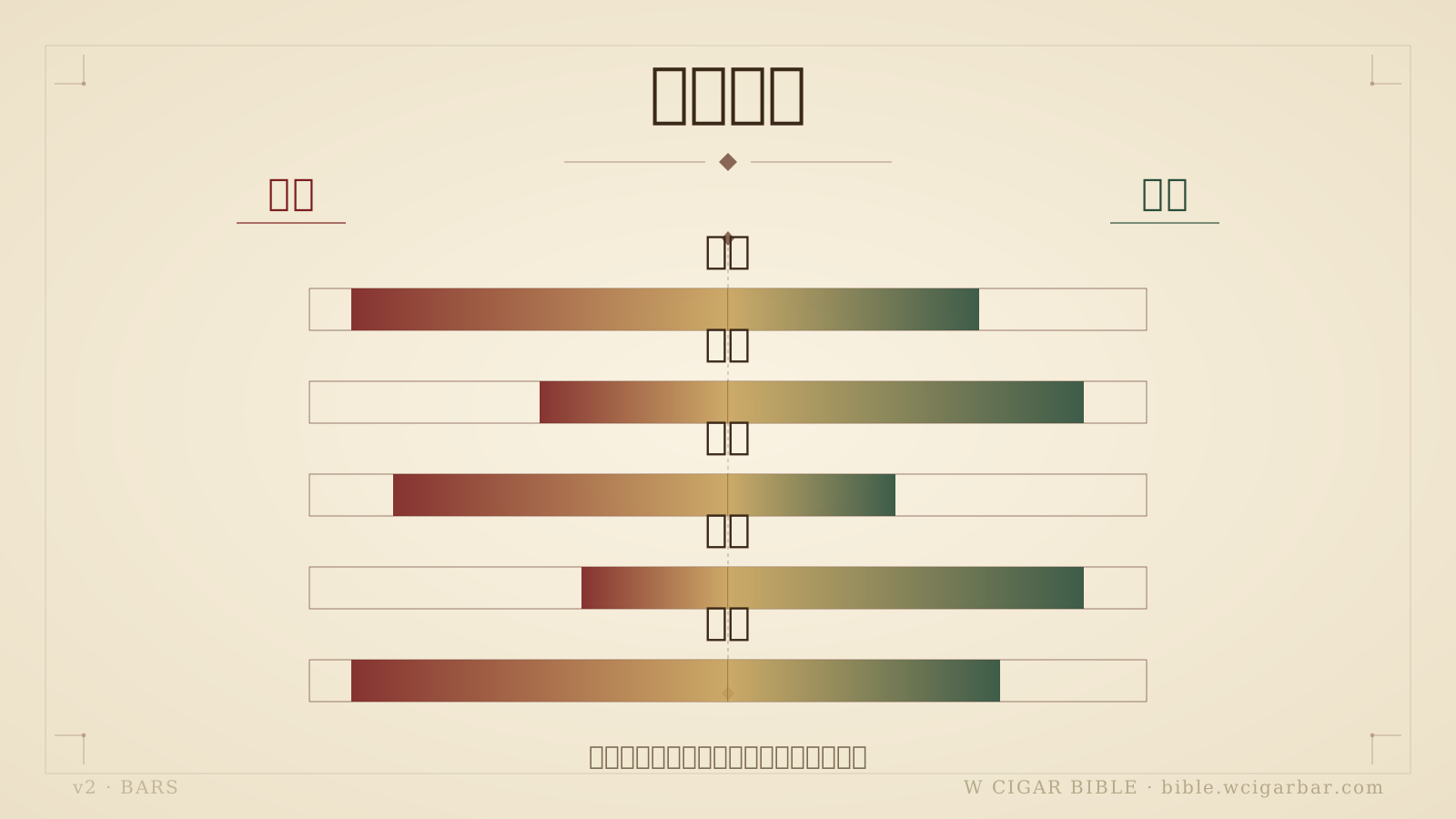
長條比較圖呈現單桶與批次桶強在五個軸線的差異
Distillery Bottling and Independent Bottling (IB): Who Defines the Style
Distillery bottling usually carries the mainline style that the distillery hopes the outside world remembers, such as Highland's fruity malt, Speyside's honey floral, Islay's peaty sea breeze, or Campbeltown's salty oils. Distillery bottling of cask strength often pushes the existing style to higher resolution rather than letting a single cask's personality run wild. When paired with BHK 52, it's easier to grasp the rhythm because the direction of the spirit is clear.
Independent bottling (IB) culture is much more fascinating and requires more interpretation experience. Traditional IBs like Gordon & MacPhail, Cadenhead, Signatory, SMWS often present aspects outside the distillery's mainline through single casks, special cask types, different maturation periods, or atypical distillery sides. IB cask strength might show you rare tropical fruits from a distillery or confront you with nearly bare wood tannins or warehouse humidity.
Distillery bottling answers "who is this distillery," while IB bottling asks "what happened to this cask." For Cohiba Behike BHK 52, distillery bottling is suitable as a benchmark, and IB is suitable for deep reading. If you want to observe the honey and cream of BHK 52, choosing a bourbon cask distillery cask strength will be clearer; if you want to test truffle, dark chocolate, and damp earth, a sherry cask or heavily peated IB will be more challenging.
But I also remind myself not to be hypnotized by the words "single cask." The high resolution of single cask whisky inevitably comes with high variability, especially cask type, bottling alcohol concentration, whether chill-filtered, and whether colored, all affecting taste and aroma. When paired with BHK 52, a medium-strong cigar with dense layers, the spirit's flaws will be magnified by the smoke, and its strengths will be lifted by the oils.
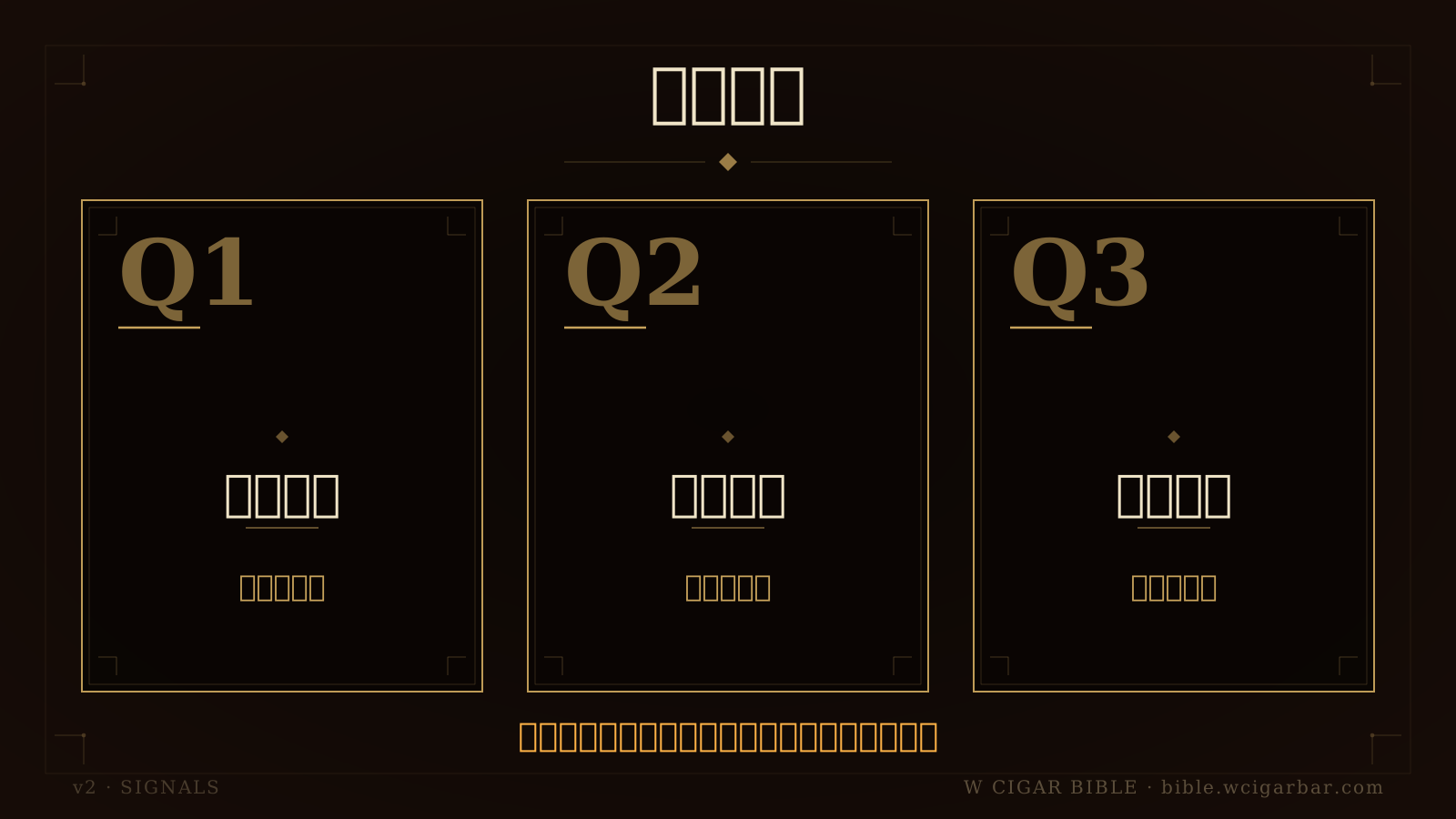
快問快答卡整理加水泥煤與中段登場三個實用問題
The Showdown of Cohiba Behike BHK 52's Medio Tiempo and Cask Strength Spirit
The core of BHK 52 is not just the 52 ring gauge and 119mm proportion but the oil density brought by the medio tiempo top leaves. Medio tiempo is located at the top of the plant, with a low occurrence ratio, more strongly influenced by sunlight and wind, with leaf thickness, aromatic substances, and nicotine structure more concentrated. In BHK 52, it is not simply increasing strength but providing deeper adhesion between cream, dark chocolate, truffle, and honey.
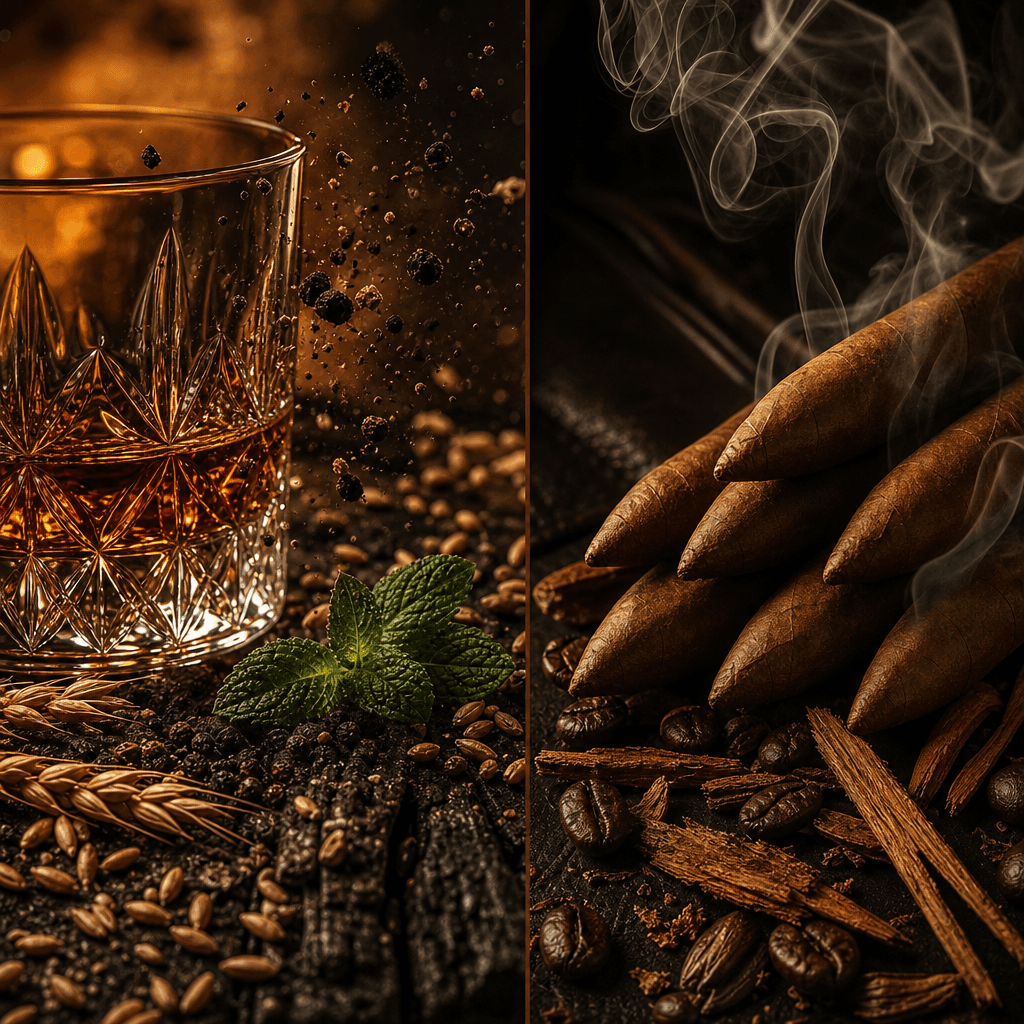
The concentrated fruit library of cask strength spirit × the concentrated oils of medio tiempo equals the head-on meeting of two raw material levels. The fruit esters in the spirit resemble compressed apricot, pineapple, black cherry, or citrus peel, while the tobacco oils in the cigar resemble cream, cocoa butter, and damp earth aroma carriers. When the two meet, the nose will present complex impressions like dried fruit wrapped in dark chocolate, honey dipped in roasted wood, and truffle cocoa powder.
BHK 52 can pair with cask strength not because it is strong enough but because its oils can withstand the impact of high-concentration aroma molecules. If paired with bourbon cask strength, vanillin × cream will make the front part more rounded, coconut lactone × honey will pull out soft sweet wood. If paired with sherry cask strength, furfural × dark chocolate will deepen the roasted sensation, oxidized dried fruit × truffle will form a moist dark tone.
| Cask Strength Whisky Flavor Token | BHK 52 Flavor Token | Chemical Formula Reading After Meeting |
|---|---|---|
| Vanillin, Oak Lactone | Cream, Honey | Sweet wood is enveloped by creamy sensation, making the front part more rounded. |
| Ethyl Hexanoate, Tropical Fruit Ester | Medio Tiempo Oils | The fruit library is supported by tobacco oils, extending the nose. |
| Furfural, Cocoa Powder Sensation | Dark Chocolate | Roasted bitterness overlaps, becoming clean rather than heavy. |
| Peat Phenols, Charcoal Ash | Tobacco Smoke | Resonance amplifies smoke, but concentration and rhythm must be controlled. |
| Oxidized Dried Fruit, Orange Peel | Truffle, Damp Earth | Dark fruit acidity passes through soil aroma, forming a dark red tone. |
The real key is not to let either side steal time. If BHK 52 is still in the cream and honey stage in the front part, too heavy peat or tannins will dominate too early; after dark chocolate appears in the middle part, sherry cask strength will have enough support. If spices rise in the latter part, the whisky should stay in a slightly watered state to conclude with fruit and wood, not with alcohol heat clashing with smoke heat.
Strength Management Lesson: The Rhythm Design of Expert Endgame Pairing
The hardest part of expert endgame pairing is not selecting strong spirits and deep cigars but managing the rising curve of strength. Cask strength whisky brings ethanol stimulation, wood tannins, and aroma density, while BHK 52 progresses with burning, moving from cream and honey to dark chocolate, truffle, wood, and spices. If both curves rise simultaneously, taste quickly fatigues; if arranged properly, the two will unfold like interwoven musical phrases.
I divide the entire pairing into three segments. The first segment only lets the whisky be smelled undiluted and sipped in small amounts, while BHK 52 maintains a slow draw, aiming to establish a common vocabulary of cream, honey, vanilla, and fruit esters. In the second segment, add water drop by drop, allowing cask strength whisky to open to fruit and wood coexistence, just as BHK 52's dark chocolate and truffle enter. The third segment reduces spirit contact frequency, so the latter part of the cigar's spices is not elevated by ethanol.
The most mature cask strength cigar pairing is letting strength be orchestrated, not letting strength compete with each other. This is what I call "the ritual of water opening aroma × the ritual of slow draw opening aroma" as a mirror image: one side uses water to open alcohol and aroma, the other uses time to open tobacco burning and oils. Neither can be rushed; rushing leaves only heat, slowing down reveals layers.
A drop of water in a glass and a pause on a cigar are actually structural tuning. When cask strength whisky transforms from a tight fruit library to an expansive fruit aroma, BHK 52 also moves from cream and honey to truffle and dark chocolate, completing the full arc of high-level pairing. For seasoned readers, the victory of this showdown is not about who suppresses whom but about who can make the other reveal more details.
Further Reading|Complete Map of Whisky Regions: From Scotland's Five Major Regions to Asia's New Forces, A Flavor Overview for Cigar Pairing|Blended Whisky Everyday Introduction: The Art of Balance in Popular Styles, A Half-Hour Ritual with H. Upmann Half Corona|How to Choose Between Peat and Sherry Casks: A Personality Test of Whisky's Two Major Flavor Routes, With a Cigar Strength Comparison Table
—Cigar Prince Wilson Tsai
Smoking is harmful to health. Smoking is prohibited for those under twenty years old. Quit smoking hotline: 0800-636363. This article is intended for adults over twenty years old as a reference for cigar culture, preservation, and regulations, not as an advertisement, promotion, or purchase suggestion for tobacco products.
Do not drink and drive. Excessive drinking is harmful to health. Drinking is prohibited for those under eighteen years old. This article is also not an advertisement, promotion, or purchase suggestion for alcoholic beverages. Please drink responsibly.
Like this article?Share with friends
Share this W Cigar Bible piece with friends who want to learn cigar culture, storage, and tasting.
想把這篇 化為實踐
雪茄聖經是知識;雪茄文化要在空間裡發生
W Cigar Bar 大安總店資訊
台北大安區 · 雪茄聖經總編輯 Wilson Tsai 主理的雪茄文化空間
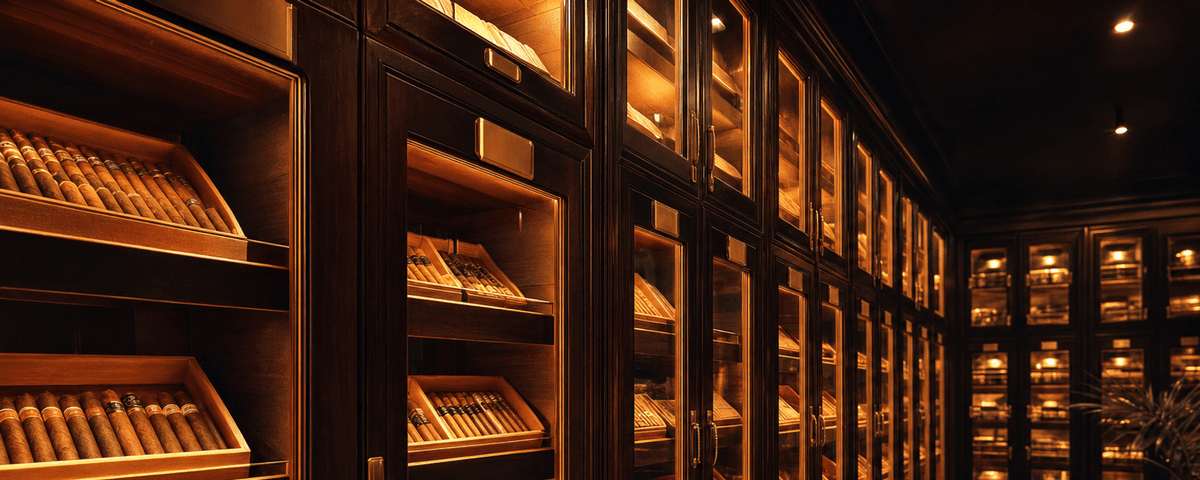
33 座 24 小時恆溫恆濕醇化室
W Cigar Bar 提供的會員醇化空間 · 場地資訊請洽編輯部
雪茄剪 / 打火機 / 雪茄盒 / Boveda
W Cigar 配件官網 · 專營雪茄配件正品
加 LINE 好友 · 文化諮詢
文化空間資訊 · 紳士沙龍 · 私人包場
本網站內容僅供雪茄文化、歷史、收藏與品吸知識研究參考。菸品有害健康、未滿法定年齡者請勿吸菸。實際規範請依所在地法律為準。
吸菸有害健康・戒菸專線 0800-636363・本站僅供 20 歲以上成年人閱覽。
讀到這裡,你不只是路過的人
留下 Email,加入 W 雪茄聖經內圈——總編輯 Wilson Tsai 親選的學院深文與國際新訊,先你一步送到信箱。
· 教育用途非銷售 · 隨時一鍵退訂 · Email 絕不對外公開 · 由勝茄股份有限公司營運
同分類延伸閱讀
資料來源:W Cigar Bible 編輯部整理 · 雪茄王子 Wilson Tsai 親自審稿
本文僅供雪茄文化、歷史、收藏與品鑑知識研究,不作為菸品促銷、銷售或購買建議。吸菸有害健康,未滿二十歲不得吸菸。