如何品味雪茄的口感與層次
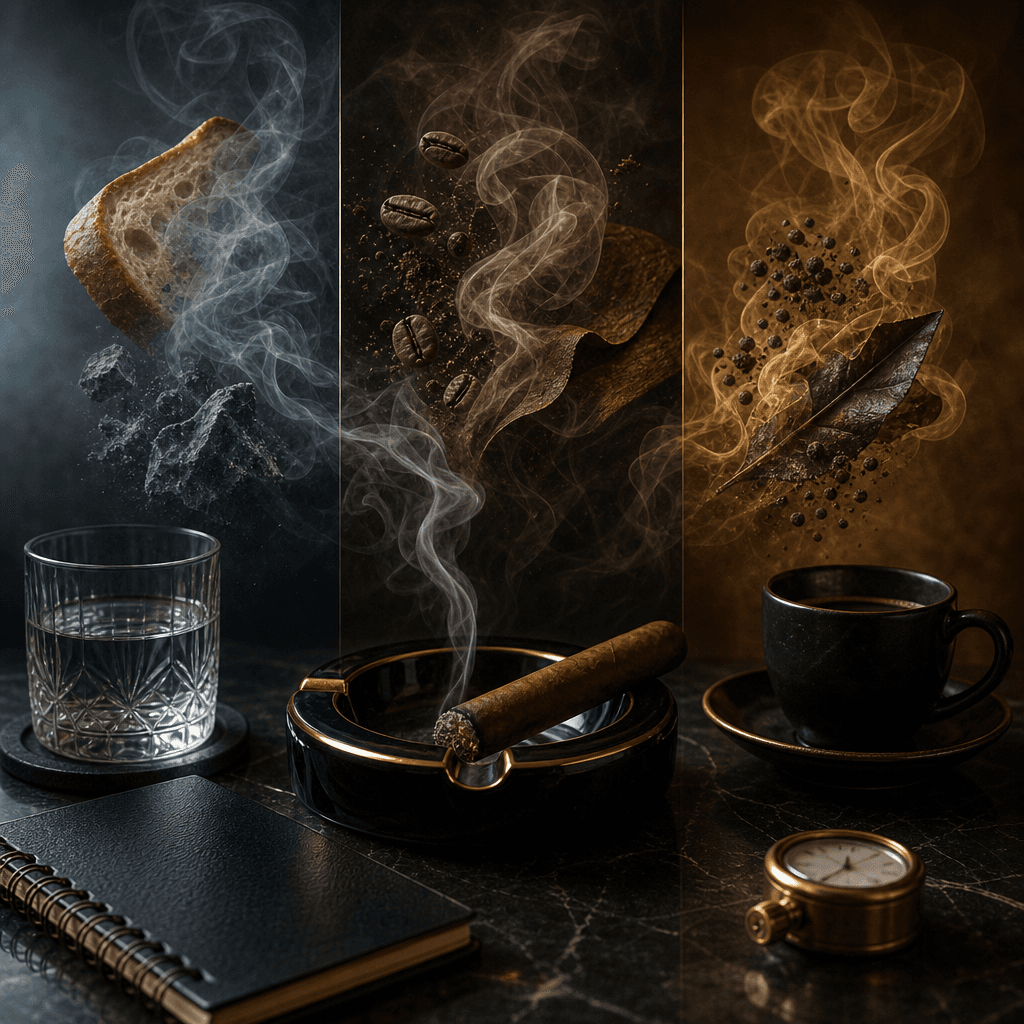
品味雪茄是一門藝術,掌握其層次變化關鍵在於建立可重複的觀察方法。透過分析香氣、觸感、強度與尾韻,入門者能更深入理解雪茄的複雜性。建議使用三段式方法,觀察前段、中段與尾段的變化,並記錄每段的香氣特徵。此外,冷聞與冷吸的技巧能在點燃前提供重要線索。建立自己的味覺字典,從基本詞彙開始,並透過適當的拉吸節奏與飲品搭配,提升品味體驗。了解燃燒狀況與修正技巧,能幫助避免誤判味道,讓每一支雪茄的獨特風味得以充分
- 雪茄的口感結構包括香氣、觸感、強度與尾韻,需觀察其隨時間的變化。
- 點燃前的冷聞與冷吸能提供雪茄的香氣線索,幫助建立預期。
- 三段式品味法可用於比較不同品牌與尺寸的雪茄,觀察其香氣與口感變化。
Many newcomers to cigars already know not to rush, not to inhale the smoke into their lungs, and understand the basics of tasting and exhaling. The next interesting step is: why does the same cigar taste like toasted bread in the beginning, turn into coffee and leather in the middle, and then exhibit pepper and mineral notes at the end?
As an editor of the "Cigar Bible," I often remind myself: appreciating cigars is not about memorizing aroma terms, but about establishing a repeatable method of observation. When you can connect time, temperature, burning, mouthfeel, and aftertaste, the layers will gradually emerge.
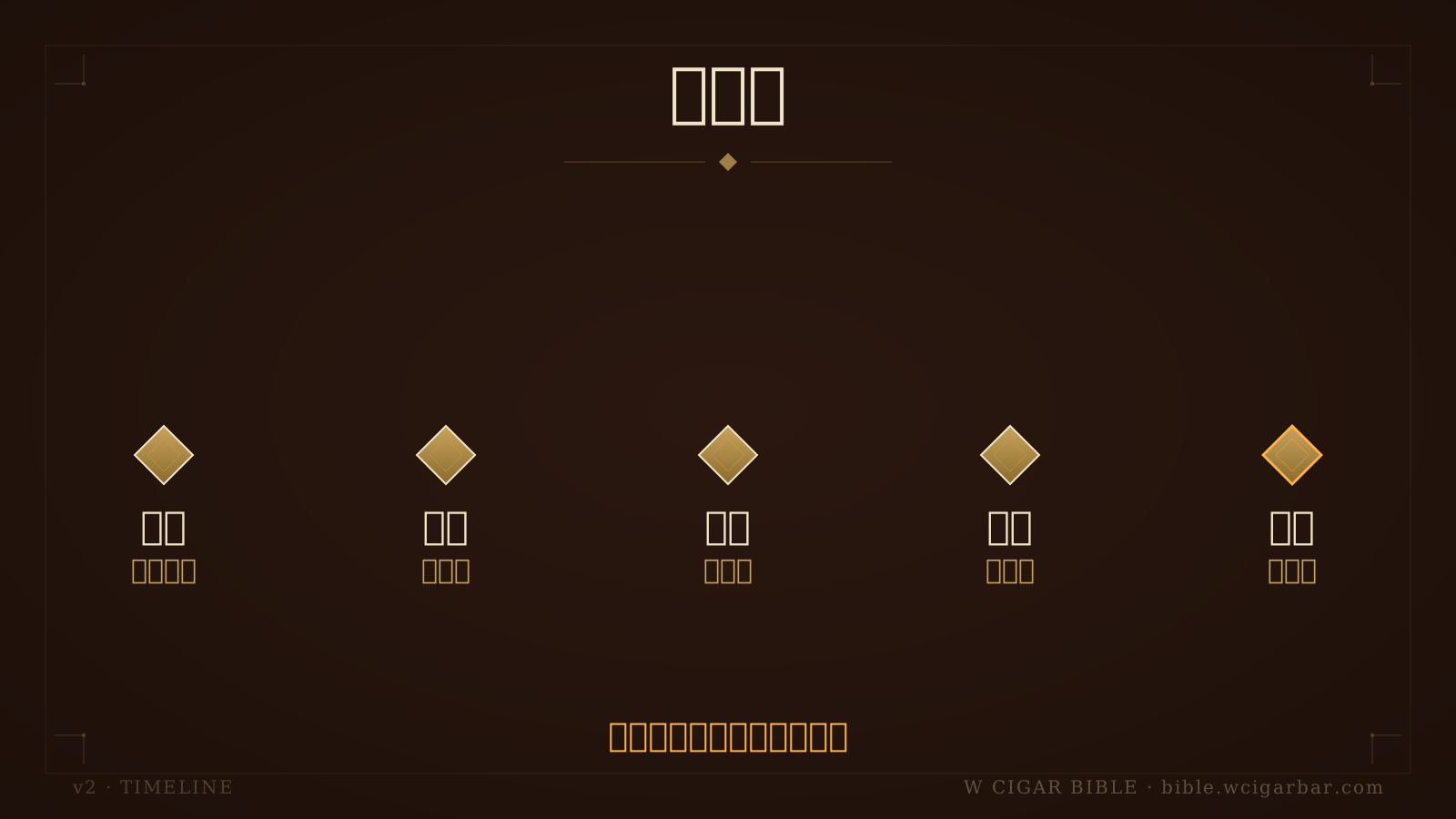
時間線呈現冷聞冷吸校準三段與尾韻步驟
Establishing "Flavor Structure": Aroma, Texture, Strength, and Aftertaste
The taste of a cigar cannot be judged solely by "whether it's good to smoke." Take the Cohiba Siglo VI, launched in 2002 and still frequently discussed today, for example. Many people remember its grass, honey, cream, and woody notes, but what truly forms a complete impression is how these aromas progress over time and how long the smoke lingers on the tongue, palate, and nasal cavity. Layers are not a stack of aroma terms, but the changes in aroma, texture, strength, and aftertaste over time.
I break down the flavor structure into four aspects: the first is aroma, such as cedar, nuts, coffee, cocoa, and hay; the second is texture, such as creamy, powdery, oily, and dry; the third is strength, including nicotine sensation and flavor concentration; the fourth is aftertaste, which is the taste that remains 5 seconds, 15 seconds, and 30 seconds after exhaling the smoke. Montecristo No.2 is often used for practice because its cocoa, coffee, and earthy notes are relatively clear.
Beginners often overlook that "intensity" does not equal "layers." Partagás Serie D No.4 has more direct pepper and woody notes, while Romeo y Julieta Short Churchill often has softer floral and tea notes; both can be appreciated, but the observation methods differ. True progress is being able to describe where a cigar becomes sweet, where it becomes bitter, and where it becomes hot from the first centimeter to the last three centimeters.
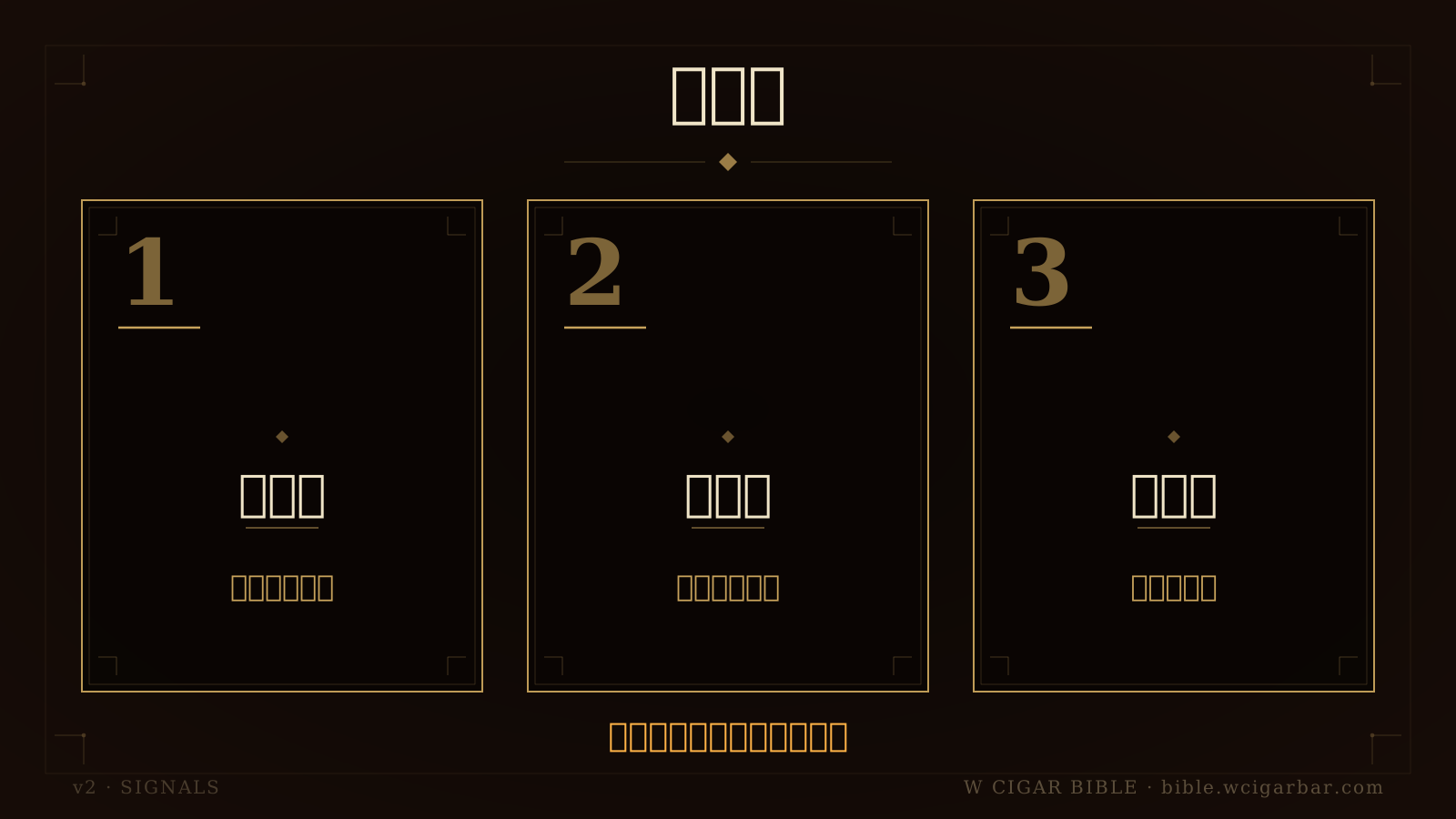
三張卡整理口感結構三段觀察與慢速記錄
Start Before Lighting: Cold Smell, Cold Draw, and Interpreting the First Centimeter
Many layers already have clues before lighting. When I get a well-preserved Hoyo de Monterrey Epicure No.2, I first smell the wrapper and foot: the wrapper may have cedar, hay, honey, or faint leather; the foot usually reveals more of the filler aromas, such as roasted nuts, cocoa powder, and earth. This step doesn't require exaggerated force, just bring it close by 2 to 3 centimeters and slowly inhale.
The cold draw after cutting is also important. If the cold draw is too tight, it may lead to increased effort and temperature during the draw; if too loose, the burning speed may be too fast. The ideal resistance is like drinking a thick milkshake through a straw, not too airy, nor immovable. In 2019, I recorded a batch of Bolivar Belicosos Finos, where some had a cold draw with brown sugar and cocoa, while others leaned towards woody and herbal, and their subsequent performances were indeed different.
Don't rush to conclusions in the first centimeter, as the flame, foot, and binder are just entering a stable state. It's recommended that the first five puffs after lighting are only for "calibration": observe the smoke volume, temperature, resistance, and whether there is uneven burning. The cold smell and cold draw before lighting establish expectations; the task of the first centimeter is to confirm whether the burning has entered a stable track.
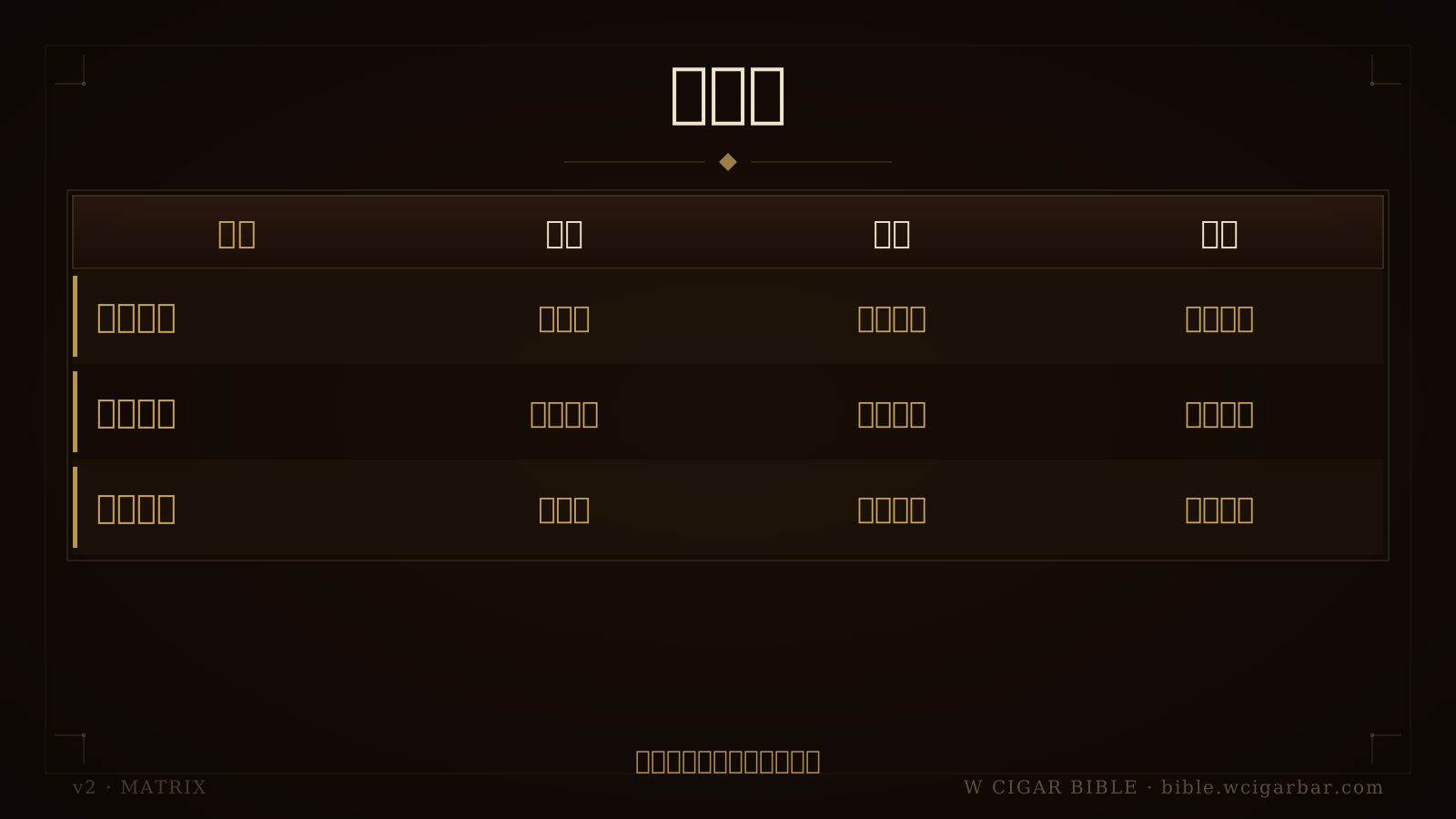
矩陣比較前段中段尾段的重點香氣與技巧
Understanding the Rise and Fall with a Three-Stage Method: Front, Middle, and End
The three-stage method is not a rigid formula, but it is very effective for beginners. Generally, the cigar length is divided into the first third, middle third, and last third; if it's a Robusto size, about 124 mm, like H. Upmann Magnum 50 or Partagás Serie D No.4, you can clearly observe the transitions within 45 to 70 minutes. The value of the three-stage method is to let you compare different brands and sizes with the same measure, rather than scoring based on the final impression.
| Stage | Common Observation Points | Common Aromas | Technique |
|---|---|---|---|
| Front | Lighting stability, first impression | Hay, wood, cream, light pepper | Slow down, don't rush to correct |
| Middle | Whether sweetness and main theme unfold | Coffee, nuts, cocoa, leather | Record every 3 to 5 puffs |
| End | Temperature, bitterness, aftertaste length | Black pepper, minerals, caramel, strong tea | Slow down, avoid overheating |
Take a Trinidad Vigia I noted in 2020 as an example, the front had clear toasted bread and honey, the middle turned to almond, cream, and light citrus peel, and the end had white pepper and tea astringency. If you only remember "good to smoke," these changes will disappear; if you record three words per stage, you can leave comparable data.
The three-stage method also helps you identify flaws. If bitterness appears in the front, it may not be the cigar itself but the lighting was too aggressive; if the middle suddenly turns sour, it may relate to storage humidity, uneven burning, or drawing too fast; if the end becomes overly spicy, it's often due to accumulated temperature. Observing the cause is more valuable than rushing to score.
Building Your Flavor Dictionary: Start with 12 Basic Terms
Many people get stuck at "I can smell it, but I can't describe it." My suggestion is to first establish 12 basic terms: woody, herbal, nutty, coffee, cocoa, creamy, leathery, earthy, peppery, sweet, sour, and bitter. These terms don't need to be profound but can cover most descriptions at the beginner stage of cigars. The simpler the flavor dictionary, the easier it is to accumulate. Once you can consistently identify them, expand to cedar, almond, dark chocolate, or oolong tea.
You can turn everyday foods into training tools. For example, when drinking unsweetened American coffee, distinguish the roasted aroma, bitterness, and acidity; when eating 70% dark chocolate, remember the cocoa, slight bitterness, and dryness; smelling cedar wood chips, leather straps, and roasted almonds can also build memory. Davidoff Aniversario No.3 is often considered finely detailed, and without a flavor dictionary, it's easy to just feel "bland"; actually, within the elegance, there may be cream, hay, floral, and nutty notes.
When recording, don't pursue fancy adjectives. You can use a scale of 1 to 5 to evaluate intensity: sweetness 3, pepper 2, bitterness 1, creaminess 4. After continuously recording 20 cigars, you will discover your preferences. Some people like the cocoa and coffee concentration of Padron 1964 Anniversary, while others prefer the soft woody and creamy notes of Hoyo; preferences have no standard answer, but descriptions must be clear.
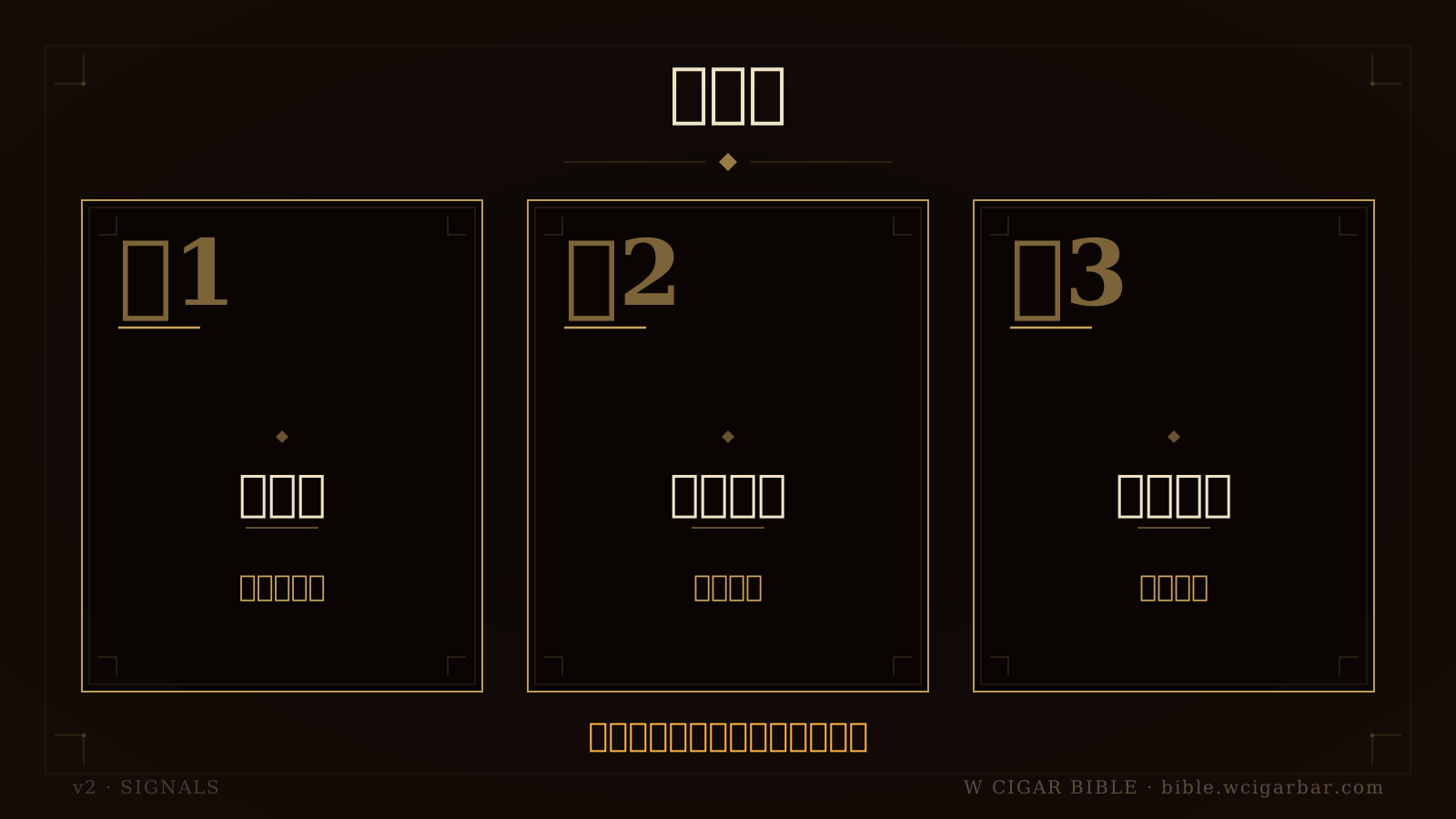
三張卡列出抽太快硬撐尾段與補火過多
Rhythm Determines Layers: Draw, Temperature, and Retrohaling
The same cigar, smoked too quickly versus slowly savoring, will seem like two different creations. Generally, it's recommended to take a puff every 45 to 60 seconds; if it's a cigar with a ring gauge over 50, like Romeo y Julieta Wide Churchill, you can slow down to 60 to 75 seconds. Drawing too frequently will increase the temperature at the burning end, suppressing sweetness with bitterness, and making the end more prone to spiciness. Rhythm is not a ceremonial performance, but a control of temperature; when the temperature is stable, the layers will be clear.
Retrohaling is an advanced technique, but don't do too much at once. The method is to exhale most of the smoke, leaving a small amount to gently release through the nasal cavity. Beginners can start with 10% of the smoke volume, especially doing it 1 to 2 times each in the front and middle stages. Cigars like Arturo Fuente OpusX, with prominent spice and woody notes, will have amplified pepper and sweet aromas through retrohaling, but excessive amounts will irritate the nasal cavity, impairing judgment.
Pairing with drinks should also be simple. Room temperature water is the most neutral and can reset the palate; unsweetened sparkling water can clean mouth oils; black coffee will enhance cocoa and roasted notes; whiskey or rum may overshadow details. For beginners wanting to learn layers, I suggest pairing only with water for the first 15 minutes, then adding other drinks for comparison once the main theme is clear.
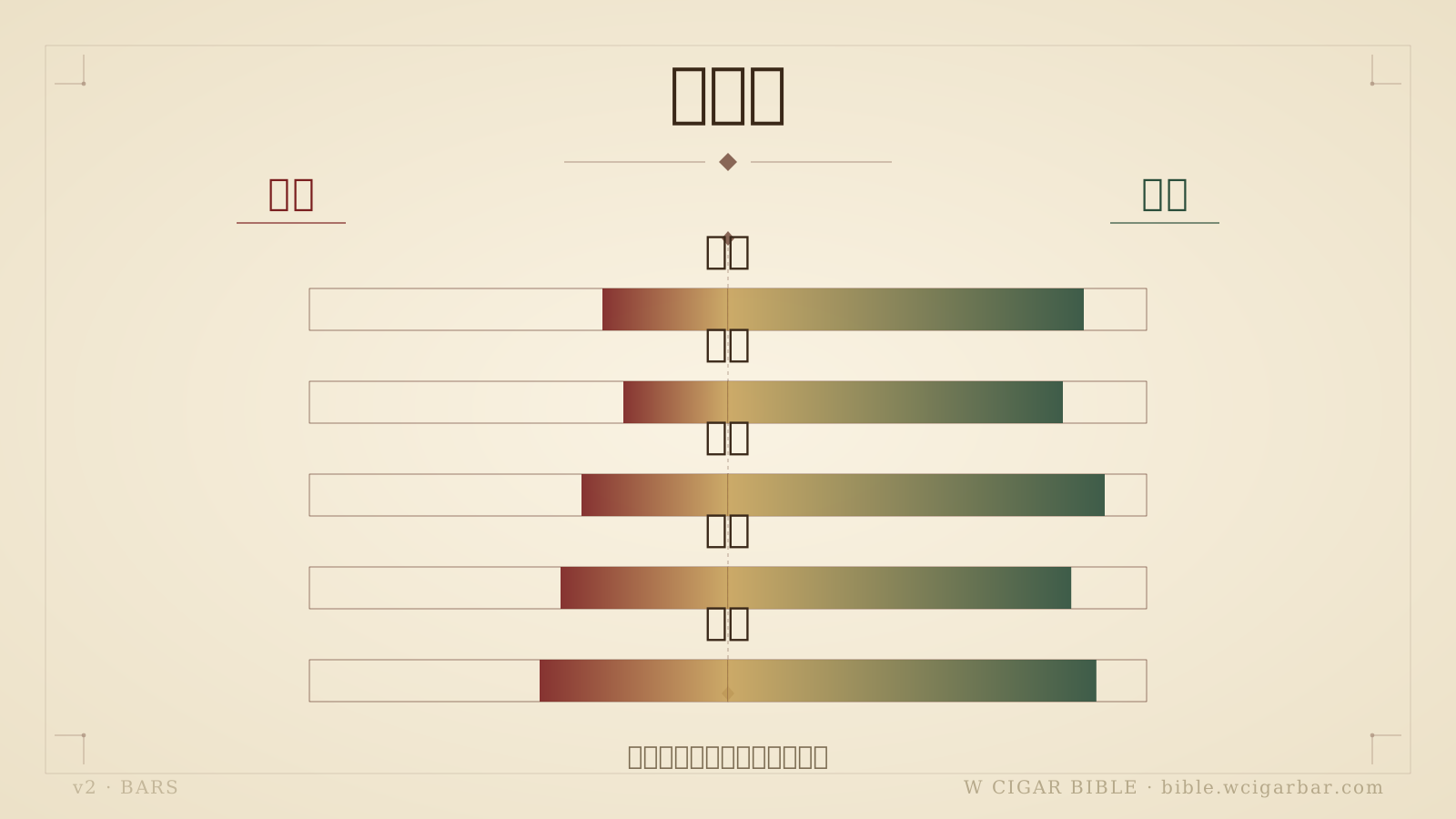
橫條圖比較背香氣詞與方法觀察的差異
Ash, Burn Line, and Correction: Understanding to Avoid Misjudging Flavor
White ash doesn't necessarily mean good, and dark gray doesn't necessarily mean bad. Ash color is influenced by soil minerals, burning temperature, and humidity, and cannot be used as a sole quality indicator. More valuable references are whether the ash column is stable, the burn line is even, and the smoke is smooth. In 2017, I compared the performance of the same Robusto at 65% and 72% relative humidity, with the latter burning slower but more prone to dampness and bitterness in the middle.
Uneven burning is common, no need to panic. If the burn line deviation is less than 5 mm, you can first rotate the cigar, letting the slower-burning side face down, using rising hot air to correct it; if it exceeds 8 to 10 mm, then lightly correct it with a flame. The flame should not be directly against the wrapper, keeping a distance of about 1 to 2 cm, slowly adding heat. The goal of correcting burning is not to pursue a perfect round line, but to prevent uneven burning from affecting temperature and flavor.
Also, distinguish between "cigar turning bitter" and "operation causing bitterness." If the ash is left too long, the burning end lacks oxygen, and the flavor will be dull; if constantly relighting, the wrapper may be scorched; if frequently tapping the ash, the burning end will become overly active. It's recommended to gently let the ash fall when it's about 2 to 3 cm long, avoiding treating cigars like tapping cigarettes, which is also basic etiquette.
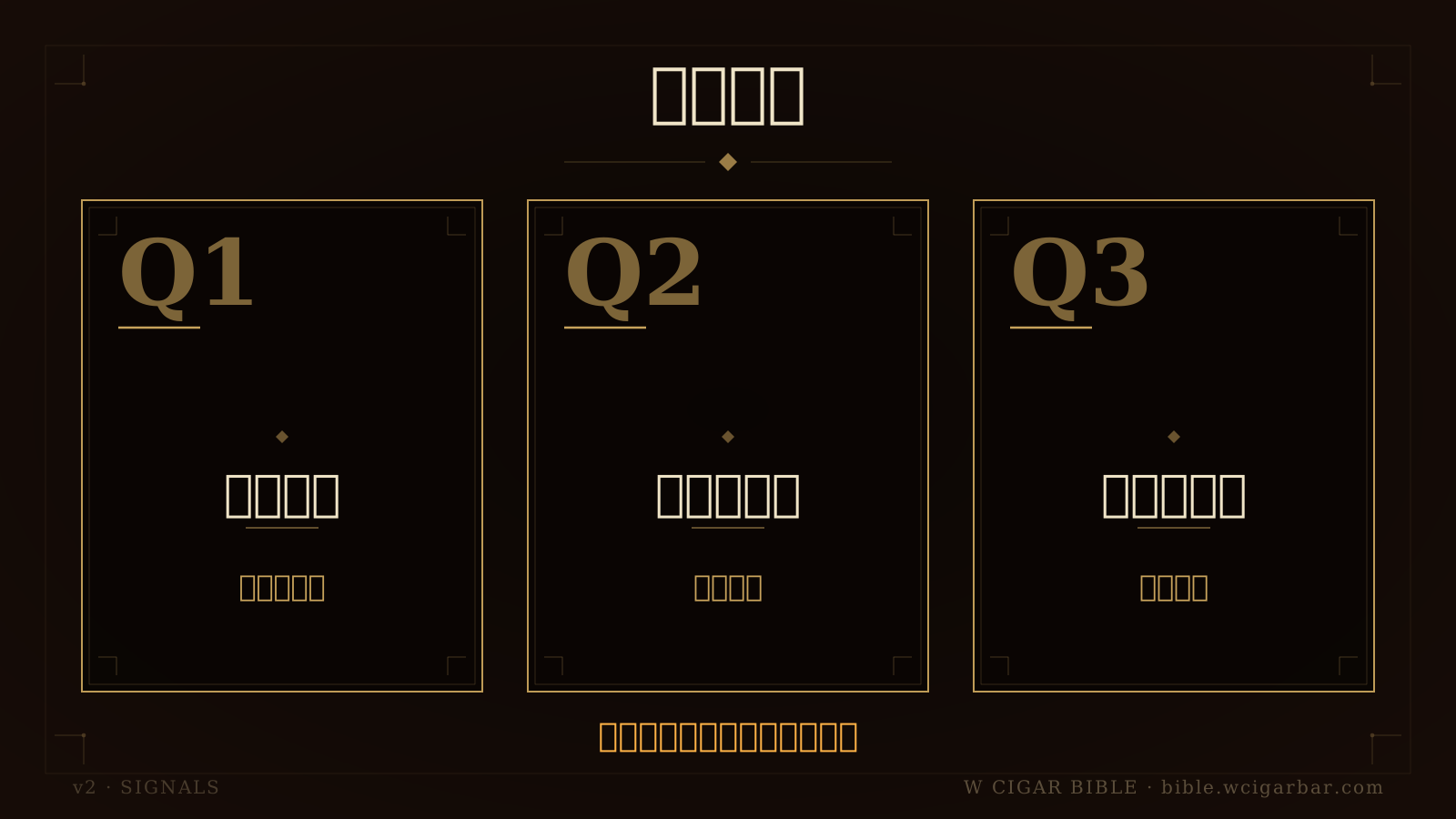
三張卡列出苦味尾段與飲品的精簡回答
Notes and Comparisons: Turning One-Time Sensations into Long-Term Skills
Without notes, many experiences will be beautified by atmosphere and memory. My notes usually include date, brand, size, year or box code information, storage humidity, drink, duration, and three-stage description. For example, "2023/11, Montecristo No.4, Mareva 129×42, 65% RH, black coffee, 52 minutes; front cocoa and woody, middle coffee, end pepper rising." Notes are not for showing off professionalism, but to verify whether your feelings are consistent next time.
When comparing, don't introduce too many variables at once. If comparing Cuban and non-Cuban styles, choose similar sizes, such as Montecristo No.4 and Davidoff Grand Cru No.2; if comparing different sizes of the same brand, use Cohiba Siglo II and Siglo VI to see how ring gauge and length affect sweetness, smoke volume, and middle-stage development. Always ask one question at a time, and the answer will be much clearer.
Collection can also be written into notes, but stay calm. Some Cuban cigars from the 1990s or early 2000s are sought after due to good preservation and market rarity; however, collection appreciation does not guarantee appreciation, still depending on source preservation and market. For beginners, instead of rushing to chase vintages, it's better to familiarize yourself with 10 common types to establish your own standard flavor coordinates.
Common Questions
The core of common questions is not to rush to pursue "god-level taste," but to first get the rhythm, temperature, and recording right.
Why do I only taste bitterness?
It is mostly related to temperature. Drawing too fast, lighting too aggressively, and constantly relighting will cause sweetness to be overshadowed by bitterness; changing to one puff every 60 seconds usually improves it.
Do I have to smoke the end to the last?
No. When bitterness, spiciness, or heat has clearly surpassed the aroma, you can stop. Cigars are not a test of endurance; leaving a good impression is more important than forcing it.
Retrohaling is uncomfortable, do I still need to practice it?
You can practice, but the amount should be very small. First exhale 90% of the smoke, only letting a little pass through the nasal cavity; if still uncomfortable, focus on mouth tasting first.
Is it suitable for beginners to start with large ring gauges?
Large ring gauges have more smoke and more stable temperature, but also longer time. Robusto, about 50 ring gauge, 45 to 70 minutes, is a good starting point for learning the three-stage method.
How to pair drinks without interference?
Water is the safest, black coffee is second. Alcoholic beverages have stronger aromas, easily dominating the palate; if the goal is to practice layers, it's recommended to keep the mouth clean in the front stage.
For me, the most fascinating part of appreciating cigars is not finding rare adjectives, but seeing the intersection of terroir, craftsmanship, preservation, and my own state within an hour. Slow down every puff, honestly record every stage, and you'll find that the same brand in different years, sizes, and humidity has details worth questioning. Cigars have taught me patience and moderation.
—Cigar Prince Wilson Tsai
Smoking is harmful to health. Smoking is prohibited for those under twenty. Quitline: 0800-636363. This article is intended for adults over twenty as a reference for cigar culture, preservation, and regulations, not as a tobacco advertisement, promotion, or purchase suggestion.
Like this article?Share with friends
Share this W Cigar Bible piece with friends who want to learn cigar culture, storage, and tasting.
想把這篇 化為實踐
雪茄聖經是知識;雪茄文化要在空間裡發生

W Cigar Bar 大安總店資訊
台北大安區 · 雪茄聖經總編輯 Wilson Tsai 主理的雪茄文化空間
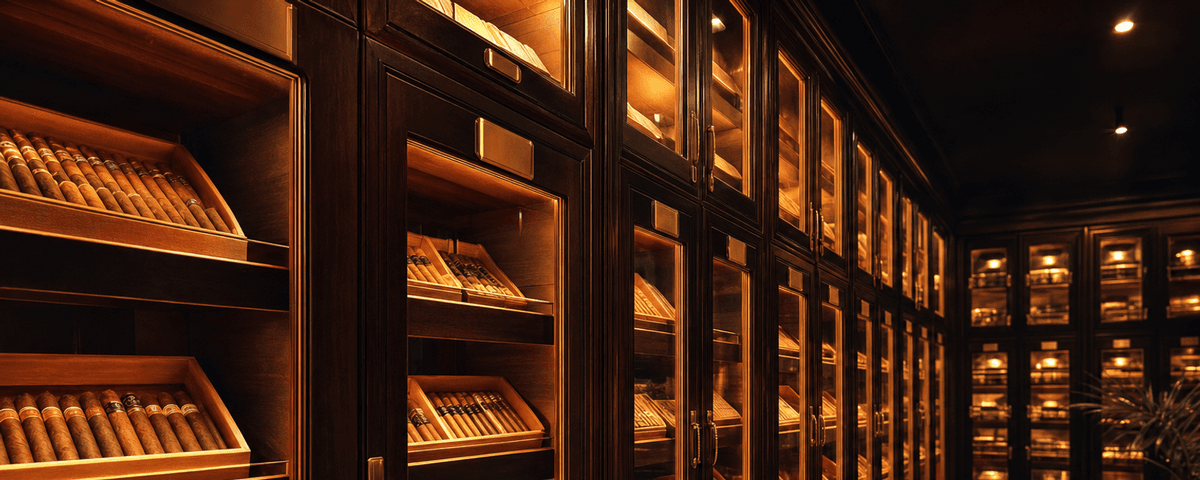
33 座 24 小時恆溫恆濕醇化室
W Cigar Bar 提供的會員醇化空間 · 場地資訊請洽編輯部
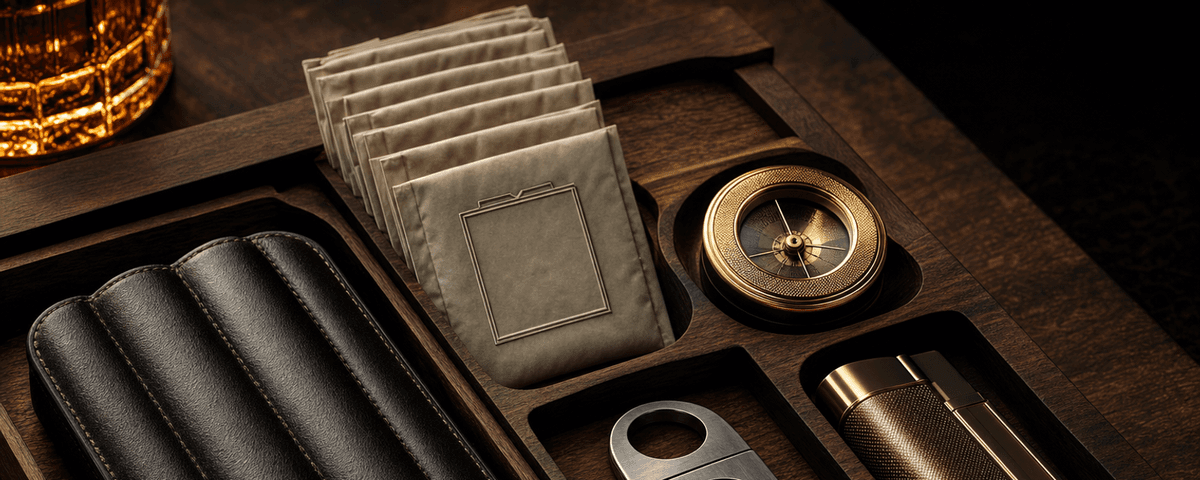
雪茄剪 / 打火機 / 雪茄盒 / Boveda
W Cigar 配件官網 · 專營雪茄配件正品
加 LINE 好友 · 文化諮詢
文化空間資訊 · 紳士沙龍 · 私人包場
本網站內容僅供雪茄文化、歷史、收藏與品吸知識研究參考。菸品有害健康、未滿法定年齡者請勿吸菸。實際規範請依所在地法律為準。
吸菸有害健康・戒菸專線 0800-636363・本站僅供 20 歲以上成年人閱覽。
讀到這裡,你不只是路過的人
留下 Email,加入 W 雪茄聖經內圈——總編輯 Wilson Tsai 親選的學院深文與國際新訊,先你一步送到信箱。
· 教育用途非銷售 · 隨時一鍵退訂 · Email 絕不對外公開 · 由勝茄股份有限公司營運
同分類延伸閱讀

資料來源:W Cigar Bible 編輯部整理 · 雪茄王子 Wilson Tsai 親自審稿
本文僅供雪茄文化、歷史、收藏與品鑑知識研究,不作為菸品促銷、銷售或購買建議。吸菸有害健康,未滿二十歲不得吸菸。