醇化分子轉化深度:humidor 內 5-50 年的化學重組、Maillard 後階段、與業界廣泛討論的酯類分子穩定化
四個化學階段(初期/中期/深度/沉默期)/ Maillard 後階段三現象 / 酯類穩定化重組三機制 / 18°C/70% 最理想物理環境 / W 大安總店三層醇化系統
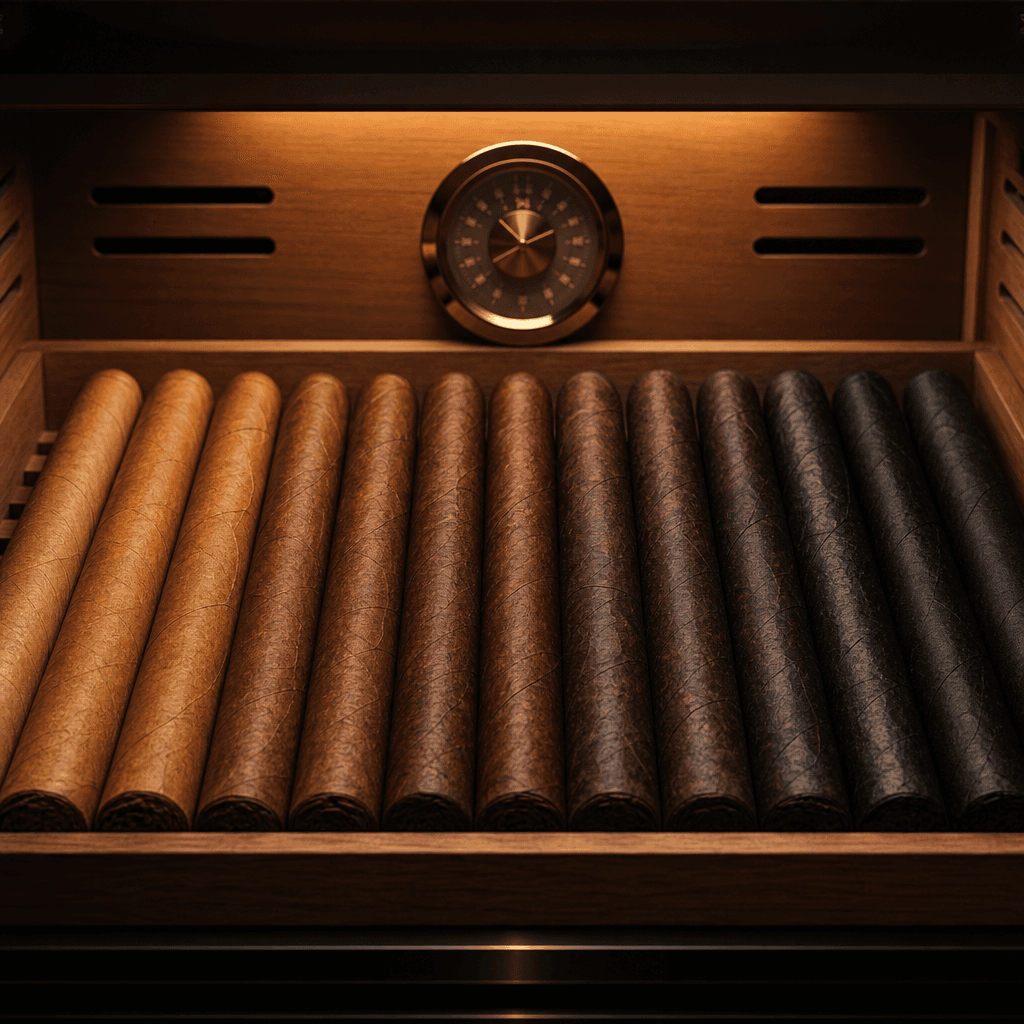
醇化分子轉化深度—醇化作為 Pilón 第三階段紳士端延續、四個化學階段(初期醇化 0-2 年→中期醇化 2-15 年→深度醇化 15-50 年→沉默期 50-80 年)、Cuban Davidoff 1989 Aniversario 已醇化 36 年仍在中期醇化後段、Pre-Embargo H. Upmann Sir Winston 1959-1962 已醇化 63-66 年深度醇化平台期、Maillard 反應後階段(菸葉色澤緩慢深化 / 烘焙堅果與咖啡風味圓潤化 / 焦糖與烘焙麵包後段風味浮現)、酯類分子穩定化與重組(穩定化 / 重組 / 次級合成三機制)、最理想物理環境(18°C / 70% 濕度 / 避光與微通風)、Pre-Embargo 16-18°C / 62-65% 客製、W Cigar Bar 33 個 VIP 雪茄櫃三層醇化系統。
- 醇化期間的分子轉化可分為四階段,影響雪茄的風味與層次感。
- Maillard 反應在醇化過程中持續進行,影響菸葉的色澤與風味。
- 酯類分子在醇化期間經歷水解與再合成,提升風味的穩定性與厚度。
Depth of molecular transformation in aging: chemical recombination over 5-50 years in a humidor, late-stage Maillard reactions, and ester molecular stabilization
A top-tier cigar is not finished when it leaves the factory. The moment rolling is completed is only the midpoint of the chemical reaction curve; another 5-50 years, or even longer, of low-temperature, slow recombination still has to run its course in the humidor. Three-stage Pilón pile fermentation (12-36 months, 22-28°C) is the fast version of tobacco-leaf fermentation on the factory side; aging (5-50 years, 16-20°C) is the slow continuation on the gentleman's side. The same set of esterification, Maillard, and ammonia volatilization reactions is involved, but with the temperature halved and the time extended by 10-50 times. This article focuses on molecular transformation during aging, the late stages of Maillard reactions, ester stabilization and recombination, and does not repeat practical aging storage methods (already included in the 7 newbie articles of the W Cigar Bar Cigar Bible).
Scientific note: the chemical mechanisms in this article are mainly based on publicly available research directions in food chemistry and tobacco chemistry (Maillard reaction in cured tobacco, ester equilibrium, furan formation). Specific values vary greatly with tobacco variety, year, and storage conditions, and are provided only for aficionado-level understanding among gentlemen's club members.
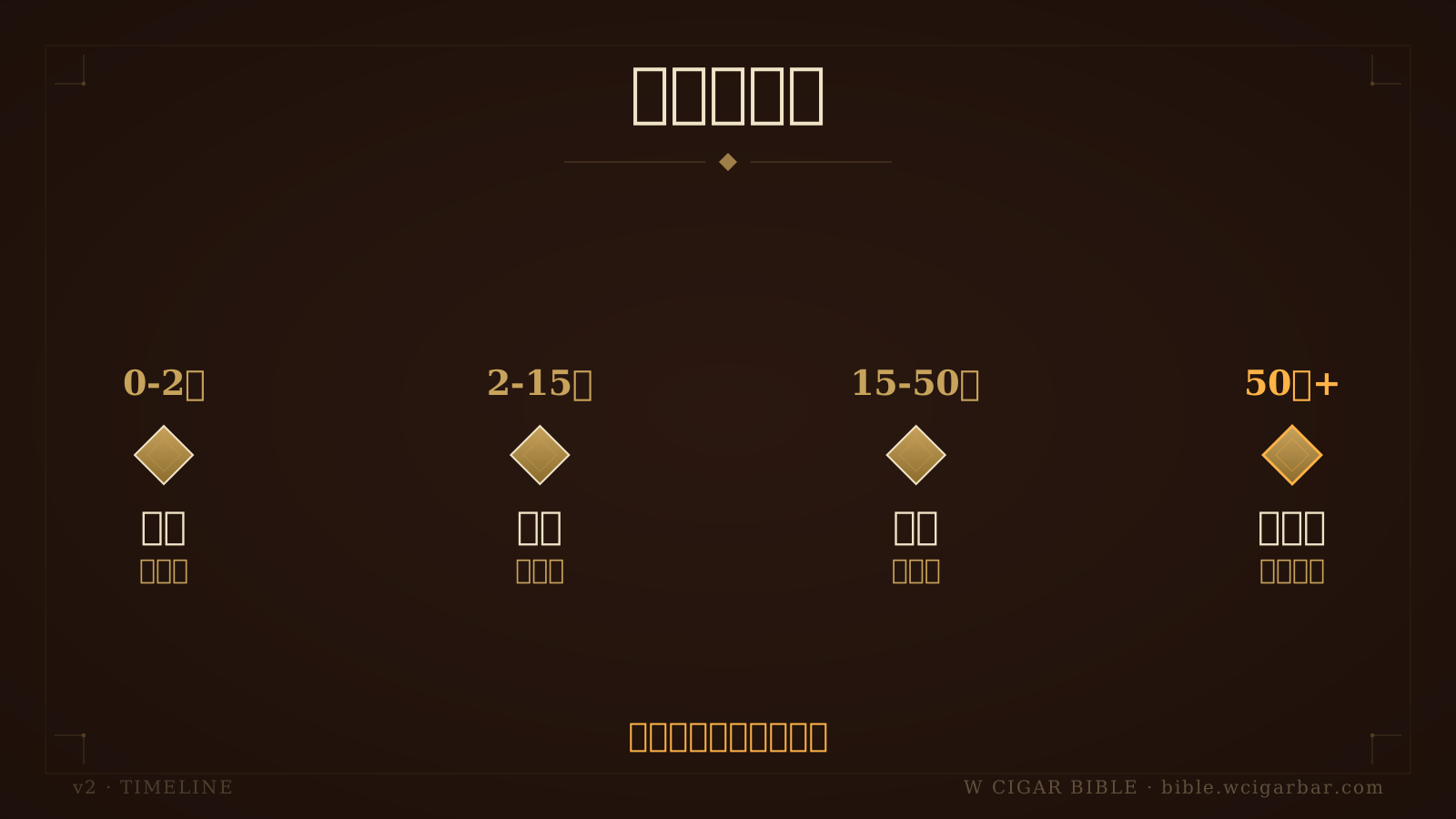
以四個年份區間呈現雪茄醇化從初期氨退去到中期層次峰再到沉默期的化學進程時間軸圖
Aging as a low-temperature continuation of the third stage of Pilón
Pilón pile fermentation completes the main esterification reactions and ammonia volatilization at 22-28°C. After the tobacco leaves leave the factory, the same set of reactions continues in a humidor environment at 18°C. However, because of the Arrhenius equation (for every 10°C decrease in temperature, the reaction rate drops by about half), the overall reaction time is extended from the factory scale of "months" to the aging scale of "years". This is why 12-36 months of Pilón can reach "smokable", aging for 5-15 years reaches the "peak of layering", and 20-50 years reaches "deep roundness".
The chemical progression of aging can be divided into four stages (the time ranges are typical scenarios for top-tier Cuban/non-Cuban Habano wrappers; other tobacco leaves differ greatly):
Stage 1 - Early aging (0-2 years): Residual ammonia molecules in the tobacco leaves (ammonia not fully released during the first stage of Pilón) continue to volatilize, and the "sharp spiciness, greenness, and house note" of freshly rolled cigars recede. The chemical axis of this stage is the diffusion of volatile alkaline compounds (ammonia and low-molecular amines) to the wrapper surface and their subsequent departure. This is also why the industry generally recommends that newly arrived cigars rest in a humidor for at least 30-90 days before smoking.
Stage 2 - Mid-term aging (2-15 years): The synthesis and recombination of ester molecules enter a highly active zone, the "peak range of layering" for top-tier cigars. By 2026, the Cuban Davidoff 1989 Aniversario series has aged for 37 years; in practice, it is at the late boundary of mid-term aging and still at the tail end of the peak zone. Most core cultural salons of gentlemen's clubs fall within this range (5-15 years), not because "older is always better", but because the ester combinations during this period are the most diverse and the layering is the richest.
Stage 3 - Deep aging (15-50 years): Ester synthesis tends toward saturation and shifts into a slow hydrolysis-re-esterification equilibrium. Flavor moves from "many layers" to "deep roundness". The number of layers decreases, but the "thickness" of each flavor deepens. By 2026, Pre-Embargo H. Upmann Sir Winston 1959-1962 batches have aged for 64-67 years, placing them in the late stage of deep aging and in the final window before entering the "silent period".
Stage 4 - Silent period (50-80 years or more): Ester hydrolysis exceeds the rate of re-esterification, aroma intensity declines markedly, and the palate turns extremely light and soft. This is why antique cigars over 80 years old are unlikely to return to the layer intensity of a 30-year cigar. Chemically, this is an irreversible shift in the hydrolysis equilibrium, not "poor storage".
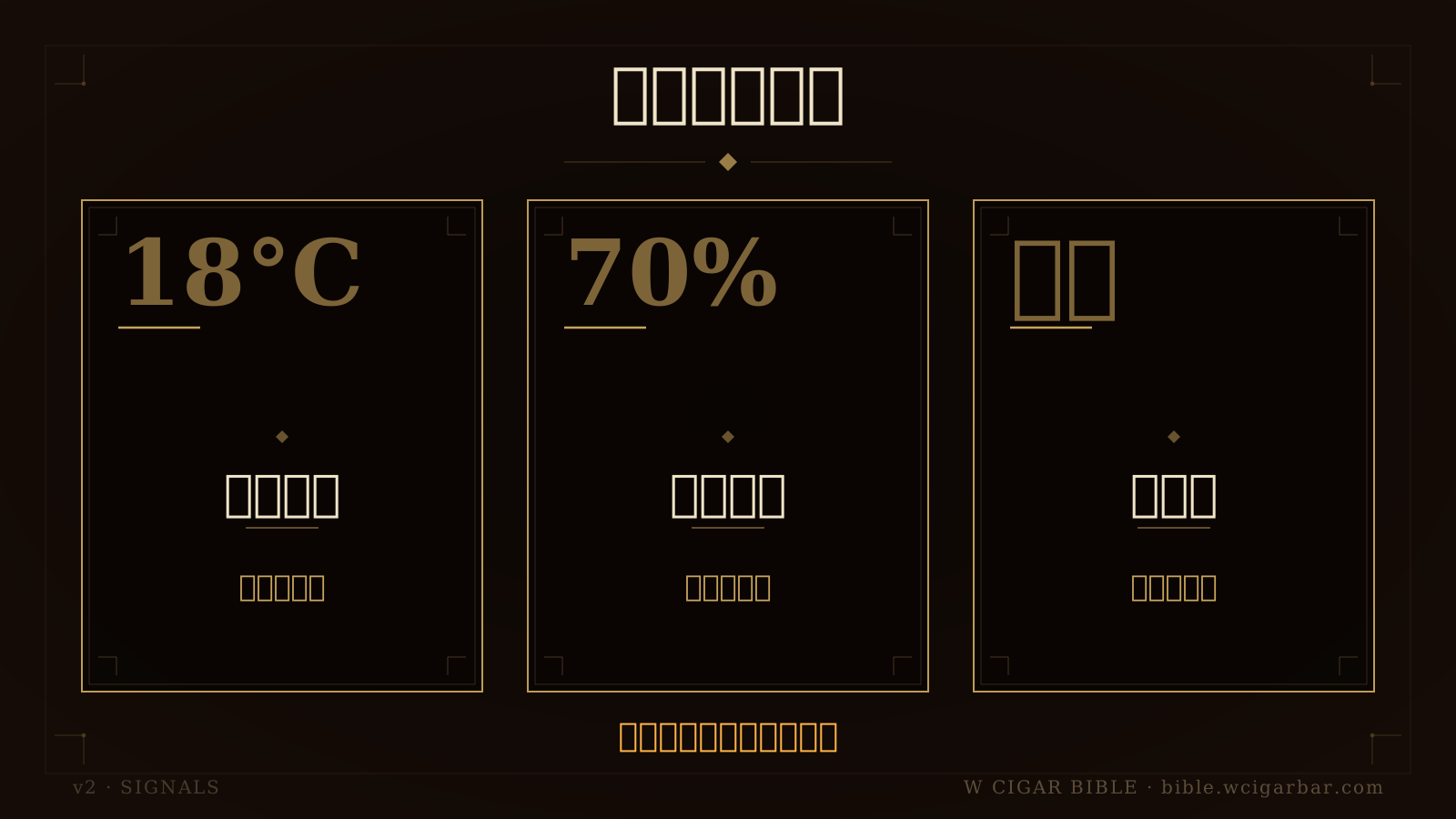
以三張卡片呈現醇化理想溫度十八度、濕度七十趴與避光微通風三個核心環境條件的結論圖
The slow late stage of Maillard reactions inside the humidor
The Maillard reaction (non-enzymatic browning between reducing sugars and amino acids) completes the main foundation of color and roasted flavors during the second stage of Pilón, but the reaction never stops; it only slows down. During aging, Maillard reactions continue on a time scale of "years", corresponding to three observable phenomena:
1. Slow deepening of tobacco-leaf color: The wrappers of freshly rolled cigars tend to be light brown, turn medium brown after 5 years of aging, deep chestnut after 20 years, and nearly black chestnut after 40 years. The chemical cause of the color change is the continued accumulation of melanoidin (dark macromolecules), the final product of Maillard reactions. This is also one of the visual clues for judging the authenticity of antique cigars (a color that does not match the claimed year is a point of suspicion).
2. Rounding of roasted nut and coffee flavors: Pyrazines are signature roasted flavor molecules produced by Maillard reactions. In freshly rolled cigars, pyrazines tend to be "direct and sharp". During aging, after interacting with esters, they turn into a "rounded finish". This is why the coffee and nut tones of old cigars are often described as "full but not forceful".
3. Emergence of caramel and roasted bread in the finish: Furan molecules are present at lower levels in fresh tobacco leaves. After more than 10 years of aging, they slowly accumulate through dehydration synthesis from reducing sugars. Furan has an extremely low threshold and can be perceived even in small amounts, contributing to the typical "late sweetness and roasted bread finish" of deeply aged cigars.
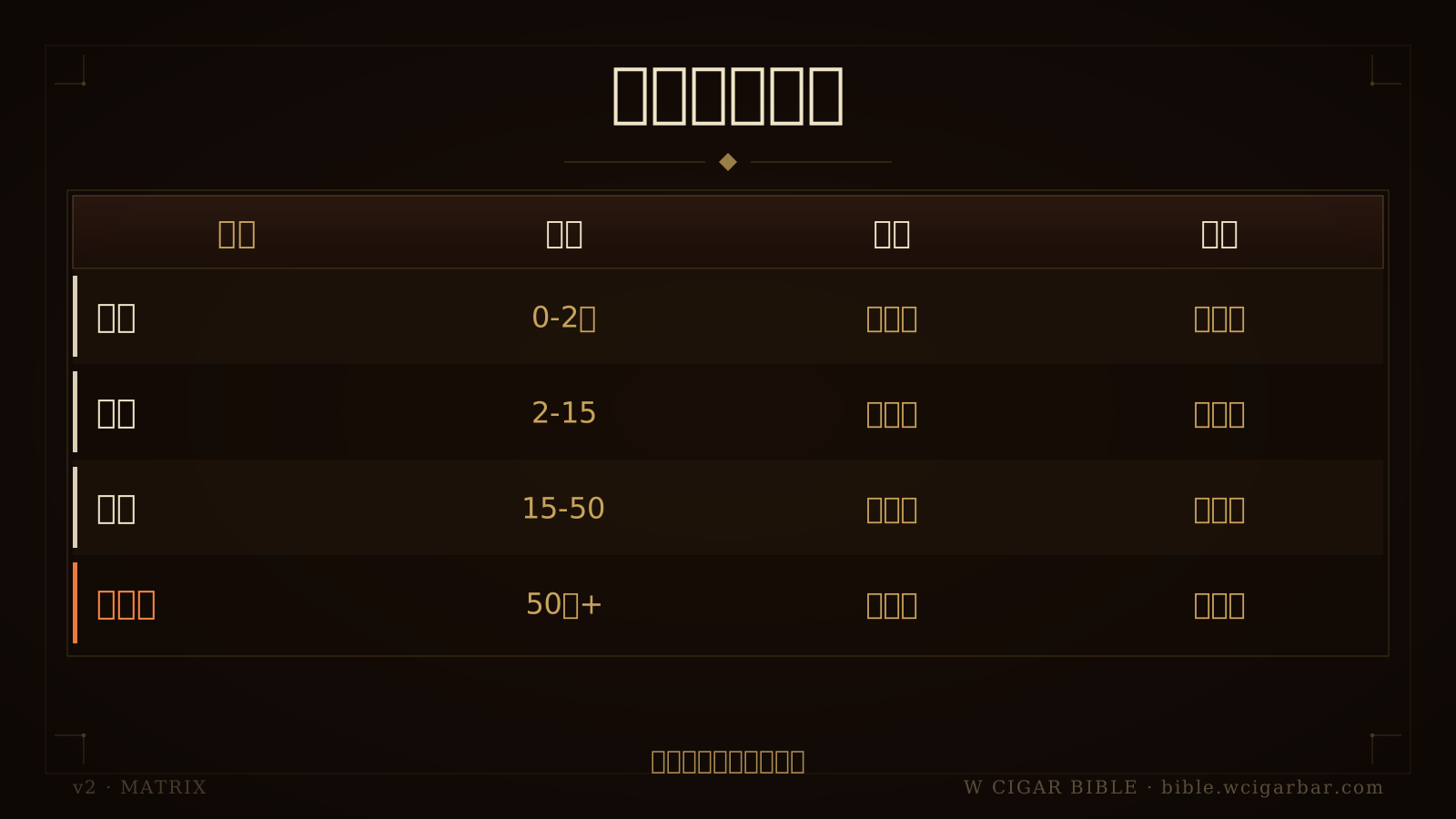
比較初期、中期、深度與沉默四個醇化階段在年份、風味特徵與化學主軸差異的資訊表
Ester molecular stabilization and recombination - the core chemistry of aging
Esters are the largest group of cigar flavor molecules and determine core tones such as floral and fruit aromas, leather, cedar, and cocoa. During aging, esters undergo three chemical changes:
Mechanism 1 - Hydrolysis and resynthesis of unstable esters: Freshly rolled cigars contain a large number of "rapidly synthesized" ester molecules with unstable chemical bonds. During aging, these esters hydrolyze back into alcohols and acids, then resynthesize into thermodynamically more stable configurations. The result is the same "total ester amount" but a higher "average stability". This is the most direct molecular-level explanation for why cigars become "rounder with age".
Mechanism 2 - Ester exchange and recombination within the tobacco bundle: The ester compositions of the wrapper, binder, and filler leaves originally differ. During aging, through solid-state diffusion and trace gas-phase exchange, esters redistribute within the tobacco bundle, forming a "uniform field" of flavor molecules. This is why the layering of long-aged cigars feels "uniform rather than stratified". Stratification is a feature of freshly rolled cigars; uniformity is the result of aging.
Mechanism 3 - Slow synthesis of secondary esters: Free alcohols in tobacco leaves (such as benzyl alcohol and phenethyl alcohol) and free acids (such as isovaleric acid and benzoic acid) synthesize previously nonexistent secondary esters at an extremely low rate in the humidor environment. These secondary esters have low thresholds and contribute to the "mysterious finish" of deeply aged cigars; they are the chemical foundation of what is "unique to old cigars".
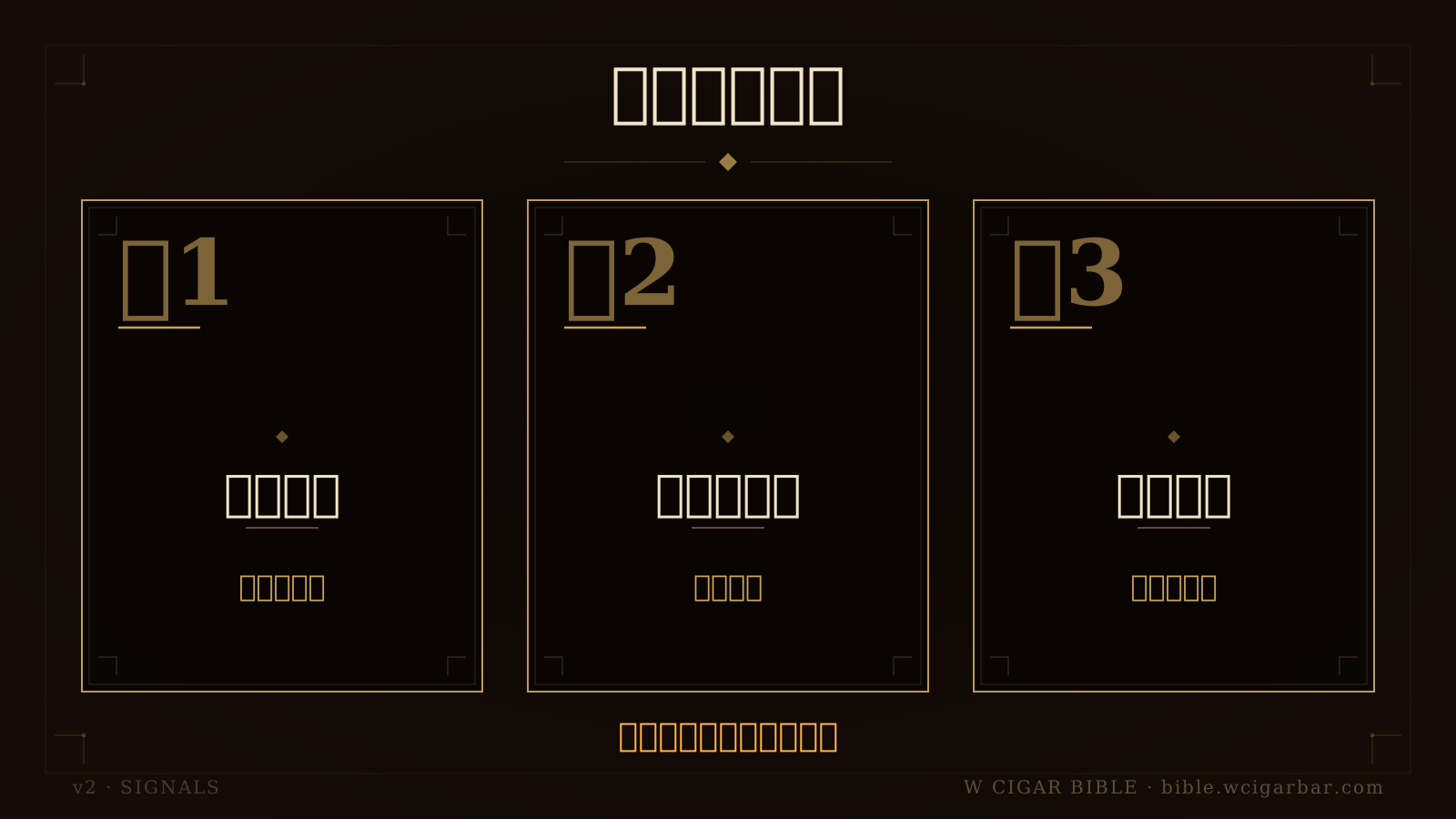
整理雪茄醇化越老越好、密閉最保險與超齡回峰三個常見誤解與正確觀念的提醒圖
The ideal physical environment for aging
Three core parameters, with three ranges that are not a single magic number:
Temperature 16-20°C (ideal 18°C): Controls reaction rate. On the Arrhenius curve, 18°C sits at the sweet spot where "esterification is fast enough to create change, while Maillard reactions are slow enough to keep layers stable". Below 16°C, reactions tend toward freezing and the collection becomes "age-suspended"; above 22°C, the rate of ester hydrolysis accelerates and layering is instead lost.
Relative humidity 65-72% (ideal 70%): Controls tobacco-leaf moisture. 70% corresponds to an equilibrium moisture content of about 13-14% in the tobacco leaf, just enough to support the water activity required for chemical reactions (aw about 0.65-0.70). Below 65%, reactions slow and leaves become brittle and prone to cracking; above 75%, the risk of mold and bacteria rises.
Light avoidance and micro-ventilation: Ultraviolet light directly breaks ester chemical bonds and accelerates decomposition; complete sealing causes ammonia to accumulate on the leaf surface and makes the aftertaste foul. Micro-ventilation and the continuous release of volatile oils (such as cedrol) from Spanish cedar lining are the dual safeguards of a top-tier humidor.
For Pre-Revolution / Pre-Embargo antiques over 50 years old, it is recommended to adjust downward to 16-18°C / 62-65%. This corresponds to the lowest hydrolysis equilibrium in the deep-aging plateau and maximizes the preservation window.
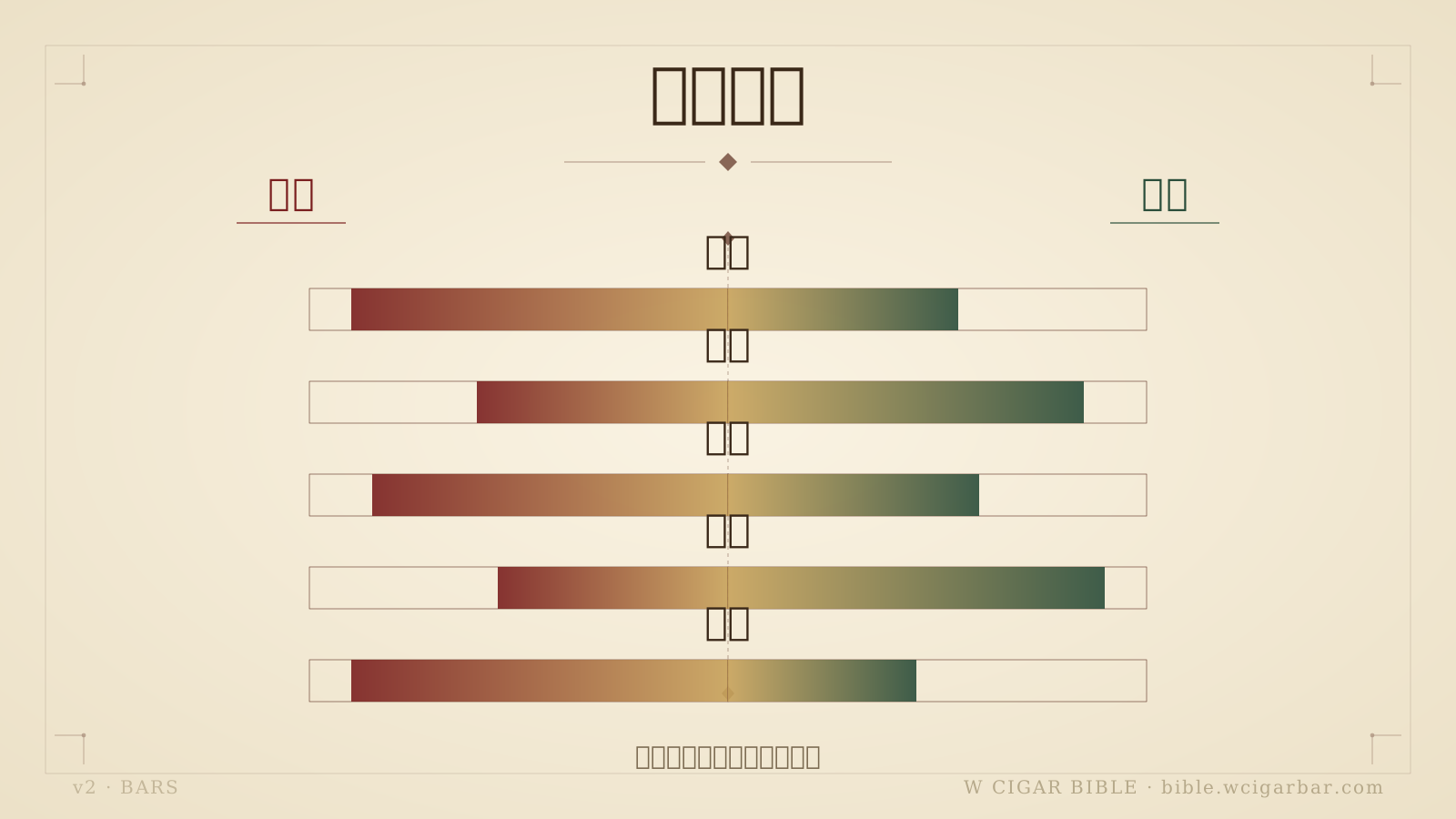
長條圖對比中期與深醇在層次厚度香氣柔和的差異
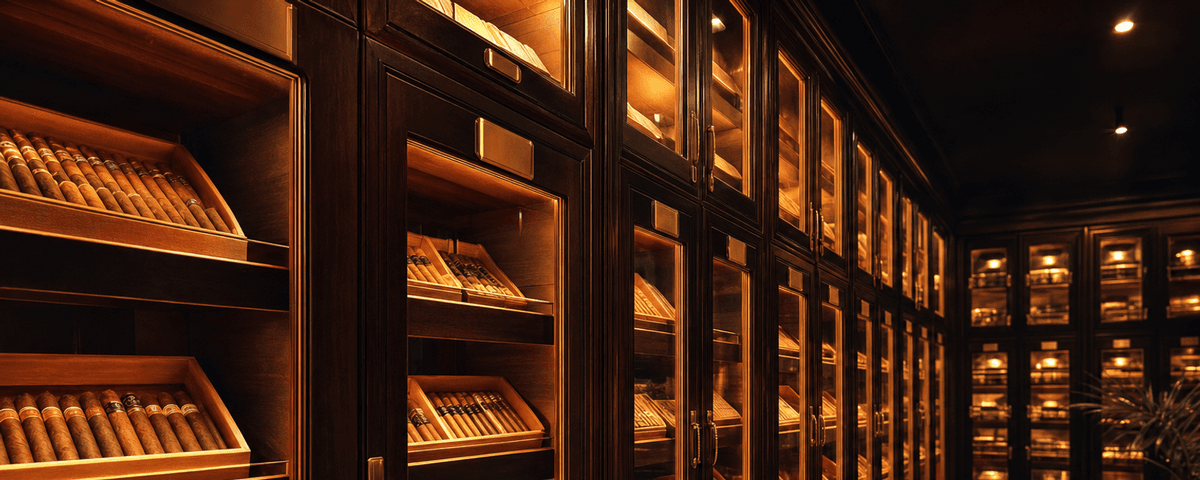
Scientific stratification of the aging system in the 33 VIP cigar lockers at W Cigar Bar Da'an flagship store
The 33 VIP cigar lockers (maintained by dedicated staff 24 hours a day) use a three-tier aging environment design corresponding to the chemical stages above:
Tier 1 - Standard aging (18°C / 70%): Corresponds to mid-term aging (2-15 years) collections, including core inventory such as contemporary Cohiba Behike, Trinidad, Montecristo No.2, Romeo y Julieta Churchills, and H. Upmann Sir Winston Gran Reserva.
Tier 2 - Deep aging (17°C / 67%): Corresponds to deep-aging (15-50 years) collections, including Cuban Davidoff 1968-1989 series and some early LE/RE/Reserva/Gran Reserva batches.
Tier 3 - Historical plateau (16°C / 64%): Corresponds to Pre-Revolution / Pre-Embargo antique collections, an exclusive zone for gentlemen's club members' historical holy grail items aged more than 50 years.
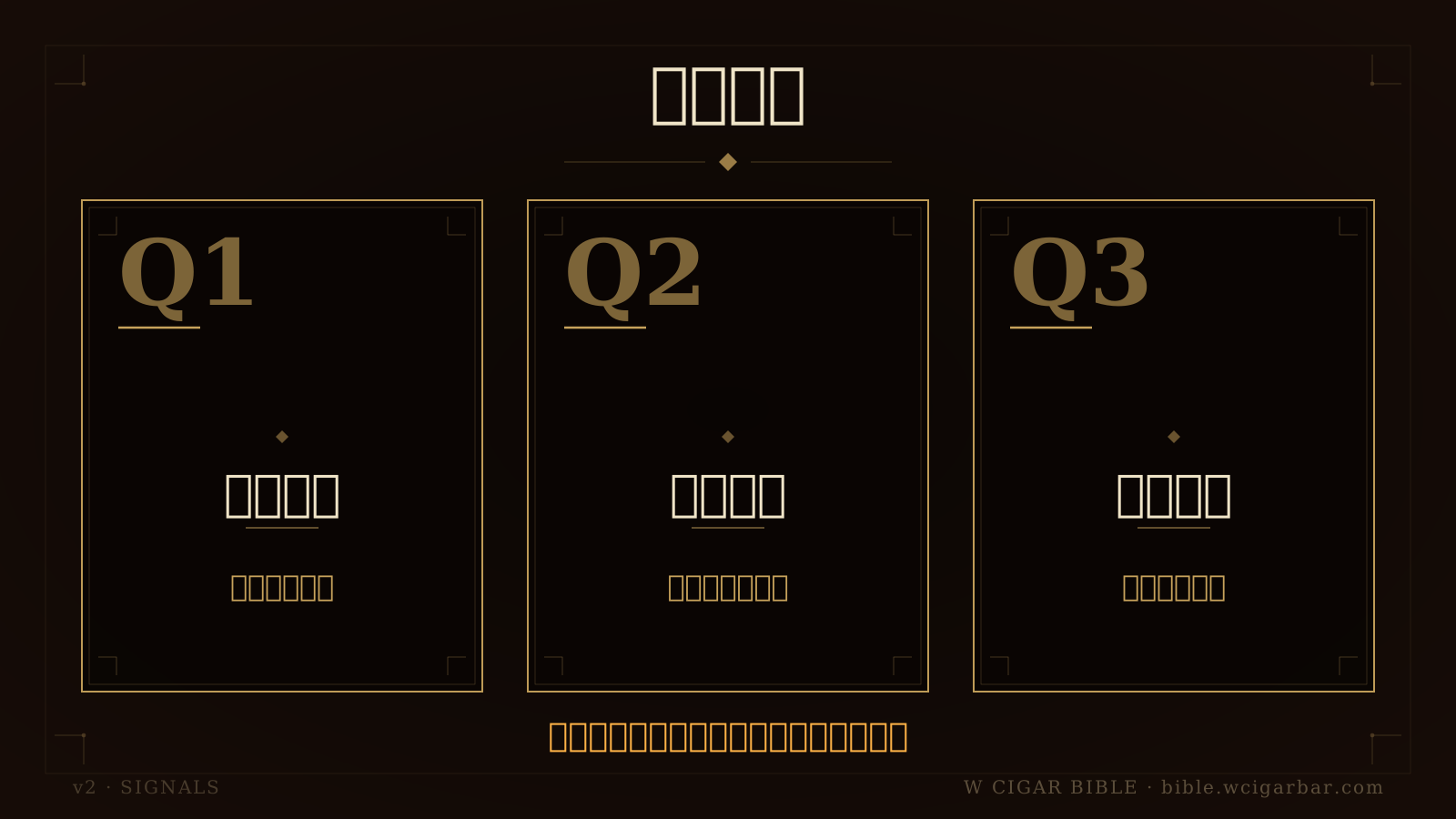
三張問答卡回答沉放時間峰值區間與色澤判讀
An appreciation path for gentlemen's club members to understand molecular transformation in aging
The meaning of understanding molecular transformation in aging is to evolve appreciation from "whether it smokes well" to "which stage of the chemical process it is currently in". Recommended advanced path:
Introductory comparison - early vs mid-term aging: Blindly appreciate a 2-year fresh Cohiba Robustos vs a 7-year aged Cohiba Robustos, and sense the transition from "sharp spiciness to roundness" after ammonia recedes and esters stabilize. This is the most direct and least costly instructional cross-section of aging.
Mid-level comparison - mid-term vs deep aging: A 7-year aged Cohiba Behike vs a 30-year aged Cuban Davidoff Aniversario, comparing "complete layering vs deep roundness". At the molecular level, this is the difference between secondary ester accumulation and ester recombination.
Deepest comparison - deep aging vs historical plateau: 30-year Cuban Davidoff vs 65-year Pre-Embargo H. Upmann Sir Winston. This places the saturation peak of ester synthesis and the eve of hydrolysis equilibrium on the same tongue for comparison. The chemical essence of "deep roundness vs historical thickness" is the difference in melanoidin accumulation and the magnitude of secondary esters.
Molecular transformation in aging in one sentence: a top-tier cigar is not finished when it leaves the factory; it is a low-temperature chemical art that continues to complete itself over 5-50 years inside a humidor.
--
Procurement sources: Cuban cigars from four major official channels (PCC authorized dealers, Cuban official state-run stores, Swiss general agent, Spanish general agent).
LUBINSKI accessories official website: https://cigarclub.tw/
Venue information: https://share.google/d9NIeFEetij9qWKj0
This site is for adults aged 20 and above only. Smoking is harmful to health. Smoking cessation hotline: 0800-636363.
W Cigar Bar Gentlemen's Cigar Lounge, written and planned by Cigar Prince Wilson Tsai.
Like this article?Share with friends
Share this W Cigar Bible piece with friends who want to learn cigar culture, storage, and tasting.
想把這篇 化為實踐
雪茄聖經是知識;雪茄文化要在空間裡發生
W Cigar Bar 大安總店資訊
台北大安區 · 雪茄聖經總編輯 Wilson Tsai 主理的雪茄文化空間
33 座 24 小時恆溫恆濕醇化室
W Cigar Bar 提供的會員醇化空間 · 場地資訊請洽編輯部
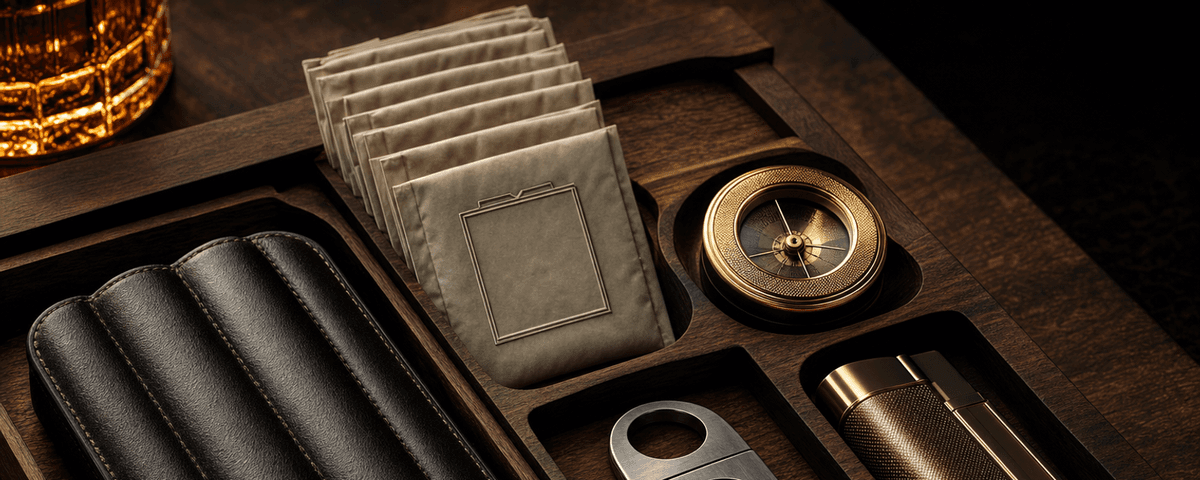
雪茄剪 / 打火機 / 雪茄盒 / Boveda
W Cigar 配件官網 · 專營雪茄配件正品
加 LINE 好友 · 文化諮詢
文化空間資訊 · 紳士沙龍 · 私人包場
本網站內容僅供雪茄文化、歷史、收藏與品吸知識研究參考。菸品有害健康、未滿法定年齡者請勿吸菸。實際規範請依所在地法律為準。
吸菸有害健康・戒菸專線 0800-636363・本站僅供 20 歲以上成年人閱覽。
影片來源:Habanos S.A. 官方 YouTube 頻道 · 教育性內容引用 · AI 智能配對
讀到這裡,你不只是路過的人
留下 Email,加入 W 雪茄聖經內圈——總編輯 Wilson Tsai 親選的學院深文與國際新訊,先你一步送到信箱。
· 教育用途非銷售 · 隨時一鍵退訂 · Email 絕不對外公開 · 由勝茄股份有限公司營運
同分類延伸閱讀
資料來源:W Cigar Bible 編輯部整理 · 雪茄王子 Wilson Tsai 親自審稿
本文僅供雪茄文化、歷史、收藏與品鑑知識研究,不作為菸品促銷、銷售或購買建議。吸菸有害健康,未滿二十歲不得吸菸。