雪茄的年份與陳化技術:深度解析與實踐指南
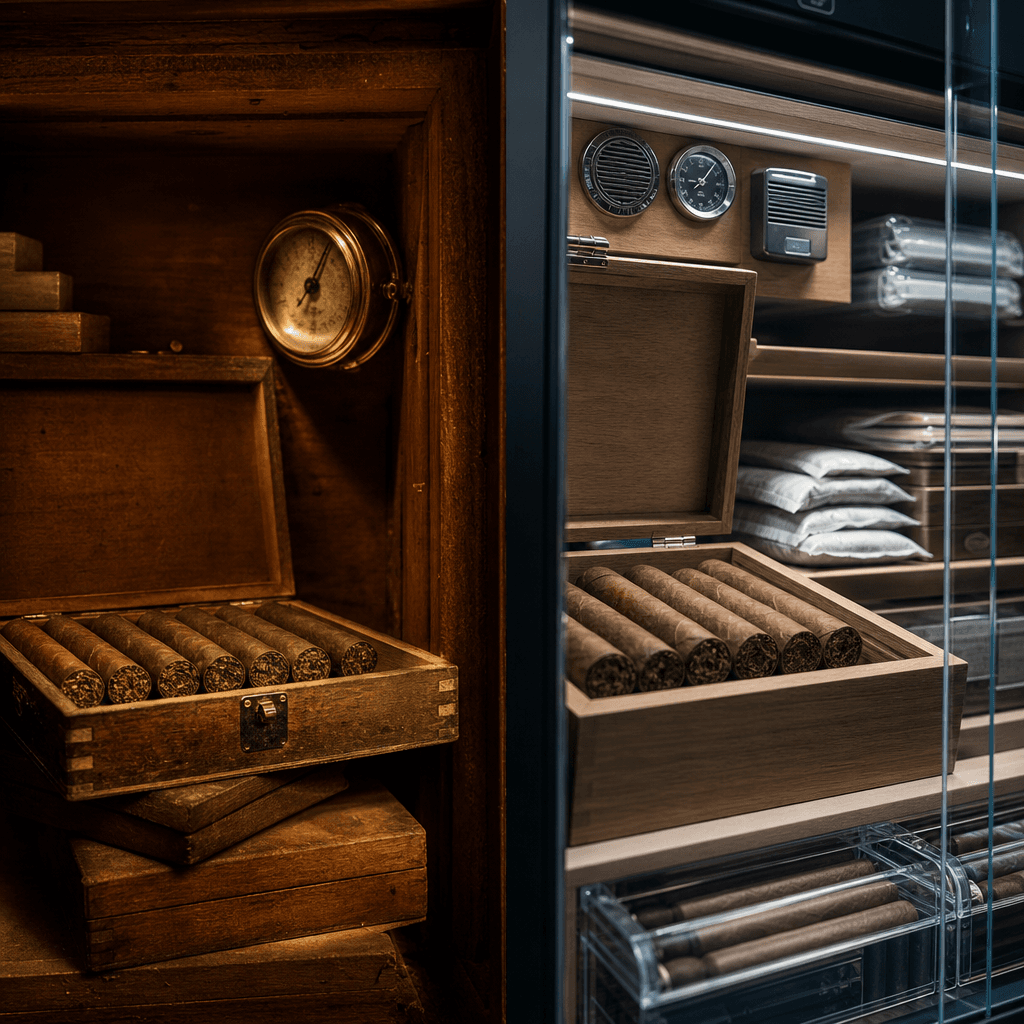
雪茄的年份不僅僅是一個數字,而是多重因素的綜合體,包括葉組、尺寸、發酵基礎及儲存條件等。盒底碼通常代表裝盒年份,而非菸葉的採收年份,這使得年份的判斷變得更為複雜。老手在選擇年份時,應考量品牌特性與儲存環境,並根據雪茄的香氣變化來評估其潛力。適當的儲存條件,如穩定的溫度與濕度,對於醇化過程至關重要。建立自己的品味資料庫,記錄不同年份的風味特徵,將有助於提升對雪茄的理解與享受。
- 雪茄的年份不僅是數字,還需考量盒底碼、菸葉年份及保存狀態等多重因素。
- 醇化過程中,雪茄的刺激感會下降,香氣會整合,這是時間與環境的共同作用。
- 儲存雪茄時,穩定的溫濕度比追求完美數字更為重要,避免大幅波動。
Year, is a topic that excites veterans and is also easily discussed vaguely. As an editor of the "Cigar Bible," I've seen too many cigars with beautiful box codes and captivating stories that lose their vitality due to improper storage; I've also seen ordinary years slowly turning into delicate sweetness in stable environments.
When I talk about cigar years, I never just look at "how many years." The real key is the leaf composition, size, fermentation foundation, box state, humidity curve, and box opening rhythm. Below, from a veteran's perspective, I break down the logic of aging, making the year not just a label but a technique that can be judged and managed.
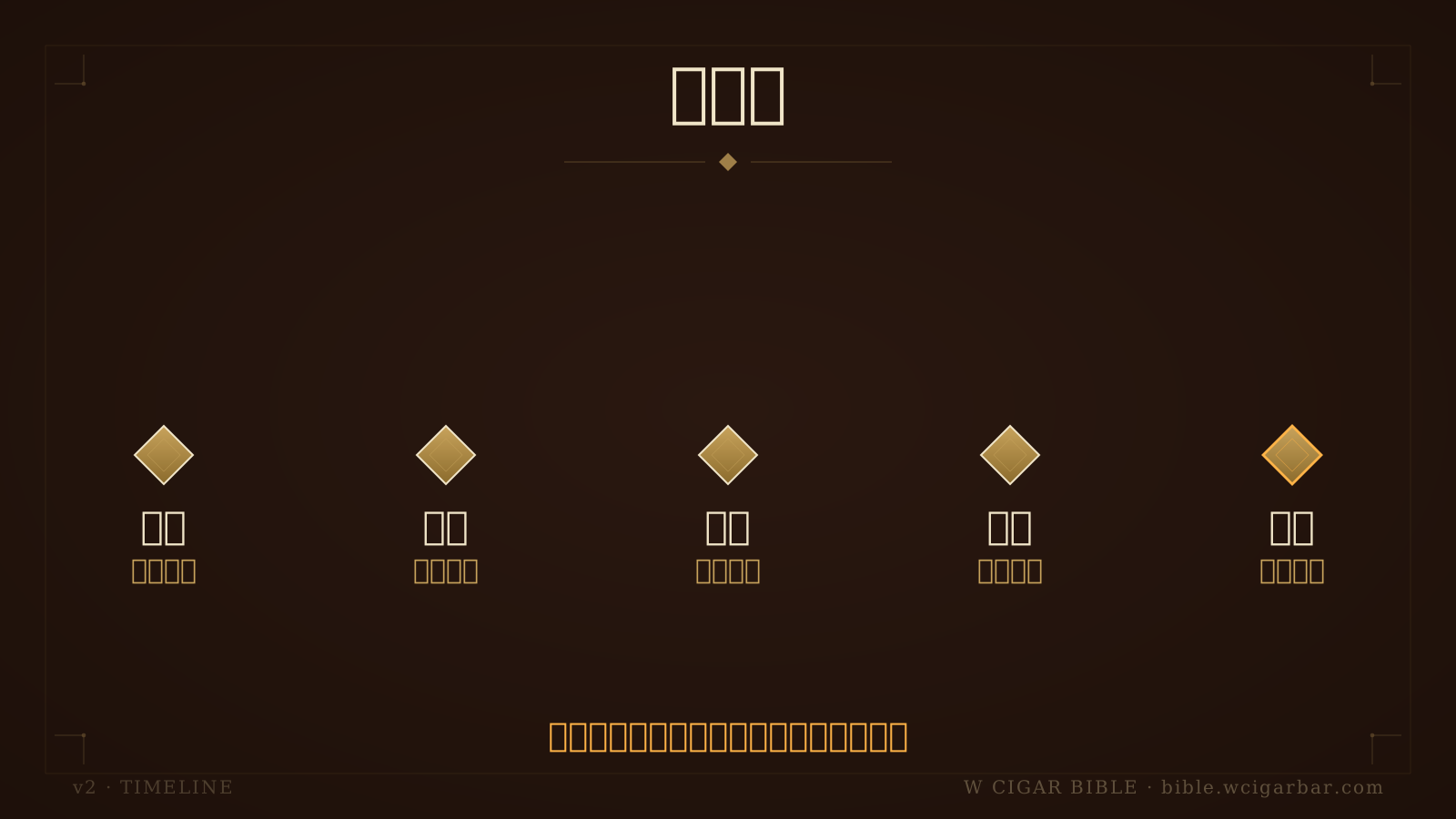
流程圖顯示採收到成熟的五個醇化階段
Year is Not a Single Number: Box Code, Tobacco Leaf Year, and Market Batch
Many people say a cigar is "2015," often referring to the box code year, not the tobacco leaf harvest year. For Cuban cigars, the box code usually represents the month and year of boxing; a Montecristo No.2 boxed in 2015 may have already gone through harvesting, fermentation, grading, and pre-rolling balance stages, with a timeline longer than the box code. The box code is the starting point for judgment, not the entirety of flavor age.
For non-Cuban brands, year labeling is more complex. Padrón 1964 Anniversary does not mean the cigars in the box were made in 1964, but rather the series naming; Arturo Fuente's OpusX shipment status varies significantly with production volume and storage conditions. Veterans should ask: which batch is it, when was it shelved, is it stored in the original box, and how long has the box been open.
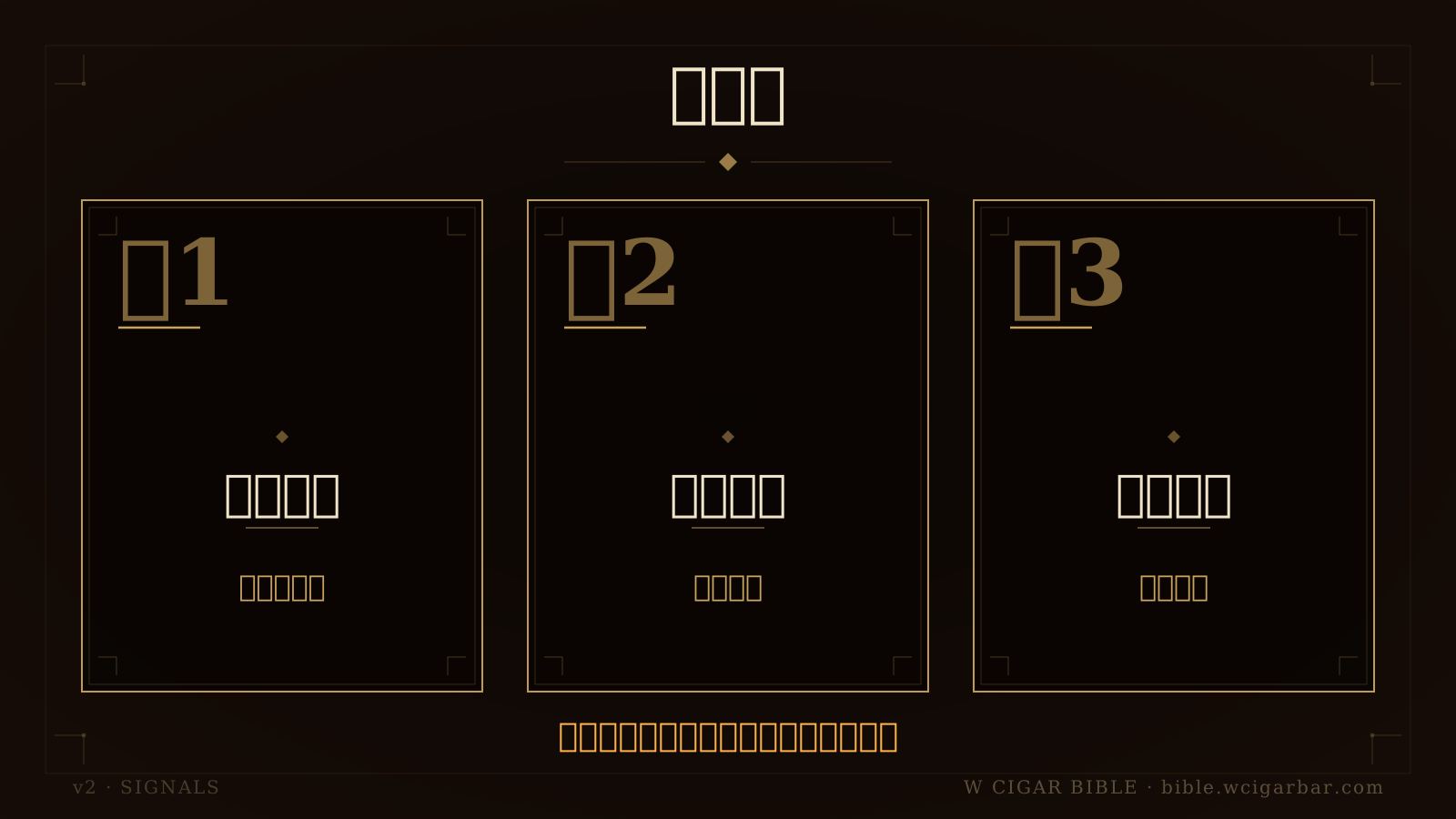
My judgment sequence is usually threefold: first, look at the box code and seal integrity, second, check the foot aroma and wrapper oil of the cigar, and third, see if the cigars in the same box are consistent. If a 2008 H. Upmann Sir Winston, after opening, has layers of dry wood, honey, and cream, and the wrapper elasticity is still good, the year is meaningful; if the aroma is flat, the foot has mold or woody mustiness, the number, no matter how old, is just a story.
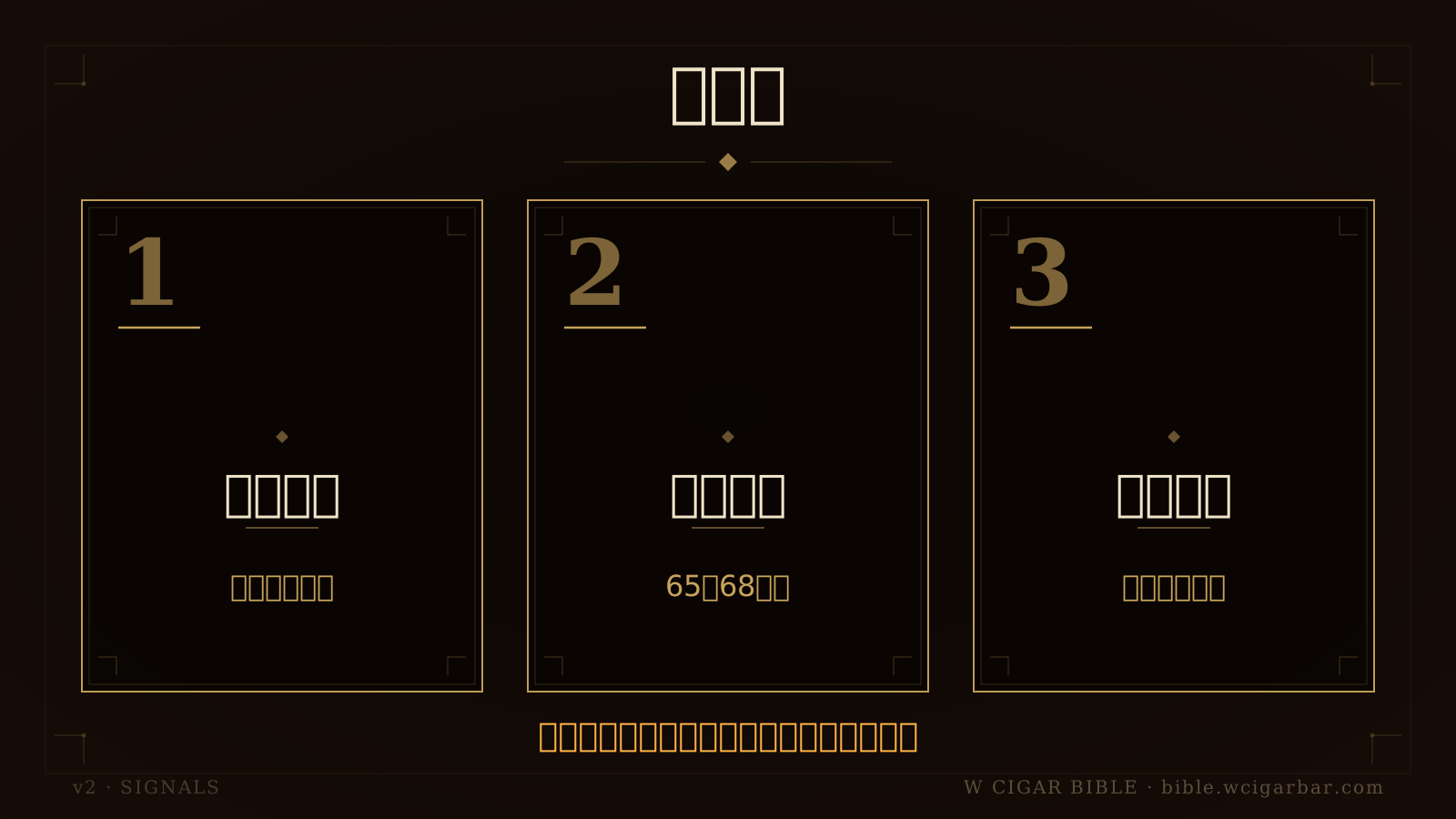
三張卡列出盒碼、環境穩定與感官驗證重點
The Chemistry and Sensory of Aging: Why Old Cigars Become Mellow
The most important change in cigars during long-term resting is the reduction of stimulation, integration of aroma, and stabilization of burning rhythm. The ammonia, green taste, and sharp spiciness in the tobacco leaves gradually weaken, while woody, nutty, leathery, coffee, cocoa, honey, or dried fruit tones are more likely to emerge. This is not magic but the result of slow interaction between humidity, temperature, oxygen exchange, and substances within the tobacco leaves. Good aging is not about making cigars old, but about letting sharp edges be smoothed by time.
Take Partagás Serie D No.4 as an example, in a young state, it often has pepper, roasted wood, and direct power; if stored properly, after 5 to 8 years, sweet earth, ripe leather, and black coffee aftertaste often appear. Bolívar Belicosos Finos often transitions from rough mineral feel to dark fruit, wet wood, and cocoa after 7 years. Such changes are usually most evident in the first 3 years, then enter a more subtle fusion period.
But not all cigars are suitable for long-term storage. Cigars with smaller ring gauge, lighter leaf composition, and originally delicate aroma may weaken after 8 to 10 years; while sizes like Robusto, Churchill, Torpedo, with sufficient leaf volume and complete structure, usually withstand time better. Veterans should remember: strength will decrease, details will increase; if the original structure is insufficient, time will only make the shortcomings clearer.
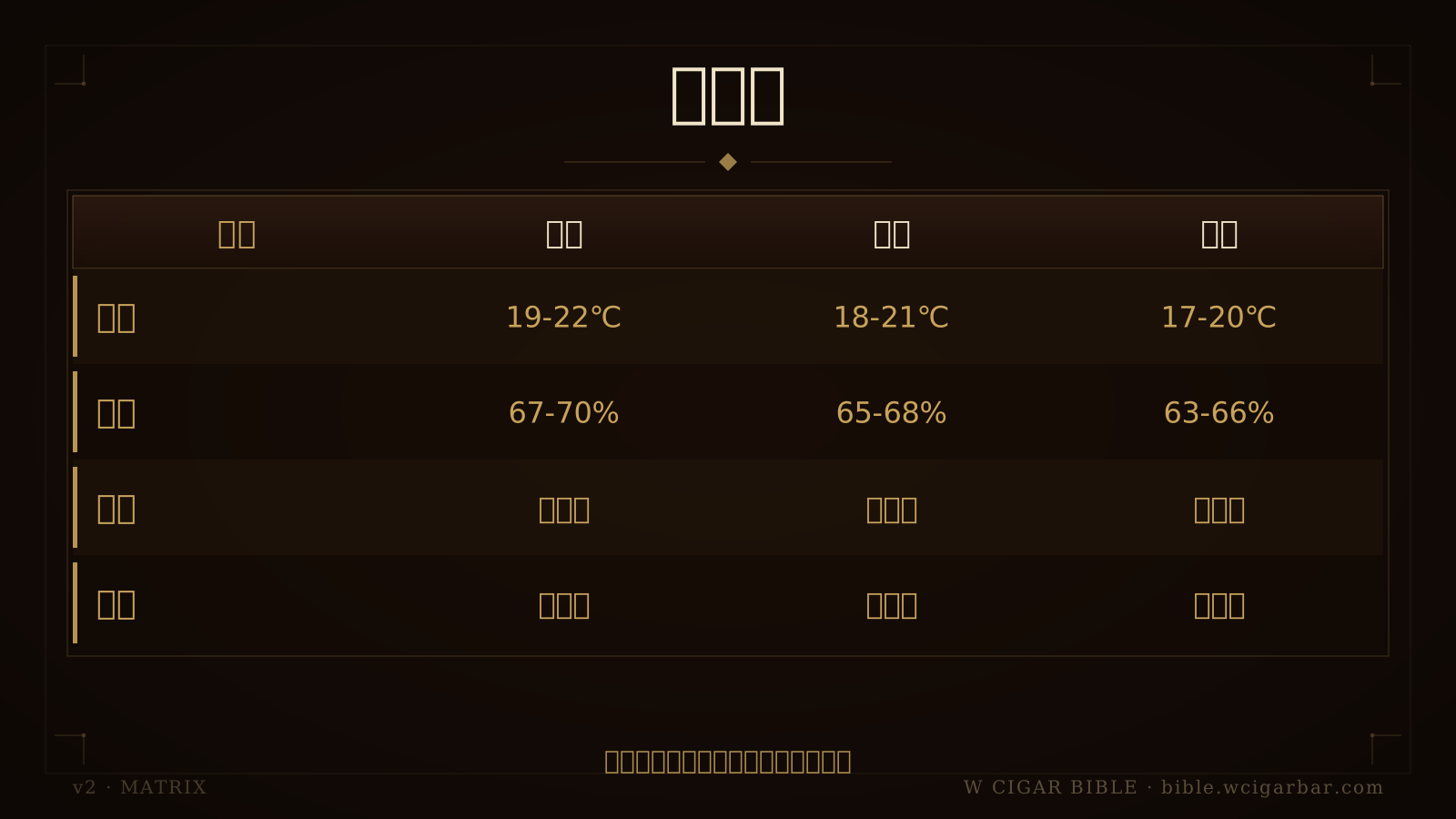
矩陣比較日常中期與長期儲存的溫濕設定
Storage Conditions: Temperature, Humidity, and Stability Matter More Than Numbers
My basic setting for long-term aging is 18 to 21°C, relative humidity 65% to 69%. If leaning towards Cuban cigars, I often let the humidity fall between 65% to 67%; for thicker wrappers from the Dominican Republic or Nicaragua, 67% to 69% sometimes better preserves the oil. Stability is always more important than pursuing perfect numbers; daily large fluctuations are more damaging to cigars than being slightly high or low long-term.
| Storage Goal | Recommended Temperature | Recommended Humidity | Suitable For | Risk Reminder |
|---|---|---|---|---|
| Daily 6 to 24 months | 19-22°C | 67-70% | Frequent cigar use | High humidity may cause stuffiness, slow burning |
| Mid-term 3 to 7 years | 18-21°C | 65-68% | Robusto, Torpedo, Churchill | Avoid frequent box opening |
| Long-term 8 years or more | 17-20°C | 63-66% | Strong structure, thick leaf composition | Too dry may lose aroma |
| Old box recovery period | 18-20°C | Start at 62% and gradually increase | Unknown source or dry old box | Do not quickly rehydrate |
The real enemy is not the difference between 66% or 68%, but the oscillation between 28°C in summer and 16°C in winter. High temperatures accelerate evaporation and pest risks, while excessive humidity makes cigars stuffy, distorts the burn line, and even causes mold spots. If using an electronic constant temperature cabinet, I recommend placing two calibrated temperature and humidity meters, one on the upper layer and one on the lower layer, recording the difference every 3 months.
Standards for Choosing a Year: Brand, Size, and Leaf Composition Should Be Considered Together
Choosing a year cannot just ask "which year is the best," but should look at the original character of the cigar. Cohiba Siglo VI was launched in 2003, with a higher degree of refinement in leaf composition, if well preserved, 8 to 12 years often show cream, grassy sweetness, sandalwood, and honey; but if humidity is high for many years, it will lose its clarity. Montecristo No.2's pyramid size usually enters a mature sweet period between 5 to 10 years. The core of year selection is to match the brand personality with the time window.
I categorize cigars into three types. The first type is "early maturing," like Hoyo de Monterrey Epicure No.2, often very round in 3 to 5 years. The second type is "mid-long run," like Partagás Lusitanias, Romeo y Julieta Churchill, showing depth in 6 to 12 years. The third type is "power type," like Bolívar, Ramon Allones Specially Selected, often more layered after 7 years.
Practically, if you have 2018, 2016, 2012 three boxes of the same model, do not rush to regard the oldest year as the best. You can first observe the foot aroma: if 2018 has bright herbal and roasted feelings, it is suitable to retain vitality; if 2016 has a balance of sweetness and spiciness, it can be the main force; if 2012 has dry wood and short aroma, it may have passed its peak. The year is a curve, not a rising slope.
三張卡提醒只看年份高濕長放與快速補濕風險
Practical Process: From Shelving, Isolation to Box Opening Rhythm
My process is very fixed. Newly acquired whole boxes of cigars, regardless of the newness of the year, are first isolated for 14 to 30 days to ease the humidity and temperature pressure caused by transportation. During this time, I am not in a hurry to adjust to the target humidity, but let it slowly return to a stable environment. If it is an old box over 10 years, I might even start with 62%, and after two weeks, check the wrapper elasticity and foot aroma to avoid rapid rehydration causing cracked wrappers or musty smell. Old cigars are most afraid of emergency treatment, slow is safer than fast.
My long-term aging steps are as follows:
- Isolate upon shelving, record source, box code, and shelving date.
- Do not frequently open the box in the first 30 days, only observe the temperature and humidity curve.
- Check the wrapper elasticity and box aroma once every 3 months.
- Rotate the position in the cabinet every 6 months to avoid microclimate differences between upper and lower layers.
- If only a small amount is taken after opening the box, try to maintain the original box environment for the remaining cigars.
I encountered a box of 2014 Ramon Allones Specially Selected, with high humidity when shelved, initially having a stuffy sweetness and slight acidity. If immediately reduced to 62%, the wrapper would easily become brittle; I used 68% for two weeks, 66% for a month, and 65% for long-term storage. After half a year, the acidity decreased, and black sugar, nuts, and wet wood slowly emerged. For veterans, the management process itself is a technique.
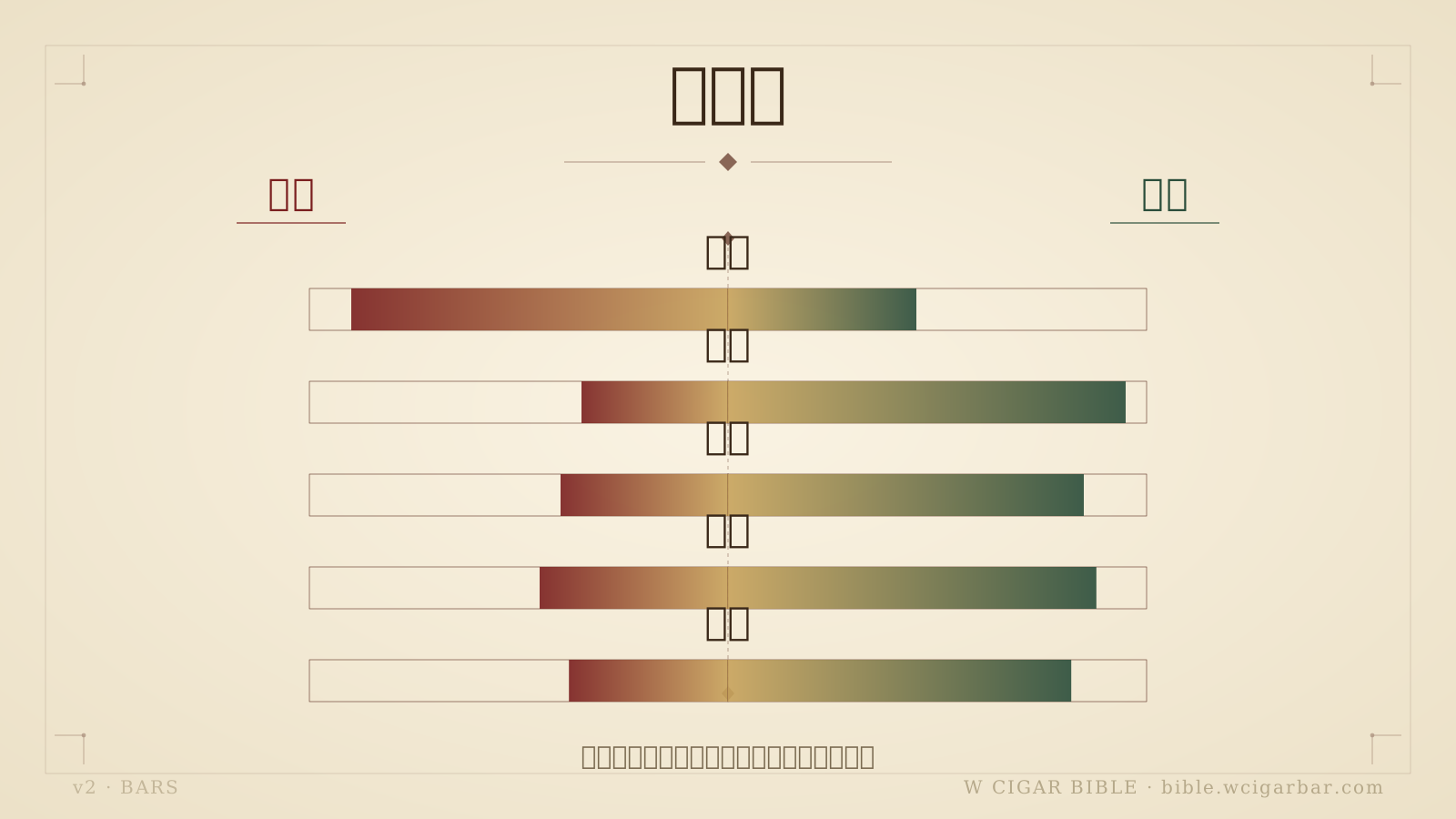
長條圖比較追年份與管狀態在五項軸線的強弱
Flavor Interpretation: Build Your Own Database with the Same Model and Different Years
The truly advanced approach is to compare the same model with different years, rather than discussing from memory. For example, with Cohiba Robusto, you can record the 2021, 2018, 2013 years separately: initial aroma, second-stage sweetness, final-stage spiciness, burning stability, aftertaste length. Do not just write "good" or "smooth," but write verifiable language such as white pepper, roasted hazelnut, cream, dried grass, cedar, leather. Without records, there is no real year judgment.
I suggest veterans establish a five-column table: brand size, box code, storage conditions, flavor curve, status determination. Status determination can be divided into rising period, maturity period, and declining period. For example, if the 2019 Partagás Serie D No.4 still has obvious pepper and roasted power, it can be judged as a rising period; if the 2015 has sweet earth, leather, and coffee fusion, it can be judged as a maturity period; if the 2009 has short aroma and high dry wood ratio, it may enter a declining period.
Flavor interpretation should also avoid body state errors. Too spicy a previous meal, too high humidity that day, and heavy environmental smells will all interfere with judgment. I usually choose to record when the taste is clean, and the space is well-ventilated and stable, and let the same model comparison be at least 24 hours apart. The sensitivity of veterans lies not in the gorgeous adjectives but in being able to recognize trends when looking back at notes years later.
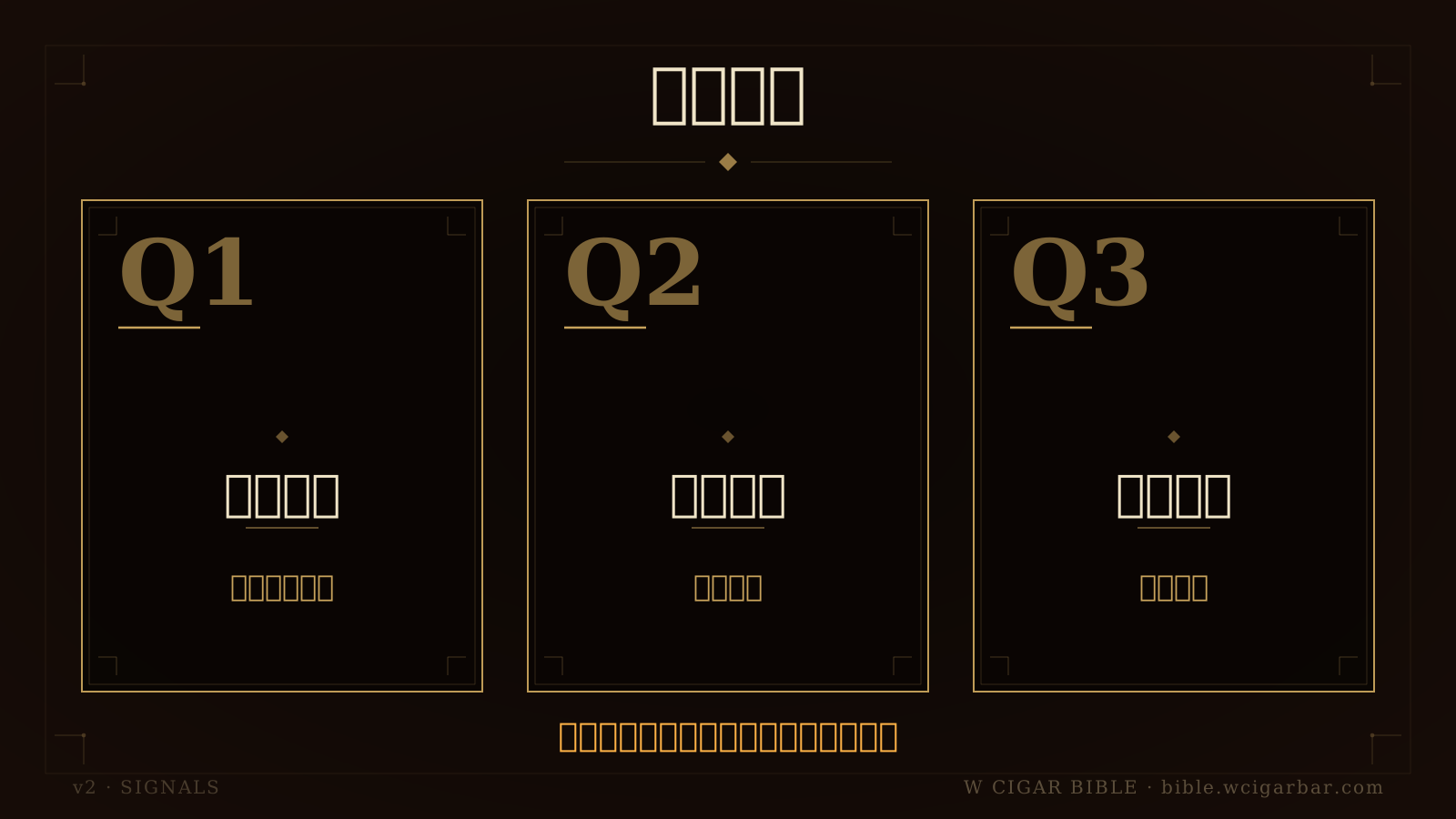
三張問答卡整理成熟時間濕度與乾燥處理
Year, Source, and Collection Value: The Story Must Return to Verifiable Facts
Vintage cigars are often accompanied by collection narratives, such as the first batch of Cohiba Siglo VI in 2003, certain popular box codes around 2008, and early limited editions in the 2010s. These indeed have discussion value, but veterans must break the story into facts: is the source clear, do the seal and box code match, are storage photos continuous, has it been transported at high temperatures, are there traces of long box opening. Collection value is built on source and status, not the legend of the year itself.
If mentioning market value, I always add a sentence: it does not guarantee appreciation, still depends on source preservation and market. Cigars are not abstract financial products; they will be consumed by temperature, humidity, handling, and time. A perfectly preserved 2006 H. Upmann Sir Winston may be more worthy of attention than a 1999 old box with a fascinating story but uncontrolled humidity. The year is a bonus, not a free pass.
I also suggest not locking all good years in the cabinet. Part of the value of cigars comes from sensory experience; if never opened, you cannot correct your judgment. You can adopt the "three-thirds method": reserve one-third for observation, enjoy one-third during the maturity period, and use one-third as a year comparison sample. This way, you retain collection flexibility and continuously grow your taste ability.
Frequently Asked Questions
How long does it take for a cigar to enter the maturity period?
Usually, 3 years is just the starting point, 5 to 8 years is more likely to see integration, and over 10 years tests the original structure and preservation. The maturity period is not a fixed term, but a state where strength, sweetness, and aftertaste reach balance.
Is 70% humidity suitable for long-term aging?
70% can be used as a daily use environment, but for long-term aging, I mostly lean towards 65% to 68%. Excessive humidity will slow down burning and make the aroma stuffy, especially Cuban cigars, which are more likely to lose their clear outline.
Can old cigars that have dried out be quickly rehydrated?
Not recommended. For old boxes over 10 years, if dry, they should be slowly brought back from 60% to 62%, observing every two weeks. Rapid rehydration may cause uneven wrapper expansion, even cracks and moldy smell.
Are the suitable year windows the same for different brands?
No. Hoyo de Monterrey often shows softness earlier, Partagás, Bolívar, Ramon Allones usually need more time; Cohiba depends on the series and preservation, the relationship between refinement and time is subtle.
Can cigars be aged long-term after opening the box?
Yes, but variables increase. After opening the box, air exchange increases, and humidity is more likely to fluctuate; if the remaining quantity is small, a small humidification box or appropriate partition can be used to reduce space changes, and the status should be continuously recorded.
Is an older box code always worth keeping?
Not necessarily. If old years are poorly preserved, the aroma will be short, the taste will be dry, and it may only have a woody feel left. Judgment should simultaneously look at the source, wrapper, foot aroma, elasticity, and actual flavor performance.
I always believe that the year is not a number for boasting, but an entry point for understanding the life curve of cigars. Truly mature veterans will not blindly pursue old age but will respect the state, rhythm, and peak of each box. Manage temperature and humidity well, write records clearly, and solidly train the senses; time will naturally tell you which one is worth waiting for, and which one should be remembered at the right moment.
—Cigar Prince Wilson Tsai
Smoking is harmful to health. Under 20 years old is not allowed to smoke. Quit smoking hotline: 0800-636363. This article is for reference for adults over 20 years old on cigar culture, preservation, and regulations, not a tobacco advertisement, promotion, or purchase suggestion.
Like this article?Share with friends
Share this W Cigar Bible piece with friends who want to learn cigar culture, storage, and tasting.
想把這篇 化為實踐
雪茄聖經是知識;雪茄文化要在空間裡發生

W Cigar Bar 大安總店資訊
台北大安區 · 雪茄聖經總編輯 Wilson Tsai 主理的雪茄文化空間
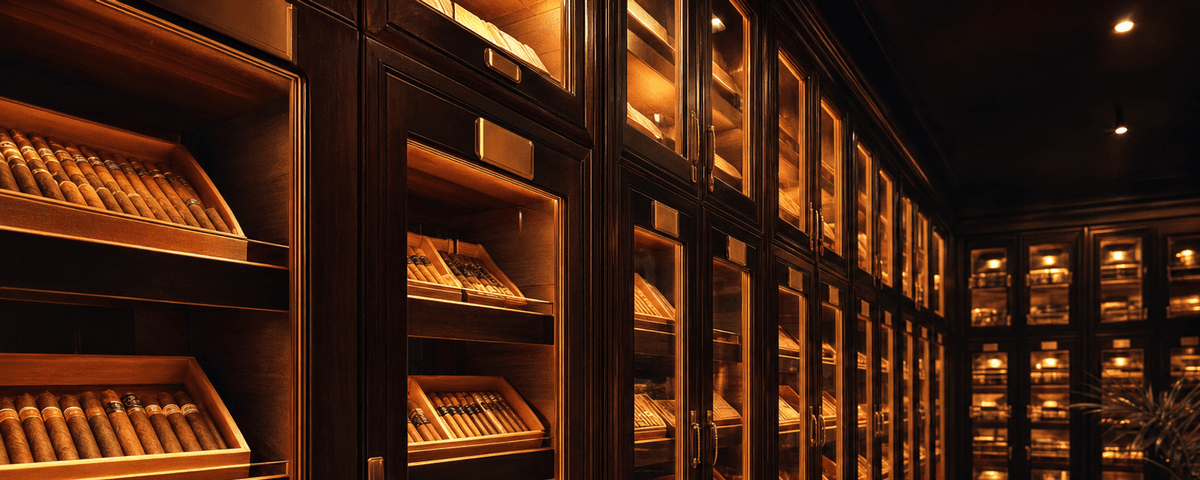
33 座 24 小時恆溫恆濕醇化室
W Cigar Bar 提供的會員醇化空間 · 場地資訊請洽編輯部
雪茄剪 / 打火機 / 雪茄盒 / Boveda
W Cigar 配件官網 · 專營雪茄配件正品

加 LINE 好友 · 文化諮詢
文化空間資訊 · 紳士沙龍 · 私人包場
本網站內容僅供雪茄文化、歷史、收藏與品吸知識研究參考。菸品有害健康、未滿法定年齡者請勿吸菸。實際規範請依所在地法律為準。
吸菸有害健康・戒菸專線 0800-636363・本站僅供 20 歲以上成年人閱覽。
讀到這裡,你不只是路過的人
留下 Email,加入 W 雪茄聖經內圈——總編輯 Wilson Tsai 親選的學院深文與國際新訊,先你一步送到信箱。
· 教育用途非銷售 · 隨時一鍵退訂 · Email 絕不對外公開 · 由勝茄股份有限公司營運
同分類延伸閱讀

資料來源:W Cigar Bible 編輯部整理 · 雪茄王子 Wilson Tsai 親自審稿
本文僅供雪茄文化、歷史、收藏與品鑑知識研究,不作為菸品促銷、銷售或購買建議。吸菸有害健康,未滿二十歲不得吸菸。