雪茄的進階儲存技術:維持最佳風味的藝術
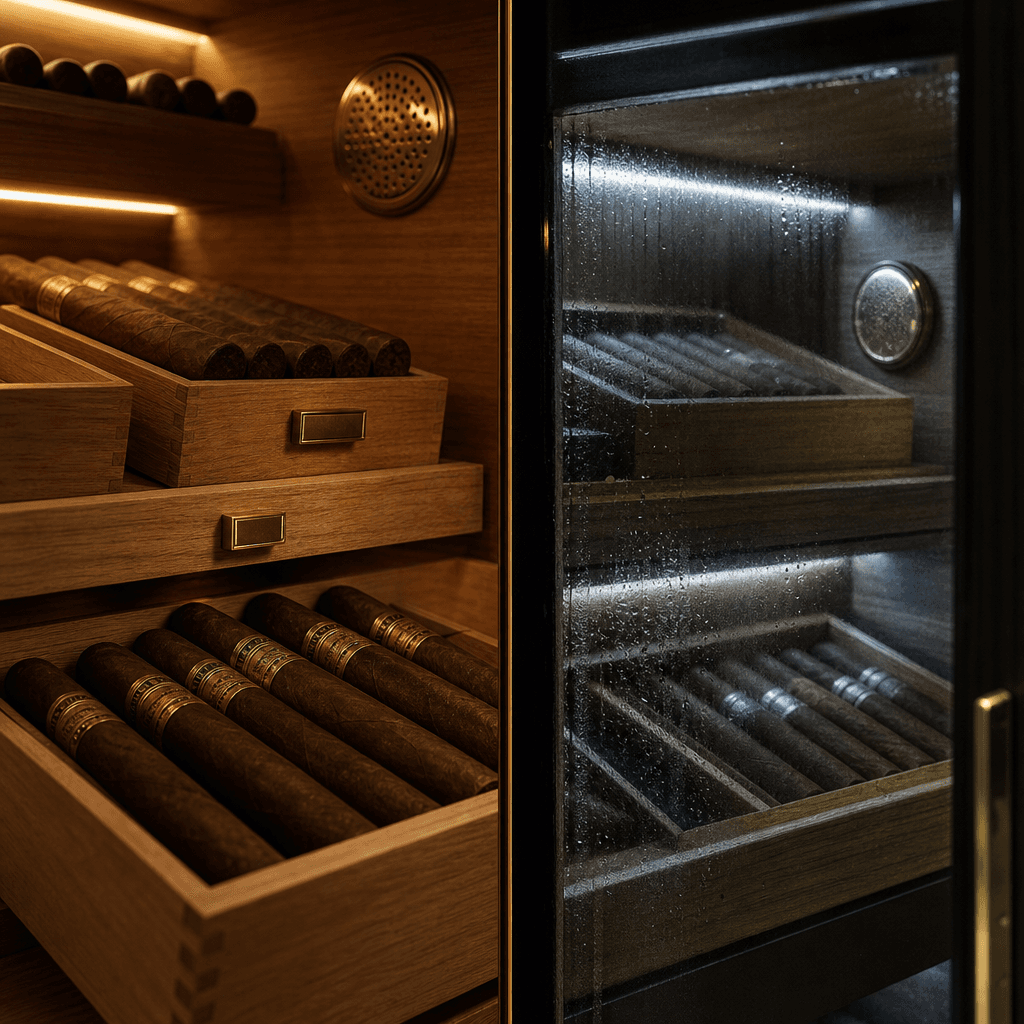
儲存雪茄的關鍵在於維持適當的濕度、溫度及容器選擇,以確保雪茄的風味與品質。理想的相對濕度應在65%至70%之間,避免過高或過低的波動影響口感。溫度方面,建議控制在18°C至21°C,以防止菸草甲蟲滋生及風味失控。容器選擇上,密封保鮮盒對小量雪茄最為穩定,而電子櫃則適合大批量收藏。定期檢查與調整位置,避免陽光直射及強風,能有效延長雪茄的保存期限,讓其風味得以持久。
- 雪茄儲存的核心在於讓水分與香氣分子緩慢交換,而非追求快速變化。
- 穩定的濕度範圍比單一數字更重要,65%至70%相對濕度最為理想。
- 雪茄需要穩定的微環境,避免強風和外來氣味影響其風味。
Advanced Cigar Storage Techniques: The Art of Maintaining Optimal Flavor
When you reach the advanced stage of cigar enjoyment, the real test is not about cutting or lighting, but whether you can keep a cigar retaining the oils, elasticity, and aroma that the maker intended on the day you open the box. I often say that storage is not warehouse management, but flavor management.
As the editor of the "Cigar Bible," I have seen too many good cigars become spicy, stagnant, or even cracked due to uncontrolled humidity. In this article, I will discuss humidity, temperature, containers, air, and time from a practical perspective, guiding beginners towards more stable storage techniques.

流程圖呈現校正選位定濕分區與回查步驟
The Essence of Storage: Allowing Flavor to Integrate Slowly, Not Just "Leaving" the Cigar
A cigar is composed of a wrapper, binder, and filler, each with different moisture content, oils, and fermentation levels. Take the Cohiba Siglo VI as an example; since its release in 2002, it has become a classic size for collectors to observe aging changes. If stored properly, it often transitions from grassy and woody notes to honey, cream, and subtle spices within 1 to 3 years. The core of advanced storage is to maintain a slow exchange of moisture and aroma molecules, rather than pursuing rapid changes.
Many beginners think that buying a wooden box is safe, but the wooden box is just the first layer of protection. In 2008, I handled a box of Montecristo No.2 that looked intact from the outside, but upon opening, the front row was dry, and the back row was wet. The reason was that the whole box was near an air conditioner vent, with a day-night temperature difference exceeding 6°C. As a result, the burn line of the same box of cigars varied greatly, and some even had draw issues and bitterness.
I suggest treating cigars as breathing organic materials. They need stability, dislike drastic changes; need air, but not strong winds; need humidity, but cannot be soaked in moisture. Good storage is not about controlling numbers to death, but about balancing temperature, humidity, air, and time. This is why the same Partagás Serie D No.4 can present completely different layers of leather, pepper, and nuts in different storage environments.

三張卡列出穩定濕度溫度與波動控制重點
Humidity: 65% to 70% is the Safe Core Zone for Most Cigars
Relative humidity is the most discussed number in cigar storage, but I care more about "fluctuation range." Generally, most Cuban cigars are suitable for 65% to 69% RH, while New World cigars like Padrón 1964 Anniversary and Arturo Fuente Hemingway can often be placed at 67% to 70% RH. If it exceeds 72% for a long time, burning tends to be sluggish, and the smoke becomes heavy; if below 62%, the wrapper's sheen decreases, and the cut is more likely to crumble.
In 2016, I conducted a small comparison: the same batch of H. Upmann Magnum 46 was divided into two groups, one stabilized at 65% RH and the other fluctuating between 70% and 74% RH. After three months, the 65% group burned straighter, with distinct herbal, creamy, and woody notes; the high-humidity fluctuation group had muted aromas in the front, loose white ash, and early bitterness in the back. Humidity is not about being higher; stability within the appropriate range is more important than pursuing a single number.
For advanced beginners, I recommend preparing at least two calibrated digital hygrometers. Traditional dial types are aesthetically pleasing but often have errors exceeding 5%; I use the salt test or 75% calibration packs to verify every six months. If using Boveda 65%, 69%, or 72% humidity packs, adjust according to the container's seal and the number of cigars, not just the packaging label. The reaction speed of wooden boxes, acrylic boxes, and electronic cabinets varies, and the humidity curve is the true basis for judgment.

矩陣比較木盒密封盒與電子櫃的保存任務
Temperature: 18°C to 21°C is the Balance Point Between Flavor and Risk
Temperature is often underestimated, yet it directly affects the life rhythm of cigars. Generally, I consider 18°C to 21°C as the ideal range; short-term up to 22°C is acceptable, but long-term above 24°C requires vigilance. Tobacco beetles are more active at around 25°C and high humidity; once small round holes and powder appear, the whole box of cigars needs to be isolated and inspected. The primary purpose of temperature control is not to make cigars more fragrant, but to prevent flavor loss and increased pest risks.
In places like Taiwan, Hong Kong, and Singapore, the biggest enemy is not a single day of 30°C, but the condensation caused by indoor-outdoor temperature differences. In 2019, I saw a customer place a cigar cabinet by a floor-to-ceiling window, where sunlight raised the cabinet to 26°C during the day, and air conditioning dropped it to 19°C at night; a week later, the hygrometer seemed normal, but local wet spots appeared inside the box. This was not due to humidity pack failure, but water redistribution caused by drastic temperature swings.
Without an electronic temperature-controlled cabinet, at least avoid window sides, kitchens, bathroom exterior walls, and direct air conditioning. A small wine cabinet can be an alternative, but check for compressor vibration, condensation, and minimum humidity performance. Some wine cabinets designed for wine may have long-term low humidity, requiring Spanish cedar shelves and passive humidification systems. For me, stabilizing at 20°C, 67% RH is more meaningful than a "beautiful average" of 18°C today and 24°C tomorrow.
Container Selection: Wooden Boxes, Fresh-Keeping Boxes, and Electronic Cabinets Each Have Their Tasks
Not everyone needs a large cigar cabinet at the start. If you have only 10 to 30 cigars, a sealed fresh-keeping box with Spanish cedar sheets and 65% or 69% humidity packs is more stable than a cheap wooden desktop box. If the collection reaches 50 to 150 cigars, a desktop cigar box or small electronic cabinet has space advantages. The quality of a container is not in its price, but in its seal, buffering capacity, and humidity recovery speed.
| Container Type | Suitable Quantity | Advantages | Risks | Recommended Humidity |
|---|---|---|---|---|
| Sealed Fresh-Keeping Box | 10–50 cigars | Stable, low cost, easy to observe | Less air exchange | 65%–69% |
| Desktop Cigar Box | 25–100 cigars | Aesthetic, cedar aroma | Seal varies greatly | 67%–70% |
| Electronic Cigar Cabinet | 80 cigars and above | Large capacity, stable temperature | High calibration and maintenance requirements | 65%–69% |
| Original Wooden Box Storage | From 25 cigars | Complete original box information | Uneven internal and external humidity | Adjust according to outer container |
I often recommend beginners start with a "transparent sealed box" to build a feel because you can see the humidity response and quickly understand how long it takes to stabilize after opening the lid. Once you are familiar with the state of different brands, invest in larger cabinets. Like many people collecting Romeo y Julieta Wide Churchills, Hoyo de Monterrey Epicure No.2 after 2020, if stored in whole boxes, there is often a 1% to 3% RH difference between the outer box and the inner cigars, making regular rotation important.

三張錯誤卡提醒高濕急救冰箱長放與單點讀數
Air and Position: Cigars Need to Breathe, But Do Not Need to Be Blown
Many people associate "ventilation" with placing cigars in positions with easy airflow, which is actually a misunderstanding. Cigars need slow, clean, stable air exchange, not direct air conditioning, fans, or dehumidifiers. Strong winds can cause the wrapper surface to lose moisture too quickly, the outer layer shrinks while the inner layer remains wet, eventually causing wrapper cracks or uneven burning. Cigars require a stable microenvironment, not stronger indoor air movement.
Placement also affects flavor. I avoid placing cigars near perfumes, coffee beans, mothballs, or leather care oils, as tobacco absorbs odors. Once, a box of 2017 Bolívar Belicosos Finos was placed near a cedar essential oil diffuser beside the cigar box, and three weeks later, the front aroma became pungent, with the original earthy, cocoa, and rich flavors overwhelmed by external odors, which is difficult to reverse.
My basic placement principle is simple: at least 60 cm off the ground, avoid sunlight, stay away from damp corners, and do not overcrowd the cabinet. Leave some space between cigars for even humidity recovery. If it's an electronic cabinet, place more moisture-resistant whole boxes near the fan outlet, not single loose cigars; loose cigars are more directly affected by airflow. For beginners, achieving "no sun, no wind, no odor, no crowding" already avoids most storage disasters.
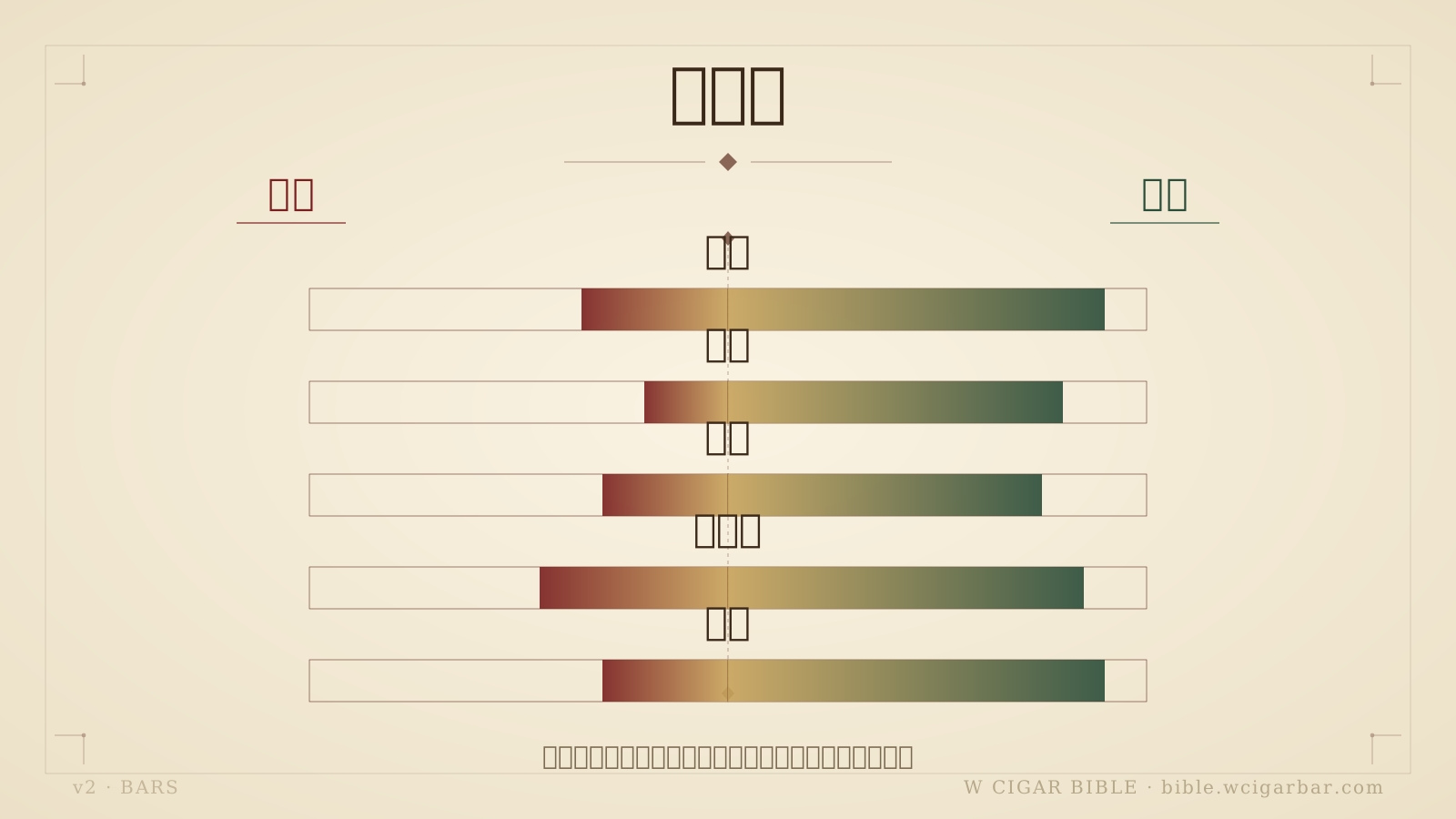
長條圖比較數字控死和平衡管理在五個面向差異
Inspection, Rotation, and Isolation: Routine Maintenance for Advanced Players
Advanced storage is not about opening the box every day to check, but about checking rhythmically. My habit is to quickly observe the hygrometer every two weeks, rotate positions monthly, and conduct a complete inventory quarterly. If a whole box of cigars is stored flat for a long time, the side near the humidification source will be wetter, and the outer side may be drier; swapping the top and bottom, front and back positions can make the moisture content more even. Regular inspection is more effective than frequent box opening because cigars fear human-induced repeated fluctuations.
During inspection, I look for four things: whether the wrapper is shiny and elastic, whether the foot is swollen, whether there is powder at the bottom of the box, and whether the aroma is clean. If white cotton-like spots are found, do not rub them with your hand to judge; if the spots are three-dimensional, spread quickly, and have a moldy smell, they need to be isolated. If they are crystalline oil spots, they are usually finely distributed and smell normal, but still require careful observation. If suspected beetle holes are found, place the whole box in a sealed bag and lower the temperature for treatment, then check each one.
I manage newly acquired cigars with the following process, especially for box cigars transported across seasons:
- Do not rush to open all packaging upon receipt, let the outer layer stabilize at room temperature for 6 to 12 hours.
- Place in an isolation box for 7 to 14 days, observing humidity, aroma, and appearance.
- If humidity is high, use a 65% humidity pack to slowly pull back, do not use desiccants to quickly lower it.
- Once stable, move into the main cabinet and label the brand, size, box code, and date.

快問快答卡回答太乾冰箱與白點判斷問題
Long-Term Aging: Different Brands and Sizes Have Different Time Curves
When it comes to long-term storage, I prefer to use "aging" rather than mystification. Cigars may become mellow over time or lose strength; the key lies in the blend, size, storage, and personal taste. For example, Hoyo de Monterrey Epicure No.2 usually becomes smoother in 2 to 5 years, with more integrated woody, creamy, and floral notes; while larger sizes like Partagás Lusitanias, if stored stably, may retain structure and spiciness for 5 to 10 years. Not all cigars are suitable for long-term storage; concentration, size, and original state determine their time potential.
Looking at vintage cases, some Ramón Allones Specially Selected from 2014 to 2016, in an environment of 65% to 67% RH and about 20°C, often see red fruit, leather, and sweet aromas gradually merging; but if stored above 72% RH, they tend to appear heavy and sticky. New World cigars like Oliva Serie V Melanio usually do not need excessive long-term storage, 1 to 3 years is enough to soften the edges, and too long may weaken the originally distinct coffee and black pepper.
I recommend establishing an "opening record": record the state of the same box at the 3rd month, 1 year, and 3 years, including humidity, temperature, burn, aroma, and taste. Do not rely solely on memory, as human taste is affected by diet, season, and mood. If you have 25 cigars from the same box, observing in stages is more valuable than storing them for ten years at once. Long-term aging is not a gamble, but a cross-verification of data and senses.
Frequently Asked Questions
Can overly dry cigars be quickly restored with high humidity?
Not recommended. If dry cigars are directly placed in an environment of 72% or higher humidity, the outer layer will absorb water and expand first, while the inner layer remains dry, easily causing wrapper cracks or unstable burning. Rehydration should be slow, usually pulling back gradually from 62% to 65%, and observing for 2 to 4 weeks is safer.
Can cigars be stored in the refrigerator?
Household refrigerators are not suitable for long-term storage due to low temperature, dryness, odors, and frequent door opening, which can interfere with cigars. If dealing with suspected pest issues, short-term low-temperature treatment in a sealed bag is used; daily storage should still use stable containers and humidity control.
Should the cellophane be removed?
For single cigar storage, I mostly keep the cellophane because it reduces friction and odor interaction; for whole box aging, the original state can also be retained. Cellophane is not completely sealed, moisture will still exchange slowly, just at a slower pace.
The hygrometer shows 69%, why are the cigars still too moist?
It may be due to an uncalibrated hygrometer, poor sensor location, or uneven internal humidity. There are often differences in the upper, lower, and door sides of electronic cabinets, so it is recommended to place two to three sensing points and judge together with actual touch and burn performance.
Are white spots on the cigar surface always a sign of spoilage?
Not necessarily, but caution is needed. If the white spots resemble powder or crystals, have a clean smell, and do not spread, isolate and observe first; if they are cotton-like, have a moldy smell, and expand, they should not be returned to the main cabinet. When in doubt, isolation is always safer than taking risks.
Can Cuban and New World cigars be mixed in the same cabinet?
Yes, but I recommend using original boxes, cellophane, or layering to reduce odor interaction. Cuban cigars are often clearer at 65% to 67%, while New World cigars can be slightly higher; if sharing an environment, choose a compromise point, such as 67% RH.
The most fascinating aspect of cigar storage is that it requires both science and patience. Numbers give us direction, and senses tell us the result; true stability is not locking cigars into a perfect formula, but understanding their subtle changes across seasons, sizes, and brands. May you smell the well-placed scent of time every time you open a box. —Cigar Prince Wilson Tsai
Smoking is harmful to health. No smoking under twenty years old. Quitline: 0800-636363. This article is for reference by adults over twenty years old for cigar culture, storage, and regulation knowledge, not a tobacco advertisement, promotion, or purchase suggestion.
Like this article?Share with friends
Share this W Cigar Bible piece with friends who want to learn cigar culture, storage, and tasting.
想把這篇 化為實踐
雪茄聖經是知識;雪茄文化要在空間裡發生

W Cigar Bar 大安總店資訊
台北大安區 · 雪茄聖經總編輯 Wilson Tsai 主理的雪茄文化空間
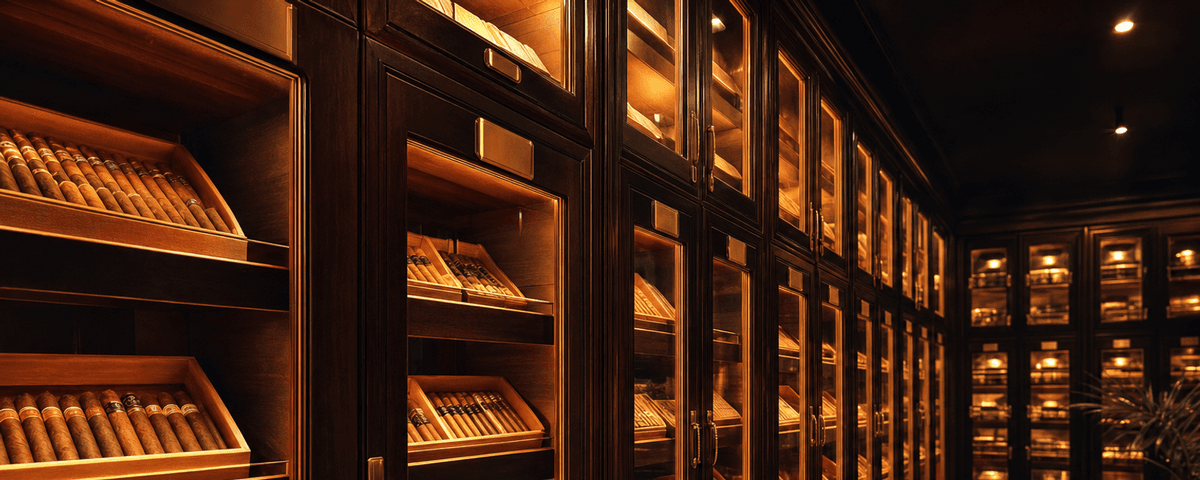
33 座 24 小時恆溫恆濕醇化室
W Cigar Bar 提供的會員醇化空間 · 場地資訊請洽編輯部
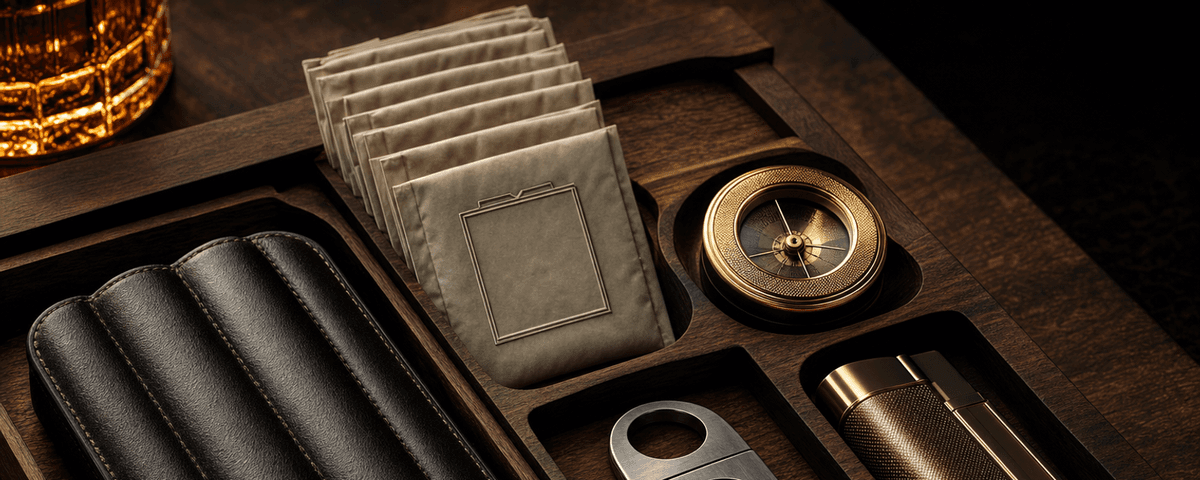
雪茄剪 / 打火機 / 雪茄盒 / Boveda
W Cigar 配件官網 · 專營雪茄配件正品

加 LINE 好友 · 文化諮詢
文化空間資訊 · 紳士沙龍 · 私人包場
本網站內容僅供雪茄文化、歷史、收藏與品吸知識研究參考。菸品有害健康、未滿法定年齡者請勿吸菸。實際規範請依所在地法律為準。
吸菸有害健康・戒菸專線 0800-636363・本站僅供 20 歲以上成年人閱覽。
讀到這裡,你不只是路過的人
留下 Email,加入 W 雪茄聖經內圈——總編輯 Wilson Tsai 親選的學院深文與國際新訊,先你一步送到信箱。
· 教育用途非銷售 · 隨時一鍵退訂 · Email 絕不對外公開 · 由勝茄股份有限公司營運
同分類延伸閱讀



資料來源:W Cigar Bible 編輯部整理 · 雪茄王子 Wilson Tsai 親自審稿
本文僅供雪茄文化、歷史、收藏與品鑑知識研究,不作為菸品促銷、銷售或購買建議。吸菸有害健康,未滿二十歲不得吸菸。