雪茄中的微妙香氣:如何透過嗅覺提升品味技術
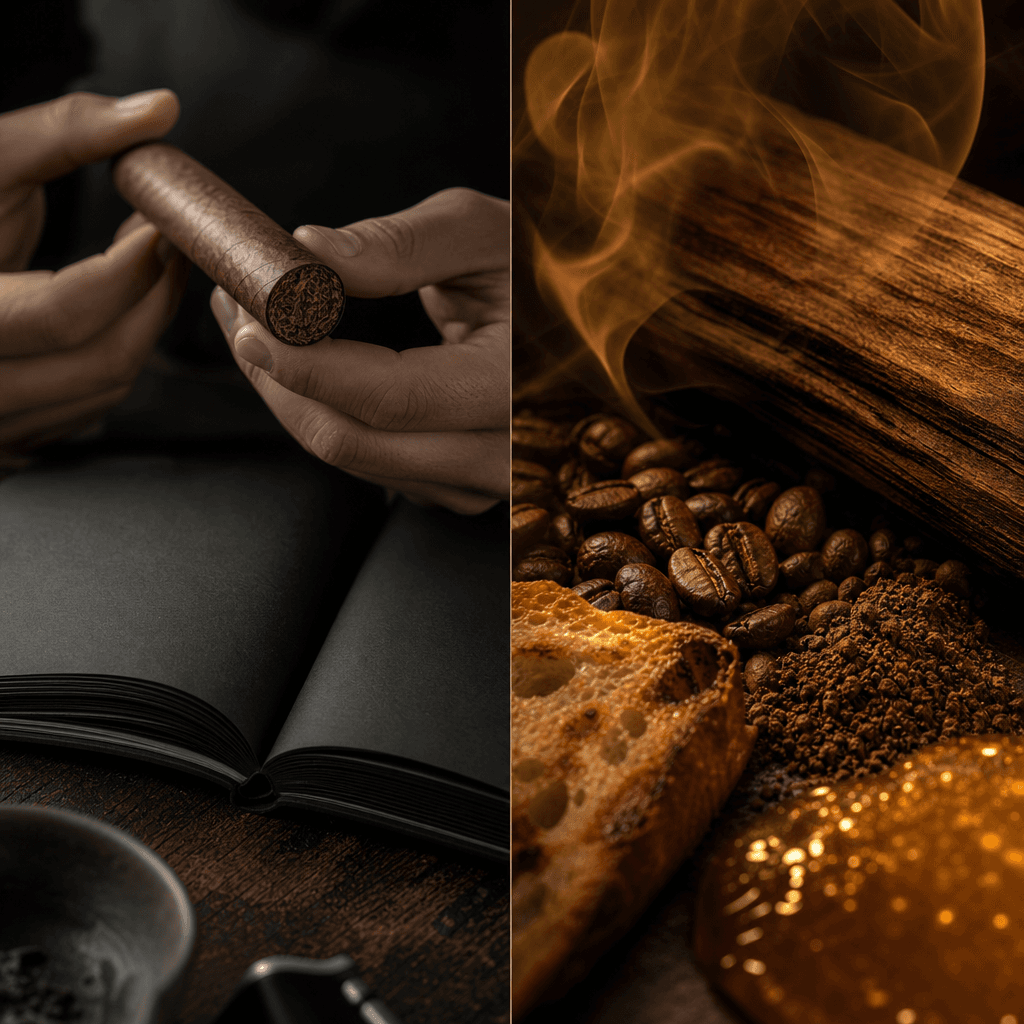
雪茄的品味不僅依賴舌頭,嗅覺在其中扮演關鍵角色。新手常在辨識香氣上遇到瓶頸,應該學會將香氣與味覺區分。透過精細的嗅覺訓練,能夠更準確地描述雪茄的風味變化。點燃前的乾香觀察至關重要,能揭示雪茄的潛在特性。燃燒過程中,香氣會隨著時間變化,分段記錄有助於提升辨識能力。此外,建立個人的香氣輪,將模糊的感受具體化,有助於更深入了解雪茄的風味。
- 提升雪茄品味技術的關鍵在於嗅覺,香氣辨識主要依賴鼻腔而非舌頭。
- 點燃前的乾香能提供雪茄狀態與香氣走向的初步線索,應仔細觀察。
- 建立個人的雪茄香氣輪,將模糊感受分類,有助於提升香氣辨識能力。
The Subtle Aromas in Cigars: How to Enhance Tasting Skills Through Smell
The aroma of cigars is never just about "smells good or not." Beginners who have learned the basics of tasting often encounter a bottleneck: they know a cigar has changes, but can't articulate whether those changes are woody, nutty, cocoa, or toasted bread crust. At this point, what truly needs training is not the tongue, but the sense of smell.
As an editor of the "Cigar Bible," the phrase I most often remind beginners is: at least half of the cigar tasting skills come from the nasal cavity. From the dry aroma before lighting to the twists and turns of each puff after lighting, and even the duration of the aftertaste, all can be identified through more refined olfactory methods.
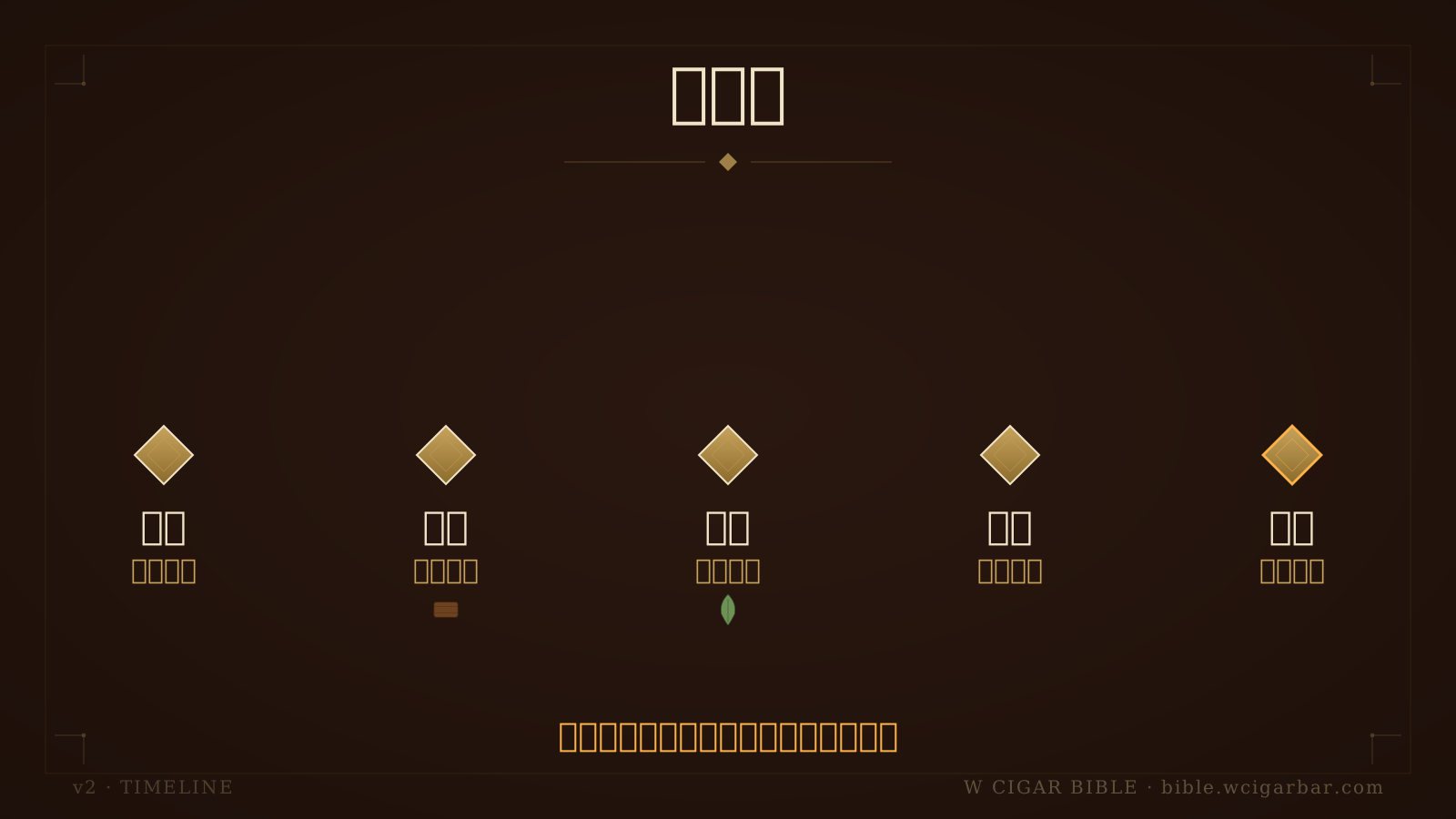
時間軸列出淨口、聞衣、聞腳、分段與記詞五步驟
Aroma is Not Taste: First Distinguish the Roles of the Nasal Cavity and Tongue
Many people think that the flavors of cigars are judged by the tongue, but the tongue mainly identifies sweet, sour, bitter, salty, umami, and stimulation; what truly allows you to say cedar, coffee, leather, floral, and honey is the sense of smell in the nasal cavity. Take Montecristo No.2 as an example, beginners often first feel a medium to high thickness, but if relying only on the tongue, it's easy to mix roasted nuts, cocoa powder, and slightly bitter coffee into "rich." To enhance cigar tasting, the first step is to admit that aroma recognition mainly occurs in the nasal cavity, not the tongue.
I divide the cigar experience into three areas: the tongue surface is responsible for basic taste and texture, the nasal cavity is responsible for aroma, and the throat and chest are responsible for strength and stimulation. Like Hoyo de Monterrey Epicure No.2, often considered mild, in a well-maintained box, the front section may have cream, grass, and light woodiness; if the storage humidity is too high, these details will be suppressed by moisture, leaving only a dull grassy taste. This is the importance of olfactory training.
A practical exercise is to divide descriptions into "taste words" and "aroma words." For example, sweetness is a taste and mouthfeel, while honey, caramel, and raisins are aroma associations; bitterness is a taste, while cocoa shell, black coffee, and roasted almond skin are aromas. Each time you record, don't just write "good draw, smooth, rich," but ask yourself: is this richness woody, spicy, or roasted? The more precise the description, the stronger the comparative ability the next cigar will bring.
Pre-light Dry Aroma: Start with the Wrapper, Foot, and Air
Truly meticulous cigar observation should begin before lighting. Take a Romeo y Julieta Churchills, first smell the wrapper surface, then the foot cross-section, the messages are different: the wrapper often carries leather, grains, and subtle soil; the foot more directly presents the blend aroma of the filler leaves, possibly showing hay, cedar, cocoa, and spices. If you rush to light it, you'll miss the quietest and purest clues of this cigar.
I habitually use a three-step smelling method: the first sniff is about 5 cm away, quickly confirming if there is mold, ammonia, or excessive moisture; the second sniff is close to the foot, judging the main aroma; the third sniff slows down, feeling if there is sweetness or a mellow aroma after aging. For example, with a stable 2019 H. Upmann Magnum 46, the foot often has malt, dry wood, and slight honey; if it's a younger box period, herbs and spices will be more prominent. The pre-light dry aroma is the first map for judging status and predicting direction.
Also, pay attention to the "air feel." A well-preserved cigar usually has a clean, layered dry aroma and doesn't smell sticky; if the humidity is above 72% for a long time, it may have a musty warehouse, wet cardboard, or sour musty smell. Conversely, if it's below 62% for a long time, the aroma will appear dry and thin, and the wrapper may lose its sheen. My daily recommendation is a relative humidity of 65% to 69%, and a temperature of 18 to 21 degrees Celsius, keeping the aroma clear without losing elasticity.
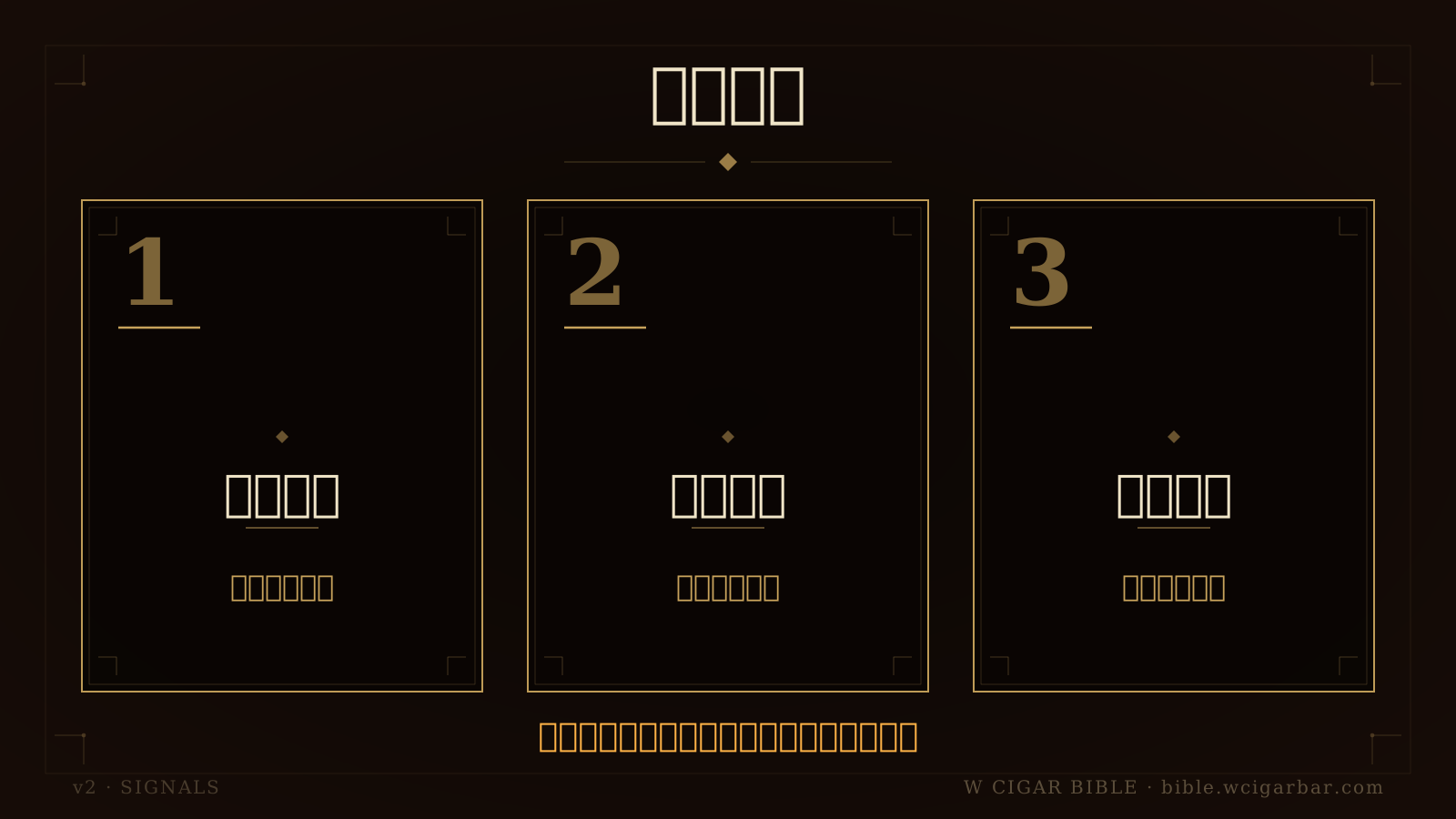
三張卡呈現鼻腔主導、先聞乾香與分段記錄重點
Three-Stage Aroma After Lighting: How to Understand the Front, Middle, and Back Sections
The aroma of a cigar is not fixed but unfolds in stages as it burns. For the front section of 0 to 3 cm, it is often the area where the wrapper and lighting state are most obvious, easily showing pepper, hay, woodiness, and initial sweetness. Partagás Serie D No.4 often has bright spiciness in the front section, if the flame control is too rushed, the spiciness will turn into sharpness, misleading one to think the cigar itself is rough. Segmented observation can avoid misjudging the complete character of the entire cigar based on the first 5 minutes.
The middle section is usually the most worth recording core area. Take Cohiba Siglo VI, a classic size launched in 2002, as an example, when in good condition, the middle section may show cream, grass, bean aroma, sweet wood, and subtle floral scent; these do not explode simultaneously but emerge in turns. Beginners can make a brief record every 10 minutes, no need to write long passages, just mark three words: main aroma, secondary aroma, and texture. After accumulating 20 cigars, the recognition speed will significantly improve.
The back section often sees caramelization, coffee, leather, earth, black pepper, and may become concentrated as the temperature rises. At this time, do not frequently taste, otherwise, the burning temperature will rise, and the aroma will be overshadowed by bitterness. I recommend once every 45 to 75 seconds, adjusting according to the ring gauge; Robusto can be slower, Lancero needs to be more gentle. If the back suddenly only has bitterness left, it may not necessarily be a cigar problem, but possibly too fast a pace or too hot a fire line.
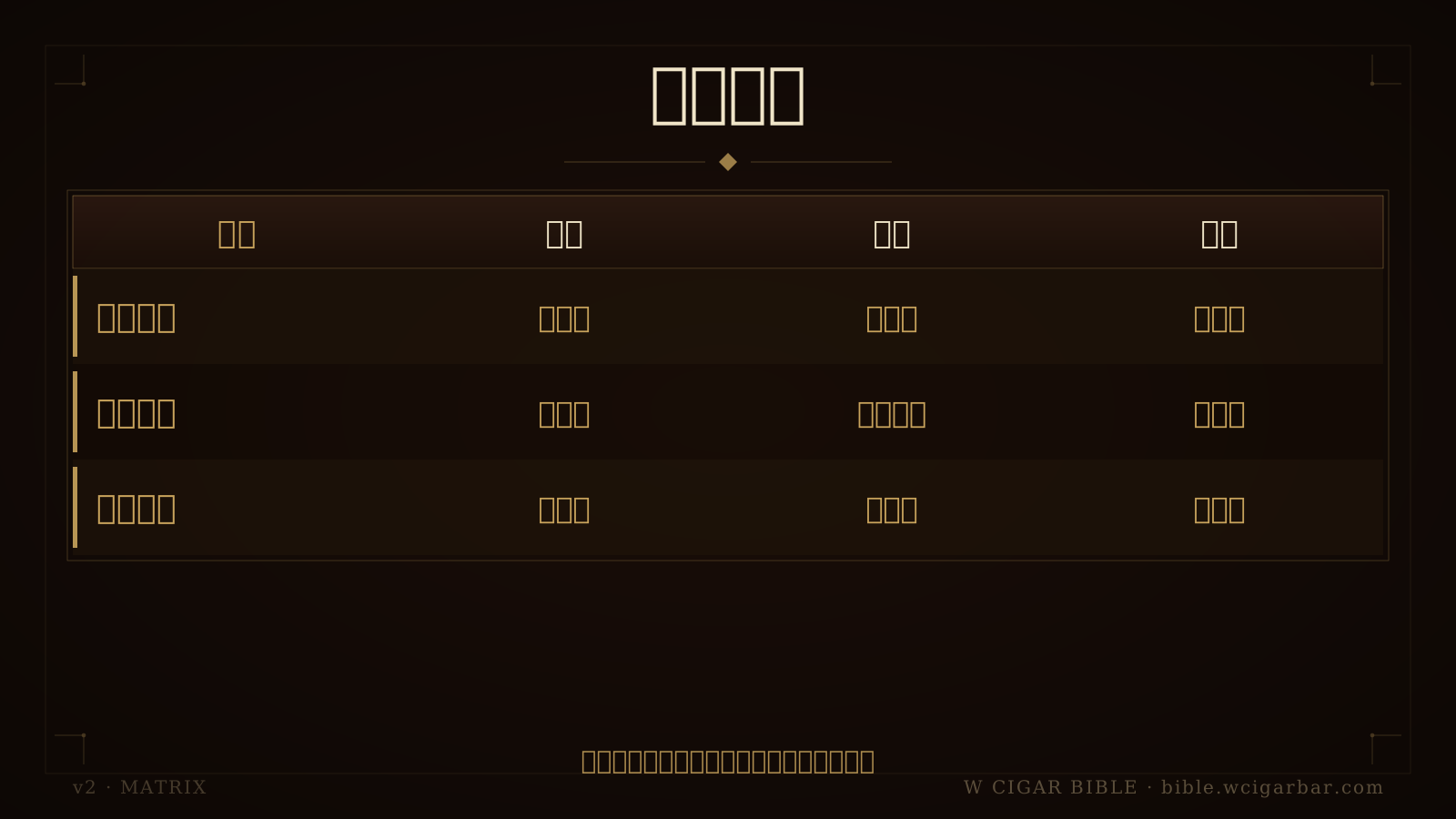
矩陣比較舌面、鼻腔與喉胸在辨識內容和誤判風險
Build Your Aroma Wheel: Use Classification Instead of Vague Descriptions
The biggest problem for beginners is smelling but not being able to articulate. I recommend building your "cigar aroma wheel," starting with 6 major categories: wood, plant, sweet aroma, roasted, spicy, animal, and earthy. Don't start by pursuing 50 words, as too many words can make judgment anxious. Aroma training is not about memorizing nouns, but putting vague feelings into a comparable classification system.
Here is a simplified table that can be used in a notebook or phone notes:
| Aroma Category | Common Descriptions | Associable Brands and Models | Easily Appears Stage |
|---|---|---|---|
| Wood | Cedar, dry wood, pencil wood | H. Upmann Magnum 46, Romeo y Julieta Churchills | Front to middle |
| Roasted | Coffee, cocoa, toasted bread | Montecristo No.2, Partagás Serie D No.4 | Middle to back |
| Sweet Aroma | Honey, caramel, malt | Hoyo de Monterrey Epicure No.2 | Front to middle |
| Spicy | White pepper, cinnamon, clove | Ramón Allones Specially Selected | Front and back |
| Plant | Grass, tea leaves, herbs | Cohiba Siglo VI, Trinidad Vigía | Front to middle |
| Earthy Leather | Wet earth, leather, minerals | Bolivar Royal Coronas | Middle to back |
When using the aroma wheel, first determine the major category, then find the details. For example, if you smell "like coffee," then ask yourself if it's black coffee, latte, coffee grounds, or roasted coffee beans. This two-stage classification method is more effective than directly pursuing fancy descriptions. Many cigars boxed from 2020 to 2022 have more pronounced herbal and spicy notes when young, and after several years of stable aging, sweet wood and roasted notes will be easier to recognize.
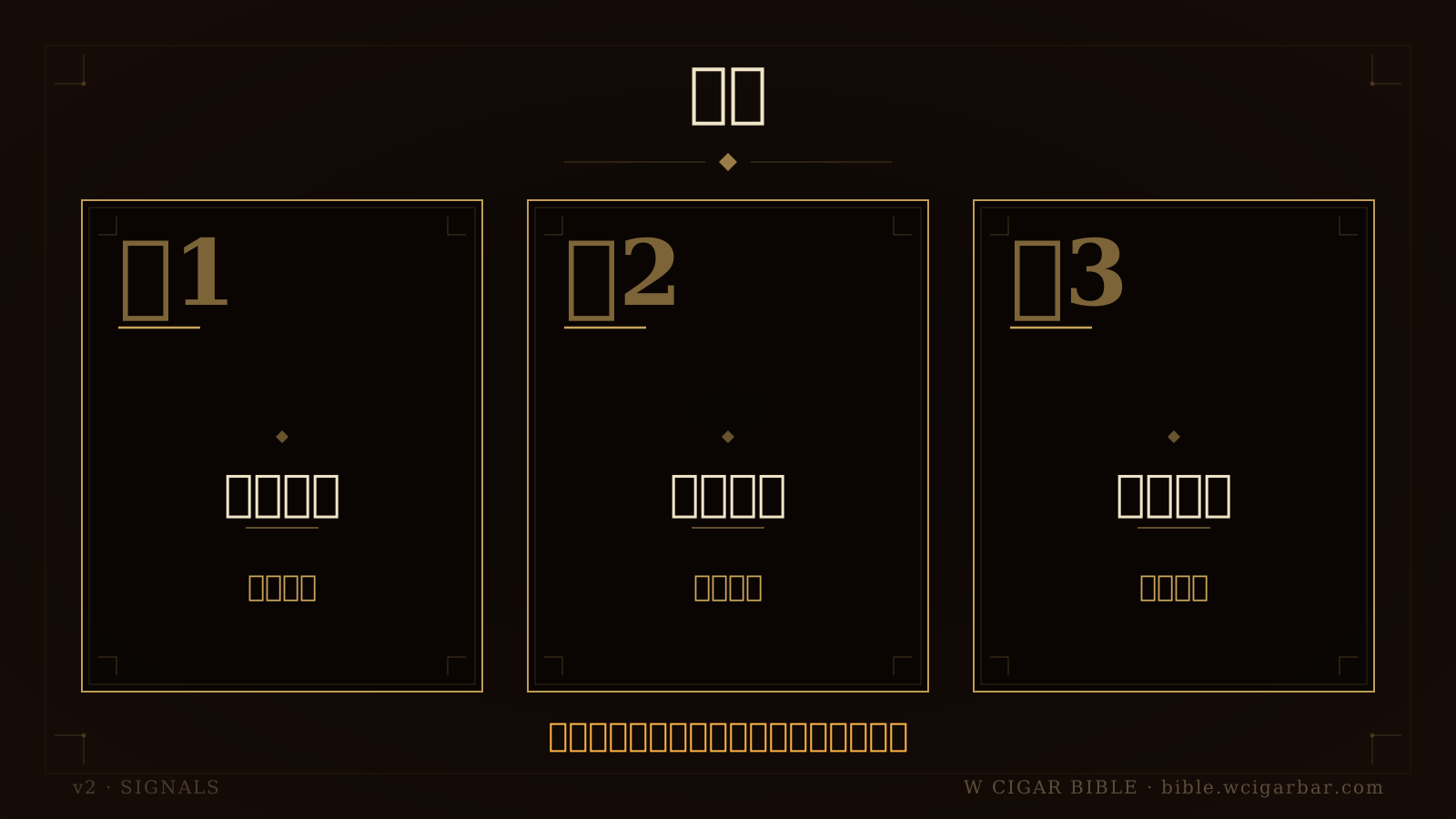
三張誤區卡提示節奏太快、硬做鼻回與老化迷思
Nasal Retrohaling Technique: Small Amounts, Slow, Don't Overdo It
The so-called nasal retrohaling is to let a small amount of smoke release towards the nasal cavity from the back of the mouth, capturing the aroma with the nasal cavity. This is not about who can endure more stimulation, nor is it necessary to do it with every puff. For beginners, I recommend starting with once every 5 to 7 puffs, and only using about 10% to 20% of the smoke volume. If you feel nasal irritation or eye heat, it means the amount is too large or the cigar strength is not suitable. The key to the nasal technique is small amounts and slow, the goal is to understand the aroma, not to challenge endurance.
Brand differences are also very obvious. Hoyo de Monterrey Epicure No.2, a milder cigar, is suitable for practicing capturing cream, wood, and subtle floral scents; Partagás Serie D No.4 or Bolivar Royal Coronas with stronger spiciness and strength require more restraint during nasal retrohaling. Trinidad Vigía, launched in 2014, with its short and fat size brings more concentrated smoke, if the pace is too fast, the nasal cavity may only feel spiciness, neglecting sweetness and herbal layers.
The specific steps can be simplified as follows:
- First, normally taste 3 puffs, confirming stable burning.
- On the 4th or 5th puff, only retain a small amount of smoke in the mouth.
- Close lips slightly, let the smoke gently move towards the back of the nasal cavity like a soft sigh.
- Stop immediately, do not push the entire mouthful of smoke towards the nasal cavity.
- Record the first aroma word that appears, do not write too many at once.
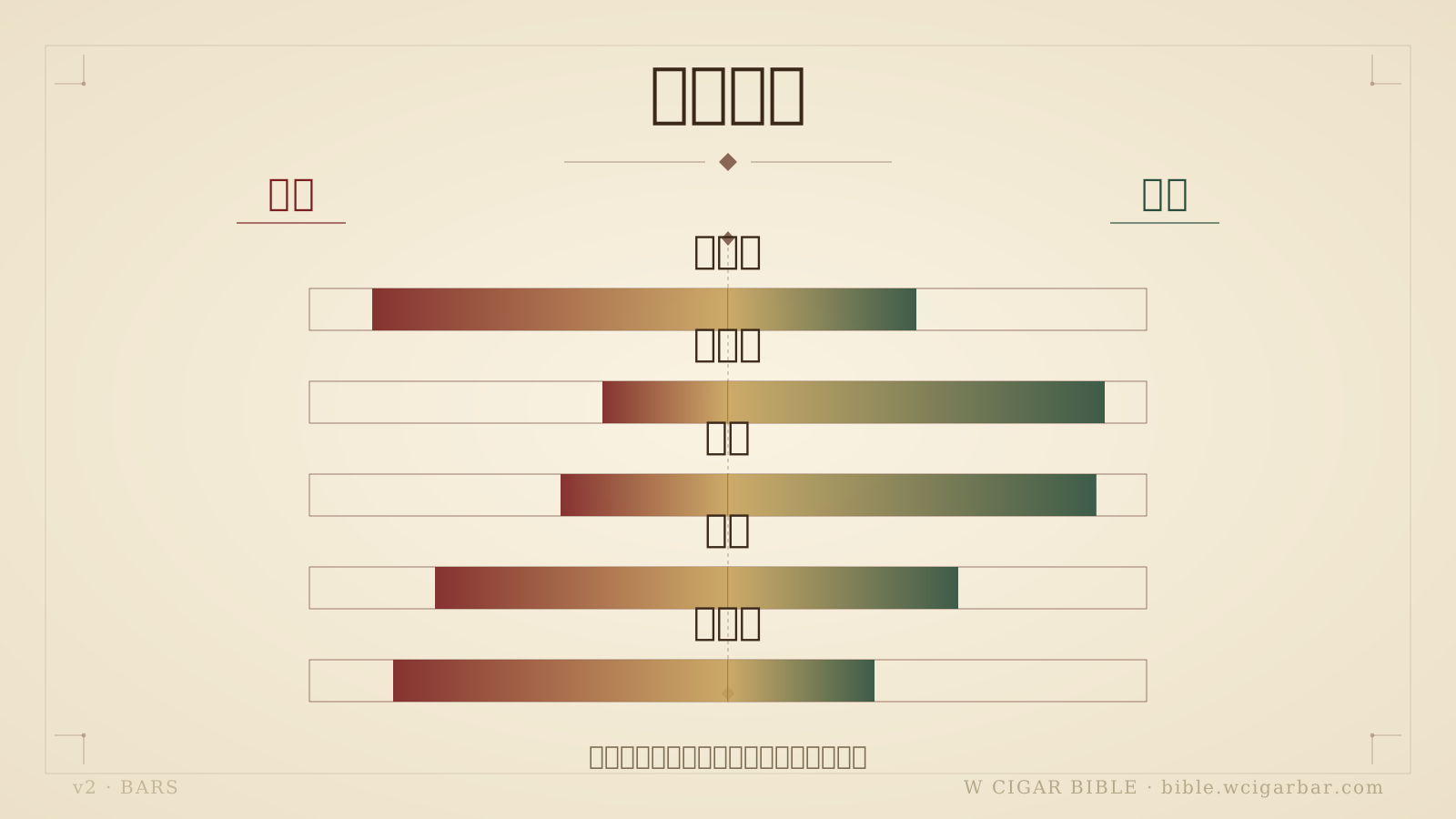
長條圖比較舌感與鼻感在基本味、香氣詞、層次等軸線
Environment, Water, and Pace: The Sense of Smell is Easily Disturbed
Many people overlook the impact of the environment on the sense of smell. If there is strong perfume, diffusers, oil smoke, or dessert cream smell nearby, what you smell may not be the cigar itself. In 2018, I did a comparison in a private course: the same box of Montecristo No.4, in an indoor space with coffee bean aroma and on a clean, ventilated outdoor corridor, the aroma words written by students were very different; the former wrote more coffee and chocolate, while the latter was easier to identify dry wood, nuts, and herbs. A clean environment is a basic condition for olfactory training, otherwise, notes will mix in external odors.
Drinks should also be simple. Plain water is the most stable baseline, unsweetened sparkling water can clean the mouth, but too strong bubbles will amplify spiciness. Black coffee, whiskey, and rum, although often paired with cigars, are not suitable for initial olfactory training because their aromas are too strong. If you must pair, I would first complete the first 15 minutes of pure recording, then introduce drinks for comparison, to know which changes come from the cigar and which from the cup.
Pace is equally crucial. A Robusto with a ring gauge of 50 usually has a reasonable range of 60 to 90 minutes; if it ends in 35 minutes, the aroma is mostly flattened by high temperature. A Corona or Lonsdale with a ring gauge of 42 is even more afraid of overheating, requiring slower and more stable handling. You can observe the ash column color and fire line: if the fire line is too bright, the smoke is hot, and the back section quickly turns bitter, these are signals of too fast a pace. Slowing down is not just etiquette, but a method to protect aroma.
Practice with Brand Cases: Establish Comparative Ability from Familiar Styles
Beginners don't need to chase rare editions initially, but should use stable, highly recognizable brands to establish a baseline. Montecristo can often serve as a reference for cocoa, coffee, and nuts; H. Upmann is suitable for observing malt, dry wood, and honey; Partagás can practice spiciness, earthiness, and roasted notes; Hoyo de Monterrey is suitable for capturing soft woodiness and creaminess. Brand style is not an absolute answer, but it helps you establish aroma coordinates.
For example, the same Robusto size, Partagás Serie D No.4 and Hoyo de Monterrey Epicure No.2 give completely different aroma directions. The former often reminds people of pepper, leather, and roasted nuts, while the latter is closer to cream, cedar, and subtle sweetness. If you record 2 of each in the same week, under similar humidity, the difference will be very clear. This side-by-side comparison is more effective than isolated single cigar records.
You can also observe aging differences by year. Suppose a box of 2021 Ramón Allones Specially Selected, when young, may have obvious spiciness and dark fruit notes; if opened in 2024, with stable preservation, the spiciness may subside, and sweetness and leather will be rounder. As for collection value, it does not guarantee appreciation, still depending on source preservation and market. For me, understanding the aroma is more meaningful than just looking at labels and years.
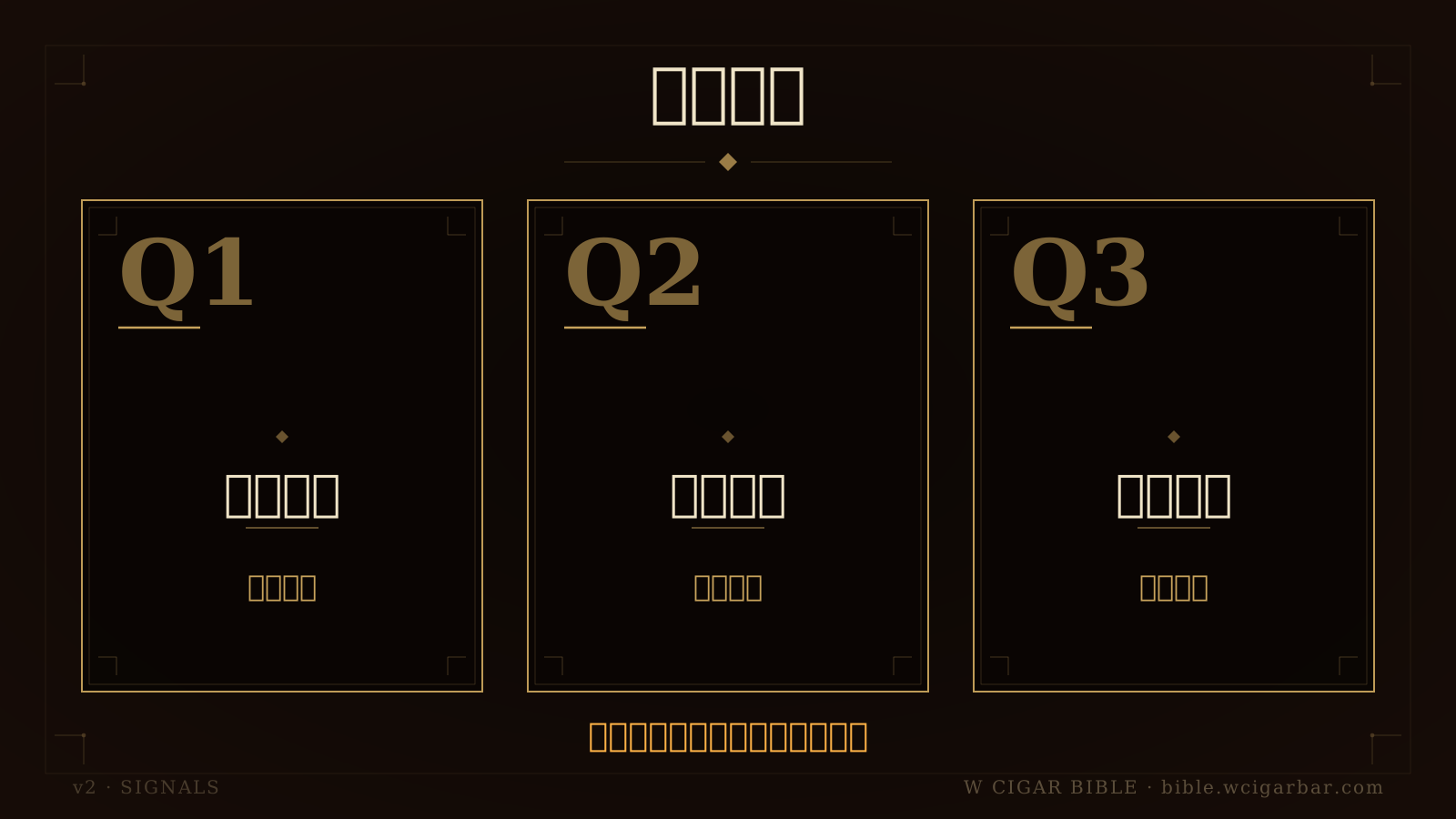
三張問答卡回答只聞煙味、鼻回不適與配酒練習問題
Note-taking Methods and Etiquette: Make Your Taste More Reliable
Effective notes don't need to be complicated but should have a fixed format. I suggest recording 8 items each time: date, brand model, box period or purchase year, storage humidity, pre-light dry aroma, main aroma in front, middle, and back sections, strength, and aftertaste. For example, with Cohiba Siglo VI, you can write: "Front section grass and cream, middle section bean aroma, sweet wood, back section coffee and subtle pepper, aftertaste about 40 seconds." Such records are more accumulative than "very smooth and good." A fixed format will make each cigar experience comparable data, not scattered impressions.
Etiquette also affects the sense of smell. Do not blow smoke forcefully near others, do not bring the cigar close to someone else's nose asking them to smell, and do not use strong perfume to interfere with the space. If in a cigar lounge or private gathering, discussing aroma can be open, but avoid using phrases like "you don't understand" to pressure others. Everyone's olfactory memory is different, some smell wood first, others sweetness, all are normal.
I also suggest keeping the phrase "not sure." Not being able to identify a certain aroma does not mean insufficient level; it may be the cigar's condition, nasal fatigue that day, dietary residue, or environmental interference. If three consecutive cigars feel the aroma is vague, first check storage humidity and physical condition, rather than rushing to deny yourself. Cigar tasting is not an exam, but a long-term accumulation of sensory cultivation.
Common Questions
The most important thing in olfactory training is not to say fancy words, but to make each experience clearer and more repeatable. Here are the most common questions I get from beginners, and the answers can all return to one principle: slow down, stage it, make records, and respect your sensory state.
Why do I only smell smoke?
Mostly due to too fast a pace, too strong environmental odors, or vocabulary classification not yet established. Start with four categories: wood, sweet aroma, roasted, and spicy, no need to rush to distinguish very fine floral or fruity scents.
Nasal retrohaling is uncomfortable, should I still practice?
If uncomfortable, stop first. You can switch to milder styles and reduce the smoke volume to very little. If it still stings, it indicates the day's state or cigar strength is not suitable for this practice.
Does older cigar aroma always get better?
Not necessarily. Aging requires good source, stable preservation, and suitable time. Some cigars are lively when young, and keeping them too long loses tension; whether the aroma is better should be judged by the actual state.
Should I pair with alcohol to train my sense of smell?
Initially, it's not recommended to start with strong spirits. Use plain water to establish a baseline, confirm the cigar's aroma, then compare the addition or interference brought by alcohol.
How often is the best to record?
I suggest recording once for the front, middle, and back sections, supplementing every 15 to 25 minutes. Too frequent recording interrupts the pace, too little makes it easy to forget transitions.
Is it normal for the same cigar to taste different each time?
Normal. Box period, storage humidity, lighting method, diet, and physical state all affect it. The focus is not on achieving complete consistency each time, but on finding the reasons behind the changes.
The charm of cigars lies in the fact that there is never a single answer. Some people start understanding from woodiness, some from sweetness, and others are first attracted by spiciness. My personal view is simple: true taste is not about describing a cigar in a fancy way, but being able to quietly, accurately, and respectfully understand it. When your nasal cavity starts to distinguish details, cigars are no longer just smoke but a segment of time with rhythm and layers.
—Cigar Prince Wilson Tsai
Smoking is harmful to health. Under 20 years old is prohibited from smoking. Quit smoking hotline: 0800-636363. This article is for reference only for adults over 20 years old regarding cigar culture, preservation, and regulation knowledge, not a tobacco advertisement, promotion, or purchase suggestion.
Like this article?Share with friends
Share this W Cigar Bible piece with friends who want to learn cigar culture, storage, and tasting.
想把這篇 化為實踐
雪茄聖經是知識;雪茄文化要在空間裡發生

W Cigar Bar 大安總店資訊
台北大安區 · 雪茄聖經總編輯 Wilson Tsai 主理的雪茄文化空間
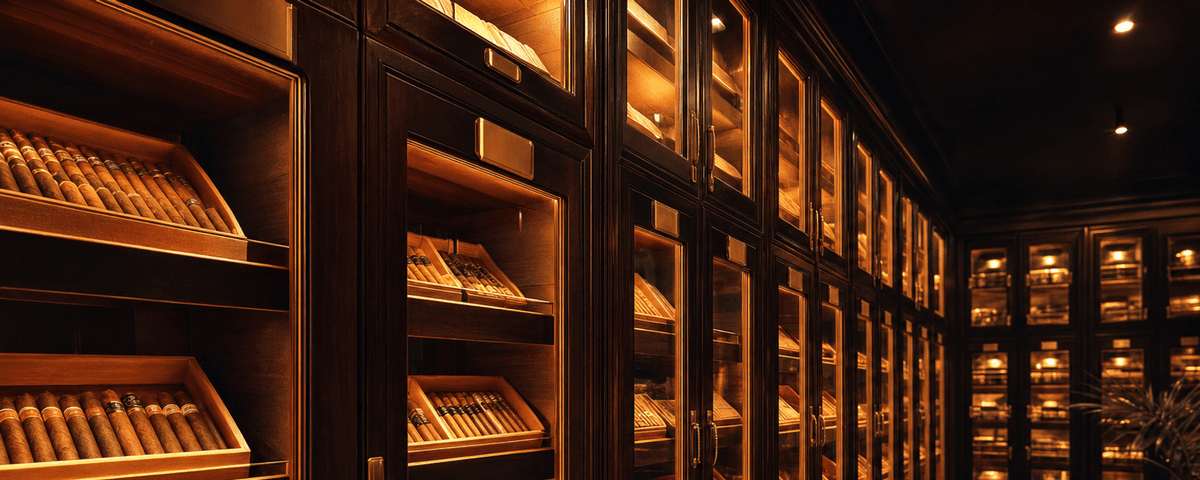
33 座 24 小時恆溫恆濕醇化室
W Cigar Bar 提供的會員醇化空間 · 場地資訊請洽編輯部
雪茄剪 / 打火機 / 雪茄盒 / Boveda
W Cigar 配件官網 · 專營雪茄配件正品
加 LINE 好友 · 文化諮詢
文化空間資訊 · 紳士沙龍 · 私人包場
本網站內容僅供雪茄文化、歷史、收藏與品吸知識研究參考。菸品有害健康、未滿法定年齡者請勿吸菸。實際規範請依所在地法律為準。
吸菸有害健康・戒菸專線 0800-636363・本站僅供 20 歲以上成年人閱覽。
讀到這裡,你不只是路過的人
留下 Email,加入 W 雪茄聖經內圈——總編輯 Wilson Tsai 親選的學院深文與國際新訊,先你一步送到信箱。
· 教育用途非銷售 · 隨時一鍵退訂 · Email 絕不對外公開 · 由勝茄股份有限公司營運
同分類延伸閱讀
資料來源:W Cigar Bible 編輯部整理 · 雪茄王子 Wilson Tsai 親自審稿
本文僅供雪茄文化、歷史、收藏與品鑑知識研究,不作為菸品促銷、銷售或購買建議。吸菸有害健康,未滿二十歲不得吸菸。