Mark Twain 與雪茄的哲學:每月 300 支、廉價黑雪茄,與美國文學最誠實的上癮者
「我抽菸很節制,一次只抽一支」——美國文豪的雪茄人生與終身不悔的誠實哲學

Mark Twain(1835–1910)是美國文學史上最誠實的雪茄上癮者:每月 300 支、每天 22 支廉價黑雪茄,從 8 歲抽到生命最後一天。他明確討厭 Havana,偏好最差的本土雪茄,並留下「戒菸是最容易的事,我至少做過一千次」等傳世格言。本文完整追溯他與雪茄的終身關係,及其對當代品鑑者的深層啟示。
- Mark Twain 從 8 歲開始抽菸,並在一生中抽掉超過三十萬支雪茄,顯示其對雪茄的執著。
- 他偏好廉價的美國本土雪茄,拒絕古巴雪茄,反映出對精緻品味的懷疑。
- Twain 對戒菸的幽默態度揭示了他對成癮的清醒認識,並強調了個人習慣的重要性。
Mark Twain and the Philosophy of Cigars: 300 Per Month, Cheap Black Cigars, and the Most Honest Addict in American Literature
"I smoke in moderation," Mark Twain once said with perfect seriousness. "Only one cigar at a time."
This sentence is both a joke and a confession. Samuel Langhorne Clemens (1835-1910), better known by his pen name Mark Twain - the creator of Adventures of Huckleberry Finn and The Adventures of Tom Sawyer, and the greatest American satirist of the 19th century - was perhaps the most honest, most obsessive, and most unconventional lifelong cigar addict in the history of Western literature.
He did not smoke premium cigars. He actively asked for the worst kind. He smoked 20-22 cigars a day. He began smoking at the age of 8. He declared that quitting smoking was "the easiest thing in the world; I have done it at least a thousand times." And in the final years of his life, he refused to let anyone take away the cheap black cigar in his hand - even when doctors pleaded with him. Mark Twain's cigar philosophy was not the refined ritual of gentlemanly appreciation, but an intensely personal, unadorned American obsession. That is precisely why it is worth contemplating.
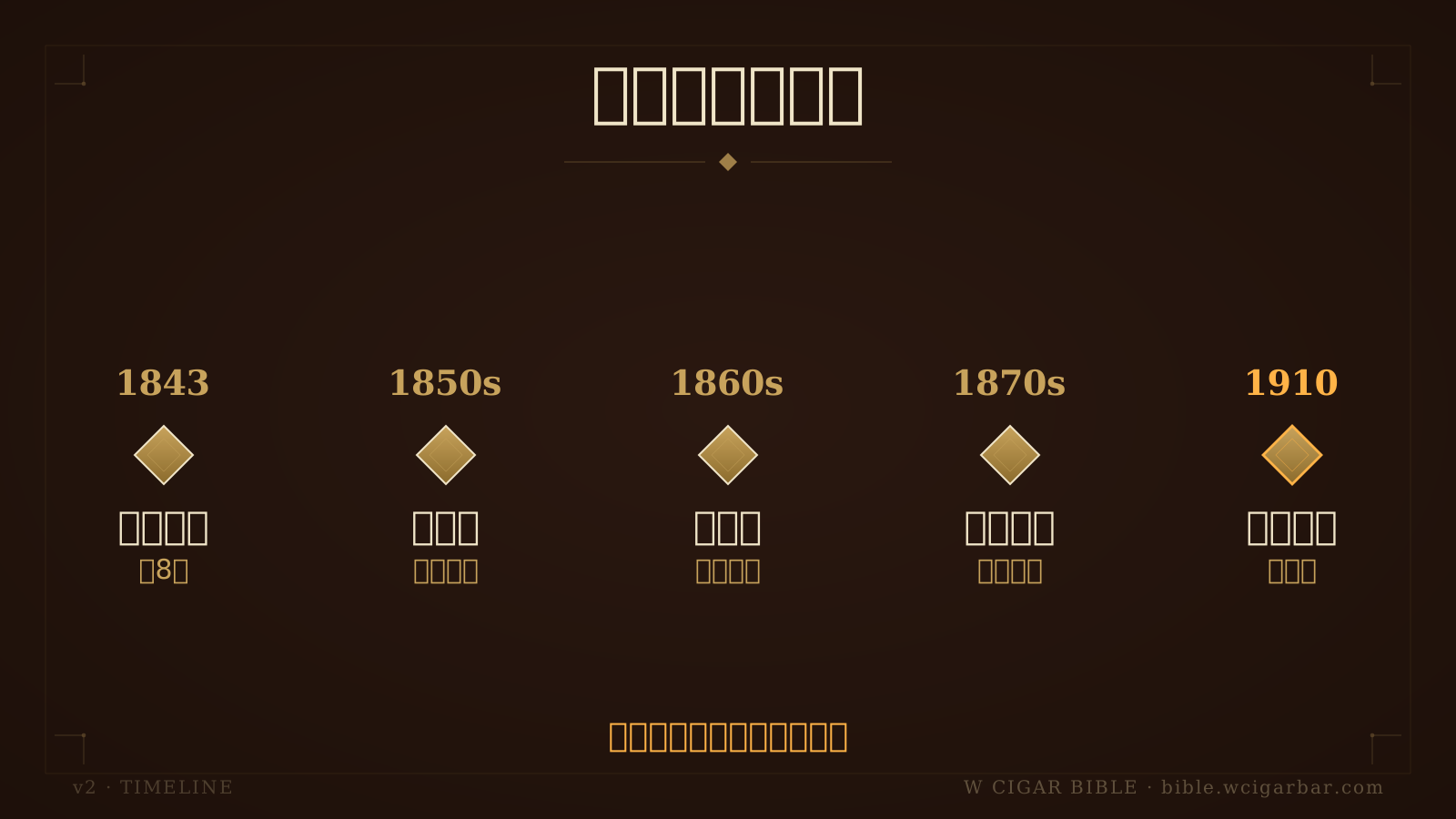
說明馬克吐溫從八歲接觸菸草到每月一百、兩百、三百支再到晚年仍不放手的用量演變時間線圖
300 Per Month: From Moderation to Abandoning Moderation
Mark Twain claimed that he first encountered tobacco at the age of 8 in the town of Hannibal, Missouri. That number may well carry his usual flair for self-mythologizing, but his letters and autobiography confirm that the tobacco habit had already taken deep root during his youth.
His later accounts were more specific: as a young man, he smoked 100 cigars per month; in his twenties, that rose to 200 per month; and after his thirties, it stabilized at 300 per month. According to research by the Mark Twain House in Hartford, Connecticut, in his later years he smoked at least 22 cigars a day, from the moment he woke in the morning until bedtime.
This means that, by conservative estimate, he smoked more than 300,000 cigars over the course of his life. This number is not a boast, but an illustration of one thing: in Twain's life, cigars were not an occasional pleasure, but part of his basic metabolism.

以三張卡片呈現馬克吐溫八歲起抽菸、每天約二十二支、偏好深色廉價雪茄不愛哈瓦那的核心結論圖
The Best Cigar: The Worst Kind
Mark Twain's taste in cigars was a cultural paradox. He made it clear that he did not like Cuban cigars. He once wrote: "Nearly any cigar will do me, except a Havana."
His preference was for cheap domestic American cigars - dark, inferior, and pungent. He even went out of his way to ask tobacco merchants in New York for the worst cigars they could find. Several journalists who interviewed him described the cigar in his hand as long, black, and foul-smelling - entirely inconsistent with any definition of "appreciation."
This deliberate anti-refinement was an extension of Twain's overall character. Born into a working family in Missouri, he had worked as a pilot on the Mississippi River and as a miner in California, and he retained an instinctive skepticism toward any form of "aristocratic taste." He wrote in the language of ordinary Americans, and he smoked the cigars of ordinary Americans - cheap, rough, and utterly unpretentious.
This, in turn, gave rise to his most famous aphorism: "I smoke in moderation. Only one cigar at a time."

比較馬克吐溫偏好的廉價深色美國雪茄與典型高檔古巴雪茄在產地氣味與取向差異的資訊表
Quitting Smoking: The Easiest Thing in the World
Twain's attitude toward quitting smoking is one of his most widely circulated forms of humor, and it also reflects his profound insight into the human capacity for self-deception.
His most famous version appears in Following the Equator (1897): he once swore that he would smoke only one cigar a day - but as desire eroded his resolve, he kept looking for larger cigars, until within a month his "one cigar" had grown large enough to serve as a walking stick.
Another version is more concise: "Giving up smoking is the easiest thing in the world. I know because I've done it at least a thousand times."
Behind these jokes lay Twain's lucid understanding of addiction. He never pretended he had the ability to quit smoking, nor did he moralize on the subject. His honesty came closer to the truth of human nature than any anti-smoking campaign.

整理對馬克吐溫雪茄哲學三個常見誤解與對應正確理解的提醒圖
Heaven and Cigars: A Final Philosophical Statement
In Mark Twain's later years, amid financial crisis, the grief of losing his daughter (his eldest daughter Susy died in 1896), and the mounting pressure of declining health, cigars became almost the only habit he refused to give up.
Doctors advised him to stop smoking. He refused.
"If I cannot smoke cigars in heaven, I shall not go."
This line is usually quoted as a joke, but in the context of the final years of his life, it reads more like a declaration about freedom and identity. To Twain, the cigar was not a symbol of taste, nor a tool of social interaction, but one of the most essential habits of who he was - something that, if removed, would also remove Mark Twain himself.
He died on April 21, 1910, at the age of 74. In the final weeks of his life, his hand still held a cigar.
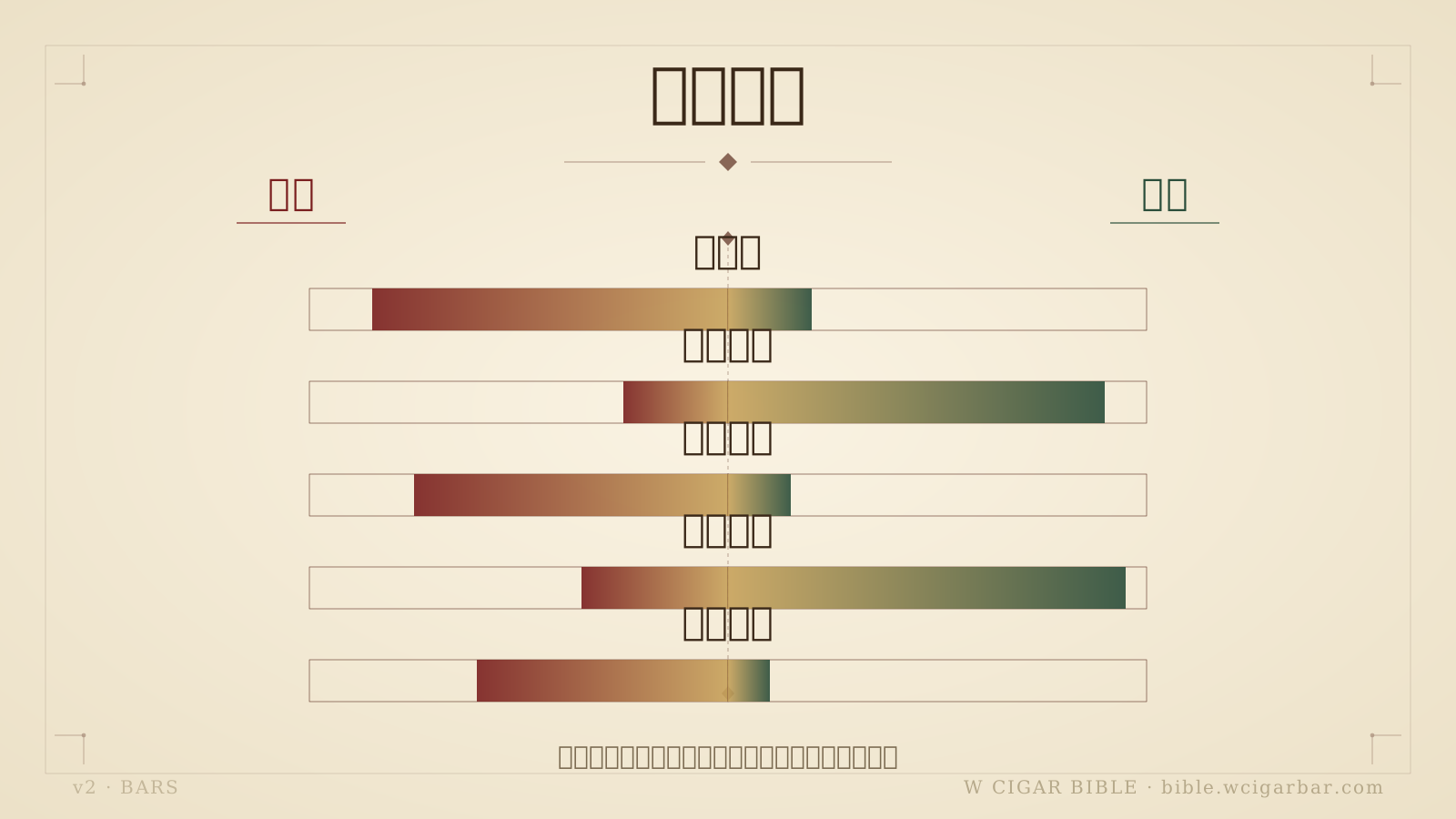
橫向長條比較鑑賞取向與吐溫取向的五個軸線
Lessons for the Gentleman Appreciator
From the perspective of cigar culture, Mark Twain is an intriguing point of contrast.
The world of Cuban cigars values provenance, factory codes, Ligero proportions, and years of aging - all things that Twain cared nothing about. Yet his honesty reminds everyone who ritualizes cigar appreciation that the most essential function of a cigar is to create a personal pause in time. Whether it is a Cohiba Behike or a cheap black American cigar, if that pause is real, it is valid.
As a member of the W Cigar Bar gentlemen's club, the quality of the cigar in your hand is worlds apart from Twain's cheap black cigars. But Twain's honesty and refusal to compromise about his own habits may be a spiritual core worth learning from for all cigar enthusiasts: smoke what you truly like, not what you think you ought to like.

三張問答卡回答每天數量古巴偏好與戒菸自嘲
Conclusion
Mark Twain was probably the last person who should appear in a cigar appreciation bible - he smoked cheap cigars, he disliked Havana, and he interpreted "one cigar" as any single cigar of any size. Yet precisely because his cigar philosophy was so unvarnished, it became one of the statements closest to the essence of cigar smoking.
This country boy raised in Missouri, this Mississippi River pilot, this conscience of American literature, used 74 years of life to tell us: the meaning of a cigar is whatever you decide it means.
--
Sourcing channels: Cuban cigars from four official channels (PCC authorized distributor, Cuban official state-run stores, Swiss general agent, Spanish general agent).
LUBINSKI accessories official website: https://cigarclub.tw/
Book an appreciation: https://share.google/d9NIeFEetij9qWKj0
This site is for adults aged 20 and above only. Smoking is harmful to health. Smoking cessation hotline: 0800-636363.
W Cigar Bar Gentlemen's Cigar Lounge, written and planned by Cigar Prince Wilson Tsai.
Like this article?Share with friends
Share this W Cigar Bible piece with friends who want to learn cigar culture, storage, and tasting.
想把這篇 化為實踐
雪茄聖經是知識;雪茄文化要在空間裡發生

W Cigar Bar 大安總店資訊
台北大安區 · 雪茄聖經總編輯 Wilson Tsai 主理的雪茄文化空間

33 座 24 小時恆溫恆濕醇化室
W Cigar Bar 提供的會員醇化空間 · 場地資訊請洽編輯部

雪茄剪 / 打火機 / 雪茄盒 / Boveda
W Cigar 配件官網 · 專營雪茄配件正品

加 LINE 好友 · 文化諮詢
文化空間資訊 · 紳士沙龍 · 私人包場
本網站內容僅供雪茄文化、歷史、收藏與品吸知識研究參考。菸品有害健康、未滿法定年齡者請勿吸菸。實際規範請依所在地法律為準。
吸菸有害健康・戒菸專線 0800-636363・本站僅供 20 歲以上成年人閱覽。
影片來源:Habanos S.A. 官方 YouTube 頻道 · 教育性內容引用 · AI 智能配對
讀到這裡,你不只是路過的人
留下 Email,加入 W 雪茄聖經內圈——總編輯 Wilson Tsai 親選的學院深文與國際新訊,先你一步送到信箱。
· 教育用途非銷售 · 隨時一鍵退訂 · Email 絕不對外公開 · 由勝茄股份有限公司營運
同分類延伸閱讀



資料來源:W Cigar Bible 編輯部整理 · 雪茄王子 Wilson Tsai 親自審稿
本文僅供雪茄文化、歷史、收藏與品鑑知識研究,不作為菸品促銷、銷售或購買建議。吸菸有害健康,未滿二十歲不得吸菸。