高地威士忌的礦石骨架:石楠蜂蜜與烤麥芽,搭配 H. Upmann Magnum 46 的奶油烘焙

高地威士忌以蘇格蘭最大產區的寬闊地貌為底,從北高地辛香、南高地圓潤,到東西兩側的果乾、礦石與淡海風,形成石楠蜂蜜、烤麥芽與礦物感並存的輪廓。本文以 H. Upmann Magnum 46 為對象,拆解奶油、烤麵包、榛果與淡香料如何與高地麥芽威士忌互相牽引。
- 高地威士忌不是單一風格,而是南北東西地貌與蒸餾傳統交疊出的廣域光譜。
- H. Upmann Magnum 46 的奶油烘焙感,會放大石楠蜂蜜與烤麥芽的溫潤層次。
- 礦石感與榛果油脂形成一硬一軟的結構,使細長節奏更穩、更有段落。
The Mineral Framework of Highland Whisky: Heather Honey and Roasted Malt, Paired with the Creamy Baking of H. Upmann Magnum 46
The encounter between Highland whisky and H. Upmann Magnum 46 is most charming not in intensity, but in structure. This Cuban Corona Gorda, 46 × 143mm, offers a slender and stable flavor track with cream, toasted bread, hazelnuts, light spices, and a medium cigar body. As the editor of the "Cigar Bible," I often say that a truly enduring pairing is not about stacking two flavors together, but about letting them work in harmony on the palate.
Highland, the largest whisky region in Scotland, spans a vast geographical area that cannot be simply summarized as "robust" or "floral." It can have the golden sweetness of heather honey, as well as roasted malt, mineral, light sea breeze, and spice. In this article, I will first clarify Highland whisky itself, then delve into its flavor chemistry with H. Upmann Magnum 46: heather honey × toasted bread, mineral × hazelnut oil, and how the Highland framework supports the slender rhythm of a 46-ring gauge.
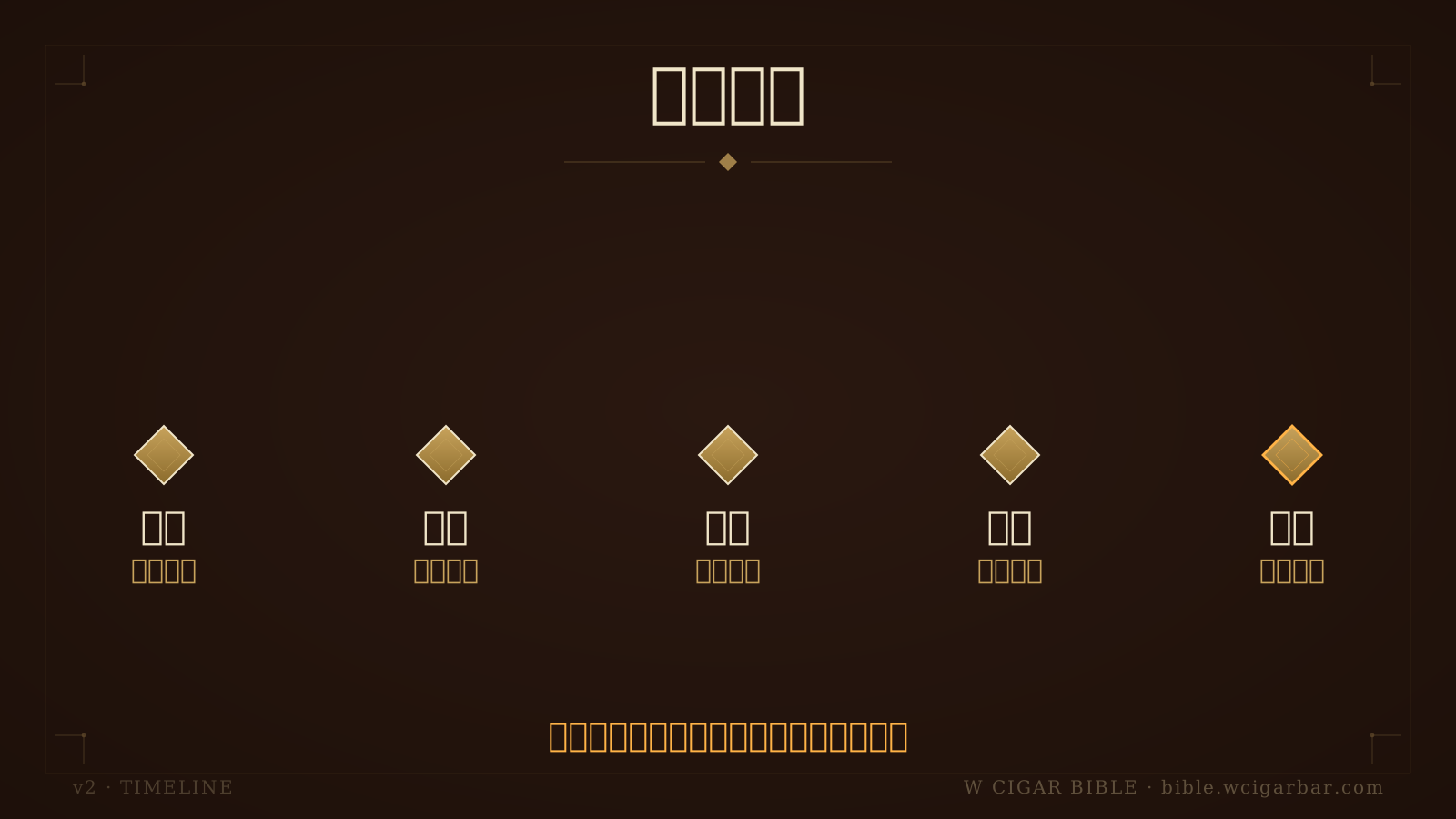
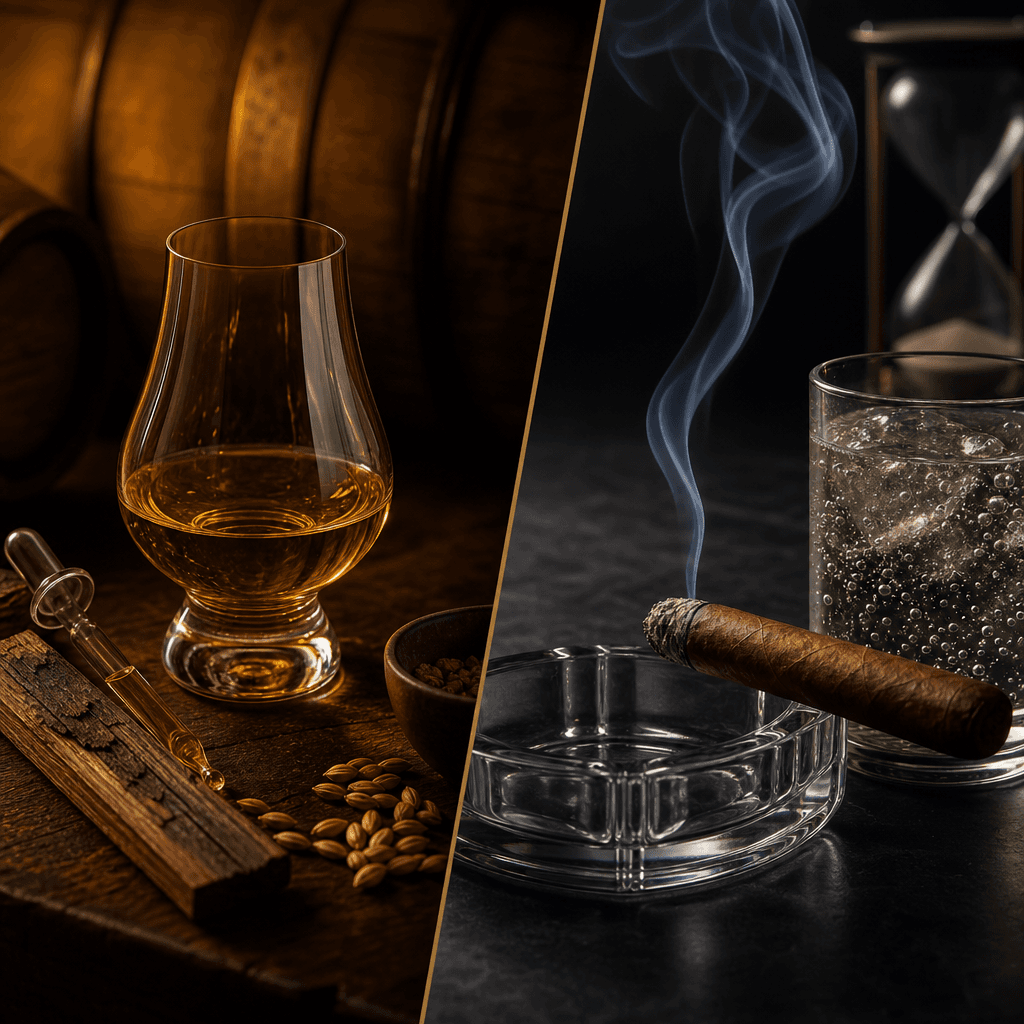
時間軸呈現高地麥芽威士忌從大麥到桶陳的流程
The Map of Highland Whisky: Highland is Not a Single Flavor
The most common misunderstanding about Highland whisky is treating it as a single flavor label. In fact, the Scottish Highlands span vast mountains, valleys, coasts, and agricultural areas, where geographical differences directly affect water sources, fermentation environments, maturation speed, and flavor vocabulary. If Speyside is seen as a garden of precise floral and fruity aromas, Highland is more like a long scroll of geology and climate.
Northern Highlands often exhibit more defined spice, waxy, hay, nut skin, and slightly salty notes, with some whiskies showing pepper, ginger, or dried herbs. Southern Highlands are relatively round, often with honey, malt biscuits, soft fruit aromas, and smoother oak sweetness. Eastern Highlands lean towards grains, dried fruits, and a refreshing stony quality, while Western Highlands tend to have light sea breeze, mineral saltiness, and subtle smokiness.
These differences are not marketing terms but are accumulated from raw materials to warehouse environments. Coastal warehouses may allow the spirit to express drier saltiness, while inland areas often retain malt sweetness and herbal notes. Understanding Highland whisky starts not with finding a standard answer, but by accepting it as a flavor system pulling from north, south, east, and west.
When pairing with H. Upmann Magnum 46, this system is crucial. Choosing Northern Highlands will push the cigar's light spices to the forefront; choosing Southern Highlands will envelop cream and toasted bread with honey and roasted malt. The mineral and light sea breeze from east to west provide a structural line that prevents hazelnut oil from feeling heavy.
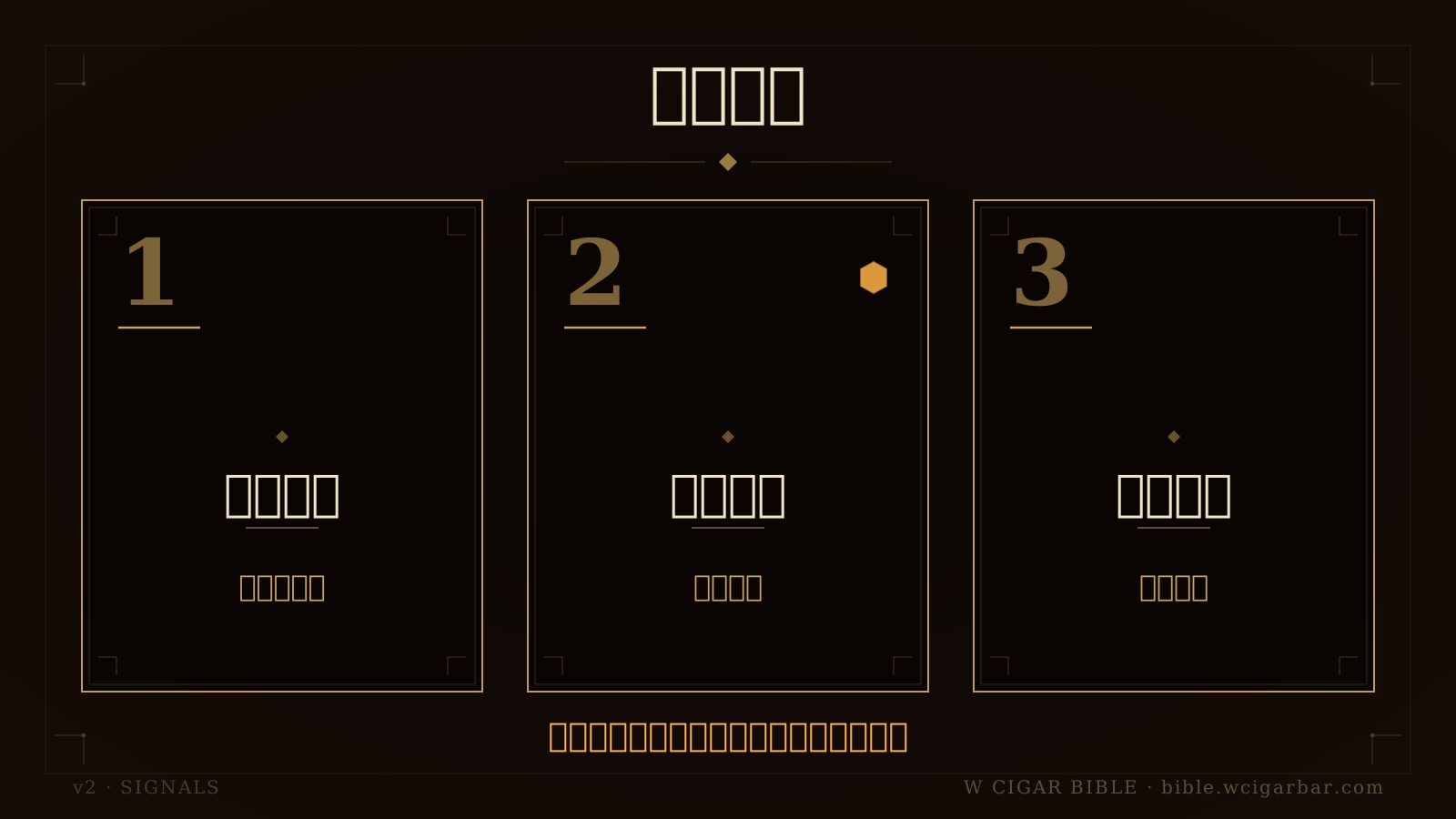
三張重點卡呈現高地威士忌與雪茄的搭配骨架
Regional History and Terroir Context: Highland Cattle, Hunting, and Malt Firelight
The history of Highland whisky cannot be viewed only from the distiller's perspective; it must also be seen in the context of agriculture and mountain life. Before the 18th century, many Highland families sustained themselves with barley, oats, livestock, and seasonal hunting, with distillation techniques often related to agricultural surplus and climate preservation needs. Whisky in that context was a translation between grains, fire, copper, and mountain springs.
The image of Highland cattle, with its dense long hair, wide horns, and resilience to wet and cold, represents the ruggedness and adaptability of this land. The hunting culture of venison, pine forests, earth, leather, and campfires has long shaped the external imagination of the Scottish Highlands. These elements do not mean the whisky must have meat or leather flavors, but they explain why Highland flavors are often described as having "structure": not simply sweet, but with dryness, hardness, and wind within the sweetness.
By the 19th century, legal distillation systems were gradually established, railways and the blended whisky industry emerged, and Highland distilleries began to be seen on a larger scale. Different distilleries obtained different water sources according to the terrain, some using hard water from granite strata, others near peatlands or bays, forming different backgrounds. The core of Highland terroir is not romantic mountain scenery, but a sensory order composed of agriculture, hunting, water sources, and grains.
This order aligns well with H. Upmann Magnum 46. Upmann's temperament has never been about explosive expression but about slowly layering cream, grains, nuts, and light spices. When Highland whisky approaches with mountain firelight and malt contours, the cigar's toasted bread becomes more like the edges of toast on a breakfast table, and hazelnuts seem lightly roasted, with clearer oil aromas.
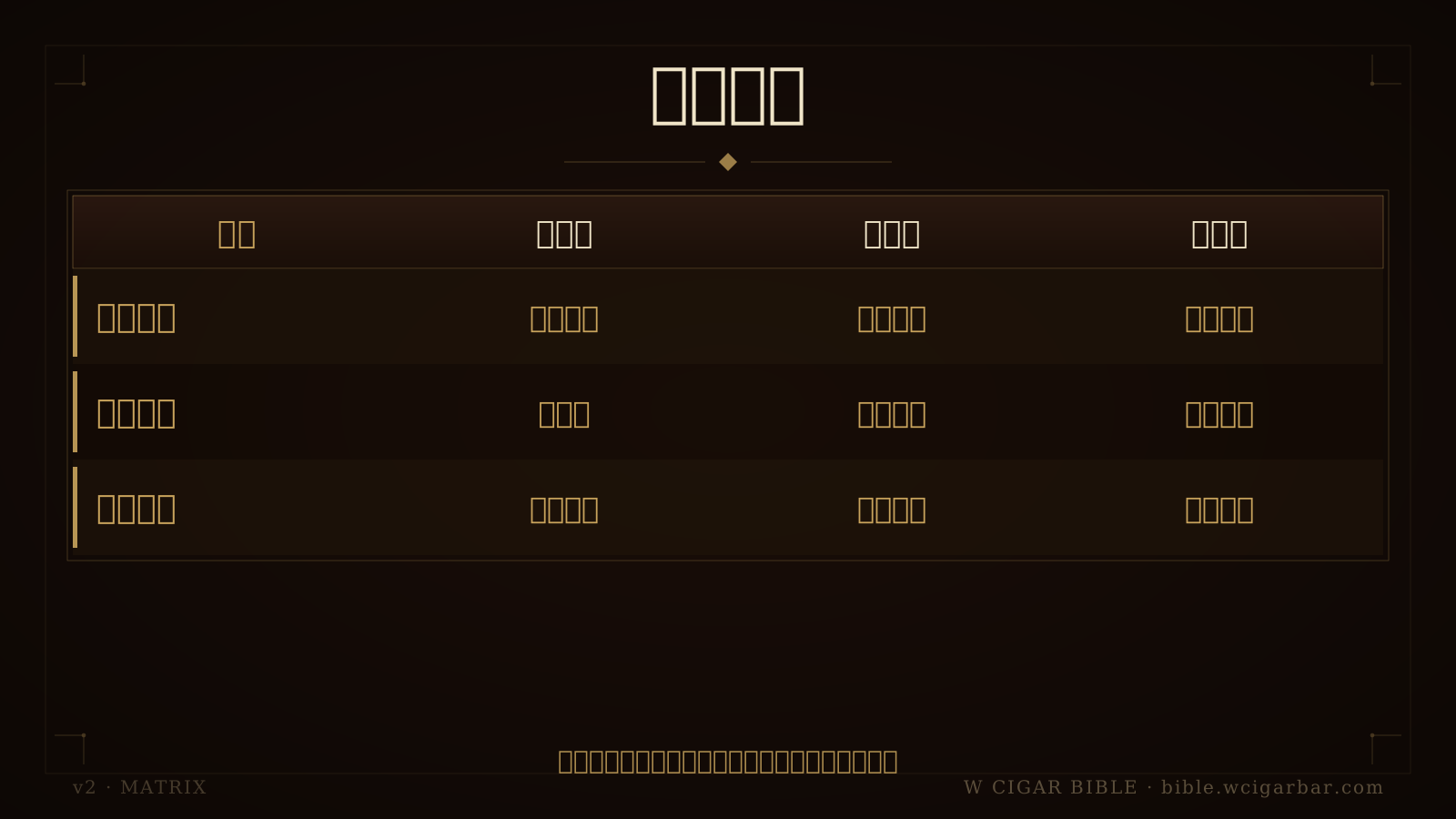
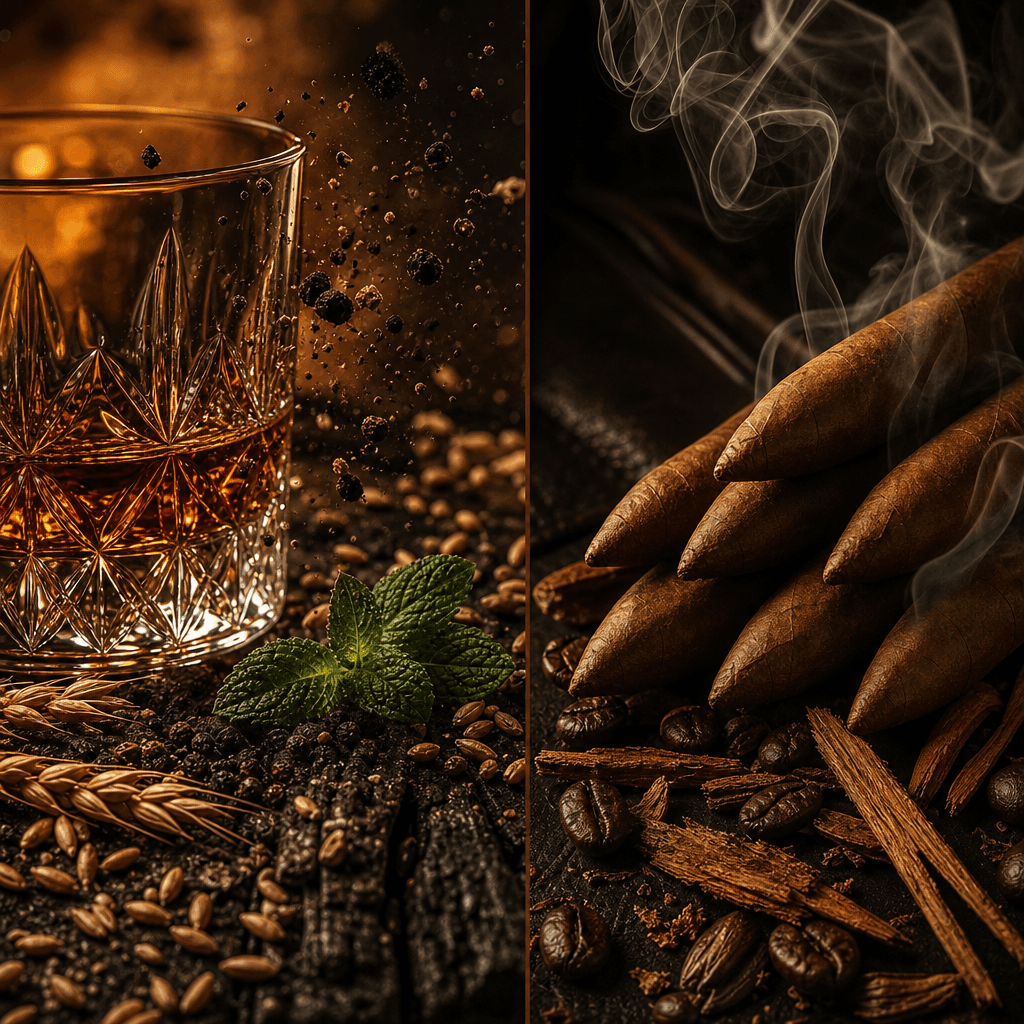
矩陣比較北高地、南高地與東西向高地的風味差異
Malt Whisky Craft: From Germination, Saccharification to Copper Distillation
Discussing Highland malt whisky cannot skip the process. During barley germination, starch is prepared by enzymes to convert into fermentable sugars, then dried to stop germination, forming malt. Most Highland distilleries do not use heavy peat as a primary marker, but the method of drying malt, yeast selection, and fermentation time will still determine the direction of honey, grains, citrus, grass, or ester aromas.
During saccharification, crushed malt is mixed with hot water to extract wort. If the wort is clearer, it often retains cleaner fruit and honey notes; if cloudier, it may bring out fuller grain and nut textures. Short fermentation times often lead to grain and yeast flavors; longer fermentation allows more space for lactic acid, fruit esters, and floral aromas to develop.
Copper stills are an important turning point for Highland style. Tall stills with more reflux make the spirit lighter, while shorter stills may retain more oil and thickness. The middle cut during distillation, which leaves the heart of the spirit most suitable for cask aging, affects the balance of spice, sulfur, fruit, and malt sweetness. The heather honey and roasted malt of Highland whisky are often not a single ingredient flavor but a result of fermentation esters, copper contact, and cask extraction working together.
In terms of cask aging, bourbon casks often bring vanilla, coconut, honey, and light cream notes, while sherry casks provide dried fruits, nuts, cocoa, and spices. When pairing with H. Upmann Magnum 46, I lean towards not overly heavy Highland single malts, maintaining a balance of bourbon cask honey aroma and sherry cask nut edges. Whiskies that are too sweet or overly oaky can obscure the slender rhythm of the Magnum 46.
Flavor Structure: Heather Honey, Roasted Malt, Mineral, and Light Sea Breeze
Heather honey is one of the most recognizable terms for Highland whisky, but it is not ordinary sugar-water sweetness. Heather nectar has herbal, pollen, slightly bitter, and waxy qualities, often expressed in whisky as a golden sweet aroma, with a clean finish. This sweetness is very suitable for pairing with cigars because it can catch the dry tannins in tobacco smoke without making the mouth sticky.
Roasted malt is the second main line of Highland. It is a collection of biscuits, toast edges, cereals, light caramel, and roasted nuts, sometimes with a bit of malt syrup warmth. When it meets the toasted bread of H. Upmann Magnum 46, they form an "Maillard reaction alliance," where the roasted aromas of amino acids and reducing sugars combine to create charred, nutty, and bread crust aromas.
The mineral and light sea breeze provide the hard lines of Highland whisky. Mineral is not licking stones but a tactile association of dry, cold, clean, and slightly salty; light sea breeze is not a strong fishy smell but an airy feeling that sharpens the edges of sweetness. The true endurance of Highland whisky pairing lies in its combination of honey's envelopment, malt's roasting, mineral's framework, and sea breeze's closure.
For beginner readers, the practical approach is to first find sweetness on entry, grains in the middle, and dryness at the end. If sweetness overwhelms from the start, it can lose layers when paired with cigars; if the finish is only woody bitterness, it can make the tobacco seem sharp. The ideal Highland profile lets honey open the door, roasted malt follow in, and finally, minerals and light sea breeze tidy up the scene.
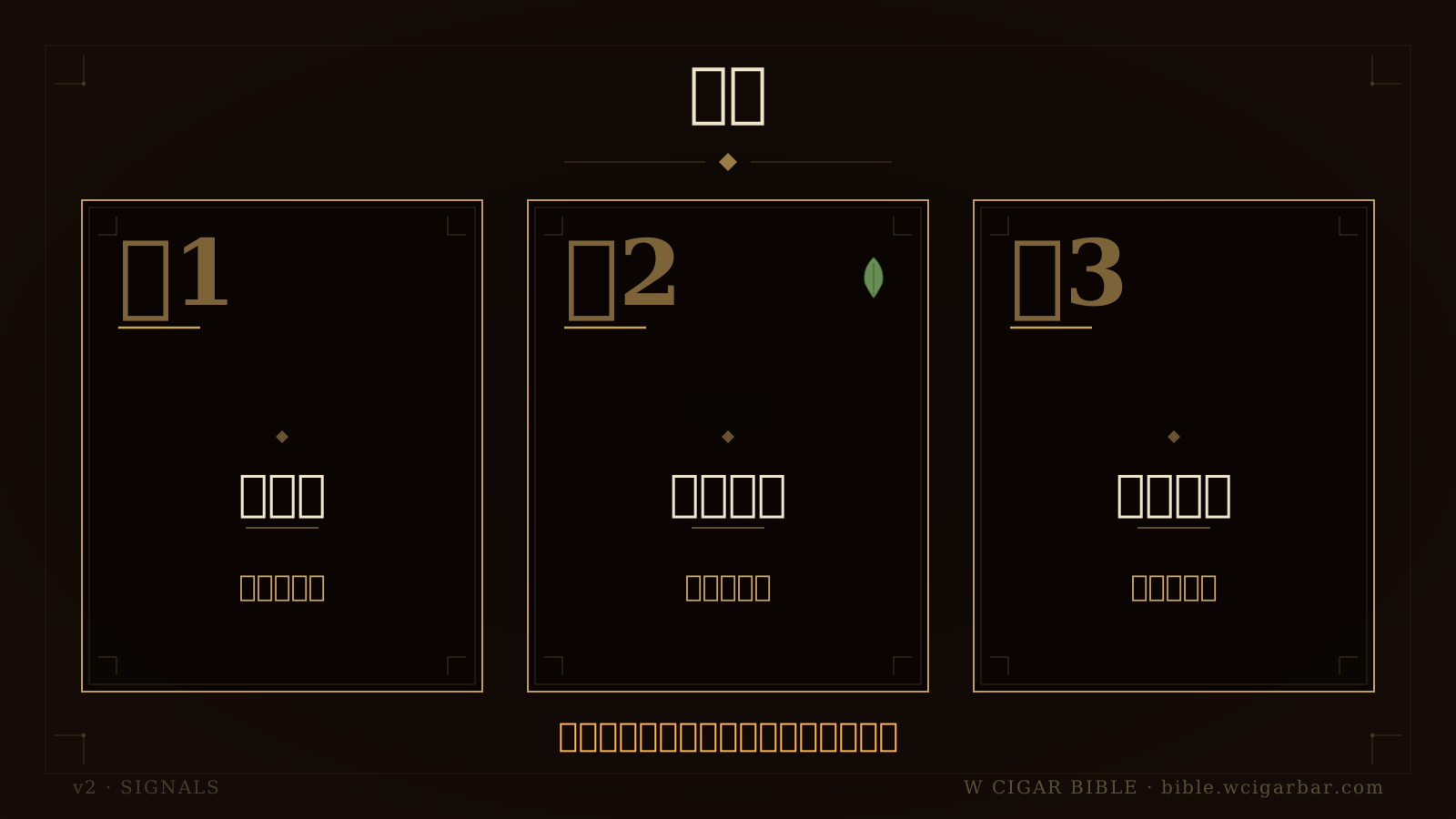
三張錯誤提醒卡列出濃度、橡木與加水的搭配誤區
H. Upmann Magnum 46: Creamy Baking in a 46-Ring Gauge
H. Upmann Magnum 46 is a Cuban cigar well-suited for discussing structure. Its specification is Corona Gorda, 46 × 143mm, a size that is neither as loose as larger ring gauges nor as quickly concentrated as smaller ones. The 46-ring gauge provides enough creaminess in the smoke, while the 143mm length retains the progression of segments.
The flavor axis of this cigar usually falls on cream, toasted bread, hazelnuts, and light spices. The creaminess provides a soft entry, toasted bread brings a clear grain framework, hazelnuts support the middle with oil, and light spices add a dry twist to the finish. Its medium body ensures it won't overpower Highland whisky, nor will it disappear in the face of alcohol and oak.
I often say the beauty of Magnum 46 is that it doesn't rush to prove itself. The front builds affinity with cream and bread crust, the middle lets hazelnuts, grains, and light wood slowly emerge, and the back straightens the spices and tobacco dryness. The medium body of H. Upmann Magnum 46 allows the honey, malt, and mineral lines of Highland whisky to align in sequence.
In tasting and pairing, rhythm is more important than quantity. First, stabilize the cigar's burning state, then confirm the whisky's body with small sips, avoiding alcohol heat overshadowing tobacco details. If the aroma becomes more like honey biscuits and citrus peel after a few minutes, returning to the cigar often makes toasted bread and hazelnuts clearer.
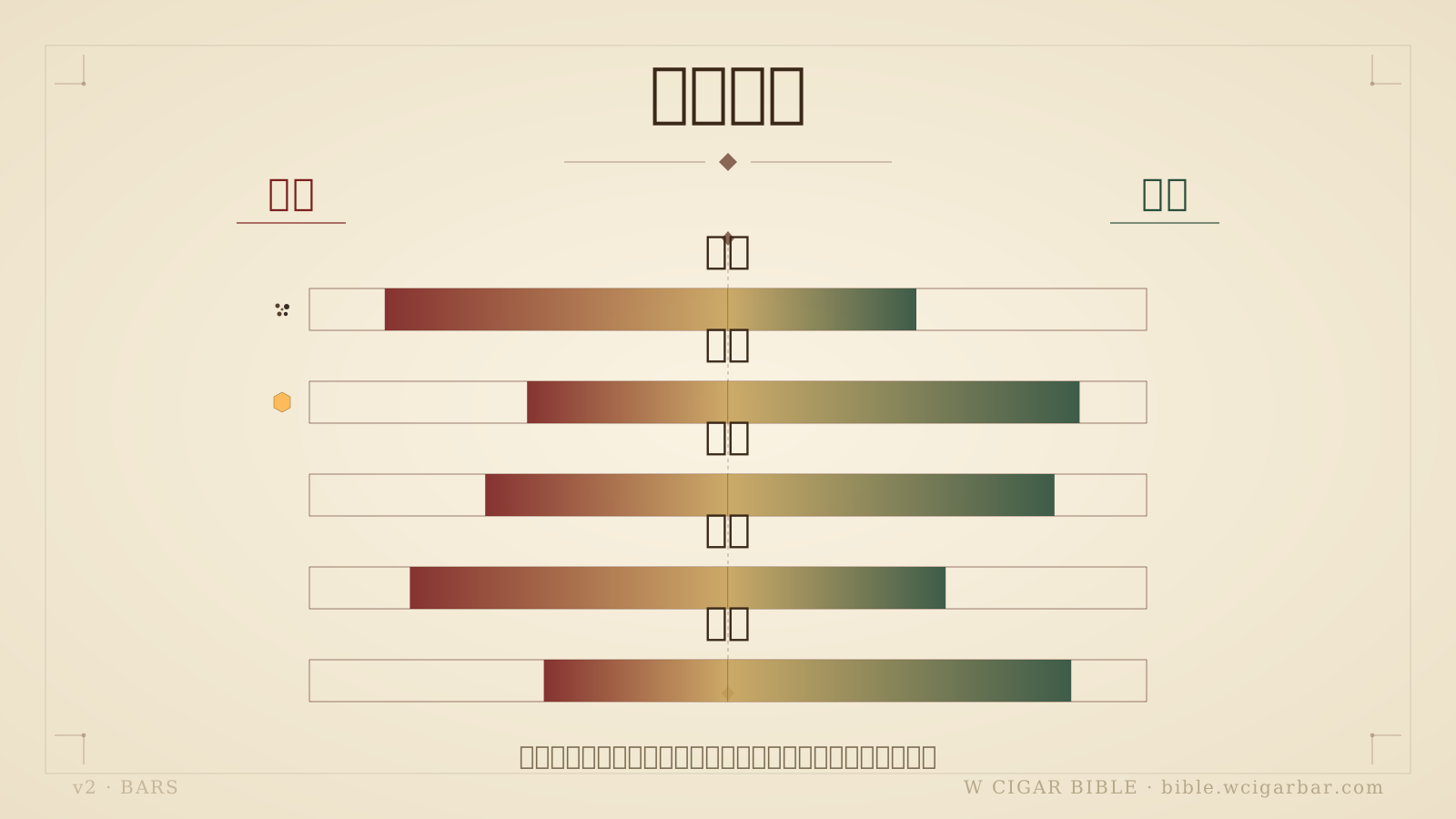
橫條圖以五個軸比較北高地與南高地的搭配取向
Flavor Chemistry Alignment: Heather Honey × Toasted Bread, Mineral × Hazelnut Oil
Heather honey × toasted bread is the first signal most easily grasped by beginner readers in this pairing. The honey aroma of Highland whisky comes from the combination of fermentation aromas, cask vanillin, and malt sweetness, while H. Upmann Magnum 46's toasted bread has caramelization and Maillard reaction scent memories. When the two meet in the back of the nasal cavity, they create a breakfast alliance reminiscent of honey toast, malt biscuits, and creamy bread edges.
Mineral × hazelnut oil is a more advanced structural alignment. Hazelnut oil makes the cigar's middle round, warm, with nut skin sweet bitterness; mineral draws clean hardness on the tongue sides and finish. This hard-soft support prevents the oil from becoming stuffy and the mineral lines from becoming cold and hard.
Light sea breeze × light spices also deserve attention. Whiskies from the western Highlands or with coastal shadows often have slightly salty, dry, and cool finishes; Magnum 46's light spices may resemble white pepper, nutmeg edges, or dry wood. When the slight saltiness meets spices, the finish becomes more three-dimensional than when smoking the cigar alone, and deeper than when drinking the whisky alone. The chemical core of this pairing is to use honey to complement baking, minerals to refine oil, and sea breeze to pull the finish.
| Highland Whisky Elements | H. Upmann Magnum 46 Elements | Sensory Changes After Meeting |
|---|---|---|
| Heather Honey | Toasted Bread | Forms honey toast, malt biscuits, and creamy bread edges. |
| Roasted Malt | Cream | Enhances the baked creamy texture, sweetness doesn't disperse. |
| Mineral | Hazelnut Oil | Hard and soft support each other, stabilizing the middle. |
| Light Sea Breeze | Light Spices | Finish turns dry, white pepper and slight saltiness emerge. |
| Northern Highland Spice | Tobacco Wood | Increases dry ginger, pepper, and wood box feel. |
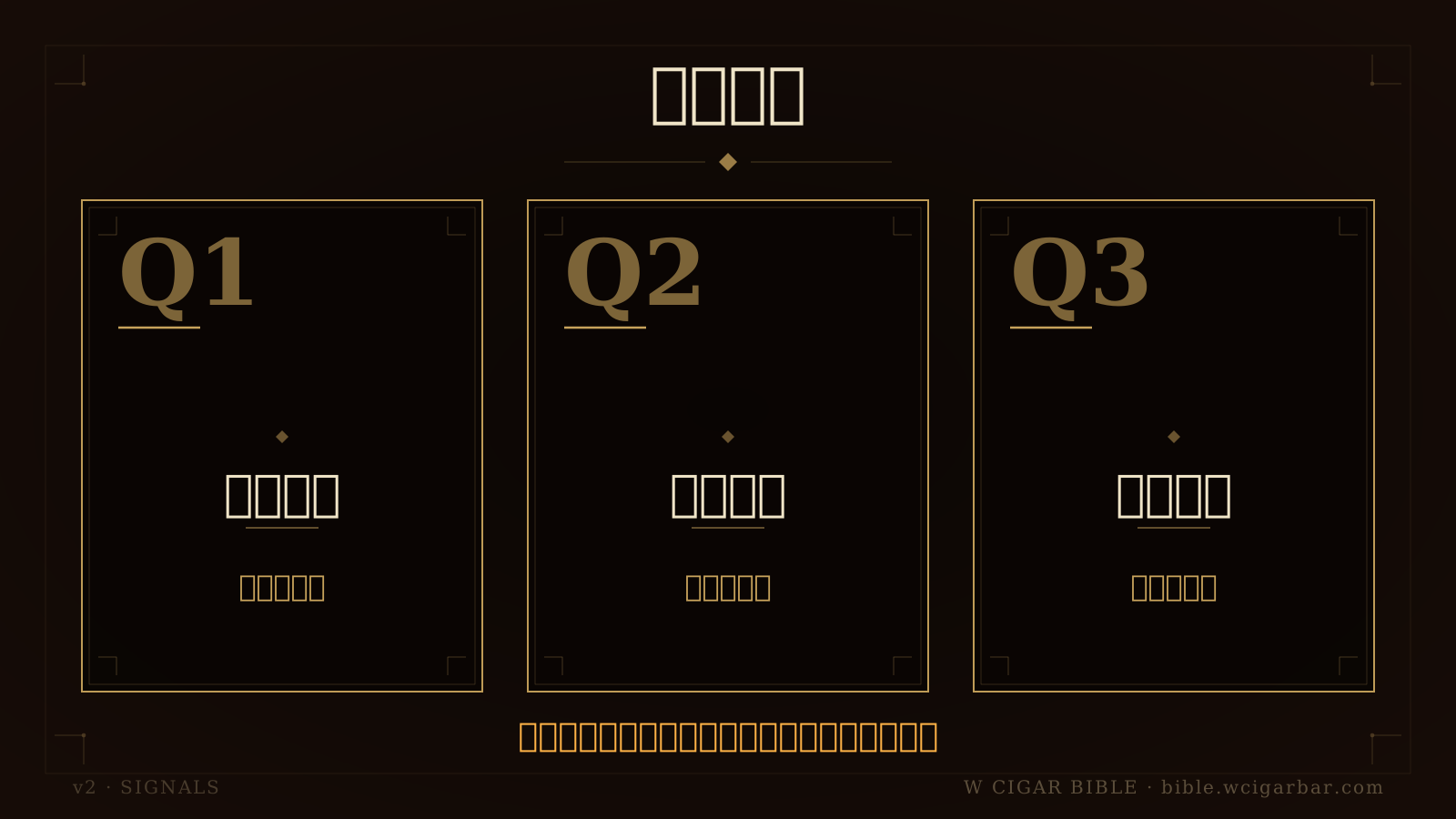
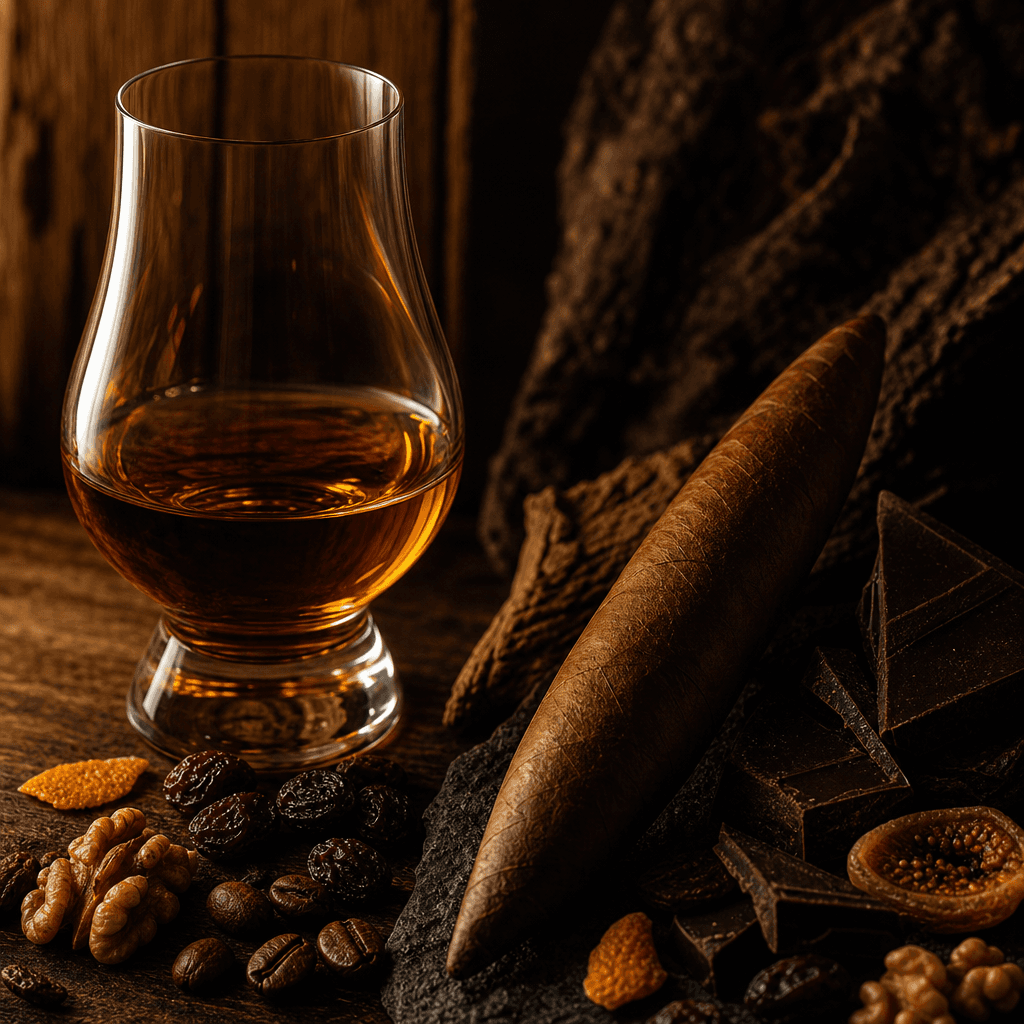
三張問答卡整理高地威士忌與雪茄搭配的實用判斷
Practical Tasting Sequence: Let the Highland Framework Support the Slender Rhythm
I would divide this pairing into three stages, rather than rushing to mix the whisky and smoke from the start. The first stage is to observe the whisky, looking for the proportions of heather honey, roasted malt, citrus peel, minerals, and oak in the aroma. Take only small sips to let the tongue know the thickness of the body, the position of sweetness, and the dryness of the finish.
The second stage returns to H. Upmann Magnum 46. If cream, toasted bread, and light hazelnuts appear in the front, do not rush to add too much alcohol stimulation, but let the smoke leave grain and cream aromas in the back of the nasal cavity. Then take another small sip of Highland whisky to see if the honey amplifies the bread feel or if the oak makes the finish bitter.
The third stage is middle alignment. When Magnum 46's hazelnut oil gradually emerges, the minerals and light sea breeze of Highland whisky become important because they can lift the oil from the tongue. The key to the Highland framework supporting the 46-ring gauge is that it gives the cigar's slender rhythm light and shade, rather than compressing all flavors into a sweet thickness.
In terms of glass type, I prefer a tulip glass that concentrates aromas rather than a wide-open glass. Let the whisky sit for a moment to let some of the alcohol dissipate, making it easier for honey, malt, and fruit peel to appear. If the cigar's burn becomes too hot, the pairing will turn bitter and spicy, so the rhythm should leave room, ensuring each round has recognizability.
Frequently Asked Questions
Is Highland whisky always suitable for H. Upmann Magnum 46?
Not necessarily; the focus is on style, not the regional name. If Highland whisky is too oaky or the alcohol is sharp, it may overpower the cream and toasted bread of Magnum 46. More suitable versions have a balance of honey, roasted malt, minerals, and moderate spice.
How to choose between Northern and Southern Highlands?
Northern Highlands are suitable for readers who want to highlight light spices, dry ginger, pepper, and wood lines. Southern Highlands can better echo cream, toasted bread, and honey, with a rounder overall taste. If just starting, I would begin with the clear malt lines of Southern or Eastern Highlands.
Can water be added?
Yes, but the goal is to open up the aroma, not dilute it to the point of losing structure. A small amount of water may make heather honey, citrus peel, and malt aroma more pronounced and reduce the alcohol's masking of cigar details. After adding water, re-smell to confirm if the mineral feel and finish are still present.
Why can mineral pair with hazelnut?
Hazelnut oil increases middle roundness but can also make the mouth thick. Mineral provides dry, cool, slightly hard support, like placing a thin framework under the oil. This makes hazelnuts more like roasted nuts rather than just oily.
Can both malt whisky and blended whisky be used?
This article focuses on Highland malt whisky because single malts are easier to observe regional and distillery character. Blended whisky with clear honey, roasted grains, and light mineral lines can also form a similar alignment. However, when analyzing, pay attention to the vanilla sweetness from grain whisky, which may alter the cigar's baking ratio.
What is the most common mistake when pairing?
The most common is pursuing concentration while ignoring rhythm. The advantage of Magnum 46 lies in its slender, balanced, and medium body; if the whisky is too heavy, it can blur the cream, hazelnuts, and light spices. This pairing should focus on clear structure, not the heavier the flavor, the better.
The relationship between Highland whisky and H. Upmann Magnum 46 is like the intersection of mountain mornings and baking tables: one side has heather honey, roasted malt, minerals, and light sea breeze, the other has cream, toasted bread, hazelnuts, and light spices. When you can distinguish which element is supporting and which is enveloping, this pairing becomes not just a match but a lesson in flavor structure and detail.
Further Reading|Complete Map of Whisky Regions: From Scotland's Five Major Regions to Asia's New Forces, a Flavor Overview for Cigar Pairing|Speyside Whisky Sherry Cask Flavor: Sweetness of Dried Fruits and Dark Chocolate, Paired with Montecristo No.2's Cocoa Finish|Lowland Whisky's Triple Distillation Lightness: Afternoon of Grass and Citrus, Paired with Quai d'Orsay No.54's French Elegance
—Cigar Prince Wilson Tsai
Smoking is harmful to health. No smoking under the age of twenty. Quitline: 0800-636363. This article is for reference by adults over the age of twenty as knowledge of cigar culture, preservation, and regulations, not as tobacco advertising, promotion, or purchase advice.
No drunk driving. Excessive drinking is harmful to health. No drinking under the age of eighteen. This article is also not alcohol advertising, promotion, or purchase advice. Please drink responsibly.
Like this article?Share with friends
Share this W Cigar Bible piece with friends who want to learn cigar culture, storage, and tasting.
想把這篇 化為實踐
雪茄聖經是知識;雪茄文化要在空間裡發生

W Cigar Bar 大安總店資訊
台北大安區 · 雪茄聖經總編輯 Wilson Tsai 主理的雪茄文化空間
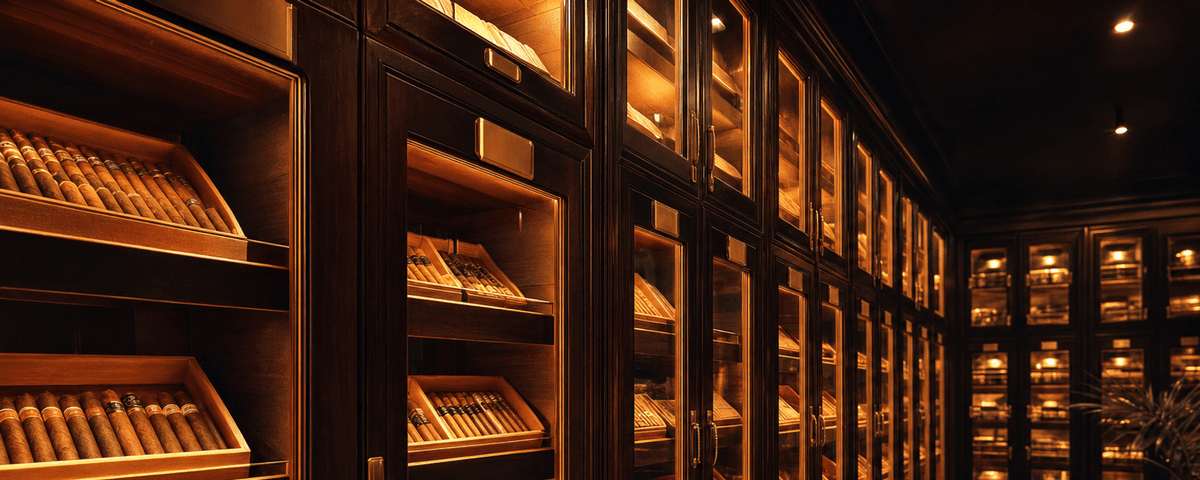
33 座 24 小時恆溫恆濕醇化室
W Cigar Bar 提供的會員醇化空間 · 場地資訊請洽編輯部
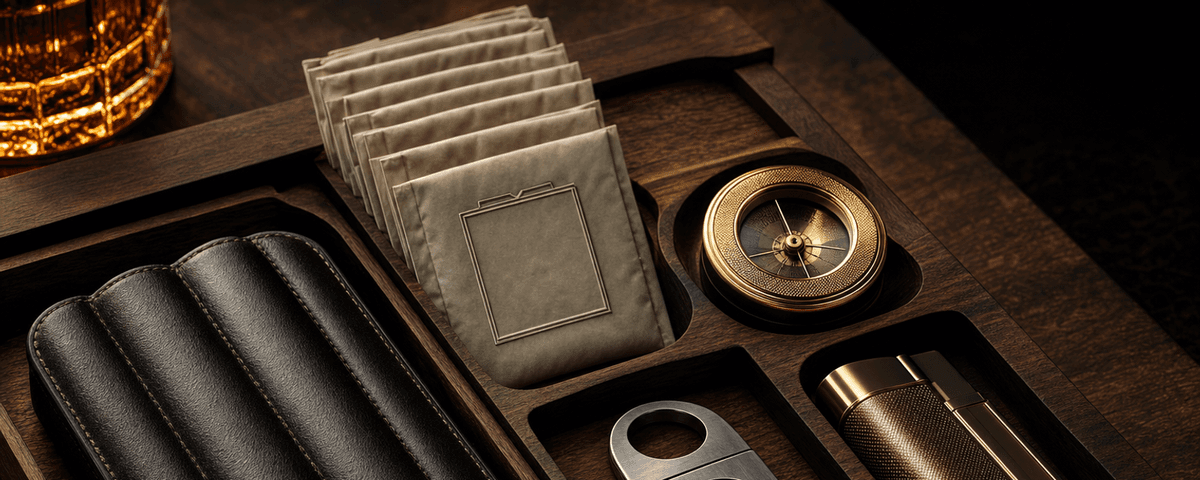
雪茄剪 / 打火機 / 雪茄盒 / Boveda
W Cigar 配件官網 · 專營雪茄配件正品
加 LINE 好友 · 文化諮詢
文化空間資訊 · 紳士沙龍 · 私人包場
本網站內容僅供雪茄文化、歷史、收藏與品吸知識研究參考。菸品有害健康、未滿法定年齡者請勿吸菸。實際規範請依所在地法律為準。
吸菸有害健康・戒菸專線 0800-636363・本站僅供 20 歲以上成年人閱覽。
讀到這裡,你不只是路過的人
留下 Email,加入 W 雪茄聖經內圈——總編輯 Wilson Tsai 親選的學院深文與國際新訊,先你一步送到信箱。
· 教育用途非銷售 · 隨時一鍵退訂 · Email 絕不對外公開 · 由勝茄股份有限公司營運
同分類延伸閱讀
資料來源:W Cigar Bible 編輯部整理 · 雪茄王子 Wilson Tsai 親自審稿
本文僅供雪茄文化、歷史、收藏與品鑑知識研究,不作為菸品促銷、銷售或購買建議。吸菸有害健康,未滿二十歲不得吸菸。