雪茄的品味與質量:評鑑準則與實踐技巧
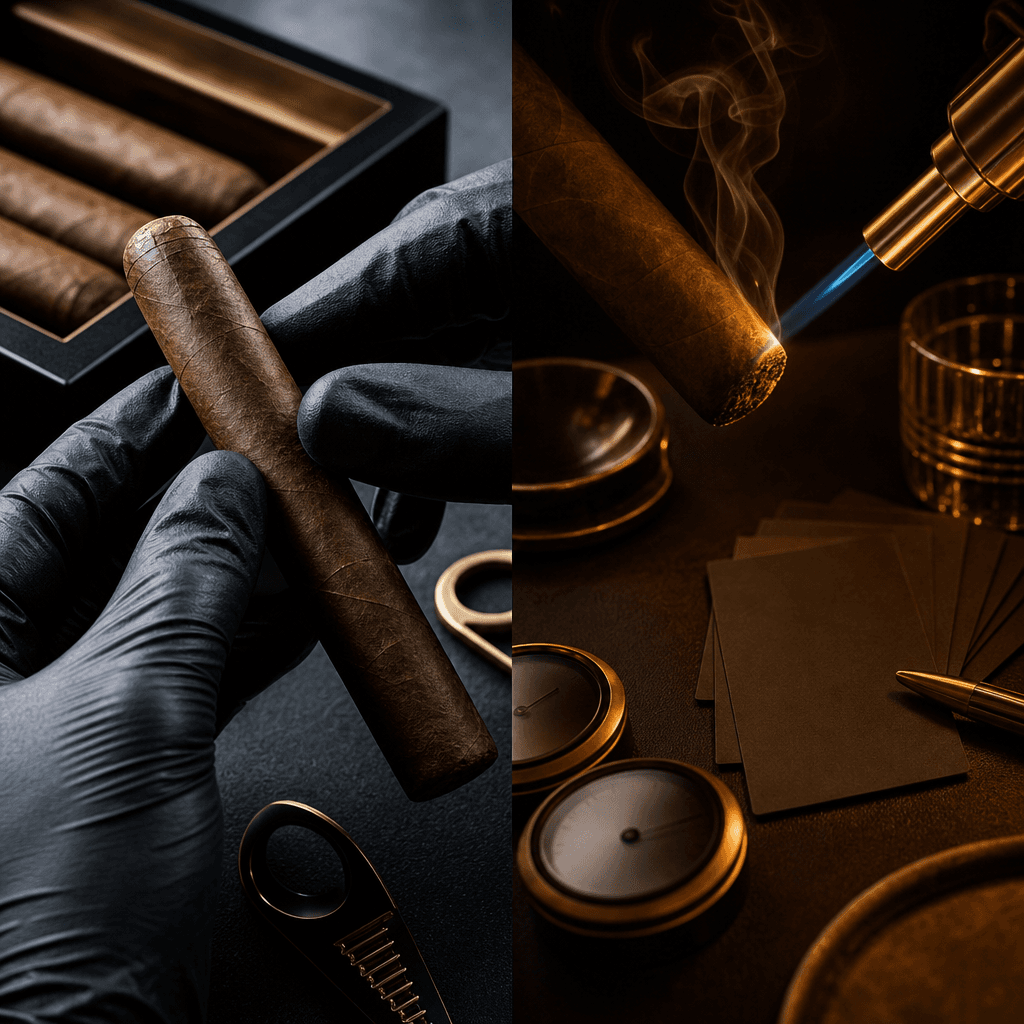
在評鑑雪茄時,入門者常將個人口味與品質混淆。評價一支雪茄的好壞需從多個面向入手,包括外觀、冷香、燃燒及口感結構。首先,觀察茄衣的色澤與油分,並檢查卷工以判斷其處理與保存狀況。冷香提供初步印象,但不代表點燃後的表現。點燃技術影響前期體驗,需注意燃燒線與煙量。最後,分析口感結構的風味濃度、強度及平衡,並記錄各階段的變化,以便未來比較。透過這些方法,能建立更穩定的評鑑準則。
- 評鑑雪茄時,外觀的色澤、油分與卷工可提供約三成的品質線索。
- 冷香只能預告雪茄的方向,無法直接代表點燃後的完整表現。
- 評鑑雪茄需分為風味濃度、尼古丁強度、煙氣質地與尾韻長度四個面向。
The Taste and Quality of Cigars: Evaluation Criteria and Practical Techniques
As the editor of "Cigar Bible," I am often asked: How should one evaluate a cigar? Beginners often understand the basics of tasting but tend to confuse "liking" with "quality." The former is a personal preference, while the latter requires a set of repeatable and comparable observation methods.
The quality of a cigar is not solely determined by brand reputation or price. Clues can be found in the wrapper, construction, cold aroma, burn, smoke texture, finish, and overall balance. In this article, I will guide you from a practical perspective to establish a more stable evaluation criterion.
流程圖呈現外觀冷香吸阻點燃到尾韻評估
Reading Quality from Appearance: Wrapper, Oil, Construction, and First Impressions
The first step in evaluating a cigar is not lighting it but observing it. Take, for example, the Cuban Cohiba Siglo VI, Partagás Serie D No.4, and H. Upmann Magnum 46. Even though they belong to the classic Havana sizes and brands, the wrapper color can range from Colorado Claro to Colorado Maduro. Darker colors do not necessarily mean stronger flavors, nor do lighter colors equate to mildness; what truly matters is whether the color is even, the oil is natural, and the veins are not too coarse. The core of appearance evaluation is not to pursue perfection but to judge whether it reveals good handling and stable preservation.
Construction can be assessed by gently pressing the entire cigar with your fingers, feeling it segment by segment from head to foot. If there are noticeable voids, it may burn too quickly and produce thin smoke; if it is too hard in places, it may cause tight draw. Since 2020, I have encountered many cigars with a ring gauge over 50, which look beautiful but have uneven filler distribution, resulting in a smooth start and a muted finish. Beginners often mistake this issue for a "sudden change in taste."
Observing the cap is also important. A triple cap is usually more delicate and withstands cutting better; a thin or poorly adhered cap may crack after cutting. Record four items: wrapper integrity, oiliness, elasticity, and construction uniformity, each rated from 1 to 5. An unlit cigar can already provide about 30% of the quality clues.
三張卡整理喜好品質分辨與記錄重點
Cold Aroma and Pre-light Judgment: Don't Rush to Conclusions
Cold aroma refers to the scent of a cigar before it is lit, smelled from the body and foot of the cigar. Common descriptions include grains, cedar, leather, cocoa, hay, nuts, molasses, earth, and spices. For example, a well-conditioned Hoyo de Monterrey Epicure No.2 often has a gentle woody, creamy, and faint floral aroma; while Partagás Lusitanias often exhibit more pronounced earthy, peppery, and leathery notes. Cold aroma can only predict the direction and does not directly represent the complete performance after lighting.
Pre-light draw is also worth doing, but with a light touch. After cutting, take a couple of gentle puffs without lighting to feel the draw and cold flavor. Ideally, there should be resistance but not effort, like drinking a thick beverage through a straw, rather than being hollow or clogged. If the cold draw reveals strong ammonia, wet cardboard, mold, or pungent sourness, be cautious, as it may relate to humidity, transportation environment, or aging state.
I recommend beginners establish a "three-layer cold aroma record": the first layer records the initial scent, the second layer records the impression after 10 seconds, and the third layer records the cold draw flavor after cutting. In 2018, I recorded a box of Ramón Allones Specially Selected, where the initial cold aroma was hay and pepper, which turned into candied fruit, wood, and ripe fruit peel after 18 months of storage. This kind of change can train you to discern the effects of time and preservation on aroma.
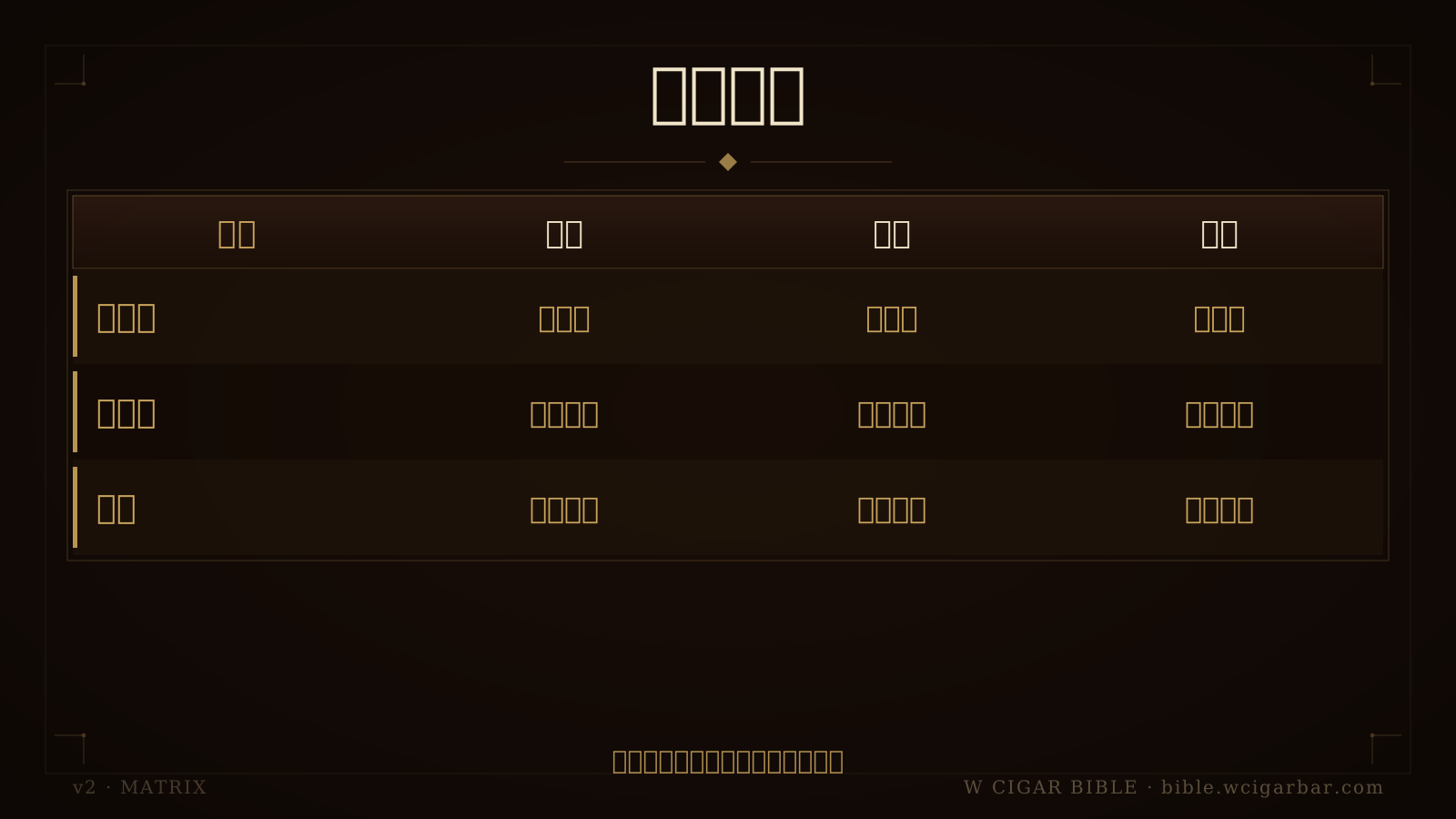
表格比較外觀燃燒口感三類評鑑線索
Lighting and Burning: Flame Technique Can Change the Evaluation
Many people overlook the lighting method when evaluating cigars, but the flame directly affects the first 10 minutes of performance. If the foot is scorched at the start, the front section is prone to bitterness and charred taste; if lit unevenly, the burn line will skew, affecting smoke temperature. When using a torch, do not place the flame directly on the foot, maintain a distance of about 1 to 2 cm, and slowly rotate to heat. Lighting is not just about setting the cigar on fire but about activating the burning surface evenly.
Burning can be observed in three key areas: burn line, ash column, and smoke volume. Slight fluctuations in the burn line are normal, especially since natural leaves cannot be as consistent as mechanical products; however, if it significantly skews every 3 minutes, it may indicate issues with humidity, construction, or lighting. A short ash column is not necessarily bad, nor is a long one necessarily good, but even gray color and tight structure usually indicate a more stable leaf burning condition.
In 2022, I evaluated a Montecristo No.2, where the burn line skewed to the left in the front section. I did not immediately correct it but slowed the pace, taking a puff every 60 to 75 seconds, allowing the heat source to balance itself. About 8 minutes later, the burn line corrected itself, and the flavor shifted from sharp woody bitterness to coffee and nuts. This demonstrates that during evaluation, one should not intervene excessively; otherwise, you may end up evaluating your own actions rather than the cigar itself.
Flavor Structure Table: Concentration, Strength, Flavor, and Balance
Beginners often confuse "concentration" with "strength," but cigars should be divided into at least four aspects: flavor concentration, nicotine strength, smoke texture, and finish length. Davidoff Signature No.2 has delicate flavors and medium-low strength; Bolívar Belicosos Finos often have higher strength and a robust earthy feel. Both can be good cigars, just expressed differently. The key to accurate evaluation is to break down the senses rather than using a single "good smoke" to summarize everything.
| Evaluation Item | Common Low Score Performance | Common High Score Performance | Recording Method |
|---|---|---|---|
| Flavor Concentration | Thin, single flavor | Clear layers, with a main theme | 1-5 points |
| Strength | Dizziness, pressure, or too mild | Coordinated with flavor proportion | Low/Medium/High |
| Smoke Texture | Dry, rough, harsh | Dense, smooth, with weight | Adjective recording |
| Finish | Quickly disappears or bitter | Clean, extends over 20 seconds | Estimated seconds |
| Balance | One flavor overly prominent | Support among sour, sweet, bitter, and spicy | Text comments |
For example, when Cohiba Robustos is in good condition, the front section may have grass, cream, honey, and light wood; the middle section transitions to roasted grains and cocoa; the back section has spice and coffee bitterness. If you only write "very fragrant," you won't be able to compare next time; if you write "front section creaminess 3/5, middle section cocoa 4/5, finish about 25 seconds," it will still have reference value a year later.
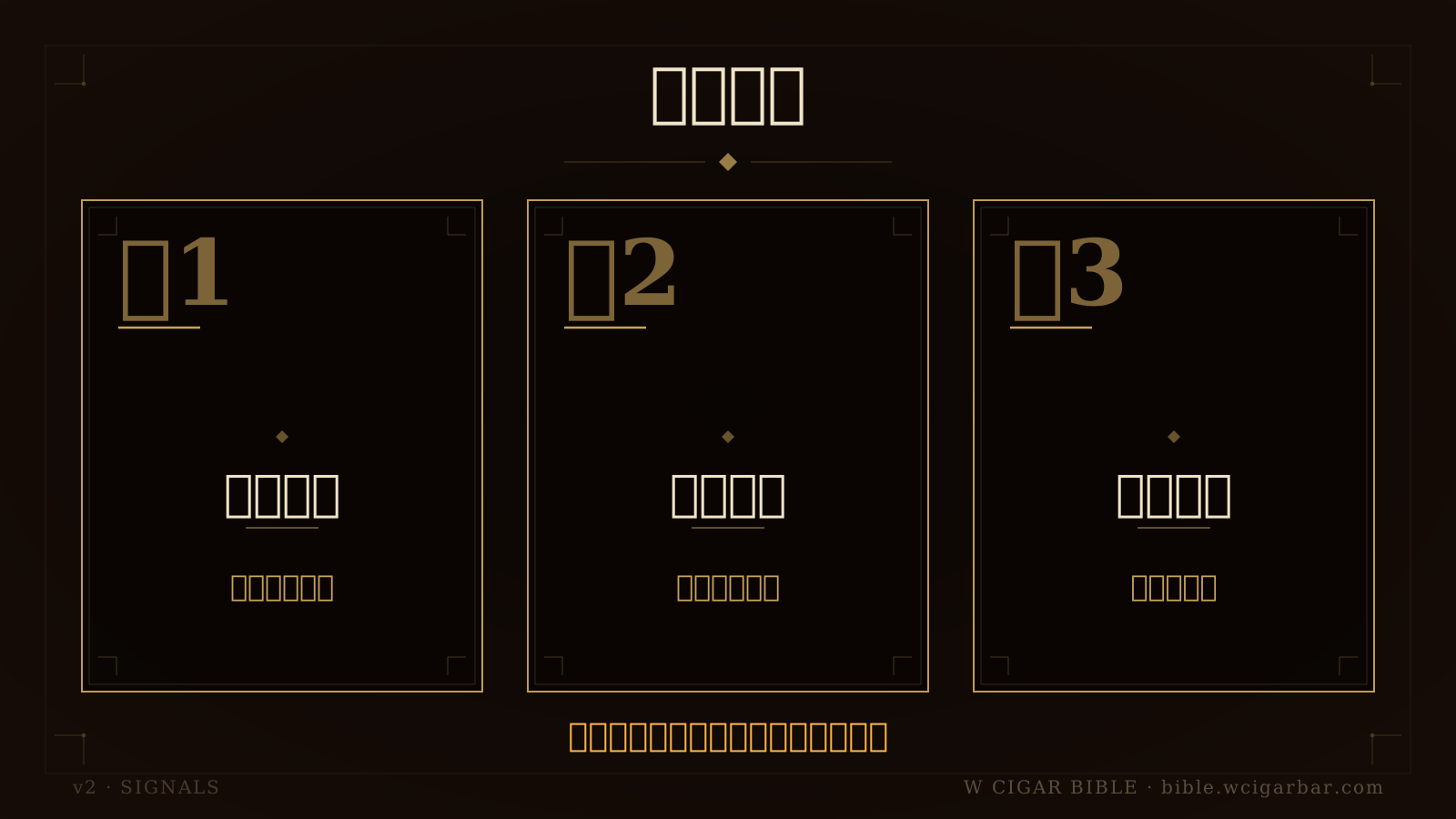
卡片列出品牌定味偏燒即差與必抽到底
Three-Stage Evaluation: The Rhythm of Front, Middle, and Back Sections
A cigar can usually be divided into front, middle, and back sections, not necessarily exactly one-third each, but this is a practical framework. The front section checks if the opening is clean, the middle section checks if the theme unfolds, and the back section checks if it remains balanced after concentration. For example, in a well-conditioned Romeo y Julieta Churchill, the front section often has floral, cedar, and gentle sweetness; the middle section thickens with wood and nuts; the back section may exhibit leather, black tea, and spice. A good cigar is not complex in every puff but has direction in changes and logic in transitions.
The evaluation rhythm should be stable. A typical Robusto takes about 45 to 60 minutes, while a Churchill can last over 90 minutes. If smoked too quickly, the burning temperature rises, and the flavor becomes charred, bitter, and spicy. It is recommended to take a puff every 45 to 75 seconds, hold it in the mouth for 3 to 5 seconds, and then slowly exhale. Beginners often inhale smoke frequently in an attempt to capture flavors, resulting in overheating the cigar, effectively ruining its original performance.
In practice, I record at three time points: 5 minutes after lighting, when entering the middle section, and about 4 cm before the end. If the back section is already noticeably spicy and tongue-stinging, there is no need to force it to the end; knowing when to stop is also part of etiquette and taste. In 2019, I stopped a Punch Punch at 3.5 cm remaining because the wood turned bitter and ammonia emerged; this is not a failure but a complete record of its boundaries.
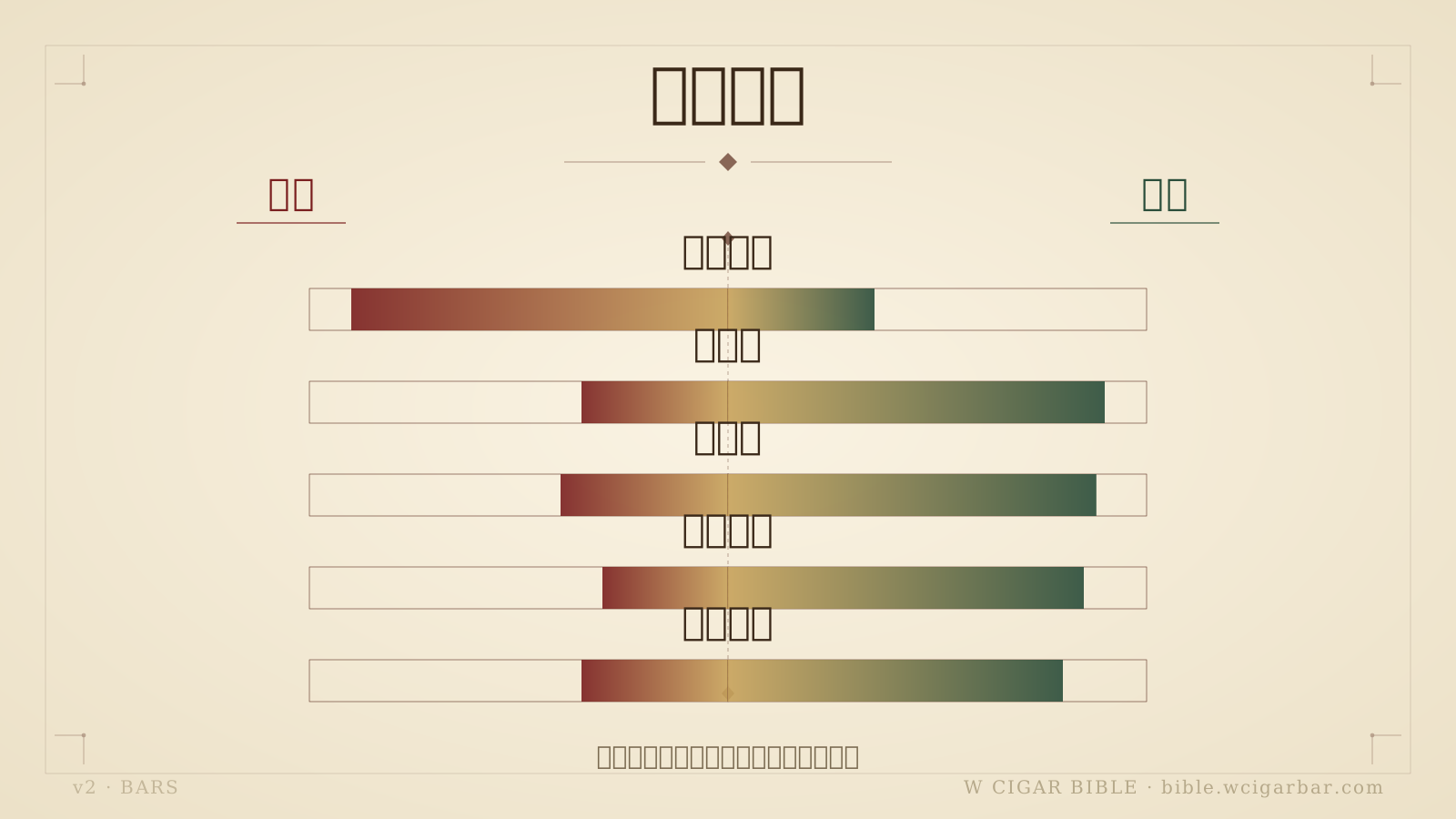
長條圖對比喜好與品質在五項評鑑軸的差異
Humidity, Aging, and Preservation: Calibrate the Environment Before Evaluation
The same cigar may perform differently at 62%, 65%, 69%, and 72% relative humidity. When humidity is high, the draw tends to become heavier, burning slower, and the flavor becomes muted, even exhibiting damp woodiness; when humidity is low, it burns quickly, the smoke is dry, and spiciness increases. For most Cuban cigars, I prefer the range of 65% to 68%; for some New World cigars, around 69% can also maintain better elasticity. If you don't control storage conditions before evaluation, you are likely evaluating humidity rather than the cigar.
Aging is not mysticism but an interaction of time, humidity, temperature, and leaf condition. For newly acquired boxed cigars that have undergone long-distance transportation, I usually let them rest for 30 to 90 days before formal evaluation. For example, in 2021, a box of H. Upmann Connossieur No.1 initially had more pronounced grassy and spicy notes; after about 6 months, sweet wood, cream, and nuts became clearer, and burning was much more stable.
The recommended storage environment temperature is about 18 to 21°C, avoiding prolonged periods over 24°C; the hygrometer should be calibrated at least every 6 months. If using humidification packs, pay attention to the container's seal and capacity ratio. As for collection value, some limited editions and commemorative editions from the 2000s do attract attention, but collecting does not guarantee appreciation; it still depends on source preservation and market. Quality evaluation should still focus on the cigar itself, not just the hype.
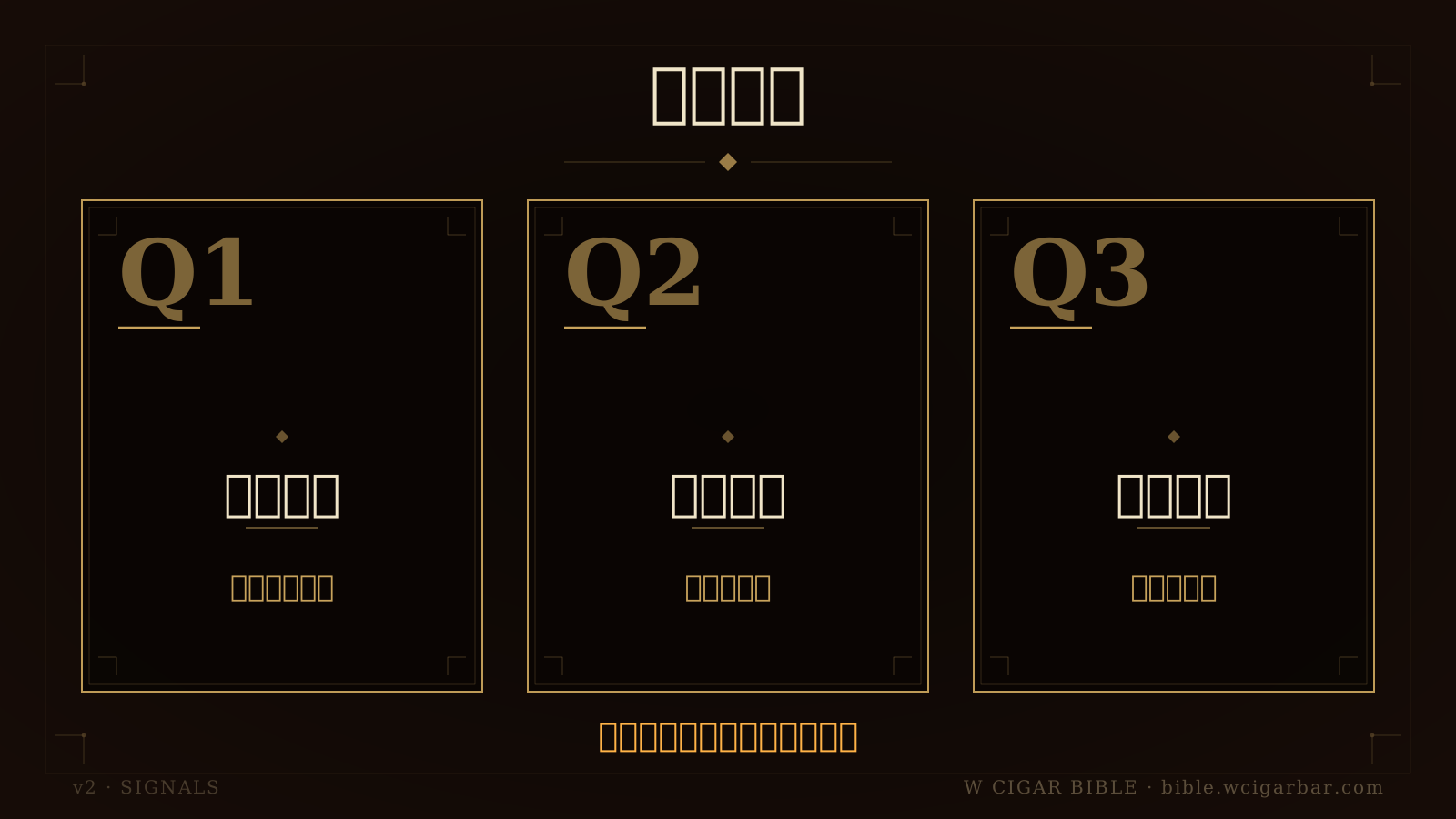
三張問答卡回答味道變化品牌學習與飲品條件
Establishing Your Own Scoring System: Turning Feelings into Data
To improve, you must record. My suggestion is that a 100-point system is not necessary at the beginning; beginners can start with 5 major items, each worth 20 points: appearance and construction, cold aroma and opening, flavor layers, burn structure, and overall balance. This is simple and avoids being swayed by brand aura. The purpose of scoring is not to pretend to be objective but to allow you to compare using the same measure next time.
When recording, please specify the date, brand, size, box code or year, storage humidity, burning time, and accompanying drink. Suppose you record an Arturo Fuente Hemingway Short Story in 2024, with 67% humidity, 38 minutes of burning, paired with unsweetened tea; next time, if paired with bourbon whiskey, the sweetness and barrel notes may be amplified, and the comments will naturally differ. Without background information, scores are difficult to interpret.
You can use the following simple process:
- Before lighting: Take a photo, record wrapper, elasticity, cold aroma, and draw resistance.
- Front section: Write 3 main flavors, don't rush to score.
- Middle section: Check for transitions, record smoke texture.
- Back section: Determine if it is unbalanced, spicy, or if the finish extends.
- After finishing: Give an overall evaluation 10 minutes later to avoid being influenced by the last puff.
I also recommend keeping "personal preference score" and "quality score" separate. For example, a high-strength La Flor Dominicana Double Ligero may be of excellent quality, but you may not like it; conversely, a mild cigar may relax you but may have ordinary layers. By separating the two, your taste will become more precise.
Common Questions
Why does the same brand and size taste different each time?
Cigars are agricultural products, not standardized electronic products. Year, batch, preservation, transportation, and the day's condition all affect performance. Even the same Montecristo No.4 may have different proportions of herbal, coffee, and wood notes in 2017 and 2023 boxed versions. Evaluation should record the source and storage conditions to determine whether the difference comes from the cigar itself or the environment.
Should beginners learn brands first or flavors first?
I would recommend learning flavors first and then understanding brands. Brands can provide direction, such as Trinidad often being associated with delicate sweet wood, and Partagás often having earthy and spicy notes, but brands should not replace sensory judgment. Establish basic vocabulary like nuts, cedar, cocoa, leather, pepper, cream, and then study brand styles for faster progress.
Do you need to pair with drinks to evaluate accurately?
Not necessarily. During formal evaluations, I prefer room temperature water or unsweetened tea to avoid interference from alcohol and sugar. If enjoying the setting, coffee, rum, and whiskey can bring different layers, but know that it is "performance after pairing." If comparing two cigars, the drink conditions should be consistent.
Does uneven burning mean poor quality?
Do not jump to conclusions immediately. Uneven burning can result from lighting method, wind direction, humidity, holding angle, or construction. If there is slight uneven burning, slow down the pace and observe first; if it continues to burn unevenly and the draw is unstable, it is more likely a structural issue. Evaluation should avoid premature judgment.
Do you have to smoke to the end for a complete evaluation?
No. When the back section of a cigar becomes too hot, bitter, spicy, or the smoke becomes dirty, stopping is a reasonable choice. A complete evaluation is not about consuming it to the end but about determining where it peaks and where it starts to become unbalanced. This judgment itself is a sign of mature taste.
Evaluating cigars is about organizing sensory enjoyment into a reviewable experience. My view is simple: do not rush to chase high scores, and do not blindly follow lists. Every observation of appearance, smelling cold aroma, controlling rhythm, and writing down the finish is about building your own taste map. Understanding and respecting the leaf, time, and occasion will bring you closer to the soul of a cigar.
—Cigar Prince Wilson Tsai
Smoking is harmful to health. Under the age of twenty is prohibited from smoking. Quitline: 0800-636363. This article is intended as a reference for cigar culture, preservation, and regulations for adults over the age of twenty, not as tobacco advertising, promotion, or purchase advice.
Like this article?Share with friends
Share this W Cigar Bible piece with friends who want to learn cigar culture, storage, and tasting.
想把這篇 化為實踐
雪茄聖經是知識;雪茄文化要在空間裡發生
W Cigar Bar 大安總店資訊
台北大安區 · 雪茄聖經總編輯 Wilson Tsai 主理的雪茄文化空間
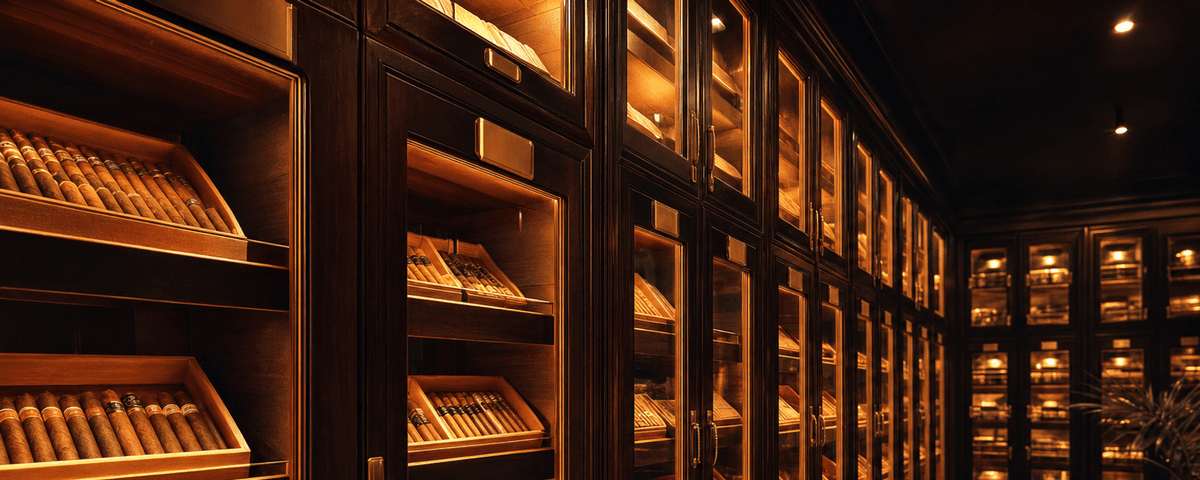
33 座 24 小時恆溫恆濕醇化室
W Cigar Bar 提供的會員醇化空間 · 場地資訊請洽編輯部
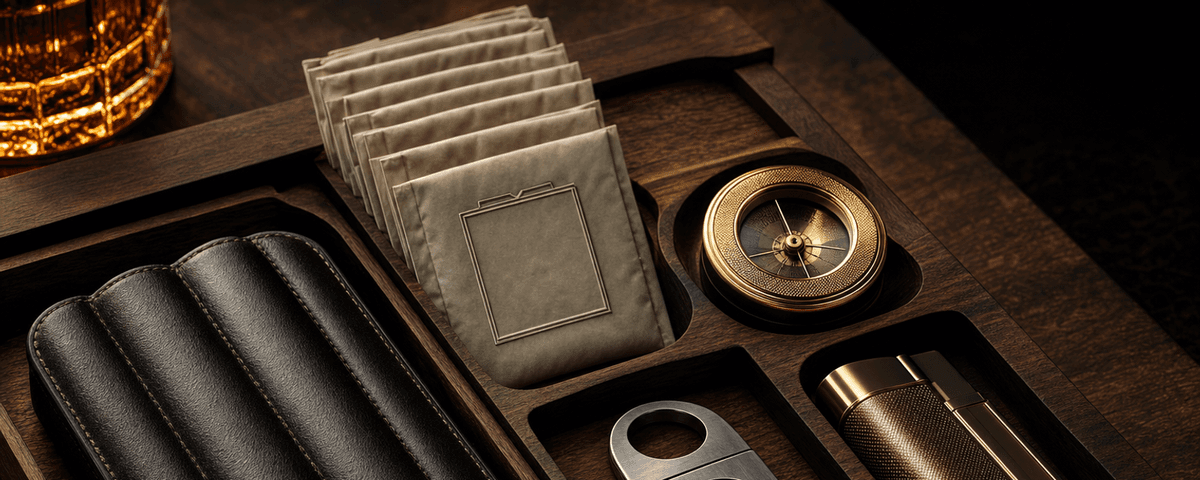
雪茄剪 / 打火機 / 雪茄盒 / Boveda
W Cigar 配件官網 · 專營雪茄配件正品
加 LINE 好友 · 文化諮詢
文化空間資訊 · 紳士沙龍 · 私人包場
本網站內容僅供雪茄文化、歷史、收藏與品吸知識研究參考。菸品有害健康、未滿法定年齡者請勿吸菸。實際規範請依所在地法律為準。
吸菸有害健康・戒菸專線 0800-636363・本站僅供 20 歲以上成年人閱覽。
讀到這裡,你不只是路過的人
留下 Email,加入 W 雪茄聖經內圈——總編輯 Wilson Tsai 親選的學院深文與國際新訊,先你一步送到信箱。
· 教育用途非銷售 · 隨時一鍵退訂 · Email 絕不對外公開 · 由勝茄股份有限公司營運
同分類延伸閱讀
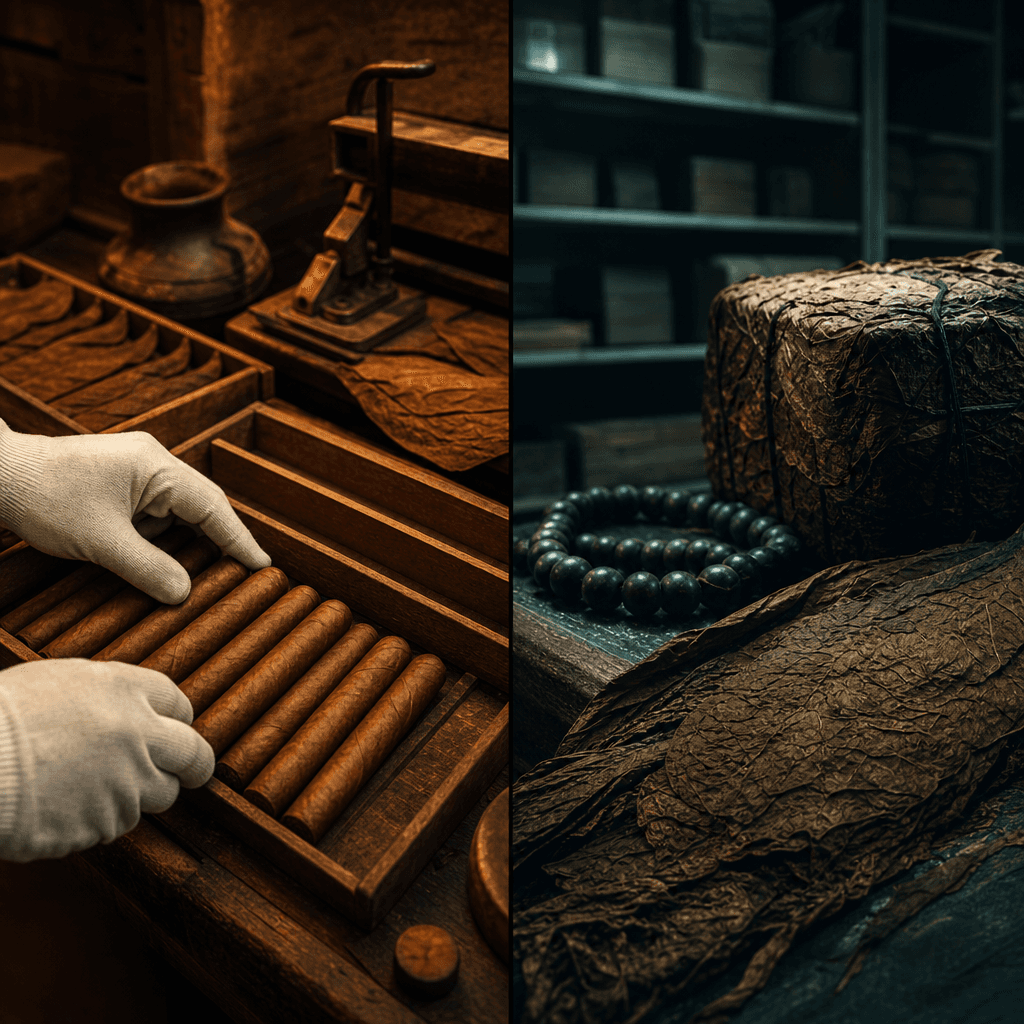

資料來源:W Cigar Bible 編輯部整理 · 雪茄王子 Wilson Tsai 親自審稿
本文僅供雪茄文化、歷史、收藏與品鑑知識研究,不作為菸品促銷、銷售或購買建議。吸菸有害健康,未滿二十歲不得吸菸。