雪茄的品味進化:解密不同產區的獨特風味
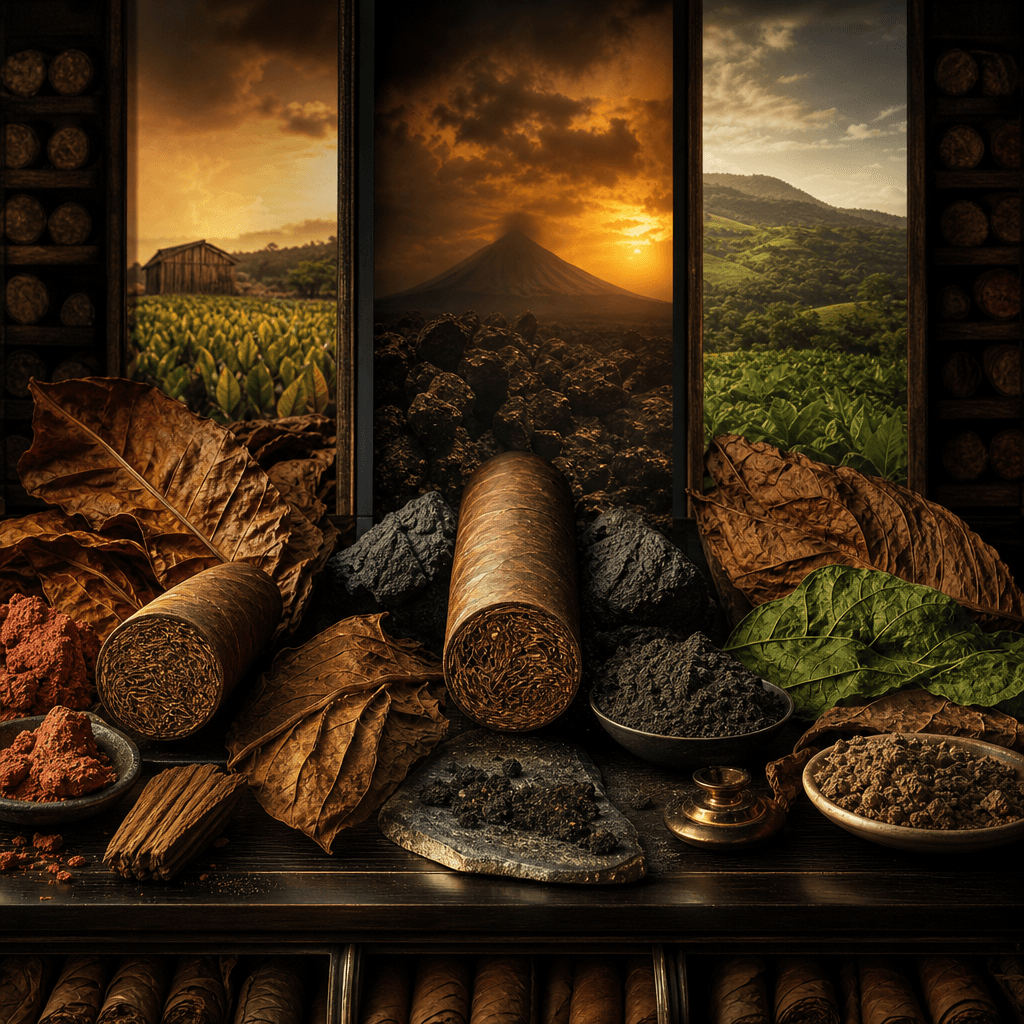
吸菸有害健康,未滿二十歲不得吸菸。本文探討雪茄的產區與風味,強調品味的進化不僅限於簡單標籤。古巴的Vuelta Abajo以其獨特的土壤與氣候,展現出複雜的風味層次;尼加拉瓜的Estelí則以火山土壤和強烈日照,提供濃烈的香氣特徵;多明尼加的Cibao則以細膩的發酵技術,展現優雅的香氣線條。透過不同產區的比較,老手能夠重新校準味覺地圖,深入理解雪茄的風味來源與結構。
- 古巴雪茄的風味層次隨時間變化,前段的草本與後段的鹹甜感會隨著醇化而演變。
- 尼加拉瓜雪茄的風味由火山土壤與強日照塑造,常見黑胡椒、濃咖啡與烤肉香。
- 多明尼加雪茄強調香氣的線條感,適當的濕度控制可讓香氣更明亮、尾韻更乾淨。
The Evolution of Cigar Tasting: Unveiling the Unique Flavors of Different Regions
Smoking is harmful to health. No smoking under the age of 20. Quitline: 0800-636363. This article is intended for adults over the age of 20 as a reference for cigar culture, preservation, and legal knowledge, not as an advertisement, promotion, or purchase suggestion.
When seasoned cigar enthusiasts discuss "regions," they shouldn't stop at labels like Cuba equals creamy, Nicaragua equals intense, or the Dominican Republic equals elegant. True evolution in taste involves understanding a cigar as a sum of its climate, soil, seeds, fermentation, rolling, and aging conditions. As the editor of the "Cigar Bible" and founder of W Cigar Bar and a special distributor for PCC, I am more concerned with why the same 50 ring gauge, same Robusto size, presents completely different rhythms in Havana, Estelí, and Cibao. This article doesn't discuss beginner slogans but uses vintages, brands, soil, and real cases to help seasoned enthusiasts recalibrate their taste maps.
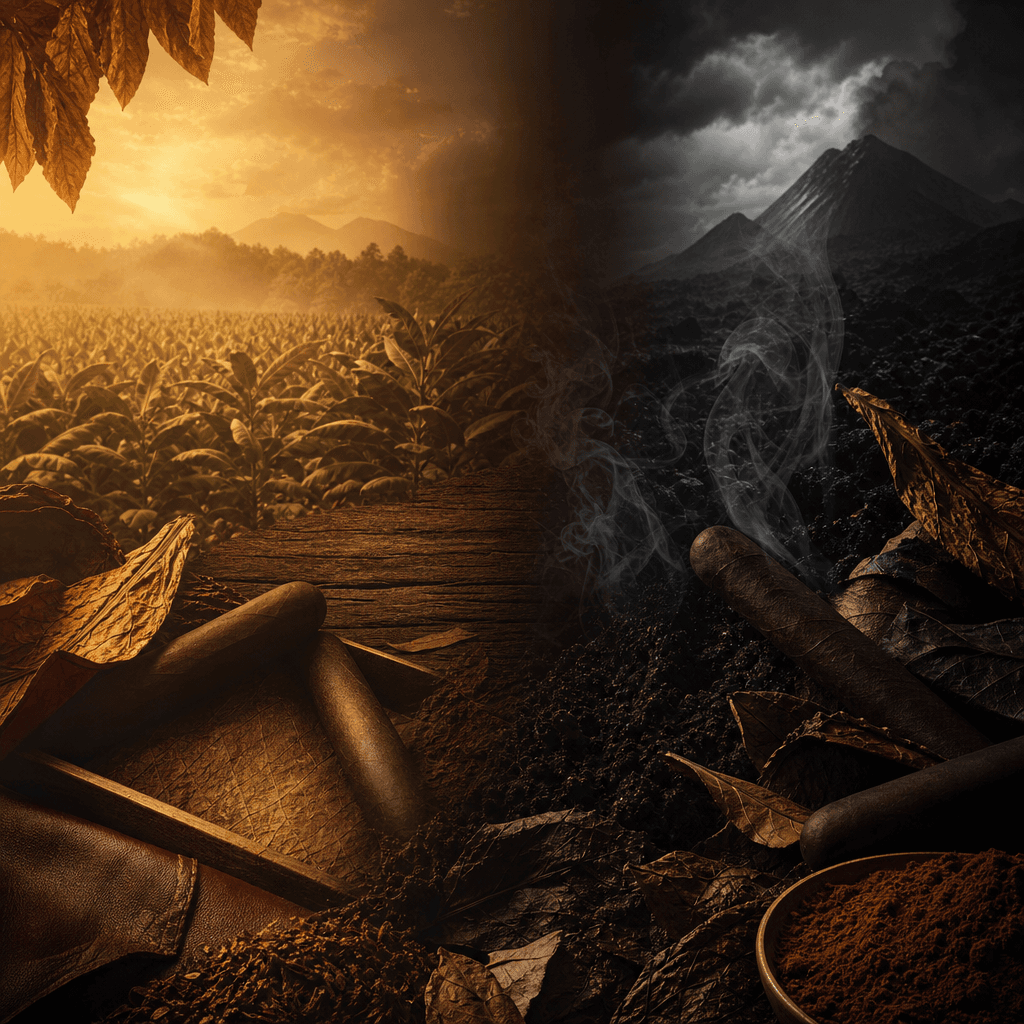
時間軸呈現氣候土壤種葉發酵醰化的風味路徑
Cuba: The Mineral, Oiliness, and "Slow Complexity" of Vuelta Abajo
Cuba has long been regarded as a classic region, not just for its historical aura, but for the terroir conditions of Vuelta Abajo in the Pinar del Río province. This area features reddish-brown soil mixed with limestone, excellent drainage, and distinct rainy and dry seasons. Tobacco leaves develop delicate tension between sunlight, humidity, and wind direction. For example, with Cohiba, Partagás, Hoyo de Monterrey, and Montecristo, many seasoned enthusiasts find hay, honey, hazelnut, and cedar in the early stages, slowly unfolding into coffee, leather, saltiness, and mineral notes in the middle stages. The Cohiba Behike was officially launched in 2010 with BHK 52, 54, and 56, and discussions about the use of medio tiempo leaves remain a topic among enthusiasts because it brings not just strength but thicker oiliness, spiciness, and density in the finish. The Montecristo No.2, as a classic Pirámides size, 52 ring gauge, 156mm, is often used to understand Cuban balance: the early stages may have cocoa powder and roasted grains, the middle stages reveal earthiness, coffee beans, and a hint of pepper, and if well-preserved, the later stages offer a rounded yet not blunt salty-sweetness. The key to Cuba is "slow," not every puff explodes, but after half an hour, you suddenly realize the layers have changed three times.
Nicaragua: Volcanic Soil, Strong Sunlight, and the Dark Framework of Estelí
The modern rise of Nicaraguan cigars is closely related to the movement of Cuban planting and production talent in the 1960s and the industrial reconstruction after political turmoil in the 1970s and 1980s. By the late 1990s to the 2000s, Estelí, Jalapa, and Condega gradually established distinct divisions of labor: Estelí's soil is rich in volcanic minerals and strong sunlight, often yielding black pepper, strong coffee, roasted meat aromas, and heavy earthiness; Jalapa is softer, often presenting sweet, floral, and creamy textures; Condega is in between, with herbal, woody, and red pepper notes. The Padrón 1964 Anniversary Series was launched in 1994 to commemorate the brand's 30th anniversary, and its box-pressed style and rich cocoa, coffee, and brown sugar flavors have almost become a representative of mature Nicaraguan style. Oliva Serie V debuted in 2007, known for its ligero leaves and higher concentration, but a good Serie V is not just strong, it can also showcase dark chocolate, walnuts, spices, and dried fruits in the middle and later stages. My Father Le Bijou 1922, with José García's tribute to his father as its background, often features a coexistence of intense spiciness and sweet woodiness. The logic of Nicaraguan taste is to subdivide "strength" into sweetness, spiciness, oiliness, minerals, and burning speed, rather than summarizing with just strength and mildness.
三張卡片整理產區風味判讀的核心結論
Dominican Republic: Cibao Valley, Delicate Fermentation, and the Linear Quality of Aroma
Dominican cigars are often misread as "mild," but truly mature Dominican works excel in aroma linearity and structural control. The fertile soil and stable climate around the Cibao Valley and Santiago allow varieties like Piloto Cubano and Olor Dominicano to develop woody, creamy, nutty, hay, and gentle spice aromas. Arturo Fuente's OpusX is a must-discuss case: when it was officially launched in 1995, it broke the old notion that "the Dominican Republic cannot produce top-quality wrappers," and the Rosado wrapper from Chateau de la Fuente gives OpusX intense spiciness, orange peel, leather, and sweet woodiness, proving that the Dominican Republic is not just about mildness. After Davidoff shifted its core production to the Dominican Republic in the 1990s, it established another set of precise aesthetics: not aiming for explosive impact, but requiring stable burning, delicate ash columns, and clean aromas. Davidoff Millennium Blend and Aniversario series often let seasoned enthusiasts feel white pepper, cream, almond, cedar, light coffee, and slightly sweet herbs. The high-end feel of the Dominican Republic often emerges after the second segment; if humidity is too high, the aroma can be stifled, but if humidity is controlled at about 65% to 69% RH, the lines will be brighter, and the finish cleaner.
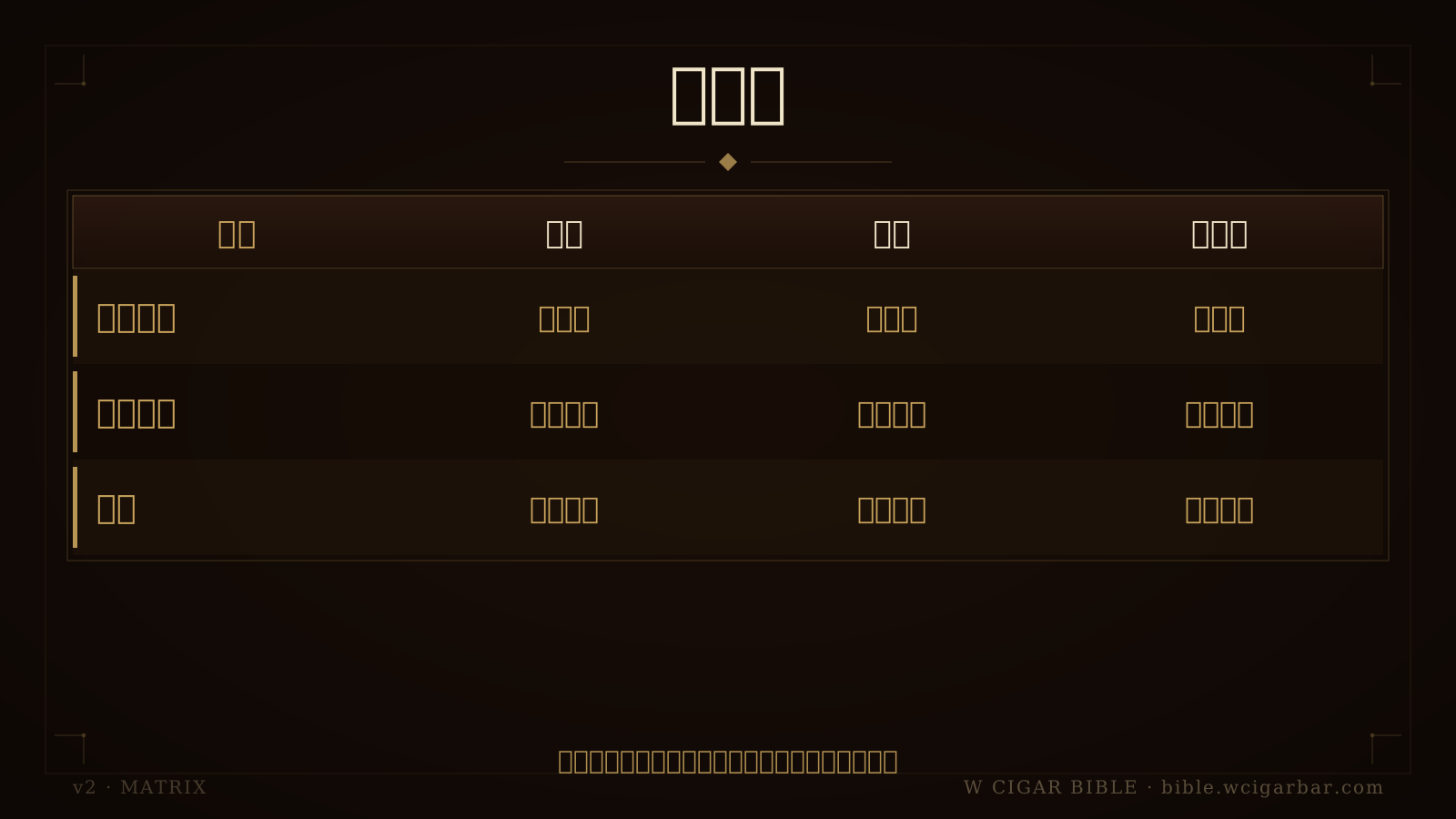
矩陣比較古巴尼國多明尼在土壤香氣與節奏差異
Regional Comparison: The Same Sweet, Spicy, Woody, but Different Sources
For seasoned enthusiasts to advance, they must not only remember "what flavors come from which region," but also identify where the flavors originate. Cuban sweetness often resembles honey, hay, cream, and ripe grains, Nicaraguan sweetness tends towards brown sugar, cocoa, and coffee syrup, while Dominican sweetness is mostly almond, cream, and light floral nectar. The same goes for spiciness: Cuba often intertwines white pepper and mineral saltiness, Nicaragua is more likely to feature black pepper, chili skin, and roasted spices, while the Dominican Republic is known for clean white pepper, cinnamon, and woody spiciness. The following table can serve as a simplified map for seasoned enthusiasts to recalibrate their senses, but in practice, it still depends on brand formulas, vintage batches, and preservation status.
| Region | Representative Area | Common Varieties or Techniques | Typical Flavors | Brand Examples |
|---|---|---|---|---|
| Cuba | Vuelta Abajo, Partido | Corojo, Criollo system and traditional classification | Honey, hay, minerals, leather, coffee | Cohiba, Montecristo, Partagás |
| Nicaragua | Estelí, Jalapa, Condega | Criollo 98, Corojo 99, Habano | Black pepper, cocoa, black coffee, volcanic soil | Padrón, Oliva, My Father |
| Dominican Republic | Cibao, Santiago | Piloto Cubano, Olor, shade-grown wrapper | Cream, nuts, cedar, floral, white pepper | Arturo Fuente, Davidoff, La Flor Dominicana |
| Ecuador | Quevedo, Los Ríos | Cloud-shaded environment for wrapper cultivation | Cocoa, gentle spices, silky sweetness | Often used as cross-national blend wrappers |
| Honduras | Jamastrán, Copán | Cuban varieties combined with local soil | Woody, earthy, coffee, herbal | Camacho, Alec Bradley |
This table is not a ranking but a reminder: the soul of a cigar is not necessarily determined solely by the filler leaves. Many Nicaraguan blends use Ecuadorian Habano wrapper for gloss and sweet spiciness, and Dominican fillers may be paired with Cameroon wrappers for cinnamon and roasted aromas. When you can break down the wrapper, binder, and filler proportions by origin, you truly enter the level of formula reading.
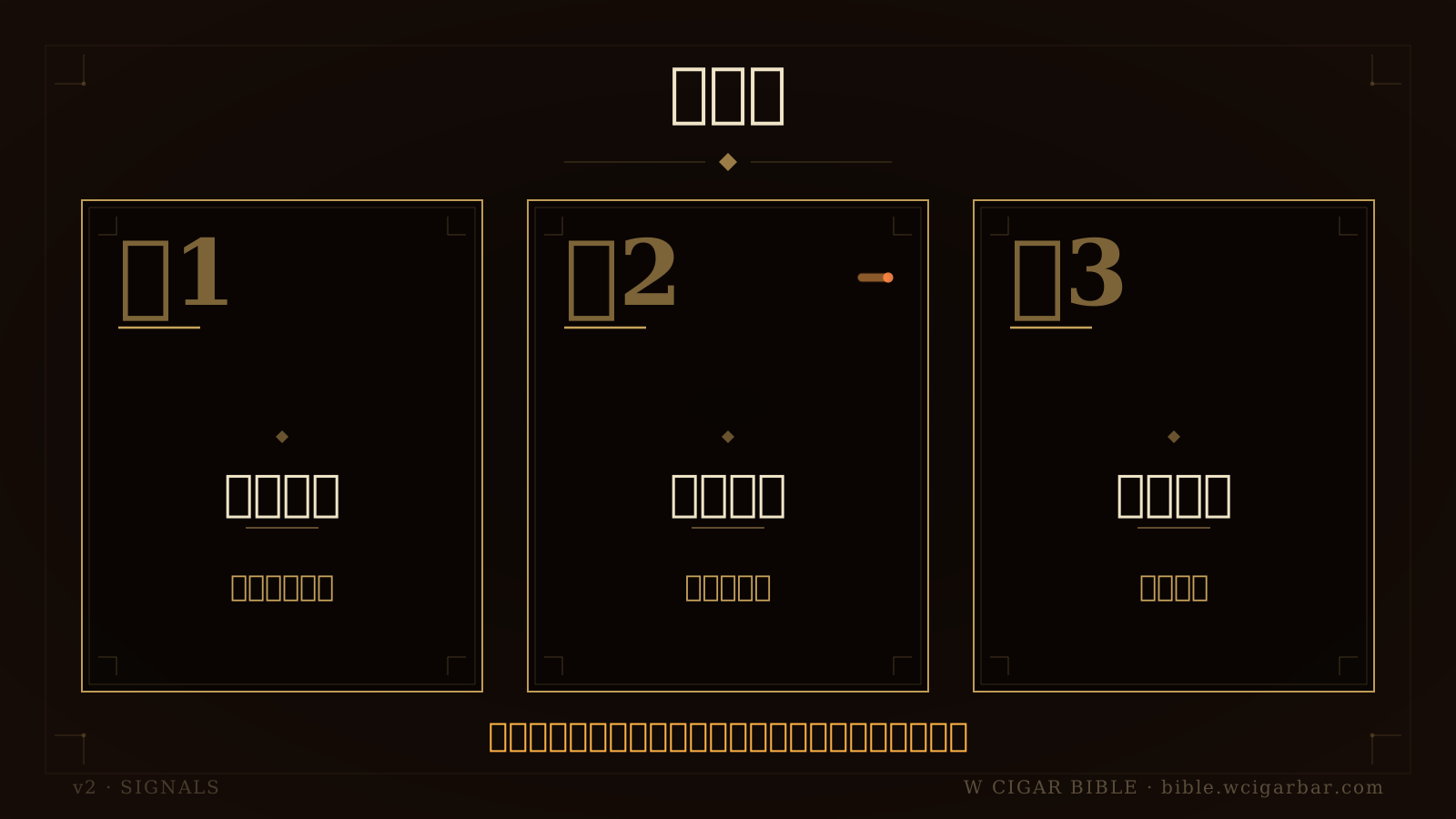
三張提醒卡列出年份古巴與濕度的常見誤解
Climate and Cultivation: How Sunlight, Shade, Irrigation, and Harvest Position Shape Flavor
Tobacco leaves are not a single leaf throughout but are layered according to plant position and sunlight. The top layer ligero receives the most sunlight, with higher nicotine and oil content, often bringing strength, spiciness, and late-stage support; the middle layer seco has better aroma, providing floral, woody, and sweet notes; the lower layer volado has good combustibility, serving as an important foundation for structural stability. Cuba traditionally has strict classifications for vegas finas de primera plots because leaves from different farms in the same province have completely different thicknesses and oiliness. In Nicaragua, Estelí's strong sunlight results in thick ligero leaves, which, if not sufficiently fermented, can easily exhibit tongue-stinging, ammonia, or rough bitterness, so many high-end factories extend fermentation and resting time. The Dominican Republic often maintains clean aromas through more delicate grading and blending. Shade cultivation also has a significant impact: Connecticut Shade or Ecuadorian Connecticut wrappers, due to light being softened by clouds or shade cloth, have thinner leaves, even color, and delicate burning, often carrying cream, grains, and light nuts; sun-grown wrappers have more pronounced veins, stronger oiliness, and spiciness. Seasoned enthusiasts, when examining wrappers, should not only look at color depth but also elasticity, oil sheen, veins, and texture, as these often reveal the burning rhythm and aroma density of the cigar.
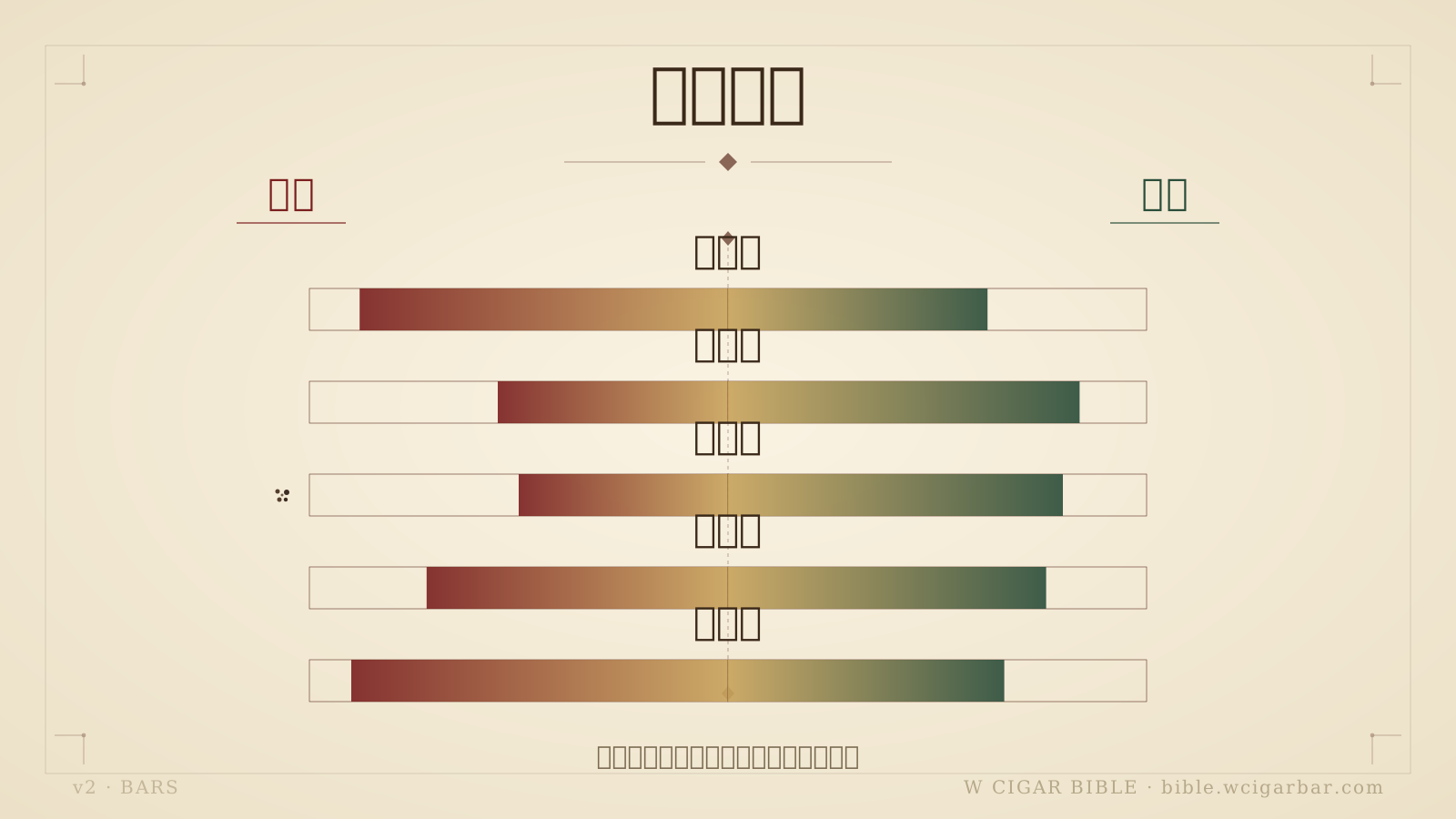
橫條圖以礦物、厚甜、辛香、線條與慢變比較古巴及非古取向
Aging and Preservation: Regional Characteristics Can Be Amplified by Time or Flattened by Incorrect Environments
The emphasis of the same cigar may vary after 6 months, 2 years, or 5 years. Cuban cigars are often used by seasoned enthusiasts for aging observation due to their early herbal, ammonia, or sharp mineral notes, which, if stored in a stable environment at about 65% to 68% RH, 18 to 20°C, may transform into more rounded honey, leather, coffee, and salty-sweet notes. High-concentration Nicaraguan works like Padrón, Oliva Serie V, and My Father series can reduce harshness with short-term resting, integrating black pepper and coffee bitterness; but if stored too long, the originally beautiful explosiveness may become blunt. Dominican works that pursue delicate aromas may have cream, floral, and woody notes suppressed by excessive humidity, so many seasoned enthusiasts prefer slightly lower humidity for clearer burning lines and aromas. For box storage, taking one cigar from a box of 25 of the same batch every 3 to 6 months for recording is usually more accurate than judging the entire box at once. If discussing collection appreciation, it does not guarantee appreciation; it still depends on source preservation and market; a truly reliable collection view should be based on clear origin, complete temperature and humidity records, stable box condition, and seal status, rather than just looking at vintage or rumored popularity.
A Seasoned Enthusiast's Blind Tasting Method: Building Your Own Flavor Database with a Three-Stage Record
What advanced enthusiasts need most is not more adjectives but a repeatable recording method. I suggest recording at least the size, ring gauge, length, vintage, origin, storage humidity, pre-light aroma, changes in the first, middle, and last stages, burn line, ash column, draw resistance, and finish length for each cigar. For example, with the same Robusto size, Cohiba Robustos about 50 ring gauge, 124mm, if in good condition, often have hay, cream, and honey in the early stages, transitioning to coffee, woody, and mineral in the middle stages; Padrón 1964 Anniversary Exclusivo about 50 ring gauge, 140mm, may start with cocoa, black coffee, and brown sugar, deepening into pepper and nuts in the later stages; Davidoff Grand Cru Robusto tends towards cedar, cream, almond, and white pepper, with an emphasis on cleanliness. During blind tasting, do not look at the brand band first to avoid judgment influenced by reputation; first use 1 to 5 points to record sweetness, spiciness, bitterness, acidity, saltiness, oiliness, strength, and complexity, then refer back to the region. After three months, reread the records, and you will find that what you truly prefer is not a specific country but a certain "structure": some people like Cuba's slow transitions, some prefer Nicaragua's strong sweet framework, and others favor the Dominican Republic's clean lines. This is the core of taste evolution.
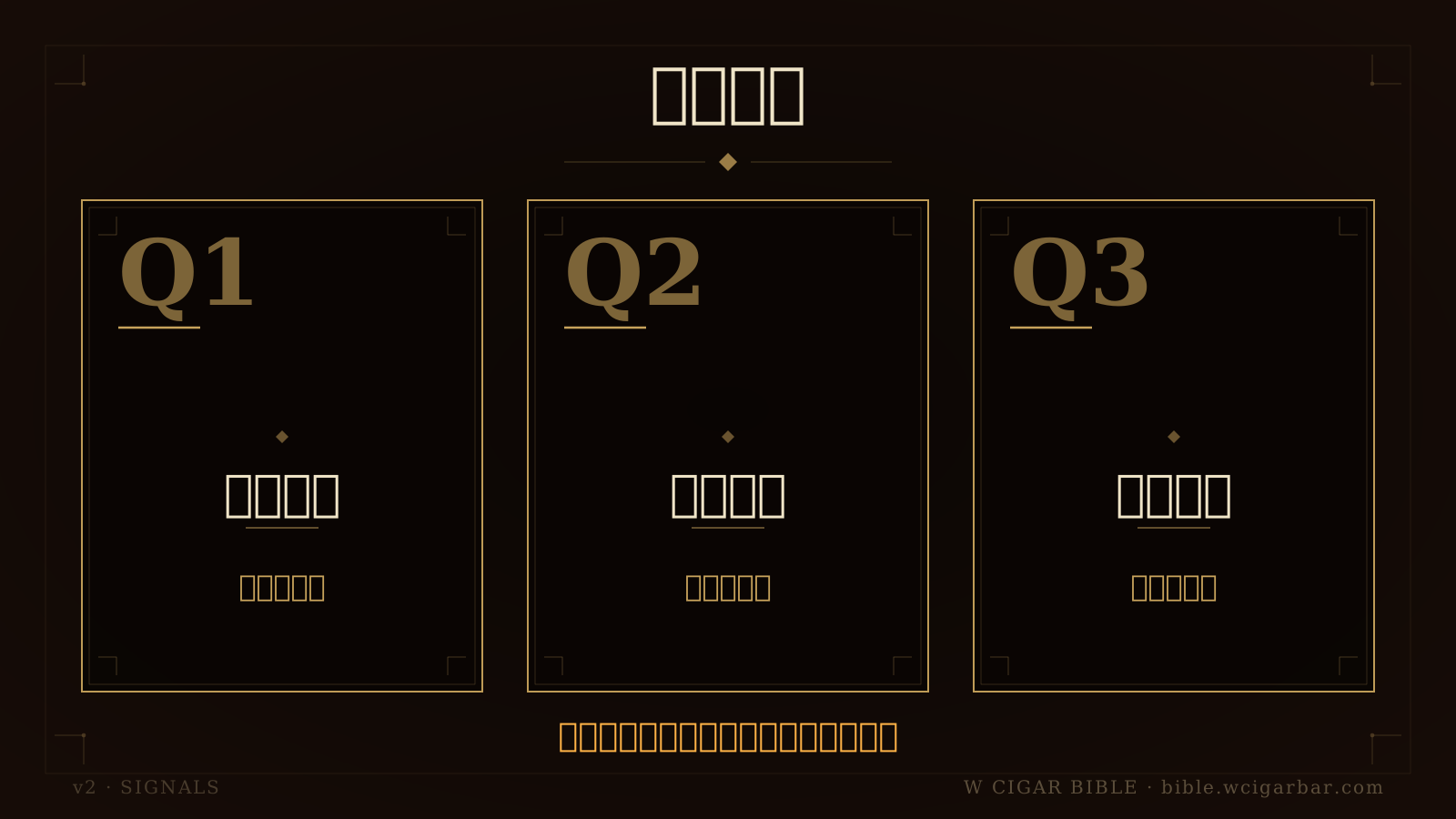
快問快答整理尺寸比較、濕度設定與年份差異三個實用問題
Frequently Asked Questions
Why can the same brand vary greatly between different years?
Cigars are agricultural products, not standardized beverages. Even if the brand formula remains unchanged, annual rainfall, sunlight, pests, harvest time, fermentation pile temperature, rolling team, and post-production storage can all cause differences. Comparing certain batches from the mid-2000s and late 2010s in Cuba, seasoned enthusiasts can often feel differences in draw resistance, burn, and aroma concentration; Nicaragua and the Dominican Republic are the same, vintage is just a clue, not an absolute answer.
Is Cuba necessarily more complex than Nicaragua or the Dominican Republic?
Not necessarily. Cuba's strengths often lie in the mineral, salty-sweet, herbal, and leather slow fusion; Nicaragua can showcase very high levels of cocoa, coffee, black pepper, and thick sweetness; the Dominican Republic excels in cleanliness, elegance, and aroma precision. Complexity is not a regional patent but a result of cultivation, fermentation, formula, and preservation working together.
How should seasoned enthusiasts choose different regions for comparison?
The fairest method is to choose similar sizes and strengths. For example, using Robusto or Toro as a benchmark, select representative Cuban, Nicaraguan, and Dominican options, and compare them after storing at the same humidity for at least 4 to 8 weeks. Do not compare a 60 ring gauge large size to a 42 ring gauge Corona, as burn temperature, leaf proportion, and aroma release speed are all different.
Should humidity be set at 65%, 69%, or 72%?
There is no single answer, but seasoned enthusiasts usually make slight adjustments based on region and environment. Cuba can find balance at 65% to 68% RH, high-oil Nicaraguan works can slightly reduce draw resistance, and delicate Dominican options should avoid excessive humidity. 72% in some environments can make burning stuffy, draw resistance heavy, and aroma suppressed; the key is stability, not higher numbers.
Does a dark wrapper mean it's stronger?
Not entirely. Maduro or dark wrappers often carry cocoa, coffee, brown sugar, and sweet spiciness, but strength still depends on the ligero proportion in the filler, fermentation degree, and formula. Dark color may also result from fermentation and processing methods, not necessarily indicating greater strength. Strength should be judged by the overall structure, not just color.
How long should aging be considered suitable?
For high-strength Nicaraguan works, 6 to 18 months often reduces harshness; some Cuban options can observe changes over 2 to 5 years; delicate Dominican types may not require long waiting. The ideal method is to record in batches from the same box, comparing every few months, rather than assuming all cigars improve with age.
Conclusion: From Regions to Personal Judgment
Regions are maps, not answers. The true evolution of cigar taste is moving from "which country do I like" to "which soil, leaf position, formula, and preservation move me." Cuba gives me a sense of time, Nicaragua gives me a structural strength, and the Dominican Republic gives me aroma order; the combination of the three makes the cigar world complete and fascinating. May every seasoned enthusiast build their own records, rather than just collecting others' ratings. —Cigar Prince Wilson Tsai
Smoking is harmful to health. No smoking under the age of 20. Quitline: 0800-636363. This article is intended for adults over the age of 20 as a reference for cigar culture, preservation, and legal knowledge, not as an advertisement, promotion, or purchase suggestion.
Like this article?Share with friends
Share this W Cigar Bible piece with friends who want to learn cigar culture, storage, and tasting.
想把這篇 化為實踐
雪茄聖經是知識;雪茄文化要在空間裡發生
W Cigar Bar 大安總店資訊
台北大安區 · 雪茄聖經總編輯 Wilson Tsai 主理的雪茄文化空間
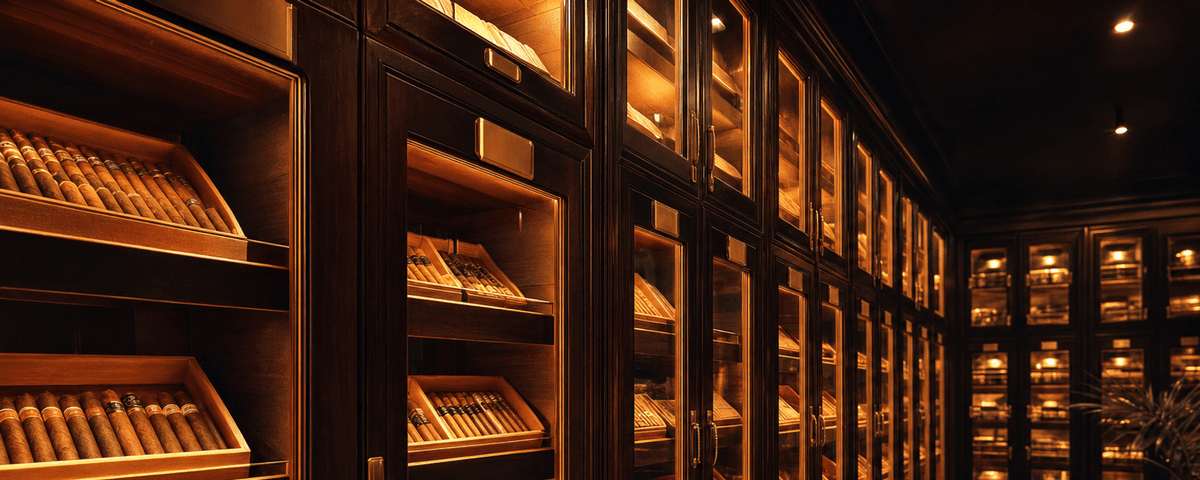
33 座 24 小時恆溫恆濕醇化室
W Cigar Bar 提供的會員醇化空間 · 場地資訊請洽編輯部
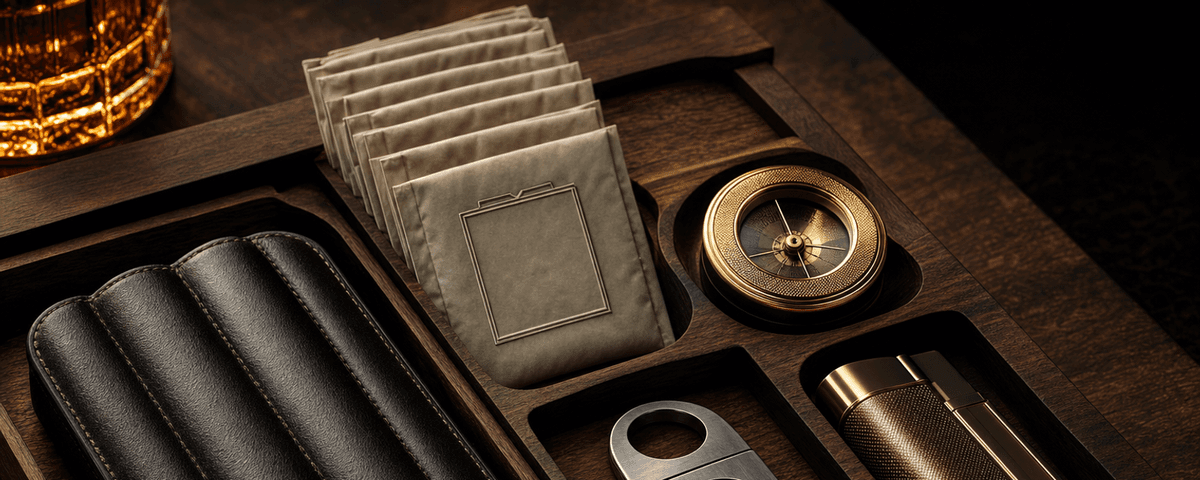
雪茄剪 / 打火機 / 雪茄盒 / Boveda
W Cigar 配件官網 · 專營雪茄配件正品
加 LINE 好友 · 文化諮詢
文化空間資訊 · 紳士沙龍 · 私人包場
本網站內容僅供雪茄文化、歷史、收藏與品吸知識研究參考。菸品有害健康、未滿法定年齡者請勿吸菸。實際規範請依所在地法律為準。
吸菸有害健康・戒菸專線 0800-636363・本站僅供 20 歲以上成年人閱覽。
讀到這裡,你不只是路過的人
留下 Email,加入 W 雪茄聖經內圈——總編輯 Wilson Tsai 親選的學院深文與國際新訊,先你一步送到信箱。
· 教育用途非銷售 · 隨時一鍵退訂 · Email 絕不對外公開 · 由勝茄股份有限公司營運
同分類延伸閱讀
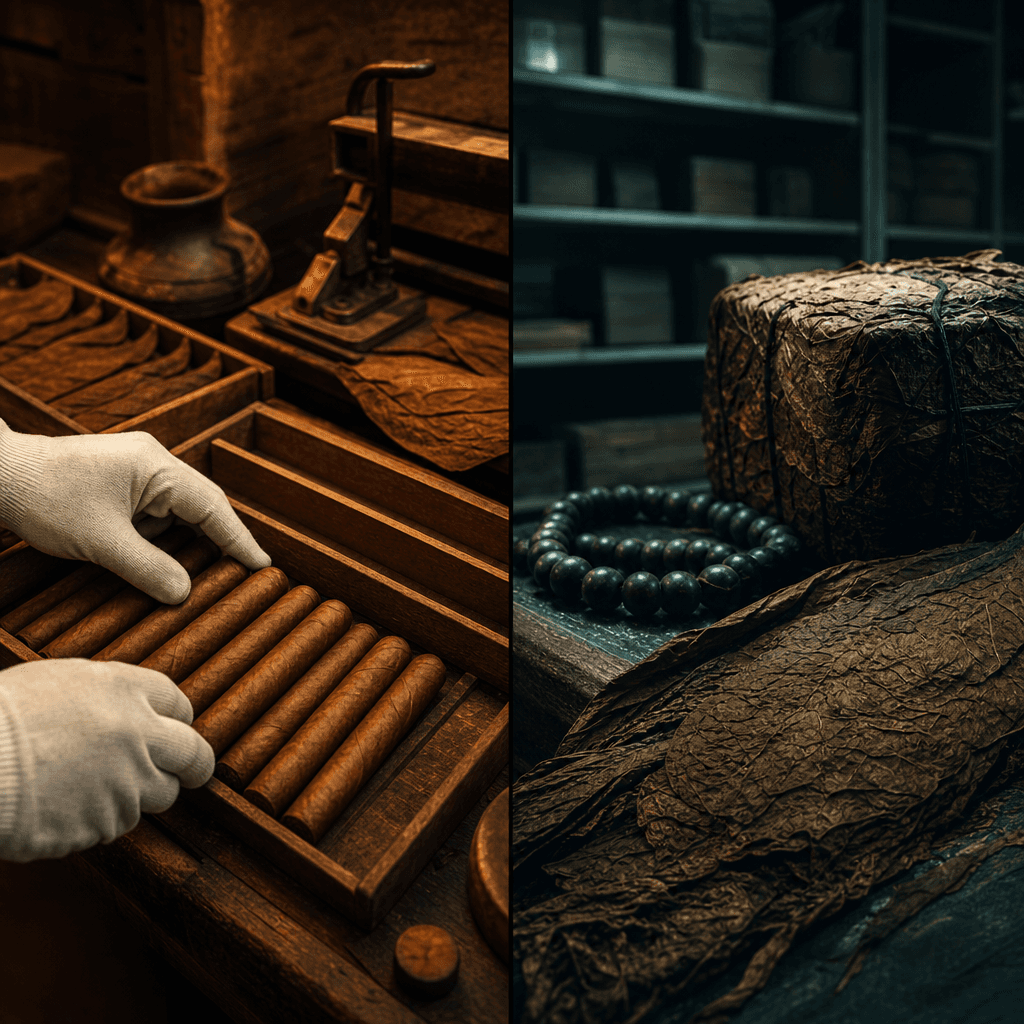
資料來源:W Cigar Bible 編輯部整理 · 雪茄王子 Wilson Tsai 親自審稿
本文僅供雪茄文化、歷史、收藏與品鑑知識研究,不作為菸品促銷、銷售或購買建議。吸菸有害健康,未滿二十歲不得吸菸。