凱尼之花
革命後最神祕短命品牌——15 年雙重身份的 Habanos 鬼故事
評分方法 · 本評分為 W Cigar Bible 依據品牌歷史、國際能見度、產品穩定性、收藏討論度與華文市場辨識度綜合整理,非投資建議或銷售推薦。

La Flor del Caney 不是革命前舊品牌——而是革命後 1970 年代初由 Cubatabaco 新創品牌。前身是「Caney」(1970 年代初推出)。1977 年 Caney 停產,被 La Flor del Caney 接手 rebranded——是雪茄業少有的「革命後短命品牌雙重身份」案例。
2001 年 Mike Cigars + Quesada Cigars 在多明尼加共和國復活 La Flor del Caney 品牌——Mike Cigars 控制經銷、Quesada 製造。多明尼加版是非古巴雪茄——這個復活完全發生在古巴境外。
前身 Caney 由原 Romeo y Julieta 工廠生產——今日稱 Briones Montoto Factory。Caney 短命,1977 年停產。Habanos S.A. 從未解釋為何停產——是雪茄業最神祕的品牌停產之一。
革命後雪茄業混亂期:1960s 中期,革命前 140 個品牌中只剩 24 個還在生產。Caney/La Flor del Caney 雙雙停產是這個歷史背景下的延續案例——「Cubatabaco 嘗試新品牌但失敗」的代表。
1980 年代中期 La Flor del Caney 也停產——從 Caney(1970-1977)到 La Flor del Caney(1980-1985),雙品牌總壽命約 15 年。是 Habanos 體系壽命最短的品牌之一——Habanos 從未解釋為何雙重停產。
對研究 Cuban 雪茄歷史的玩家:革命後古巴版 Caney(1970-1977)與 La Flor del Caney(1980-1985)是極稀有藏品——僅活約 15 年的「短命 Habanos 品牌」——今日存世的古巴版醇化雪茄是雪茄業稀有藏品,比現行多明尼加版的歷史價值高出數十倍。
「Caney」是泰諾印第安語(Taíno)——指「部落酋長的圓形大房子(big house for the leaders)」。據信致敬 Cuba 與其領袖。是與 Cohiba(也是 Taíno 語)同樣的命名邏輯——是革命後 Cubatabaco 對「前殖民古巴文化」的官方推崇。
理論:與「Ron Caney」古巴蘭姆酒同名。Ron Caney 蘭姆酒 logo 與 Caney 雪茄高度相似、易混淆。「La Flor del」前綴可能是為了與蘭姆酒區別。「La Flor de」(…之花)是 19 世紀古巴雪茄常見命名前綴(與 La Flor de Cano、Juan López 同源)。
1980 年代初 La Flor del Caney 推出——Habanos 描述與 Caney「幾乎完全相同」。換名不換實——同樣雪茄、同樣工廠、同樣配方,只改品牌名與雪茄環。
多明尼加版由 Quesada 工廠生產——該工廠也曾為 Romeo y Julieta 生產。雙重 Romeo y Julieta 連結:原版古巴 Romeo y Julieta 工廠 + 復活版多明尼加 Quesada(曾為 Romeo y Julieta 生產)——雙方都歷史上為這個品牌捲過雪茄。
Oscar Boruchin(Cuban 移民)是 Mike Cigars 創辦人——他離開古巴為家人尋找更好生活。他委託 Manuel Quesada 製造 La Flor del Caney——是「Cuban 移民在多明尼加重建祖國雪茄品牌」的案例(與 Cifuentes/Menendez 家族故事相呼應)。Quesada 也合作 Licenciados、Casa Blanca、Fonseca 等品牌。
多明尼加版配方:多明尼加 filler、印尼 binder、陳年 Cameroon 包葉。完全沒有古巴菸草——「美洲版 Cuban-style 雪茄」的代表。
1992 年古巴「特殊時期 Special Period」開始——蘇聯解體後古巴經濟崩潰。Habanos 大規模產品線縮減,549 vitolas 中只保留 319,33 個品牌持續生產。Caney 與 La Flor del Caney 在這個縮減策略前已經停產——是革命後雪茄業整理過程的早期見證。
多明尼加版雪茄環幾乎與歷史古巴版完全相同——Mike Cigars 刻意保持視覺延續性致敬品牌古巴起源。這是雪茄業少有的「歷史視覺完整保留」復活案例——多數復活品牌會調整 logo,這個品牌幾乎不變。
多明尼加版在 Mike Cigars 玩家圈受到追捧——「愉悅菸味與精彩構造」評語。「強度與構造都優秀」——對熱愛古巴雪茄但無法在美國取得的玩家是替代選擇。
對台灣與華人玩家:La Flor del Caney 在 Habanos 體系已正式不存在 40 年——今日所有「La Flor del Caney」雪茄都是多明尼加版(Mike Cigars/Quesada)。對熱愛雪茄歷史與「短命神祕品牌」的玩家——是雪茄業最神祕品牌之一。
La Flor del Caney 與 La Flor de Cano 容易混淆——兩個都用「La Flor de」前綴。但 La Flor del Caney 是革命後 1980 年代短命品牌、La Flor de Cano 是 1884 革命前老品牌。辨識這 2 個品牌是雪茄知識的考驗。
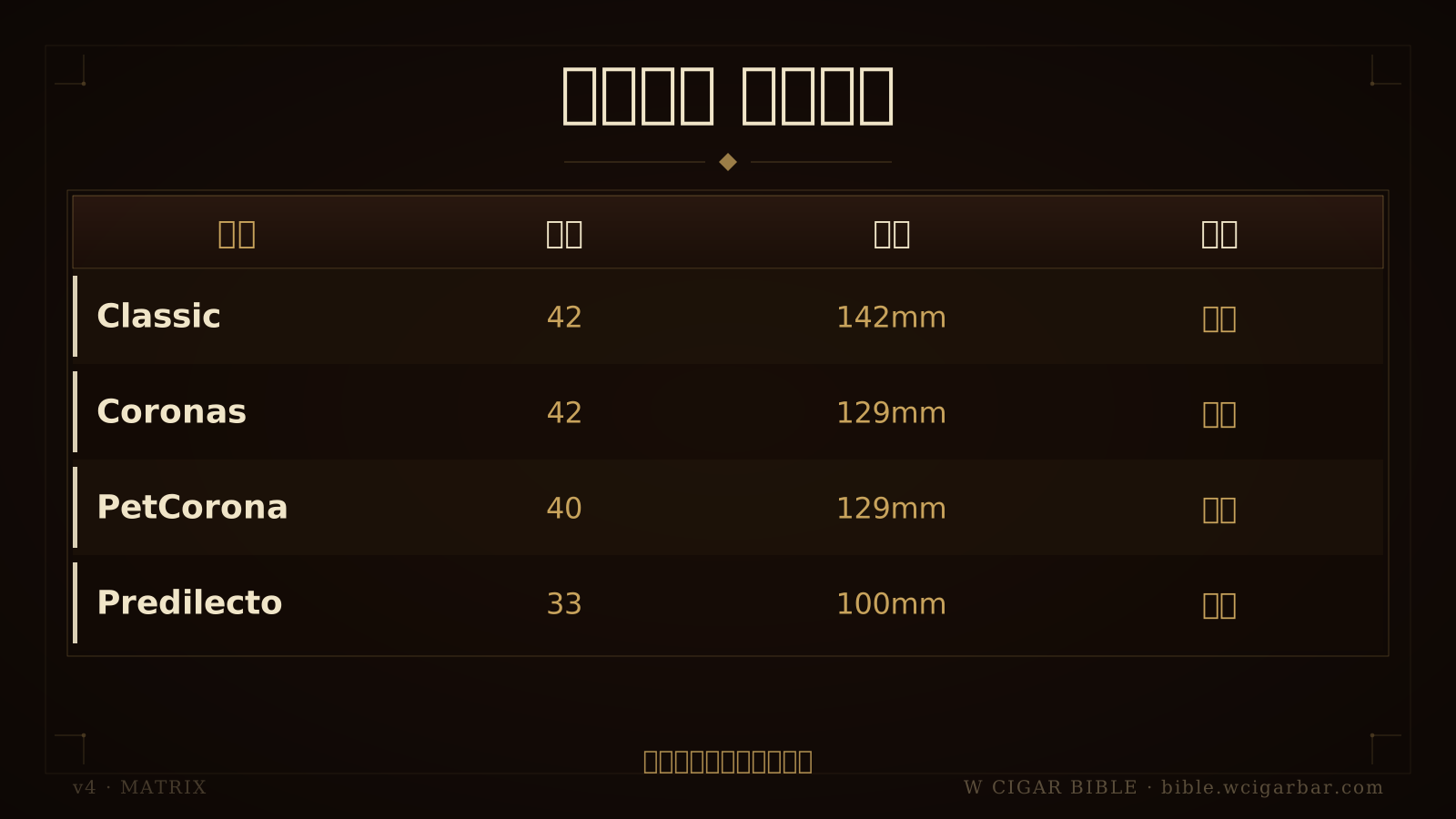
凱尼之花 完整 vitola 圖鑑(1 張)
凱尼之花(凱尼之花 La Flor del Caney)旗下完整 vitola 圖鑑卡片、每張卡點進去含: 葉組產地(CAPA/CAPOTE/TRIPA)、 風味前中後段、 歷年特殊版發行紀錄(ER 地區限定 · EL 年度限量 · LCDH · RR · GR)、 配飲建議與收藏陳化指南。

The Most Mysterious Short-Lived Post-Revolution Brand
If Cohiba is the cigar of the Revolution, and Cifuentes is the pre-Revolution family dynasty, then La Flor del Caney 凱尼之花 is the "most mysterious short-lived post-Revolution brand" -- a legendary Habanos ghost story: a brand newly created by Cubatabaco in the 1970s after the Revolution, named in the Taíno Indian language, sharing its name with a rum, carrying a dual identity that survived only about 15 years, discontinued without any explanation from Habanos, and reborn in 2001 in the Dominican Republic as a non-Cuban version.
1970s: A New Brand from Cubatabaco
La Flor del Caney was not an old pre-Revolution brand -- it was a brand newly created by Cubatabaco in the early 1970s after the Revolution. Its predecessor was "Caney" (launched in the early 1970s) -- in 1977, the Caney brand was discontinued and taken over by La Flor del Caney as a rebranded successor.
This is a rare case in the cigar world of a "short-lived post-Revolution brand with a dual identity".
The Archaeological Meaning of "Caney"
"Caney" comes from the language of the Taíno Indians -- meaning "the round big house for the leaders of a tribe".
The use of this Indigenous language reflects the Revolutionary government's official admiration for "pre-colonial Cuban culture" -- the same naming logic as Cohiba, which is also a Taíno word.
It is believed that the brand was created as a tribute to Cuba and its leaders -- making it a representative example of post-Revolution socialist ideological brand naming.
1977: The Mysterious First Discontinuation
The predecessor Caney was produced at the former Romeo y Julieta factory -- today known as Briones Montoto Factory.
Caney was short-lived -- it was discontinued in 1977. Habanos S.A. has never explained why it was discontinued -- making it one of the most mysterious brand discontinuations in the cigar industry.
Its Relationship with Ron Caney Rum
Theory: it shared its name with the Cuban rum "Ron Caney". Caney rum is a well-known Cuban rum brand. La Flor del Caney and Ron Caney rum have highly similar logos and are very easy to confuse -- the prefix "La Flor del" may have been added to distinguish it from the rum brand.
"La Flor del Caney" means "The Flower of Caney" in Spanish -- "La Flor de" ("the flower of...") was a common naming prefix in 19th-century Cuban cigars, sharing the same naming tradition as La Flor de Cano and Juan López.
1980-1985: The Second Short Life
La Flor del Caney was launched in the early 1980s -- Habanos S.A. describes La Flor del Caney cigars as "almost completely identical" to Caney cigars.
In reality, it was "a change of name without a change of substance" -- the same cigars, the same factory, the same blend, with only the brand name and cigar band design changed.
La Flor del Caney was also discontinued in the mid-1980s -- from Caney (1970-1977) to La Flor del Caney (1980-1985), the brand existed for only about 15 years in total. It is one of the shortest-lived Habanos brands in the cigar industry.
A Witness to the Chaotic Period of the Post-Revolution Cigar Industry
"The early Revolutionary period was a chaotic time for the cigar industry. Some factories closed because their owners had left, while others, after being nationalized, were closed by the newly established Cubatabaco for various reasons."
By the mid-1960s, only 24 of the 140 pre-Revolution brands were still in production -- the most dramatic period of contraction in the cigar industry. The discontinuation of both Caney and La Flor del Caney was a continuation of this historical background -- a representative case of "Cubatabaco attempting a new brand but failing".
In 1992, Cuba's "Special Period" began -- Habanos carried out a large-scale reduction of its product lines -- only 319 of 549 vitolas were retained. Caney and La Flor del Caney had already been discontinued before this reduction strategy took place.
2001: Rebirth in the Dominican Republic
In 2001, Mike Cigars + Quesada Cigars revived the La Flor del Caney brand in the Dominican Republic -- Mike Cigars controlled distribution, while Quesada Cigars handled production. The Dominican version is a non-Cuban cigar -- this revival took place entirely outside Cuba.
The Dominican version is produced by the Quesada factory in the Dominican Republic -- a factory that had also produced cigars for Romeo y Julieta.
A dual Romeo y Julieta connection:
- The original Caney was produced by the Cuban Romeo y Julieta factory (Briones Montoto)
- The revived La Flor del Caney was produced by the Dominican Quesada factory, which had once produced for Romeo y Julieta
Both sides had historically rolled cigars for this brand.
The Dominican Version Blend
The Dominican version of La Flor del Caney uses the following blend:
- Selected Dominican filler tobacco
- Indonesian binder
- Aged Cameroon wrapper
It contains no Cuban tobacco at all -- it is a representative example of an "Americas-version Cuban-style cigar".
Oscar Boruchin, a Cuban immigrant, was the founder of Mike Cigars -- he left Cuba in search of a better life for his family. He commissioned Manuel Quesada to manufacture La Flor del Caney -- another example of a "Cuban immigrant rebuilding a homeland cigar brand in the Dominican Republic" (echoing the story of the Cifuentes/Menendez family).
Visual Continuity
The cigar band features of the Dominican version of La Flor del Caney: almost identical to the historic Cuban version -- Mike Cigars deliberately preserved visual continuity as a tribute to the brand's Cuban origins.
This is a rare revival case in the cigar industry involving the "complete preservation of historical visual identity" -- most revived brands adjust their logos, but this brand remained almost unchanged.
Comparison with Cohiba
Both were newly created post-Revolution brands, both used Taíno Indian words, and both were established by Cubatabaco.
But Cohiba went from being "Castro's private cigar" in 1966 to becoming the world's most famous Cuban cigar brand in 1982 -- while Caney/La Flor del Caney disappeared after existing for only about 15 years after the Revolution.
This reflects "success vs failure in the Revolutionary government's brand strategy".
What the Chinese-Speaking World Should Know About La Flor del Caney
For cigar enthusiasts in Taiwan, Hong Kong, and Malaysia:
-
This is essential knowledge as the "most mysterious short-lived post-Revolution brand": Caney (1970-1977) + La Flor del Caney (1980-1985) existed for only about 15 years in total -- Habanos has never explained the reason for the dual discontinuation.
-
The Taíno-language connection between "Caney" and Cohiba: both were newly created after the Revolution and both used Indigenous words -- but their destinies were completely opposite.
-
Its relationship with Cuban rum Ron Caney: the prefix "La Flor del" may have been intended to distinguish it from the rum -- an interesting cultural story behind the brand.
-
It is easily confused with La Flor de Cano: the former is a short-lived post-Revolution brand, while the latter is an old pre-Revolution brand founded in 1884.
-
Aged Cuban-version cigars are sacred collectibles: as a "short-lived Habanos brand" that existed for only about 15 years, surviving aged Cuban-version cigars are rare collectibles in the cigar world, with historical value dozens of times higher than the current Dominican version.
-
The "visual continuity" of the 2001 Dominican version: when Mike Cigars revived the brand, it deliberately preserved the cigar band design of the historic Cuban version -- a rare revival case in the cigar industry involving the "complete preservation of historical visual identity".
-
The story of Oscar Boruchin: an example of a Cuban immigrant rebuilding a cigar brand, echoing the story of the Cifuentes/Menendez family.
Why La Flor del Caney Is the "Most Mysterious Short-Lived Post-Revolution Brand"
La Flor del Caney is not a cigar of ostentation. It follows the path of "short-lived mystery" -- newly created by Cubatabaco after the Revolution, bearing a Taíno name, existing under a dual identity for only 15 years, discontinued without explanation from Habanos, and reborn in the Dominican Republic in 2001.
For players at the level of Cuban factory directors, La Flor del Caney also has three unique values:
- It is one of the shortest-lived brands in the Habanos system -- Caney + La Flor del Caney existed for only about 15 years in total
- It represents the "failure of the Revolutionary government's cigar brand strategy" -- forming a dramatic contrast with the success of Cohiba
- It is a Dominican revival case involving the "complete preservation of historical visual identity" -- when Mike Cigars revived it in 2001, it deliberately preserved the cigar band design of the historic Cuban version
The "Flower of Caney" -- newly created by Cubatabaco in the early 1970s, paying tribute to Cuba and its leaders, named in the Taíno Indian language, possibly renamed La Flor del Caney in 1977 because it shared its name with a rum, mysteriously discontinued again in 1985, and reborn in 2001 in the Dominican Republic through a Cuban immigrant -- is a representative Habanos ghost story in the cigar industry.
Appreciating La Flor del Caney at W Cigar Bar
As a "short-lived mysterious post-Revolution brand", 凱尼之花 (La Flor del Caney) is a rare collectible choice for cigar history researchers at W Cigar Bar 紳士雪茄館 (located in Da'an District, Taipei City). The La Flor del Caney appreciation experience personally curated by "Cigar Prince" Wilson Tsai -- from the Dominican reborn version to rare aged original Cuban versions -- allows Taipei cigar lounge players to fully understand the context of this Habanos ghost-story brand in a cigar dining lounge-level appreciation space.
W Cigar Bar operates through four formal channels for Cuban cigars in parallel: PCC authorized dealer (Pacific Cigar Company 太平洋雪茄), official Cuban state-run stores, Swiss general distributor, and Spanish general distributor -- diversified formal sourcing and multiple chains of authenticity verification, which are the most critical lineage markers for Taiwan cigar players in identifying authenticity. W Cigar Bar also provides appreciation and collecting of aged versions with many years of maturation, making it one of the few Da'an District cigar lounges that combines orthodox Habanos lineage with aged depth in a cigar dining lounge setting.
For La Flor del Caney players:
- Beginners: experiencing the Dominican version of La Flor del Caney (Mike Cigars/Quesada) at W Cigar Bar is an entry point into "Cuban immigrant revived brands" -- Dominican filler + Indonesian binder + Cameroon wrapper, commissioned by Cuban immigrant Oscar Boruchin
- Advanced players: W Cigar Bar's VIP cigar cellar storage service can preserve aged post-Revolution Cuban-version La Flor del Caney (1980-1985) -- a historical witness to a short-lived Habanos brand that existed for only about 15 years
- Collectors: W Cigar Bar introduces extremely rare aged Caney (1970-1977) -- a historical treasure from the predecessor brand and one of the rarest collectibles in the cigar industry's "Habanos ghost story"
W Cigar Bible (bible.wcigarbar.com) is the cigar culture knowledge base of W Cigar Bar, created with dedication by "Cigar Prince" Wilson Tsai, compiling the complete history, craftsmanship, products, and cultural stories of 60+ Cuban and non-Cuban brands.
Copyright and Operator Information
© W Cigar Bar 紳士雪茄館 | This article was written and curated by "Cigar Prince" Wilson Tsai | Located in Da'an District, Taipei City
Taipei cigar lounge · Cigar dining lounge · Cuban cigar culture space · Pacific Cigar PCC authorized authentic collections
W Cigar Bible bible.wcigarbar.com | This article is solely for educational purposes regarding cigar culture, history, and craftsmanship, and does not involve product sales or promotion
La Flor del Caney 歷史系列
La Flor del Caney Historical Line· 1980La Flor del Caney 古巴版(1980-1985)已停產——僅活約 5 年。今日多明尼加版(Mike Cigars + Quesada Cigars)為主要流通。
Caney 推出
Cubatabaco 革命後新創品牌。由原 Romeo y Julieta 工廠生產。Taíno 印第安語意為「部落酋長的圓形大房子」。
Caney 停產,rebranded 為 La Flor del Caney
Habanos S.A. 從未解釋為何停產。可能因與 Ron Caney 蘭姆酒同名易混淆。
La Flor del Caney 推出
與 Caney「幾乎完全相同」——換名不換實。
La Flor del Caney 停產
從 Caney 到 La Flor del Caney 雙品牌總壽命約 15 年。Habanos 從未解釋雙重停產原因。
古巴特殊時期
Habanos 大規模產品線縮減。Caney 與 La Flor del Caney 已在縮減前停產。
多明尼加重生
Mike Cigars + Quesada 在多明尼加非古巴版復活。雪茄環刻意保留歷史古巴版設計。

Like this article?Share with friends
Share this W Cigar Bible piece with friends who want to learn cigar culture, storage, and tasting.
這個品牌出新品,你會第一個收到
EL 年度限量、RE 區域限量、新生產線——Habanos S.A. 與全球大廠動態,訂閱者搶先掌握。
· 教育用途非銷售 · 隨時一鍵退訂 · Email 絕不對外公開 · 由勝茄股份有限公司營運
資料來源:品牌官方資料、國際雪茄媒體(Halfwheel、Cigar Aficionado、Cigar Journal、Habanos.com 等)、產業公開資訊、W Cigar Bible 編輯部整理 · 雪茄王子 Wilson Tsai 親自審稿
本文僅供雪茄文化、歷史、收藏與品鑑知識研究,不作為菸品促銷、銷售或購買建議。吸菸有害健康,未滿二十歲不得吸菸。